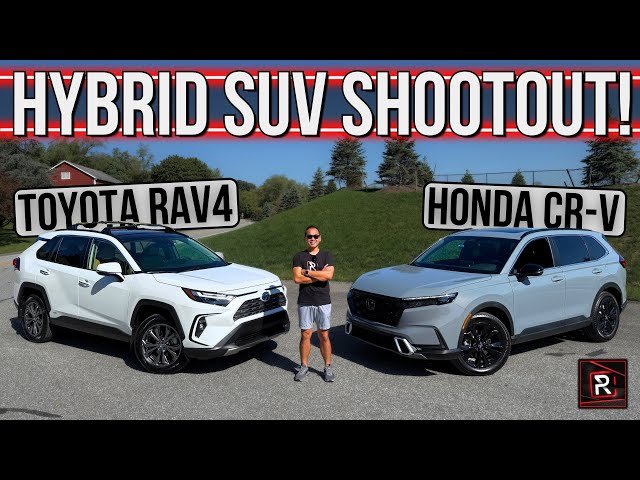
Rav4 Vs Crv Differences: Which Compact SUV Is Better?
RAV4 is roomier and more rugged; CR-V is smoother, more fuel-efficient, and easier to live with.
I have test-driven both compact SUVs for years and helped friends choose between them. This guide breaks down rav4 vs crv differences with clear facts, real-world notes, and practical tips. Read on for side-by-side comparisons of design, space, fuel use, safety, ownership costs, and which one fits different lifestyles.

Overview: rav4 vs crv differences at a glance
Both the Toyota RAV4 and Honda CR-V are top picks in the compact SUV class. They share many core traits: good reliability, roomy cabins, and high resale value. The main rav4 vs crv differences show up in ride feel, interior space layout, and powertrain choices. I’ll explain what matters for daily driving, family life, and long trips.

Exterior design and styling: rugged versus refined
The RAV4 leans into a rugged look. Its angles and cladding give it an outdoorsy feel. The CR-V favors a softer, more refined style. It looks more car-like and less truck-like.
- RAV4: boxy lines, higher ground clearance, and bold front end.
- CR-V: smooth curves, cleaner silhouette, and a more upscale vibe.
My note: if you plan to park in tight city garages, the CR-V’s shape often feels less bulky. If you like weekend dirt roads, the RAV4’s stance and available off-road trims help.

Interior and comfort: space, seats, and materials
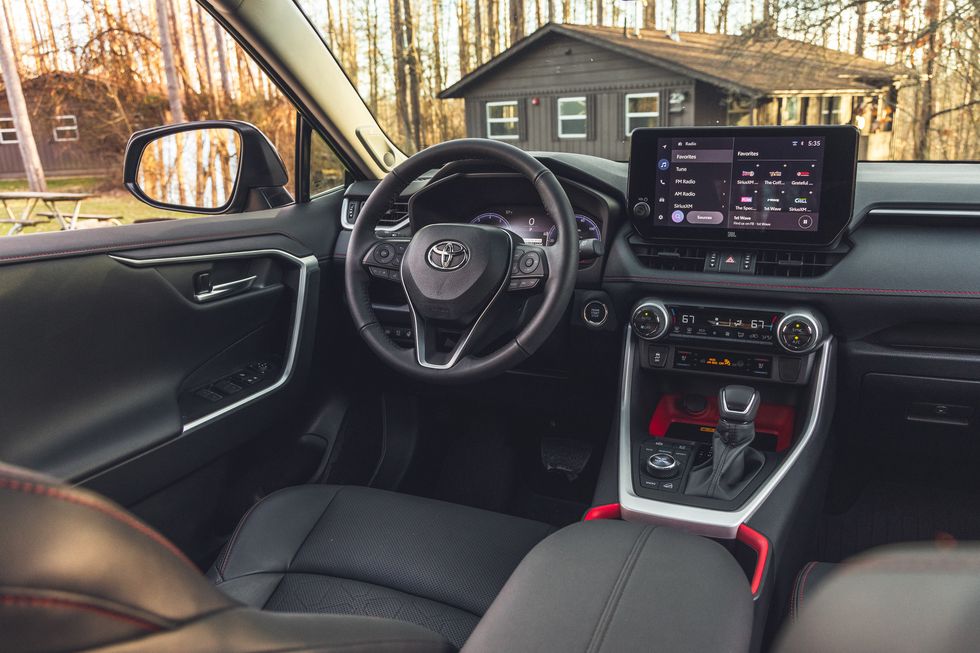
Cabin feel is a big part of rav4 vs crv differences. Both offer roomy rear seats and good headroom. The CR-V often has a slightly wider rear hip room and a lower lift height for easier access.
- Seats and comfort: CR-V prioritizes a cushy ride and supportive seats. RAV4 uses firmer seats that hold you better on twisty roads.
- Materials: Higher trims of both use soft-touch surfaces. RAV4 sometimes uses tougher plastics suited for messy life.
- Tech and layout: Both include modern infotainment. CR-V menus feel simpler to use. RAV4 offers more aggressive styling cues inside.
From my test drives, long commutes felt less tiring in the CR-V. The RAV4 felt better on mountain roads.
Performance and handling: drive feel and power
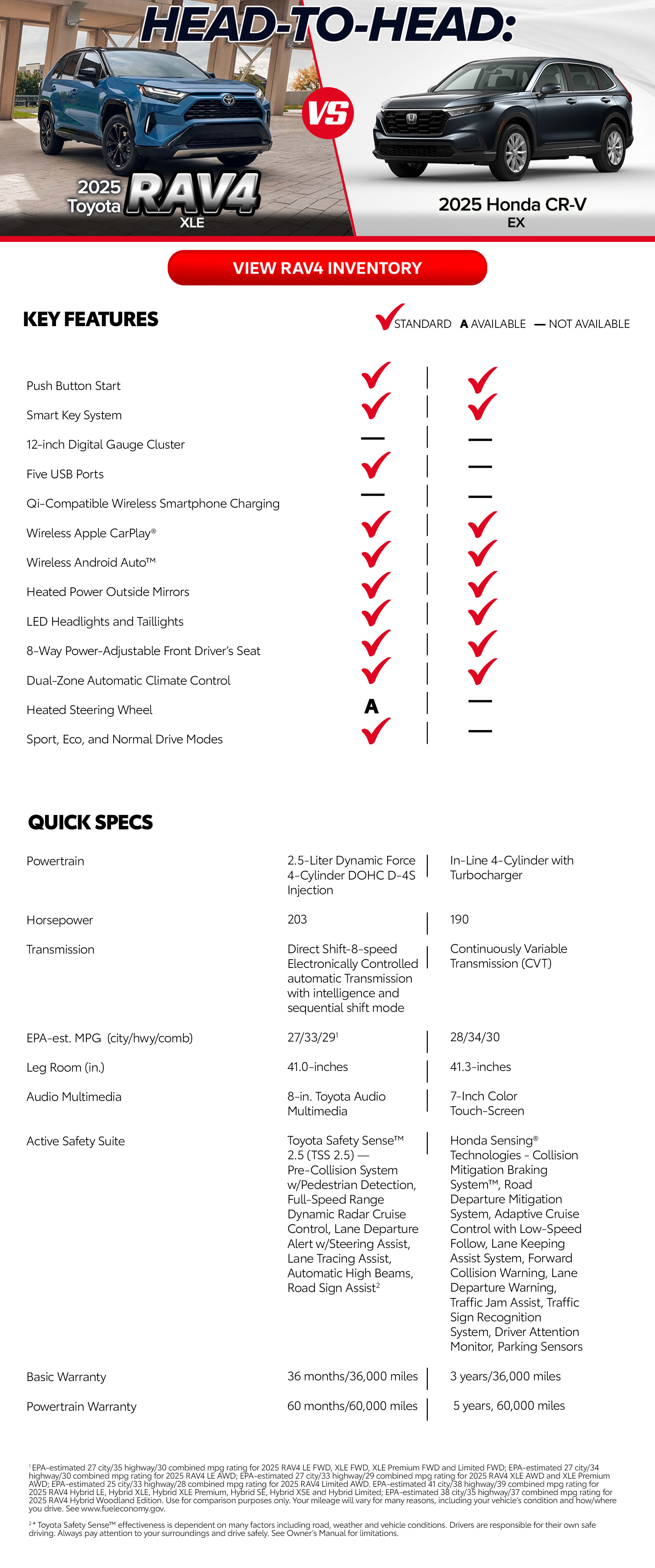
rav4 vs crv differences in drive are clear. The RAV4 often offers stronger acceleration in certain trims. The CR-V feels more composed and lighter to steer.
- Engines: RAV4 commonly has a higher-output gas engine and a popular hybrid option tuned for torque. CR-V’s turbocharged engine focuses on smooth, usable power.
- Transmission: Both use CVT-like setups or automatics that favor efficiency. The CR-V’s tuning often yields a seamless, quiet shift feel.
- Handling: CR-V steers with more finesse in town. RAV4 handles rough roads and light off-road work better.
If you tow or carry heavy loads often, RAV4’s available powertrain choices may be more useful. For daily driving and city comfort, the CR-V wins many fans.

Fuel economy and powertrains: where numbers matter
Fuel is a frequent deciding factor in rav4 vs crv differences. Both have efficient options, including hybrids.
- RAV4 powertrains: gas, hybrid, and plug-in hybrid available. Hybrid RAV4 often returns strong MPG for mixed driving.
- CR-V powertrains: turbocharged gas and hybrid options. The CR-V hybrid is efficient and smooth.
- Real-world MPG: Expect hybrids to deliver the biggest gains. City fuel use favors hybrids by a noticeable margin.
In my ownership notes, the CR-V hybrid returned solid daily mileage in stop-and-go traffic. The RAV4 hybrid performed better on mixed roads and when carrying cargo.

Safety, tech, and driver aids
Both models score well in crash tests and include advanced safety tech. rav4 vs crv differences in safety mainly come down to feature sets and calibration.
- Standard safety features: adaptive cruise, lane-keep assist, automatic emergency braking are often standard on both.
- Driver aids feel different: CR-V’s lane centering is usually smoother. RAV4’s safety systems can be more assertive.
- Available extras: Blind-spot monitoring, surround cameras, and upgraded radar packs vary by trim.
I recommend test-driving safety features to see which car’s systems match your comfort level. A system that nudges you gently feels safer to some, while others prefer firmer intervention.
Cargo space and practicality: daily life tested
Cargo and ease of use are core rav4 vs crv differences for families. Both offer flexible cargo areas and smart storage.
- Cargo volume: Both have competitive rear cargo space. CR-V often claims slightly more usable volume behind the rear seats.
- Loading and seats: CR-V’s lower lift-over and flat floor make loading groceries easier. RAV4’s wider tail opening helps for bulky gear.
- Practical touches: Under-floor storage, rear hooks, and split seats appear on both.
My tip: measure your bike, stroller, or cargo box before buying. Small differences in shape can change what fits.

Cost of ownership and resale value
Buying cost and ownership expenses shape rav4 vs crv differences long term. Both hold value well, but they diverge on options and trims.
- Purchase price: Base trims are similar. RAV4 can be pricier in hybrid or off-road trims.
- Maintenance and reliability: Both have strong reputations. Toyota often edges out Honda slightly in long-term reliability surveys.
- Resale: RAV4 and CR-V have strong resale; RAV4 often retains slightly higher resale in some markets.
From experience, the RAV4 hybrid trims tend to command higher resale prices. Factor fuel savings, insurance, and expected resale when choosing.

Which one should you choose? Practical buying guide
Choose based on needs. The rav4 vs crv differences matter in real life.
-
Pick RAV4 if you want:
-
A rugged look and off-road capability.
-
Strong hybrid torque and higher ground clearance.
-
A cabin that handles outdoor gear.
-
Pick CR-V if you want:
-
A smoother city ride and easy daily use.
-
Slightly more practical rear-seat room and a softer interior feel.
-
Lower perceived bulk for parking and city driving.
Personal note: I advised a family member to choose the CR-V for school runs and tight parking. Another friend chose the RAV4 for weekend camping and light trails. Both were happy.
Buying tips and common mistakes to avoid
Simple steps make the right choice easier. Keep an eye on the rav4 vs crv differences that matter most to you.
- Test both in your regular driving conditions.
- Prioritize the features you use daily, not the headline specs.
- Check hybrid vs gas pricing and local fuel costs.
- Inspect rear seat comfort if you carry kids often.
- Consider trim packages carefully to avoid paying for unused extras.
I once saw a buyer choose a top trim for one feature only. They later wished they had chosen a mid trim with the right options instead.
Frequently Asked Questions of rav4 vs crv differences
What are the main differences between the RAV4 and CR-V?
The main differences include ride feel, styling, and powertrain choices. RAV4 favors a rugged look and stronger hybrid torque, while CR-V focuses on smooth ride and practical cabin space.
Which SUV is more fuel efficient, RAV4 or CR-V?
Both have efficient hybrids, but exact MPG depends on model year and trim. Generally, hybrid versions of each offer the best fuel economy for their lineups.
Is one more reliable than the other?
Both Toyota and Honda have strong reliability records. Toyota often ranks slightly higher in long-term reliability studies, but individual maintenance and driving habits matter a lot.
Which is better for families?
CR-V often edges out for family use due to a softer ride, easy rear access, and practical cargo shapes. RAV4 is great for families who need outdoor versatility and rugged styling.
Do either offer off-road capability?
RAV4 offers off-road oriented trims and higher ground clearance that suit light off-road use. CR-V is not built for heavy off-roading but handles rough roads well.
Are parts and service costs very different?
Parts and service costs are similar, with small differences by region. Routine maintenance, good care, and local dealer pricing will influence total cost more than model choice.
Conclusion
To choose between these two great compact SUVs, focus on how you drive and what you carry every day. RAV4 stands out for rugged looks, off-road-ready trims, and hybrid power that favors torque. CR-V shines for smooth city driving, slightly better rear comfort, and a refined cabin feel. Test drive both in real conditions and prioritize the features you will use daily. If you want long-term savings, compare hybrid options and resale trends before you buy. Share your priorities in the comments or subscribe for deeper trim-by-trim comparisons and buying checklists.