**The Elitech ILD-200 is my top pick for its long-life infrared sensor and useful automotive refrigerant detection design.**
Imagine driving through a hot summer afternoon in Texas or Florida. You turn on your car AC, but warm air keeps coming through the vents. You add refrigerant, and the system works for a short time. Then the cold air disappears again. A small leak may cause this problem. Finding that leak can save time and money. The Best Automotive Refrigerant Leak Detectors help locate escaping refrigerant near hoses, seals, fittings, and other AC parts. I compared these ten options by their listed sensor types, refrigerant support, probe design, alarms, and displays. I have not performed hands-on laboratory tests of these units, so my recommendations rely on their stated features and practical tool selection.
🏆 Top 3 Products
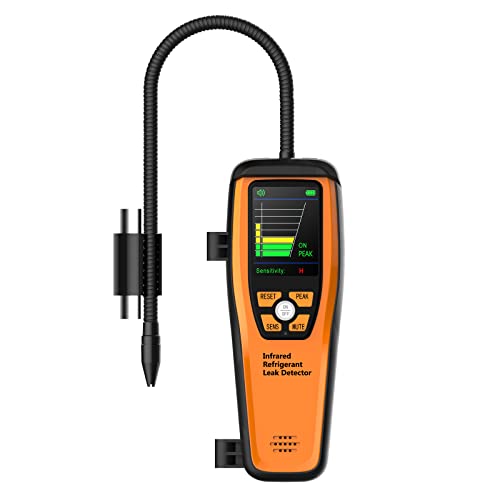
Elitech HVAC Refrigerant Leak Detector 10 Yrs Infrared Sensor Life, Halogen Freon Sniffer, Air Conditioning Detection, Automotive Gas Finder, ILD-200
Its infrared sensor and stated ten-year sensor life make it an appealing choice for regular automotive AC leak checks.

Fieldpiece – DR58 Heated Diode Refrigerant Leak Detector – Ultra-Sensitive Leak Sniffer with Large, Backlite LCD Screen – Lightweight HVAC Tool
Its heated diode sensor and large backlit screen offer a useful combination for detailed professional leak searches.

Elitech HVAC Refrigerant Leak Detector Heated Diode Sensor Halogen Freon Sniffer, Air Conditioning Detection, R22 R410A R134A R1234YF CFCs HCFCs HFCs, ILD-100H
Its heated diode design and stated support for common automotive refrigerants make it a practical all-around option.
SENSYX SFD201 Dual Gas Leak Detector

The SENSYX SFD201 is a two-in-one gas leak detector. It can detect halogen refrigerants and combustible gases. This makes it different from a basic refrigerant-only sniffer. Its rechargeable design also removes the need for regular disposable battery changes. I like the idea of having two detection functions in one tool, especially for a busy repair space.
The halogen detection function makes this model worth considering for automotive AC work. Its compact design may also help when checking small spaces around AC lines and fittings. However, buyers should confirm the exact refrigerant types supported before using it on a vehicle. The combustible gas function does not replace a dedicated safety meter or make the tool suitable for every gas hazard.
✅ Pros
- ✔ Two-in-one design checks refrigerants and combustible gases.
- ✔ Rechargeable construction reduces the need for disposable batteries.
- ✔ Halogen detection supports common refrigerant leak searches.
- ✔ One tool can serve more than one inspection task.
- ✔ A useful option for mixed workshop maintenance work.
- ✔ May reduce the number of separate tools in a toolbox.
⚠️ Cons
- ✖ The exact supported automotive refrigerant list needs confirmation.
- ✖ The dual-gas function may be unnecessary for AC-only work.
- ✖ The listing does not provide enough detail about sensor life or sensitivity.
My Recommendation
I recommend the SENSYX SFD201 for buyers who want more than a basic AC leak sniffer. Its two detection functions offer extra flexibility, and its rechargeable design is useful in a workshop. It deserves a place among the Best Automotive Refrigerant Leak Detectors for users who also inspect combustible gas leaks. Still, I would check its exact refrigerant compatibility before using it on an R134a or R1234yf vehicle. For a dedicated automotive AC tool, a model with a clearly stated refrigerant list may be a safer choice.
| Best For | Why |
|---|---|
| Mixed workshop tasks | Its two-in-one design covers refrigerant and combustible gas detection. |
| Rechargeable tool users | Its rechargeable design avoids routine disposable battery purchases. |
| General AC inspections | Its halogen sensor offers a useful starting point for leak searches. |
Elitech ILD-200 Infrared Refrigerant Detector
The Elitech ILD-200 is one of my leading choices in this group. It uses an infrared sensor to detect refrigerant leaks. Its listing also claims a sensor life of up to ten years. That long stated service life is a useful point for people who inspect AC systems often. The product is also listed for automotive gas detection and air conditioning work.
Infrared detection gives this model a clear place in a professional tool collection. It may suit technicians who want a dedicated refrigerant detector for regular service work. I also like that the product listing directly mentions automotive use. Still, I would check the manual for the exact refrigerants supported by this model before testing a modern vehicle.
✅ Pros
- ✔ Uses infrared technology for refrigerant leak detection.
- ✔ The listing claims up to ten years of sensor life.
- ✔ Designed for air conditioning leak detection tasks.
- ✔ The product listing includes automotive gas detection.
- ✔ A useful option for regular workshop inspections.
- ✔ Its sensor design may reduce frequent sensor replacement needs.
⚠️ Cons
- ✖ The initial purchase price may exceed basic detector options.
- ✖ Buyers should verify exact R134a and R1234yf compatibility.
- ✖ The stated sensor life does not guarantee ten years of actual use.
My Recommendation
I would put the ILD-200 near the top of my shopping list. Its infrared sensor and stated ten-year service life make it attractive for frequent use. It is also marketed for automotive gas detection, which fits this article’s main purpose. For buyers comparing the Best Automotive Refrigerant Leak Detectors, this model offers a good mix of dedicated detection and long-term sensor value. I would still read the full manual and confirm the refrigerant type before starting an inspection.
| Best For | Why |
|---|---|
| Professional technicians | Its infrared design suits repeated refrigerant inspection work. |
| Long-term tool ownership | The listed sensor life claim reaches up to ten years. |
| Automotive AC checks | Its product listing specifically includes automotive detection. |
Tadeto Rechargeable Refrigerant Leak Detector

The Tadeto rechargeable leak detector focuses on simple operation and broad refrigerant coverage. Its listing mentions CFC, HCFC, HFC, and HFO refrigerants. It also has audible and visual alarms. These alerts can help users notice a possible leak while they move the probe around an AC system. The flexible probe is another useful feature for reaching tight spaces.
I like the combination of a rechargeable design and a flexible probe. Car AC systems have lines, joints, and fittings in areas that are not always easy to reach. A flexible sensor tip can make those checks easier. However, broad refrigerant family support does not automatically confirm approval for every automotive refrigerant, so I would verify R134a and R1234yf compatibility first.
✅ Pros
- ✔ Rechargeable design supports repeated inspection sessions.
- ✔ Audible alarm provides a clear warning during a leak search.
- ✔ Visual alarm gives another way to notice a detection.
- ✔ Flexible probe helps reach difficult inspection points.
- ✔ Listed support includes CFC and HCFC refrigerants.
- ✔ The listing also names HFC and HFO refrigerant families.
⚠️ Cons
- ✖ The exact detection sensitivity is not stated in the supplied title.
- ✖ Buyers must confirm support for their vehicle’s refrigerant.
- ✖ Battery run time and charging time need checking before purchase.
My Recommendation
The Tadeto is worth considering if you want a rechargeable detector with simple warning signals. I especially like the flexible probe for work around crowded engine bays. Its listed refrigerant coverage also makes it interesting for general AC service. Among the Best Automotive Refrigerant Leak Detectors, this is a useful option for users who value easy handling. I would not buy it based on the word universal alone. Check the manual for the exact gas and vehicle support you need.
| Best For | Why |
|---|---|
| Tight engine bays | The flexible probe can reach around hoses and fittings. |
| Rechargeable tool users | Its rechargeable design supports repeated use. |
| Visual and sound alerts | Two alarm types help users notice possible leaks. |
Elitech ILD-100H Heated Diode Leak Detector
The Elitech ILD-100H uses a heated diode sensor for refrigerant leak detection. Its product listing names R22, R410A, R134a, and R1234yf. It also lists CFC, HCFC, and HFC refrigerants. This range makes the model interesting for people who work with different AC systems. It is a strong choice to consider when you need a detector for more than one refrigerant type.
I like the clear refrigerant list because compatibility matters in automotive AC work. Older vehicles may use R134a, while many newer vehicles use R1234yf. The correct tool must support the refrigerant in the system. Its heated diode design also gives buyers a different option from infrared models. I would follow the sensor care instructions to help maintain reliable operation.
✅ Pros
- ✔ Uses a heated diode sensor for refrigerant detection.
- ✔ The listing includes R134a support.
- ✔ The listing also includes R1234yf support.
- ✔ Covers several refrigerant families in the product description.
- ✔ Can suit workshops that service different AC systems.
- ✔ Offers an alternative to infrared detector technology.
⚠️ Cons
- ✖ A heated diode sensor may need replacement over time.
- ✖ Sensor care and warm-up instructions must be followed.
- ✖ Its listing does not state a ten-year sensor life.
My Recommendation
I consider the ILD-100H a practical choice for buyers who want a heated diode detector with a clear refrigerant list. Its stated R134a and R1234yf support is especially useful for automotive AC work. It earns my Best Value position because it combines a familiar sensor type with coverage of several refrigerants. For people comparing the Best Automotive Refrigerant Leak Detectors, this model deserves serious attention. Confirm the current manual and included accessories before ordering.
| Best For | Why |
|---|---|
| R134a vehicle service | R134a appears in the listed refrigerant compatibility. |
| R1234yf vehicle service | The listing also names R1234yf support. |
| Mixed AC workshops | Its stated coverage includes several refrigerant families. |
Fieldpiece DR58 Heated Diode Leak Detector
The Fieldpiece DR58 is a heated diode refrigerant leak detector built for detailed inspection work. Its listing highlights an ultra-sensitive leak sniffer and a large backlit LCD screen. The screen can help users read the tool in dim work areas. Its lightweight design is another useful feature for people who hold a detector during long inspection sessions.
I like the focus on the display and handling. A good screen can make it easier to follow readings while moving around an engine bay. The heated diode sensor gives this model a place in a professional tool kit. However, the supplied product title does not list every compatible refrigerant. I would confirm support for the exact automotive AC gas before purchasing it.
✅ Pros
- ✔ Heated diode sensor supports refrigerant leak detection.
- ✔ Large LCD screen makes readings easier to view.
- ✔ Backlighting helps in dark workshop spaces.
- ✔ Lightweight design may reduce hand fatigue.
- ✔ Marketed as an ultra-sensitive leak sniffer.
- ✔ A useful option for detailed service inspections.
⚠️ Cons
- ✖ The supplied listing title does not name each supported refrigerant.
- ✖ A heated diode sensor requires proper care.
- ✖ Buyers should compare its features with lower-cost alternatives.
My Recommendation
I recommend the Fieldpiece DR58 for technicians who value a clear screen and a lightweight design. Its heated diode sensor and large backlit display are useful features for detailed leak checks. It may be a good fit for a busy repair shop. Before buying, I would check the manufacturer’s refrigerant compatibility list, especially for R1234yf systems. A strong display is helpful, but correct gas support matters more.
| Best For | Why |
|---|---|
| Professional repair shops | Its listed design targets detailed refrigerant inspection work. |
| Low-light inspections | The large backlit LCD improves screen visibility. |
| Long inspection sessions | Its lightweight design may improve handling comfort. |
Elitech CLD-100 Halogen Leak Detector

The Elitech CLD-100 is a halogen refrigerant leak detector for air conditioning work. Its listing names CFC, HCFC, and HFC refrigerants. This makes it worth a look for users who want a straightforward refrigerant sniffer. The product title also mentions car HVAC use, so automotive technicians may find it relevant to their regular inspection tasks.
I like the direct focus on halogen refrigerants. A dedicated detector can help narrow down a suspected leak around AC hoses, seals, and connections. Still, the listing does not name R1234yf in its supplied description. That is an important detail for modern vehicles. I would confirm the exact gas compatibility and sensor specifications before making this my main automotive detector.
✅ Pros
- ✔ Designed for halogen refrigerant leak detection.
- ✔ The product listing specifically mentions car HVAC use.
- ✔ Lists CFC refrigerant family support.
- ✔ Lists HCFC refrigerant family support.
- ✔ Lists HFC refrigerant family support.
- ✔ Offers a dedicated option for AC inspection work.
⚠️ Cons
- ✖ R1234yf support is not confirmed in the supplied title.
- ✖ The listing does not state an infrared sensor life.
- ✖ The supplied information gives limited display and alarm details.
My Recommendation
The CLD-100 may suit buyers who want a dedicated halogen refrigerant detector. Its car HVAC description and stated refrigerant families make it relevant to automotive service. I would place it on a shortlist for older AC systems, but I would not assume it supports every newer refrigerant. When comparing the Best Automotive Refrigerant Leak Detectors, always match the detector to the gas printed on the vehicle’s AC label. That simple check can prevent a costly buying mistake.
| Best For | Why |
|---|---|
| Older AC systems | Its listed CFC and HCFC support may suit compatible systems. |
| Car HVAC inspections | The product listing directly mentions automotive AC use. |
| Halogen leak checks | Its design focuses on halogen refrigerant detection. |
Elitech ILD-300 Infrared Leak Detector

The Elitech ILD-300 is another infrared option in this product group. Its listing claims a ten-year infrared sensor life. It also names R22, R410A, R134a, and R1234yf. These details give buyers a clearer view of its stated refrigerant coverage. It may suit a workshop that handles both automotive and other compatible AC systems.
I like the combination of infrared technology and a named refrigerant list. The R134a and R1234yf support is especially relevant when checking different vehicle generations. The stated sensor life is also attractive for long-term ownership. However, I would treat the ten-year figure as a product claim, not a guarantee. Actual sensor life can depend on use, storage, and maintenance.
✅ Pros
- ✔ Uses infrared sensor technology.
- ✔ The listing claims up to ten years of sensor life.
- ✔ Names R134a among its supported refrigerants.
- ✔ Names R1234yf among its supported refrigerants.
- ✔ Also lists R22 and R410A support.
- ✔ Offers broad coverage for compatible AC service work.
⚠️ Cons
- ✖ The ten-year sensor claim is not a guaranteed service period.
- ✖ Buyers should check the exact included accessories.
- ✖ Its features may exceed the needs of occasional home users.
My Recommendation
I would consider the ILD-300 for technicians who want infrared detection and a clearly stated refrigerant range. Its R134a and R1234yf coverage makes it relevant to automotive AC service. The listed ten-year sensor life is another point in its favor. It is one of the Best Automotive Refrigerant Leak Detectors to compare if you want a long-term workshop tool. I would compare its price and full feature list with the ILD-200 before choosing between them.
| Best For | Why |
|---|---|
| R134a inspections | R134a appears in its listed refrigerant support. |
| R1234yf inspections | Its listing also names R1234yf compatibility. |
| Regular workshop use | The infrared sensor has a stated ten-year life claim. |
Fieldpiece DR82 Infrared Leak Detector

The Fieldpiece DR82 uses infrared technology to detect refrigerant leaks. Its product title highlights an ultra-sensitive sniffer and a large backlit LCD screen. The lightweight body also makes it appealing for users who need to move around a vehicle during an inspection. Its design focuses on clear readings and convenient handling.
I like the infrared approach for technicians who want another option beyond heated diode sensors. The backlit screen can help when checking areas under a dashboard or inside a dim workshop. Its lightweight construction is also a practical benefit. However, the supplied title does not name every supported refrigerant, so I would check the manual before using it on an R134a or R1234yf system.
✅ Pros
- ✔ Uses infrared technology for refrigerant leak detection.
- ✔ Features a large LCD screen.
- ✔ Backlit display helps in low-light work areas.
- ✔ Lightweight design supports comfortable handling.
- ✔ Marketed as an ultra-sensitive refrigerant sniffer.
- ✔ Suitable for buyers considering professional inspection equipment.
⚠️ Cons
- ✖ The supplied title does not list exact refrigerant compatibility.
- ✖ Its professional design may cost more than basic detectors.
- ✖ Buyers must confirm sensor service and maintenance details.
My Recommendation
The Fieldpiece DR82 is a strong option to compare if you prefer infrared detection. I like its large backlit screen and lightweight design for regular workshop inspections. It may be useful when you need to read the display while checking tight areas. Before buying, I would confirm that the detector supports the refrigerant in your vehicle. The Best Automotive Refrigerant Leak Detectors must match the system, not just the tool’s sensor technology.
| Best For | Why |
|---|---|
| Infrared detector buyers | Its main detection system uses infrared technology. |
| Dim work areas | Its backlit LCD helps users read the screen. |
| Frequent inspections | Its lightweight design supports regular handling. |
Elitech WJL-6000S Freon Leak Detector

The Elitech WJL-6000S is a halogen refrigerant leak detector with a stated range that includes R22, R410A, R134a, and R1234yf. This list makes it relevant to buyers who work with several types of AC equipment. It is a practical model to compare if you need one detector for more than one compatible refrigerant.
I like the fact that its listing names two common automotive refrigerants. R134a and R1234yf support can matter when a shop handles older and newer vehicles. The halogen detection design also fits the basic task of finding refrigerant escaping from a sealed system. I would still check its sensitivity, sensor replacement needs, and included accessories before making a final choice.
✅ Pros
- ✔ Designed for halogen refrigerant leak detection.
- ✔ Lists R134a compatibility.
- ✔ Lists R1234yf compatibility.
- ✔ Also names R22 and R410A refrigerants.
- ✔ Can suit workshops with different AC service needs.
- ✔ Offers a dedicated detector from an established tool brand.
⚠️ Cons
- ✖ The supplied title does not state the sensor service life.
- ✖ It does not highlight an infrared detection system.
- ✖ Buyers should check the alarm and display features.
My Recommendation
I would shortlist the WJL-6000S for general refrigerant leak checks. Its stated R134a and R1234yf coverage makes it relevant to automotive AC work. It also names other refrigerants, which may help a mixed-service workshop. For people searching for the Best Automotive Refrigerant Leak Detectors, this is a useful model to compare against the ILD-100H. Check the full product details to see which one offers the better fit and total ownership cost.
| Best For | Why |
|---|---|
| R134a leak checks | The product listing names R134a support. |
| R1234yf leak checks | The product listing also names R1234yf. |
| Mixed AC workshops | Its stated refrigerant list covers several AC types. |
Universal Automotive AC Refrigerant Leak Detector

This generic refrigerant leak detector has a wide compatibility claim. Its listing names R12, R22, R134a, R1234, R1234yf, R600a, and R410a. It also lists CFC, HCFC, HFC, HFO, and hydrocarbon refrigerants. That broad range may attract buyers who work with different cooling systems. However, the listing provides less brand and model information than the other products in this group.
I would approach this product with extra care. A long refrigerant list does not prove that a detector has the same sensitivity for every gas. R600a is also a flammable hydrocarbon refrigerant, so its mention should not be treated as proof of safe use in every setting. I would check the full manual, sensor type, approved gases, and safety limits before using it.
✅ Pros
- ✔ Lists several common refrigerant types.
- ✔ Includes R134a in its stated compatibility range.
- ✔ Includes R1234yf in its stated compatibility range.
- ✔ Names several refrigerant families in the product description.
- ✔ May interest users with varied cooling system needs.
- ✔ Provides a broad starting point for product comparison.
⚠️ Cons
- ✖ The product title does not identify a clear brand or model.
- ✖ The exact sensor technology is not stated.
- ✖ Sensitivity and sensor life need careful verification.
- ✖ Broad gas claims do not confirm automotive approval.
My Recommendation
I would consider this detector only after checking its full specifications. Its broad refrigerant list looks useful, but the supplied title does not give enough detail about the sensor or detection limits. I would choose a model with clearer manufacturer support for regular professional work. Among the Best Automotive Refrigerant Leak Detectors, this one belongs lower on my list until its specifications and safety details are confirmed. Do not rely on the word universal alone.
| Best For | Why |
|---|---|
| Broad compatibility shoppers | Its listing names several refrigerant types and families. |
| Occasional product comparison | Its stated gas range may justify further research. |
| Careful specification checkers | Its limited product details make manual verification important. |
Final Verdict: Which Should You Buy?
The Elitech ILD-200 is my overall winner for its infrared sensor, stated ten-year sensor life, and automotive detection focus. The Fieldpiece DR58 suits buyers who prefer a heated diode sensor and a large backlit screen. The Elitech ILD-100H offers a useful refrigerant list that includes R134a and R1234yf.
Choose one of the Best Automotive Refrigerant Leak Detectors that supports your vehicle’s exact refrigerant. Check its sensor, manual, and service needs before you buy. A good detector helps you find leaks sooner and plan the right AC repair.
FAQs Of Best Automotive Refrigerant Leak Detectors
Q What Is The Best Automotive Refrigerant Leak Detector?
Q Can A Refrigerant Leak Detector Find R134a And R1234yf Leaks?
Q Is An Infrared Or Heated Diode Leak Detector Better?
Q How Do I Use An Automotive Refrigerant Leak Detector?
Q Can I Repair A Car AC Refrigerant Leak Myself?