They use 12V power to drive compressors or Peltier coolers that remove heat.
If you want a simple, solid guide on how a portable car fridge works, you are in the right place. I test these units on real trips, in hot parking lots, and on long desert drives. I will explain the tech in plain words, share what actually works on the road, and show you smart ways to save power. Stick with me and you will understand how a portable car fridge works like a pro.

The core idea: moving heat, not making cold
A fridge does not create cold. It moves heat from inside the box to the outside air. This is the heart of how a portable car fridge works. Think of it like a tiny heat pump sitting in your trunk.
When the system runs, the inside coil gets cold and absorbs heat from your food. The outside coil gets warm and dumps that heat into the car cabin or fresh air. Good airflow over those coils makes a big difference in how a portable car fridge works. Poor airflow makes it struggle and draw more power.
The main types of portable car fridges and how each works
Not all portable fridges are the same. The cooling tech changes how a portable car fridge works, how much power it uses, and what temps it can hit.
Compressor fridges (most efficient and coldest)
A DC compressor compresses refrigerant, which then condenses and releases heat. The refrigerant expands in the evaporator plate inside the box and absorbs heat. This cycle is how a portable car fridge works when it can freeze ice cream.
Compressor fridges can reach 0°F and hold steady even in hot weather. They draw 3 to 5 amps when the compressor runs, but it cycles, so average draw is low. This is the best choice for off-grid trips.
Thermoelectric coolers (Peltier)
These use the Peltier effect. When current flows across a special module, one side gets cold and the other gets hot. A fan pushes air across both sides. This is a simple, solid-state way of how a portable car fridge works.
They usually cool 20 to 30°F below ambient. They draw a steady 4 to 6 amps and do not cycle much. They are fine for day trips but struggle in heat.
Absorption coolers (3-way)
These use heat to drive a refrigerant loop with ammonia and water. They can run on AC, DC, or propane. Level placement is important for performance.
They are quiet but not very efficient on 12V while driving. This type is less common in cars, but it still shows a classic way of how a portable car fridge works.
Power sources and energy use in a car
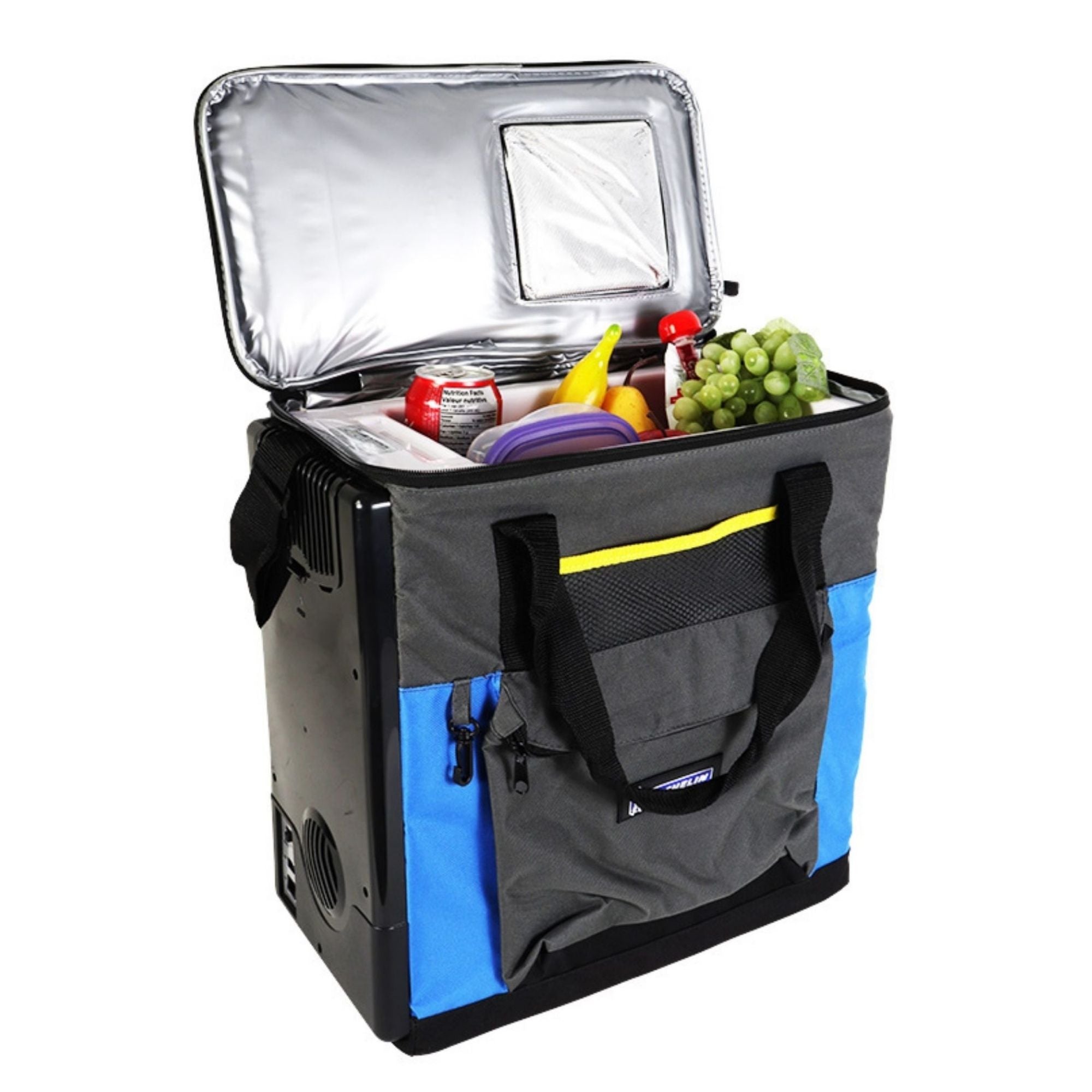
Understanding power is key to how a portable car fridge works day to day. Most models plug into a 12V socket. Many also include an AC adapter for home or campsite use.
On a compressor unit, expect 0.5 to 2.5 amp average over time, depending on size, set temp, and weather. On a thermoelectric, expect 4 to 6 amp constant draw. Use a good 12V socket on a fused circuit. If you camp with the engine off, add a second battery or a power station.
I often pair a 40-quart compressor fridge with a 500 Wh power station and a 100 W solar panel. In mild weather, it runs for two days without idling the car. This simple setup shows how a portable car fridge works best when your power plan matches the season.

Inside the fridge: components explained
If you open the case, you will see the parts that show how a portable car fridge works.
- Compressor: Pumps refrigerant and raises its pressure. The motor draws current only when cooling.
- Condenser coil and fan: Pushes heat to the air outside the box. Needs space to breathe.
- Capillary tube or expansion device: Drops the refrigerant pressure before the cold side.
- Evaporator plate: Gets cold and absorbs heat from the food compartment.
- Thermostat or controller: Watches temperature and cycles the system to save power.
- Insulation and lid seal: Thick foam walls and a tight gasket keep cold air in.
- Low-voltage cut-off: Protects your starter battery from deep drain.
- USB or app control on some models: Lets you monitor fridge temp and battery status.
In thermoelectric units, you will see a Peltier module clamped between two heat sinks with fans. That is the whole map of how a portable car fridge works with solid-state parts.

How cooling performance is controlled
The controller checks the set temperature and cycles the compressor. Duty cycle depends on ambient heat, how often you open the lid, and how full the fridge is. A fuller fridge holds temp better because food has thermal mass. This is the quiet truth of how a portable car fridge works in the real world.
Some premium units use variable-speed compressors. They slow down to sip power once close to set point. In hot weather, expect longer run times. For example, at 95°F ambient, holding 37°F might yield a 40 to 60 percent duty cycle. That is still far better than thermoelectric under the same heat.

Real-world use: packing, pre-chilling, and battery protection
A few simple habits change how a portable car fridge works for you.
- Pre-chill at home on AC power. Start with cold food to save battery on the road.
- Leave air space around the vents. I aim for at least two inches on all sides.
- Use baskets to reduce lid-open time. Keep drinks on top for fast grabs.
- Set a sane temp. 37 to 39°F is great for food safety. 27°F can hold soft freeze.
- Enable low-voltage cut-off. Choose medium or high to protect your starter battery.
- Shade the fridge in the car. Heat soak can double power draw.
These tips come from many trips where I learned the hard way. A day at the beach taught me that hot soda kills runtime. Simple planning is how a portable car fridge works best during summer.
Troubleshooting and care
Even good gear needs some love. Fast checks can reveal how a portable car fridge works or why it does not.
- Fridge not cooling well: Check airflow, set temp, and lid seal. Vacuum dust off the condenser intake.
- Runs all the time: Look for a warm cabin, weak insulation, or a big hot load of food.
- Shuts off early: Battery protection may be set to high. Use a thicker 12V cable to reduce voltage drop.
- Water inside: This is condensation. Wipe it out and add a small towel or desiccant pack.
- Noise or rattle: Level the unit and secure it. Most compressors handle up to 30° tilt during use.
Clean the fan inlets and gaskets every few weeks on long trips. Store the lid ajar to avoid smells. Care is a big part of how a portable car fridge works well for years.

Sizing and choosing the right portable car fridge
Match the fridge to your trip style. A good fit is the secret sauce in how a portable car fridge works day after day.
- Capacity: 25 to 35 quarts suits solo or couples. 40 to 55 quarts fits families.
- Form factor: Tall and narrow saves floor space. Dual-zone lets you run fridge and freezer.
- Power use: Look for real-world tested draw, not just peak amps.
- Insulation: Thicker walls and a tight lid seal cut duty cycle.
- Controls: Clear display, low-voltage settings, and app control help a lot on the road.
For daily commute lunches, a thermoelectric cooler can be enough. For camping and overlanding, choose a compressor unit. That choice defines how a portable car fridge works for your needs and budget.

Frequently Asked Questions of how a portable car fridge works
What is the difference between a car fridge and a cooler?
A cooler relies on ice, while a car fridge uses power to move heat. A fridge holds set temps and keeps food safer for longer.
Can a portable car fridge drain my starter battery?
Yes, if you run it long with the engine off. Use a power station, a second battery, or enable low-voltage cut-off.
How cold can a compressor car fridge get?
Most reach 0°F and can freeze in hot weather. They hold 34 to 40°F for fresh food with ease.
Are thermoelectric coolers worth it?
They are fine for short trips and snacks. They struggle in heat and cannot freeze, but they are cheap and simple.
Do I need to keep a compressor fridge level?
They handle normal bumps and slopes. Try to keep them upright and avoid long periods on their side.
What size inverter do I need for AC use?
If the unit includes a DC-to-AC adapter, a 150 to 200 W pure sine inverter is usually fine. Check the label for surge and continuous ratings.
How much ventilation does a car fridge need?
Leave a couple of inches around vents and avoid cramped cubbies. Hot air must escape or performance drops fast.
Conclusion
Now you know how a portable car fridge works, what powers it, and why airflow and insulation matter. You also saw simple habits that slash power draw and boost food safety. With the right choice and a few tweaks, your fridge will feel like a tiny, reliable kitchen on wheels.
Set a plan today. Pick the tech that fits your trips, pre-chill your food, and protect your battery. Want more tips and tested gear picks? Subscribe for updates or drop a question in the comments.