
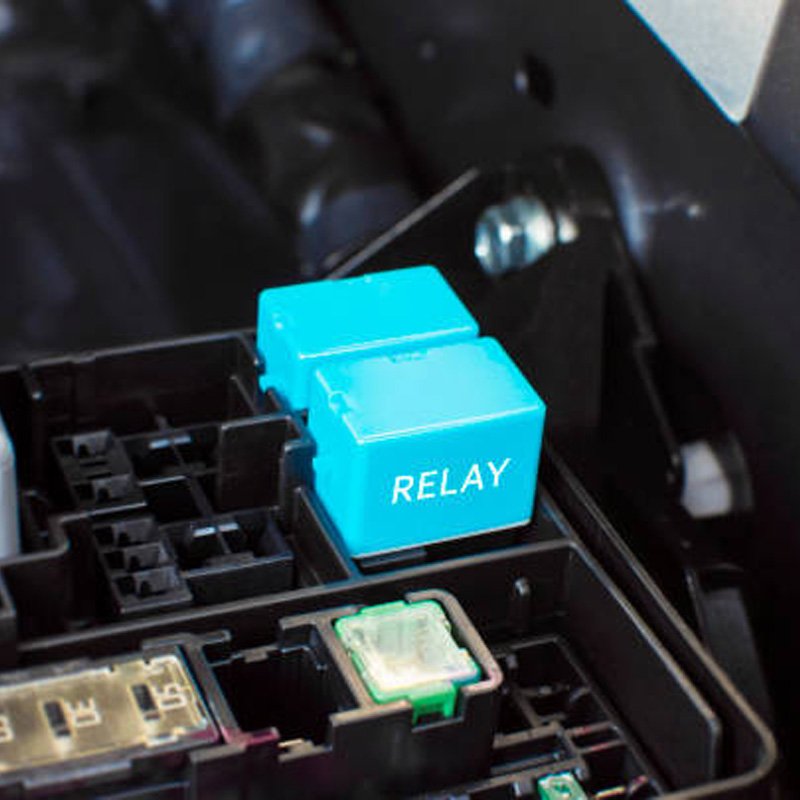
If you drive a modern vehicle in the United States, you depend on dozens of electrical parts working together every day. From starting the engine on a cold morning to running the air conditioner during summer traffic, many systems rely on small but important components called relays.
Understanding What Is an Automotive Relay and When Does It Fail helps car owners diagnose common electrical problems faster. In my experience working with automotive electrical systems, many confusing failures come from a simple relay that cannot send power correctly.
A relay may look like a small plastic box, but it plays a major role in protecting switches and wiring. This guide explains how automotive relays work, why they fail, warning signs to watch for, and how technicians test them.

What Is an Automotive Relay and What Does It Do?
An automotive relay is an electrically operated switch used inside a vehicle. It allows a low-current signal from a control device to turn a high-current circuit on or off.
Instead of sending heavy electrical current through a dashboard switch, the vehicle uses a relay to handle the load. This design reduces heat, protects wiring, and improves safety.
When learning What Is an Automotive Relay and When Does It Fail, it helps to think of a relay as a bridge between a small command and a larger electrical action.

- ✦ Controls high-power devices
Relays allow small switches or computer signals to control components that need more electrical power.
- ✦ Protects vehicle wiring
The relay keeps high current away from sensitive switches and smaller wires.
- ✦ Improves system reliability
A relay provides consistent electrical control for important vehicle functions.
Common Automotive Relay Applications
Cars use relays for many systems. Common examples include fuel pumps, headlights, cooling fans, air conditioning compressors, horns, starter motors, and power windows.
A failed relay can stop one specific system while the rest of the vehicle continues working normally.
- ✦ Fuel pump relay
Controls power delivery to the fuel pump that supplies fuel to the engine.
- ✦ Cooling fan relay
Turns radiator fans on when the engine temperature requires extra cooling.
How Does an Automotive Relay Work?
An automotive relay works through an electromagnetic coil and internal contacts. When electrical current reaches the coil, it creates a magnetic field that moves a small switch inside the relay.
This movement connects or disconnects the power circuit. The control side uses very little electricity, while the output side can handle much higher current.
Most automotive relays use numbered terminals. Common numbers include 30 for power input, 87 for output, 85 and 86 for the coil, and sometimes 87a for a normally closed connection.

- ✦ Coil activation
A small electrical signal energizes the relay coil and creates a magnetic field.
- ✦ Contact movement
The magnetic force moves internal contacts to complete or break the circuit.
- ✦ Power delivery
The connected component receives power and starts operating.
Relay Types Used in Vehicles
Vehicles use different relay designs depending on electrical needs. The most common type is the standard electromechanical relay, but some newer vehicles use solid-state relays.
Solid-state relays have no moving parts, which can improve durability in certain applications.
- ✦ Electromechanical relay
Uses a coil and mechanical contacts to control electrical flow.
- ✦ Solid-state relay
Uses electronic components instead of moving parts.
What Are the Signs of a Bad Automotive Relay?
A failing relay often creates electrical problems that seem random at first. The affected component may stop working completely or operate only sometimes.
Knowing the warning signs is important because relay problems can look similar to wiring issues or failed components. Proper diagnosis prevents unnecessary part replacement.

- ✦ Clicking sound without operation
A relay may click when activated but fail to send power to the connected component.
- ✦ Intermittent electrical problems
A weak relay may work sometimes and fail at other times.
- ✦ Complete component failure
The connected system may stop working because the relay cannot complete the circuit.
- ✦ Burning smell or melted plastic
Overheated relay contacts can create heat damage inside the relay housing.
Examples of Relay Failure Symptoms
A bad fuel pump relay may cause a vehicle not to start. A failed cooling fan relay may allow the engine temperature to rise because the fan does not receive power.
These examples show why understanding What Is an Automotive Relay and When Does It Fail is useful for everyday vehicle maintenance.
- ✦ Headlights not working
A failed headlight relay can prevent proper power delivery to lighting circuits.
What Causes an Automotive Relay to Fail?
Automotive relays can fail because of age, heat, electrical overload, moisture, or repeated switching. Like any electrical component, a relay has a limited service life.
High temperatures under the hood can slowly damage relay contacts and internal materials. Vehicles used in hot climates or heavy traffic may place extra stress on electrical parts.

- ✦ Worn internal contacts
Repeated electrical switching can create wear and reduce reliable connections.
- ✦ Excessive electrical load
Using a relay beyond its rated capacity can cause overheating.
- ✦ Moisture damage
Water exposure can create corrosion and electrical resistance.
- ✦ Voltage problems
Incorrect voltage levels can damage relay components.
Why Heat Is a Major Relay Problem
Heat is one of the biggest enemies of automotive electronics. A relay located near the engine or exhaust area may experience extreme temperatures.
Repeated heating and cooling cycles can weaken internal connections over time.
- ✦ Thermal stress
Constant temperature changes can damage internal relay materials.
How to Test an Automotive Relay
Testing an automotive relay requires checking whether it receives power and whether it sends power correctly. Many technicians start with a visual inspection before using tools.
A relay test can prevent replacing expensive components when the real issue is a simple electrical switch.

- ✦ Swap with a similar relay
Some vehicles have identical relays that can be temporarily exchanged for testing.
- ✦ Listen for clicking
A click may show that the coil activates, but it does not confirm the relay works correctly.
- ✦ Use a multimeter
A multimeter can check resistance and voltage across relay terminals.
When Professional Diagnosis Is Better
Some electrical problems involve wiring, control modules, or sensors instead of the relay itself. A professional technician can test the complete circuit.
Accurate testing saves time and avoids replacing good parts.
How Much Does an Automotive Relay Replacement Cost?
The cost of replacing an automotive relay depends on the vehicle model, relay location, and labor needed. Many standard relays are inexpensive compared with larger electrical components.
In many cases, replacing a relay is a simple repair. However, diagnosis is still important because the relay may fail due to another electrical problem.
- ✦ Relay part cost
Many replacement relays are affordable compared with other vehicle electrical repairs.
- ✦ Labor cost
Labor depends on access to the fuse box or relay location.
