
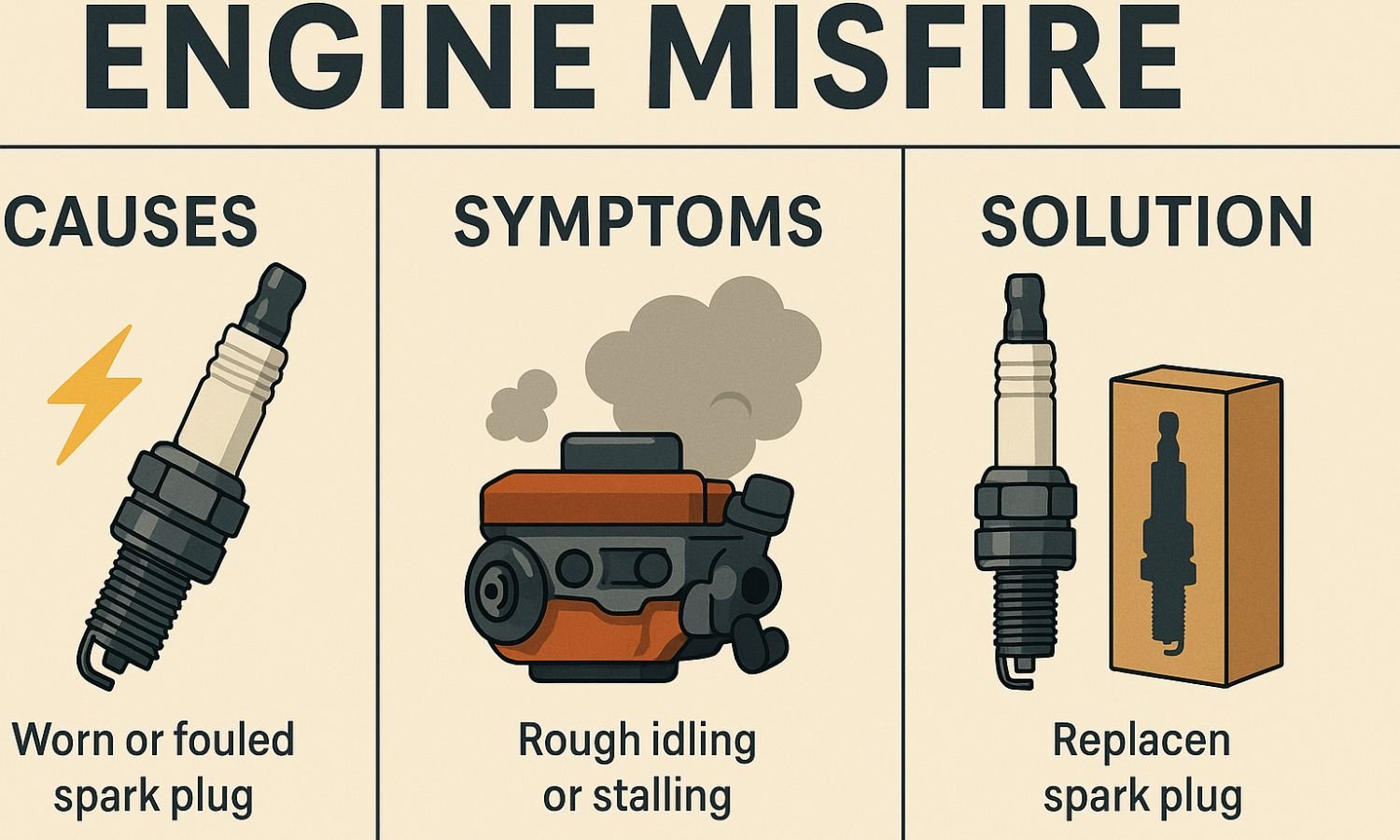
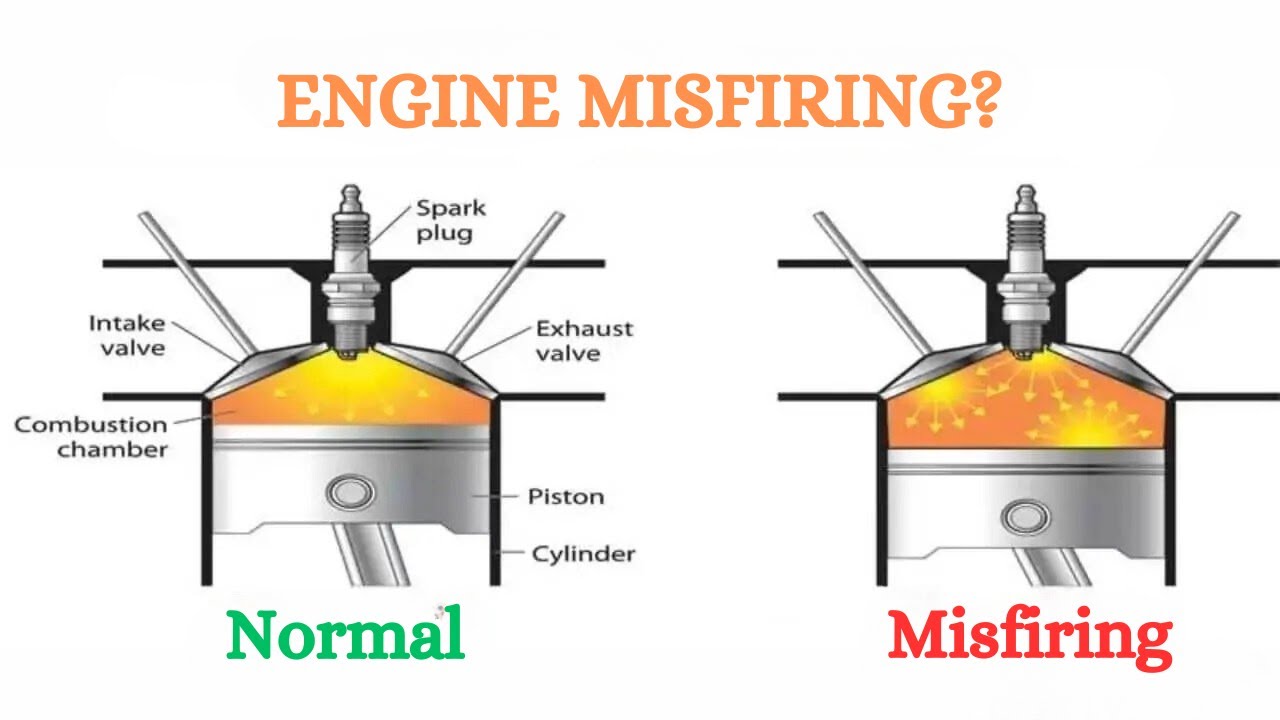
What Causes an Engine Misfire is a common question among drivers who feel shaking, notice poor acceleration, or see the check engine light turn on. A misfire means the engine cylinder does not complete the combustion process correctly. When this happens, the engine loses power and may run rough.
In my experience working with automotive troubleshooting topics, most misfire problems start with simple issues like worn spark plugs or failing ignition parts. However, some cases involve deeper problems such as low compression, damaged valves, or timing faults. Finding the exact cause is the key to a proper repair.
What Is an Engine Misfire and How Does It Happen?
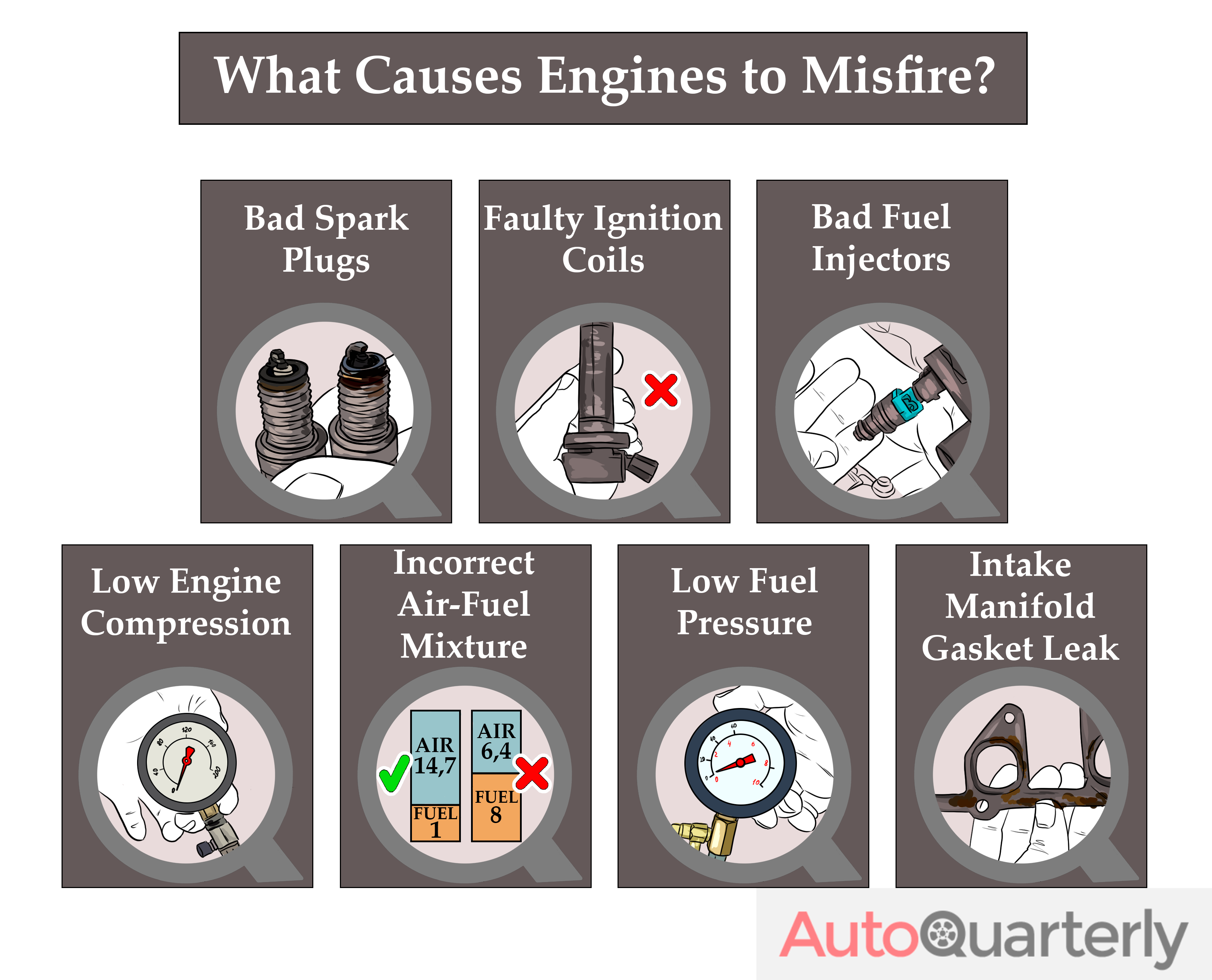
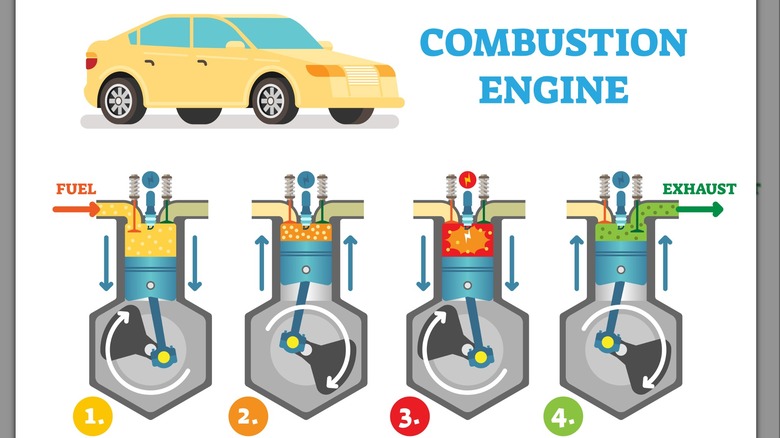
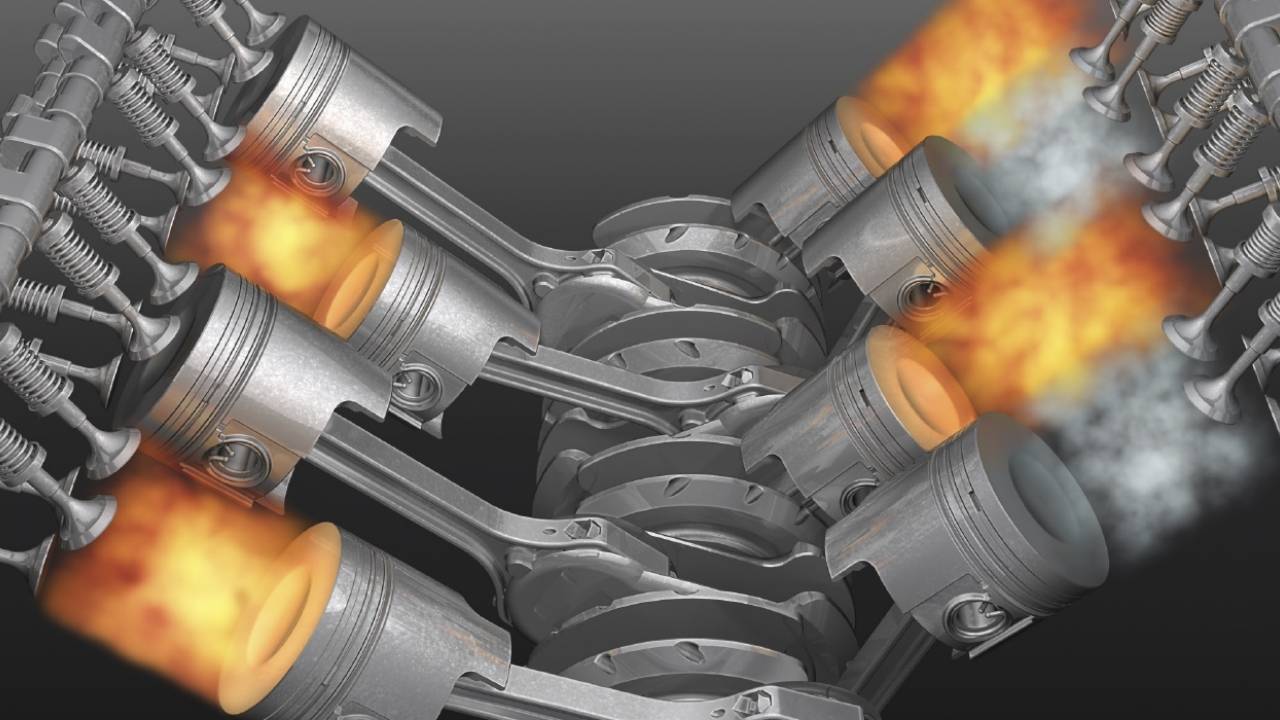
An engine misfire occurs when a cylinder fails to ignite the fuel and air mixture at the correct time. A healthy engine needs three main things for combustion: the right amount of fuel, enough air, and a strong spark.
When any of these parts fail, the cylinder may produce weak power or no power at all. Modern vehicles use sensors and engine computers to detect these problems and store diagnostic trouble codes.
- ✦ Failed combustion event
A cylinder does not burn fuel correctly, causing uneven engine operation.
- ✦ Power loss
The engine produces less force because one cylinder is not working properly.
- ✦ Computer detection
The engine control module monitors crankshaft speed changes to identify misfires.
Why Misfires Matter
A small misfire can become a major repair issue if ignored. Unburned fuel can enter the exhaust system and damage the catalytic converter, which is an expensive component.
Drivers in the United States often notice misfires during daily driving situations such as highway acceleration, cold starts, or climbing hills.
Worn or Faulty Spark Plugs Are a Common Cause of Engine Misfires
One of the most common answers to what causes an engine misfire is worn spark plugs. Spark plugs create the electrical spark needed to ignite the fuel mixture inside each cylinder.
Over time, spark plug electrodes wear down. A weak spark can cause incomplete combustion, rough idling, and reduced fuel economy.
- ✦ Old spark plugs
Worn plugs may fail to create a strong spark during combustion.
- ✦ Incorrect spark plug gap
A wrong gap can reduce ignition strength and create inconsistent firing.
- ✦ Carbon buildup
Deposits on spark plugs can interfere with proper ignition.
How Spark Plug Problems Feel While Driving
Drivers may feel hesitation when pressing the accelerator. The engine may shake at idle or struggle when carrying extra load.
Replacing worn spark plugs is often one of the simpler repairs when diagnosing a cylinder misfire.
Ignition System Failures Can Create Cylinder Misfires
The ignition system does more than use spark plugs. It also includes ignition coils, wires, and other parts that deliver electrical energy.
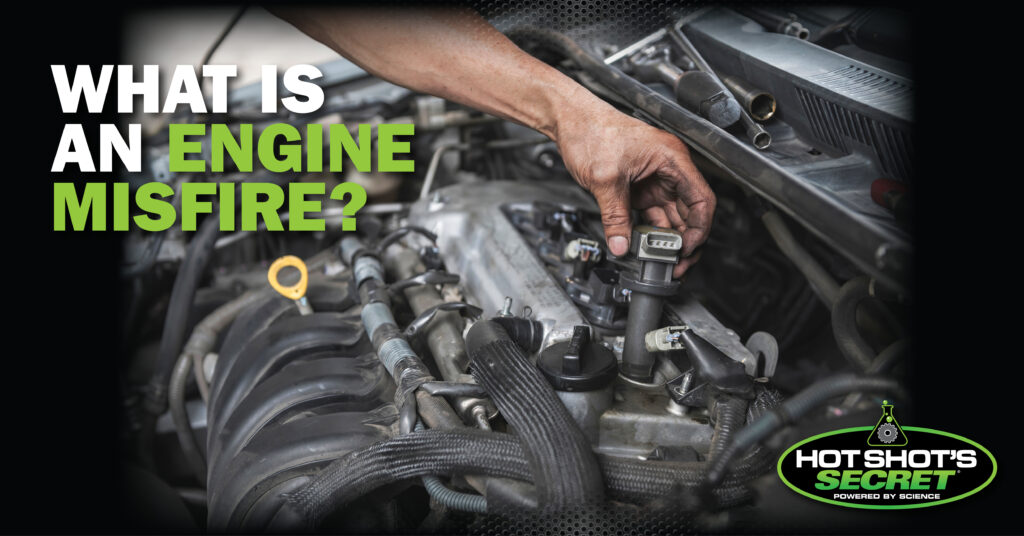
A failing ignition coil is another major reason behind what causes an engine misfire. Many modern vehicles use one coil per cylinder, so a single failed coil can affect only one cylinder.
- ✦ Bad ignition coil
A weak coil cannot provide enough voltage for proper spark creation.
- ✦ Damaged ignition wires
Broken or worn wires can interrupt electrical flow.
- ✦ Electrical connection problems
Loose connectors can create random misfires.
Why Modern Engines Detect Ignition Problems Quickly
Vehicle computers compare engine speed changes between combustion events. When a cylinder loses power, the computer can identify abnormal patterns.
This technology helps technicians find problems faster with an OBD-II scanner.
Fuel System Problems That Cause Engine Misfires
Fuel delivery problems are another important answer to what causes an engine misfire. The engine needs the correct amount of fuel at the right pressure.
A weak fuel pump, clogged injector, or dirty fuel filter can create a lean fuel condition. This means there is too much air and not enough fuel for proper combustion.
- ✦ Clogged fuel injector
A dirty injector may not deliver enough fuel to the cylinder.
- ✦ Low fuel pressure
A failing pump can reduce fuel supply during operation.
- ✦ Poor fuel quality
Contaminated fuel can affect combustion performance.
Signs of Fuel Related Misfires
Fuel-related misfires often appear during acceleration because the engine needs more fuel under load.
A technician may test fuel pressure and injector performance to confirm the cause.
Air Intake Problems and Vacuum Leaks Can Cause Misfires
Engines need a precise balance of air and fuel. A vacuum leak allows extra air to enter the engine and can disturb this balance.
Common sources include cracked hoses, damaged intake parts, or faulty gaskets. These issues can create rough idle and unstable engine performance.
- ✦ Vacuum leaks
Uncontrolled air entering the engine can create a lean mixture.
- ✦ Dirty airflow sensors
Incorrect air measurements can affect fuel control.
- ✦ Blocked intake parts
Restricted airflow can reduce engine efficiency.
Mechanical Engine Problems That Lead to Misfires
Not every misfire comes from fuel or ignition parts. Internal engine problems can also explain what causes an engine misfire.
Low compression, worn piston rings, damaged valves, or incorrect timing can prevent a cylinder from creating enough pressure for combustion.

- ✦ Low compression
A cylinder cannot produce enough pressure for efficient combustion.
- ✦ Valve damage
Poor valve sealing can reduce engine performance.
- ✦ Timing problems
Incorrect timing can cause combustion to happen at the wrong moment.
When Professional Diagnosis Is Needed
Mechanical problems usually require advanced testing. Compression tests and leak-down tests help confirm internal engine conditions.
Ignoring these problems can lead to more severe engine damage.
