
If you drive a car in the United States, your vehicle likely has a catalytic converter working every time the engine runs. This small but important exhaust part helps control pollution and keeps your vehicle within federal emissions standards.
Many drivers ask, “What Is a Catalytic Converter and What Does It Do” because they notice a check engine light, strange smells, or reduced engine power. In my experience studying vehicle systems, the catalytic converter is one of the most misunderstood parts of modern cars. Understanding its purpose can help you spot problems early and avoid expensive repairs.

What Is a Catalytic Converter and What Does It Do
A catalytic converter is an emissions control device found in a vehicle’s exhaust system. It uses special metals called catalysts to change harmful gases into less harmful substances before the exhaust exits the tailpipe.
The main purpose of a catalytic converter is to reduce air pollution. It does not create engine power, but it plays a major role in making gasoline-powered vehicles cleaner and safer for the environment.
- ✦ Reduces harmful emissions
The catalytic converter transforms dangerous exhaust gases into carbon dioxide, nitrogen, and water vapor.
- ✦ Supports emission laws
Modern vehicles use catalytic converters to meet strict emissions rules in the United States.
- ✦ Protects air quality
By cleaning exhaust gases, it helps reduce pollution from daily driving.
Where Is a Catalytic Converter Located
A catalytic converter is usually located underneath the vehicle between the engine and the muffler. It sits close to the engine because it needs heat from exhaust gases to work properly.
Most modern vehicles have one catalytic converter, but some cars and trucks use multiple converters to improve emissions control.
How Does a Catalytic Converter Work
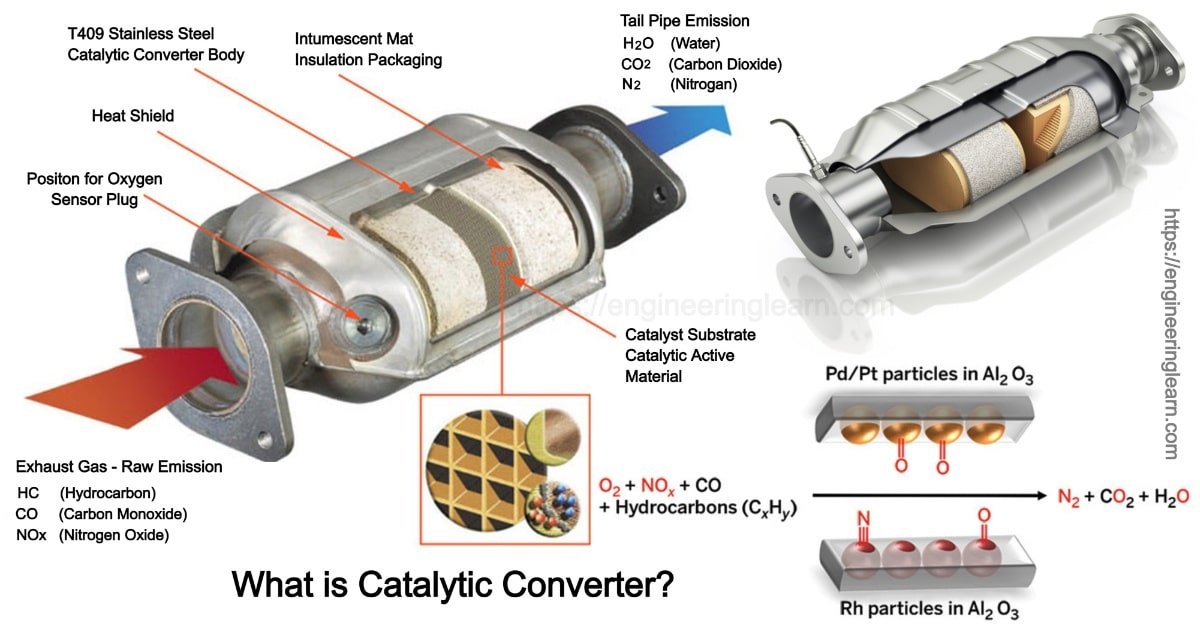
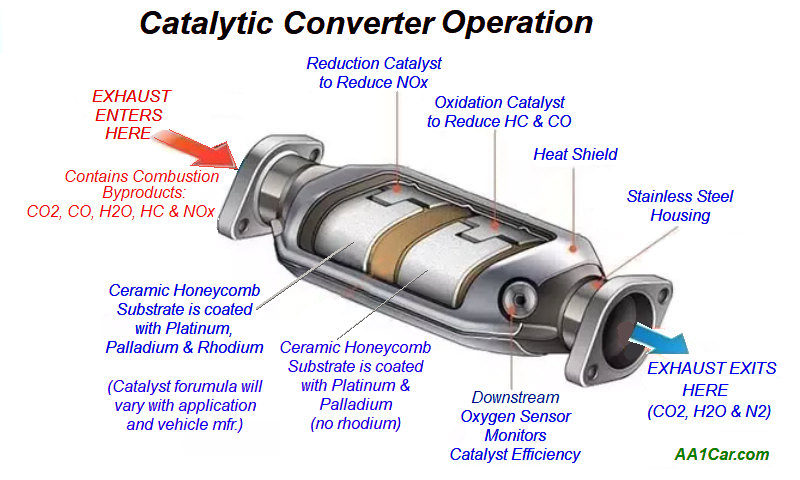
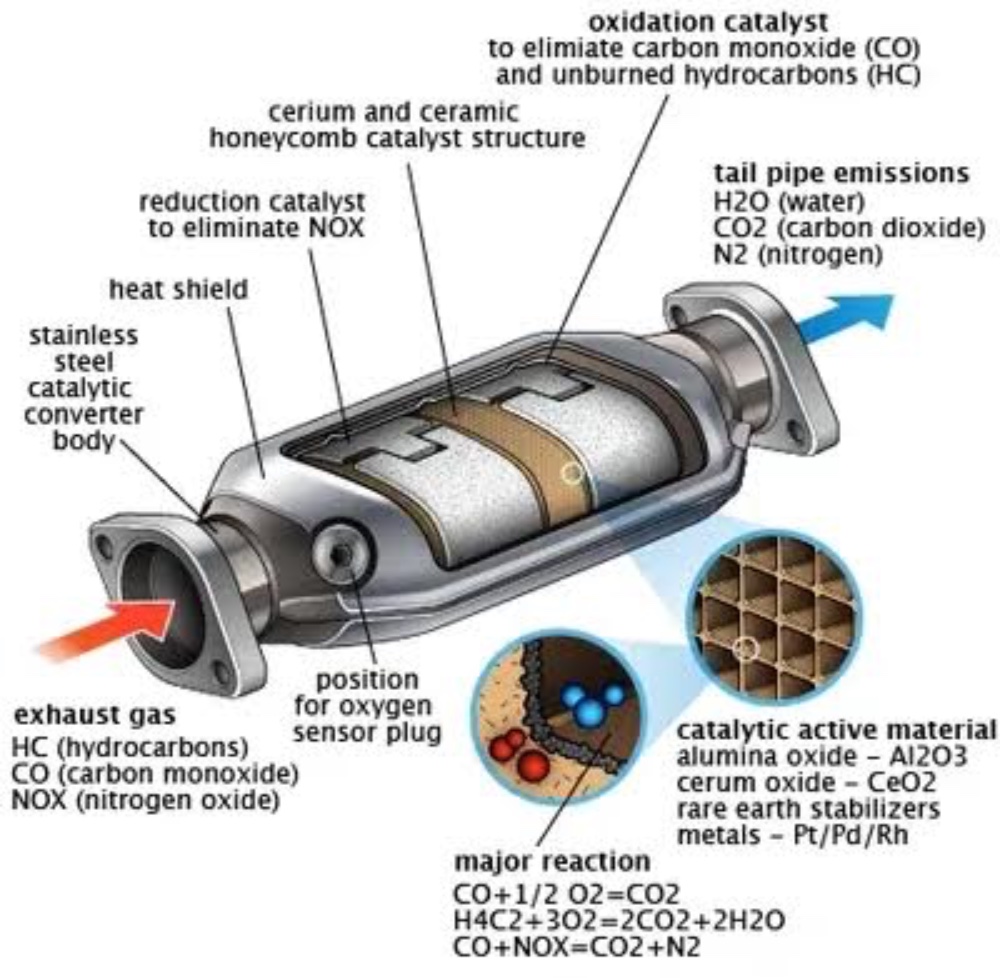
A catalytic converter works through chemical reactions. Exhaust gases enter the converter, pass through a honeycomb structure coated with precious metals, and leave with fewer harmful pollutants.
The converter does not filter gases like a traditional filter. Instead, it changes the chemical makeup of harmful gases through a process called catalytic conversion.

- ✦ Oxidation reaction
This process converts carbon monoxide and hydrocarbons into carbon dioxide and water vapor.
- ✦ Reduction reaction
This reaction removes nitrogen oxides by breaking them into nitrogen and oxygen.
- ✦ Precious metal catalysts
Platinum, palladium, and rhodium help create these chemical changes.
What Metals Are Inside a Catalytic Converter
Catalytic converters contain small amounts of valuable metals. Platinum, palladium, and rhodium allow chemical reactions to happen faster without being consumed.
Because these metals have high value, catalytic converters can become targets for theft in some areas.
Why Is a Catalytic Converter Important for Your Vehicle
A catalytic converter is important because it protects both public health and your vehicle’s ability to meet emissions requirements. Without it, cars would release much higher levels of harmful gases.
In the United States, emissions testing programs in many states check whether catalytic converters are working correctly. A failed converter can cause a vehicle to fail an inspection.

- ✦ Lower pollution
It reduces toxic gases produced during fuel combustion.
- ✦ Better compliance
It helps vehicles follow environmental regulations.
- ✦ Better vehicle operation
A healthy exhaust system supports proper engine performance.
Common Catalytic Converter Problems and Failure Causes
Catalytic converters are designed to last many years, but they can fail because of engine problems, contamination, or physical damage. A converter often fails because another issue damages it first.
A common mistake is replacing a catalytic converter without fixing the original problem. For example, an engine misfire can send unburned fuel into the converter and cause overheating.
- ✦ Engine misfires
Unburned fuel can overheat and damage the converter’s internal structure.
- ✦ Bad oxygen sensors
Incorrect fuel readings can create conditions that harm the converter.
- ✦ Oil or coolant contamination
Leaks can coat the catalyst and prevent proper operation.
- ✦ Physical damage
Road debris or accidents can crack the converter housing.
Symptoms of a Bad Catalytic Converter
A failing catalytic converter often creates noticeable warning signs. Drivers may experience slower acceleration, poor fuel economy, or a check engine light.
A sulfur or rotten egg smell can also appear because exhaust gases are not being processed correctly.
- ✦ Reduced engine power
A clogged converter can restrict exhaust flow and make the engine struggle.
- ✦ Check engine light
The vehicle computer may detect poor converter efficiency.
How to Diagnose Catalytic Converter Issues
Diagnosing a catalytic converter problem requires more than reading one trouble code. A mechanic usually checks oxygen sensor readings, exhaust temperature, fuel system performance, and engine condition.
An OBD2 scanner can help identify efficiency problems by reading codes such as P0420. However, this code does not always mean the converter itself needs replacement.
- ✦ Scan trouble codes
An OBD2 scanner can reveal possible emissions system problems.
- ✦ Check exhaust temperature
Temperature differences can show whether the converter is working.
- ✦ Inspect physical condition
A mechanic can check for cracks, damage, or blockage.
Catalytic Converter Replacement and Maintenance Tips
Replacing a catalytic converter can be expensive because the part contains valuable metals and requires proper installation. Costs vary depending on the vehicle model, location, and whether original equipment parts are used.
The best way to protect your catalytic converter is to maintain the entire engine system. Regular oil changes, fixing misfires quickly, and using quality fuel can help extend its life.
- ✦ Fix engine problems early
Small issues like misfires can create major converter damage if ignored.
- ✦ Maintain sensors
Healthy oxygen sensors help maintain the correct fuel mixture.
- ✦ Avoid unnecessary modifications
Removing or damaging emissions equipment can create legal and performance problems.
