
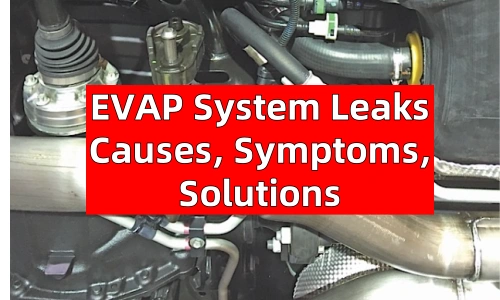
What Is an EVAP Leak in a Car is a common question among drivers who see a check engine light but notice no major driving problems. The EVAP system is designed to capture fuel vapors from the gas tank and send them back into the engine to burn. When this sealed system loses pressure, the vehicle detects a leak and stores a diagnostic trouble code.
From working with vehicle diagnostics, I have seen many EVAP issues caused by simple problems like a loose gas cap. I have also seen harder cases where cracked vapor lines or failed valves required deeper testing. Understanding how the system works helps car owners avoid unnecessary repairs.
 display: block; margin: 0 auto; border-radius: 12px; box-shadow: 0 8px 25px rgba(0, 0, 0, 0.12);”>
What Is an EVAP Leak in a Car and How Does the System Work?
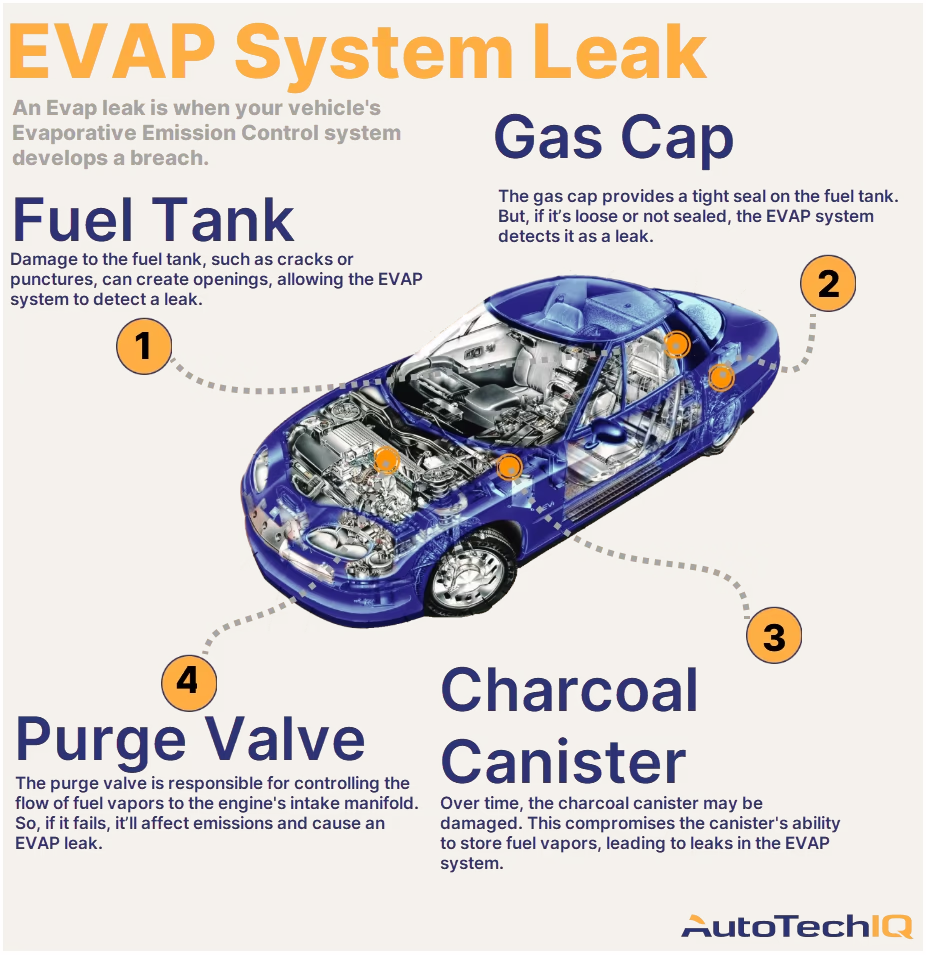
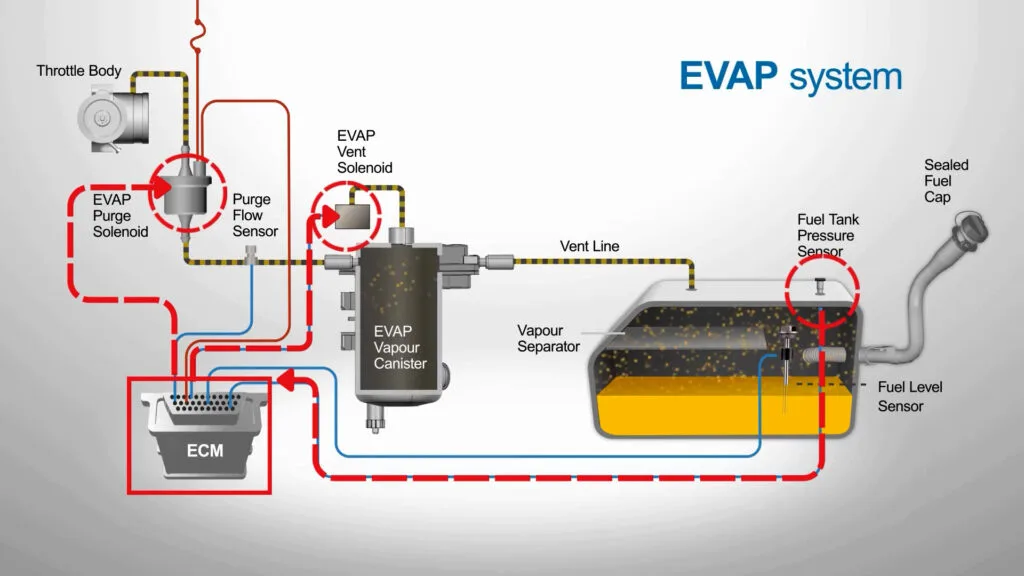
The EVAP system, short for evaporative emission control system, prevents gasoline vapors from escaping into the air. Modern cars have a sealed fuel system that stores these vapors in a charcoal canister until the engine can use them.
When an EVAP leak happens, the vehicle computer checks the system and finds that it cannot hold the expected pressure or vacuum. The computer then turns on the check engine light and records an EVAP-related trouble code.
- ✦ Fuel tank
The fuel tank stores gasoline and produces vapors that need to be controlled.
- ✦ Charcoal canister
The charcoal canister traps fuel vapors before they enter the atmosphere.
- ✦ Purge valve
The purge valve controls when stored vapors move into the engine for combustion.
Why Cars Use an EVAP System
Gasoline creates vapors even when a car is parked. The EVAP system captures these vapors to reduce air pollution and improve fuel control. It also helps vehicles meet emissions rules in the United States.
Common Causes of an EVAP Leak
There are many reasons why an EVAP leak can appear. Some problems are small and inexpensive, while others require professional diagnosis.
The most common EVAP problems involve parts that create or maintain the sealed vapor path. Age, heat, vibration, and damage can slowly weaken these parts.

- ✦ Loose or damaged gas cap
A gas cap that does not seal correctly is one of the easiest EVAP problems to fix.
- ✦ Cracked EVAP hoses
Rubber vapor lines can crack over time and allow fuel vapors to escape.
- ✦ Faulty purge valve
A stuck purge valve can prevent the EVAP system from working correctly.
- ✦ Damaged charcoal canister
A broken canister cannot properly store fuel vapors.
Signs and Symptoms of an EVAP Leak
Many EVAP leaks do not affect how a car drives. This makes them harder to notice without an OBD2 scanner or diagnostic test. The first warning sign is often the check engine light.
Some drivers notice fuel smells, trouble filling the gas tank, or poor fuel vapor control. Symptoms depend on the size and location of the leak.
- ✦ Check engine light
The vehicle computer turns on the warning light when it detects an EVAP system problem.
- ✦ Fuel smell
Escaping gasoline vapors may create a noticeable fuel odor near the vehicle.
- ✦ Difficulty refueling
A faulty EVAP vent system can cause fuel pumps to shut off repeatedly while filling.
Can an EVAP Leak Affect Engine Performance?
A small EVAP leak usually does not cause major power loss or rough driving. However, a failed purge valve or related issue can sometimes affect idle quality and fuel mixture control.
Common EVAP Leak Trouble Codes
When the engine computer finds an EVAP issue, it stores a diagnostic trouble code. An OBD2 scanner can read these codes and help identify the problem area.
The code alone does not always identify the exact failed part. A proper diagnosis may require a smoke test or additional inspection.

- ✦ P0455
This code usually indicates a large EVAP system leak.
- ✦ P0456
This code usually indicates a very small EVAP leak.
- ✦ P0442
This code often points to a small or medium EVAP leak.
How Mechanics Diagnose an EVAP Leak
Finding an EVAP leak can be challenging because the system is designed to stay sealed. Mechanics use several tests to locate where vapor escapes.
A smoke test is one of the most effective methods. The technician fills the EVAP system with safe smoke and looks for the point where smoke exits.

- ✦ OBD2 scan
A scanner reads stored codes and provides clues about the EVAP problem.
- ✦ Visual inspection
Technicians check hoses, valves, caps, and connectors for visible damage.
- ✦ Smoke test
Smoke testing helps locate tiny leaks that are difficult to see.
How Much Does It Cost to Fix an EVAP Leak?
The repair cost for an EVAP leak depends on the failed component. A simple gas cap replacement may cost very little, while replacing an EVAP canister or valve can cost more.
The most important step is accurate diagnosis. Replacing parts without finding the actual leak can waste money and time.

- ✦ Gas cap replacement
Usually one of the cheapest EVAP repairs.
- ✦ Valve replacement
A failed purge or vent valve may require part replacement and testing.
- ✦ Smoke diagnosis
Professional leak testing can add cost but prevents unnecessary repairs.
