
If you are researching what is Level 1 EV charging, you are likely trying to understand the simplest way to charge an electric car. In the United States, Level 1 charging is the most basic home charging method because it uses the same type of outlet found in most garages and homes.
From my experience studying EV charging systems, many new EV owners underestimate how useful Level 1 charging can be. While it is slower than Level 2 charging, it can meet the daily needs of many drivers who travel shorter distances and plug in overnight.
What Is Level 1 EV Charging and How Does It Work?
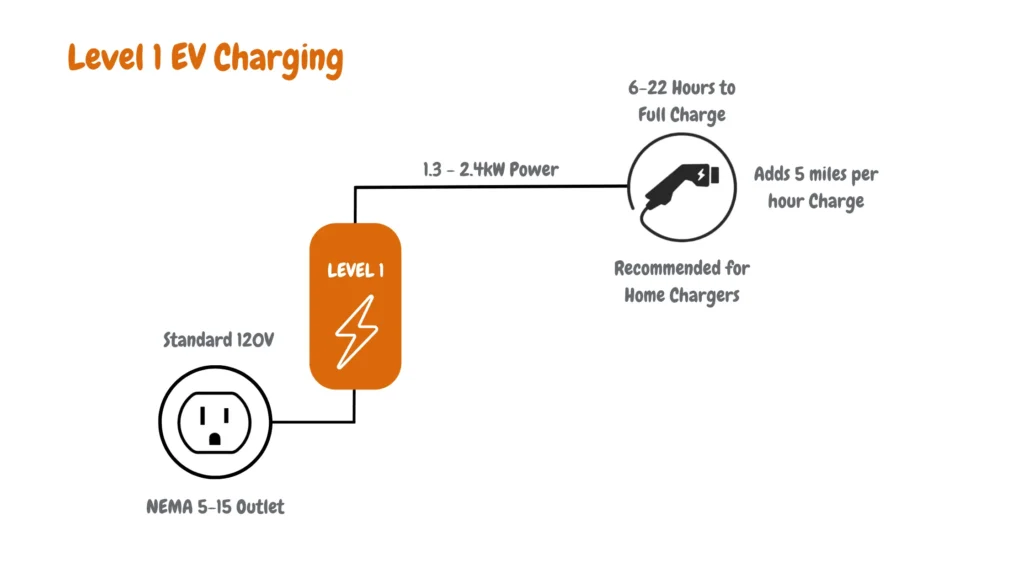
What is Level 1 EV charging? It is a charging method that sends electricity from a standard 120-volt household outlet to an electric vehicle battery. It does not require a dedicated charging station or major electrical upgrades.
A Level 1 charger usually includes a charging cable with a household plug on one end and a vehicle connector on the other. When connected, electricity flows from the home outlet through the charger and into the EV battery.
This charging method is common among new EV owners because it is affordable and simple. Many electric vehicles include a Level 1 charging cable as standard equipment.

- ✦ Voltage Used
Level 1 EV charging uses a 120-volt AC power supply, which is the standard household voltage in the United States.
- ✦ Installation Needs
Most drivers can use Level 1 charging without installing special electrical equipment.
- ✦ Charging Method
The charger slowly transfers electricity from the home electrical system into the EV battery.
Why Level 1 Charging Is Popular in the United States
Many American homes already have garages, driveways, and outdoor outlets. This makes Level 1 EV charging accessible for homeowners and renters.
Drivers who return home every night can plug in their vehicle and allow it to charge while they sleep.
How Fast Does Level 1 EV Charging Work?
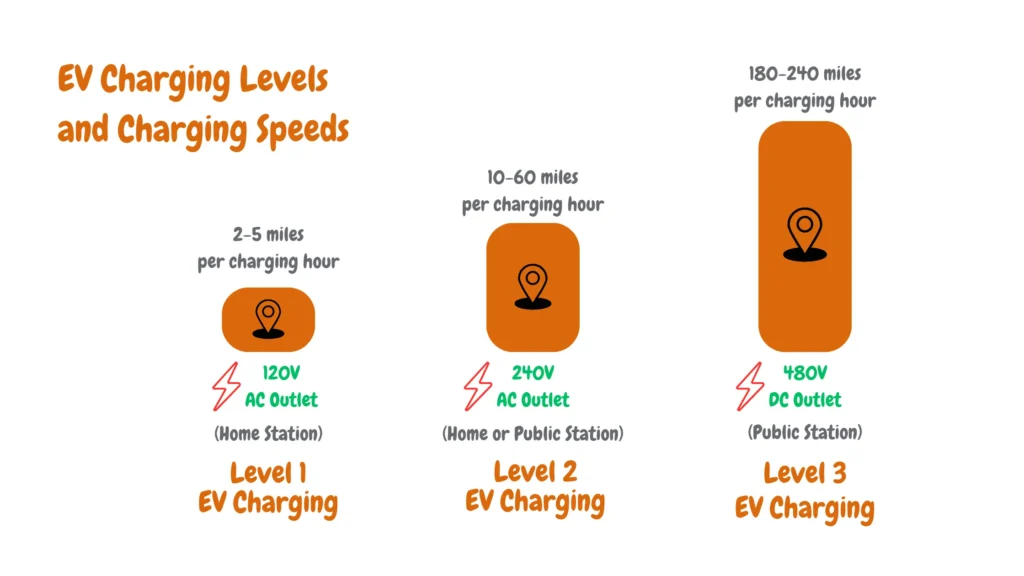
Level 1 EV charging is slow compared with other charging methods. Most Level 1 chargers add around 3 to 5 miles of driving range per hour of charging.
The exact charging speed depends on the EV model, battery size, charging equipment, and energy efficiency. A smaller electric vehicle may gain range faster than a large electric SUV.
For many drivers, slow charging is not a problem because the vehicle remains connected for many hours overnight.
- ✦ Overnight Charging
A typical overnight charging session can add enough range for many daily commutes.
- ✦ Daily Driving Needs
Drivers traveling short distances may find Level 1 charging completely sufficient.
- ✦ Long Trips
Drivers with frequent long-distance travel may need faster charging options.
Factors That Affect Level 1 Charging Speed
Battery capacity plays a major role in charging time. Larger batteries need more energy and take longer to fill.
Temperature can also affect charging performance. Very cold or hot conditions may change how quickly an EV accepts power.
- ✦ Battery Size
A larger battery pack requires more charging time than a smaller one.
- ✦ Vehicle Efficiency
More efficient vehicles gain more driving range from the same amount of electricity.
Level 1 EV Charging vs Level 2 Charging
Understanding the difference between Level 1 and Level 2 charging helps EV owners choose the right home setup. Both systems charge electric vehicles, but they use different amounts of power.
Level 2 charging uses a 240-volt electrical supply and can charge much faster. However, it often requires professional installation and additional costs.
Level 1 charging remains attractive because it is simple, inexpensive, and available almost everywhere.

- ✦ Level 1 Charging
Uses a standard outlet and provides slower charging without major installation work.
- ✦ Level 2 Charging
Uses higher electrical power and provides faster charging for drivers with higher mileage needs.
Choosing Between Level 1 and Level 2 Charging
Your driving habits should guide your decision. A person with a short commute may not need a faster charger.
A driver with multiple daily trips may benefit from the higher speed of Level 2 charging.
Benefits of Level 1 EV Charging
Level 1 EV charging offers several advantages, especially for people who want a simple home charging solution. It removes many barriers that new EV owners face.
Because it uses existing household electricity, the setup process is usually straightforward. This makes it a practical starting point for many EV drivers.

- ✦ Low Cost
Most users avoid installation expenses because they can use an existing outlet.
- ✦ Simple Setup
Drivers can usually plug in their EV without hiring an electrician.
- ✦ Convenient Overnight Charging
The vehicle can charge while parked at home for several hours.
Limitations of Level 1 EV Charging
Although Level 1 EV charging is useful, it is not the best option for every driver. The biggest limitation is charging speed.
People who drive long distances every day may find that Level 1 charging does not replace enough battery energy overnight.
Before choosing Level 1 charging, drivers should consider their daily mileage, vehicle battery size, and charging schedule.

- ✦ Slow Charging Rate
Adding range can take many hours compared with faster charging methods.
- ✦ Not Ideal for High Mileage Drivers
Frequent long trips may require a faster home charging solution.
- ✦ Limited Recovery After Heavy Use
A nearly empty battery may take a long time to recharge fully.
