Worn steering parts, loose connections, and damaged steering components cause steering wheel play.
Many drivers notice steering wheel play when the wheel feels loose or moves slightly before the vehicle changes direction. This issue is common in older vehicles, trucks, and cars that drive on rough roads. Understanding what causes steering wheel play helps you find problems early and maintain safe handling.
From years of working with vehicle systems, one thing becomes clear: a small amount of movement can be normal, but excessive free movement often points to wear in the steering system. Components such as tie rods, steering racks, and ball joints must work together with very little movement.
For U.S. drivers who use their vehicles daily for commuting, highway travel, or family trips, a loose steering feel should not be ignored. A quick inspection can often prevent more serious steering failures.

What Is Steering Wheel Play?
Steering wheel play refers to the amount of movement the steering wheel makes before the front wheels begin turning. A small amount of movement is normal because steering systems need some operating clearance.
However, excessive steering wheel play means there is too much movement between the steering wheel and the tires. This can make the vehicle feel unstable, especially during highway driving or quick turns.
When drivers ask what causes steering wheel play, the answer usually involves worn parts or loose connections somewhere in the steering system.
- ✦ Normal steering movement
A small amount of free movement can exist without affecting vehicle control.
- ✦ Excessive steering movement
Too much play may indicate worn parts that need inspection or replacement.
How Much Steering Wheel Play Is Too Much?
Most modern vehicles should have very little free movement before the tires react. If the steering wheel moves several inches without changing direction, the system may have a problem.
A mechanic can measure steering play and check each component for looseness.
- ✦ Vehicle response
Delayed steering response often suggests excessive play.
Worn Tie Rod Ends Can Cause Steering Wheel Play
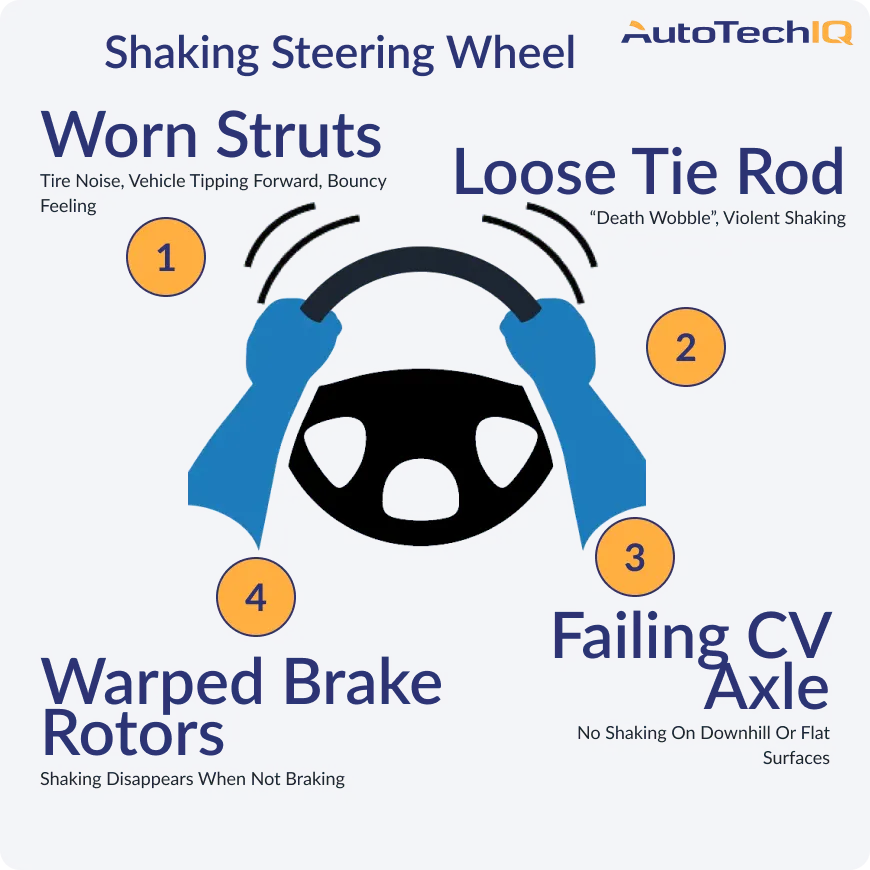
Tie rod ends connect the steering rack or steering gear to the steering knuckles. They transfer steering movement from the wheel to the tires.
When tie rod ends wear out, they develop extra movement. This allows the steering wheel to move without immediately changing the direction of the tires.
Worn tie rods are one of the most common answers to the question: what causes steering wheel play?
- ✦ Loose steering feel
Worn tie rods can make the steering feel vague or delayed.
- ✦ Uneven tire wear
Damaged tie rods may affect wheel alignment and tire wear.
Signs of Bad Tie Rod Ends
Drivers may notice clicking sounds, uneven tire wear, or a vehicle that feels difficult to keep straight.
A technician can check tie rods by lifting the vehicle and testing for movement.
- ✦ Common symptom
Clunking noises during turns may indicate worn steering joints.
Loose Steering Rack or Steering Gear Problems
The steering rack or steering gear converts steering wheel movement into tire movement. If internal parts wear out, the steering response can become loose.
Rack-and-pinion systems are common in modern cars, while larger trucks may use steering gear boxes. Both systems can develop play over time.
A worn steering rack is another major cause when drivers search for what causes steering wheel play.

- ✦ Internal wear
Worn gears or bushings can create unwanted movement.
- ✦ Mounting problems
Loose steering rack mounts can also create a loose steering feeling.
Power Steering System Effects
Hydraulic and electric power steering systems help drivers turn easily, but they do not remove the need for strong mechanical connections.
A power steering issue may feel similar to steering play, so proper diagnosis is important.
- ✦ Diagnosis matters
A professional inspection separates steering assist problems from mechanical wear.
Worn Ball Joints and Suspension Components
Ball joints connect suspension parts and allow controlled movement as the vehicle turns and travels over bumps.
When ball joints become worn, they can create extra movement that feels like steering wheel play. They also affect alignment and handling.
Suspension wear is often overlooked because the problem may start as a small steering change.

- ✦ Front suspension wear
Loose suspension joints can reduce steering precision.
- ✦ Safety concern
Severely worn joints may affect vehicle control.
Other Suspension Parts That May Cause Play
Control arm bushings, idler arms, and pitman arms can also create looseness in the steering system.
A complete inspection is needed because several worn parts may create similar symptoms.
- ✦ Multiple causes
Steering problems often involve more than one component.
Incorrect Wheel Alignment and Tire Issues
Wheel alignment problems usually do not directly create steering wheel play, but they can make the steering feel loose or unstable.
Uneven tires, incorrect tire pressure, and damaged wheels can also change how the steering feels on the road.
Drivers should check tires and alignment when diagnosing what causes steering wheel play.
- ✦ Tire condition
Worn or damaged tires can reduce steering stability.
- ✦ Alignment check
Proper alignment improves steering response and tire life.
How to Diagnose Steering Wheel Play
Finding the exact cause of steering wheel play requires checking each part that connects the steering wheel to the tires.
A mechanic usually begins with a visual inspection and then tests components for unwanted movement.
Proper diagnosis prevents replacing parts that are still in good condition.

- ✦ Steering inspection
Technicians check steering racks, tie rods, joints, and mounting points.
- ✦ Road test
A road test helps identify handling symptoms and noises.
Simple Checks Drivers Can Perform
Drivers can notice warning signs such as delayed steering response, unusual noises, or a vehicle that drifts.
However, steering repairs should be handled carefully because these parts directly affect safety.
- ✦ Warning signs
Loose feeling, vibration, and pulling may indicate steering problems.
How to Fix Steering Wheel Play
The repair for steering wheel play depends on the damaged component. Some vehicles may only need a simple adjustment, while others may require replacement parts.
Common repairs include replacing tie rod ends, steering racks, ball joints, bushings, or worn steering gear components.
After repairs, a wheel alignment is often recommended to restore proper handling.
- ✦ Replace worn parts
Damaged steering components should be replaced instead of adjusted beyond limits.
- ✦ Perform alignment
Alignment helps ensure accurate steering after repairs.