
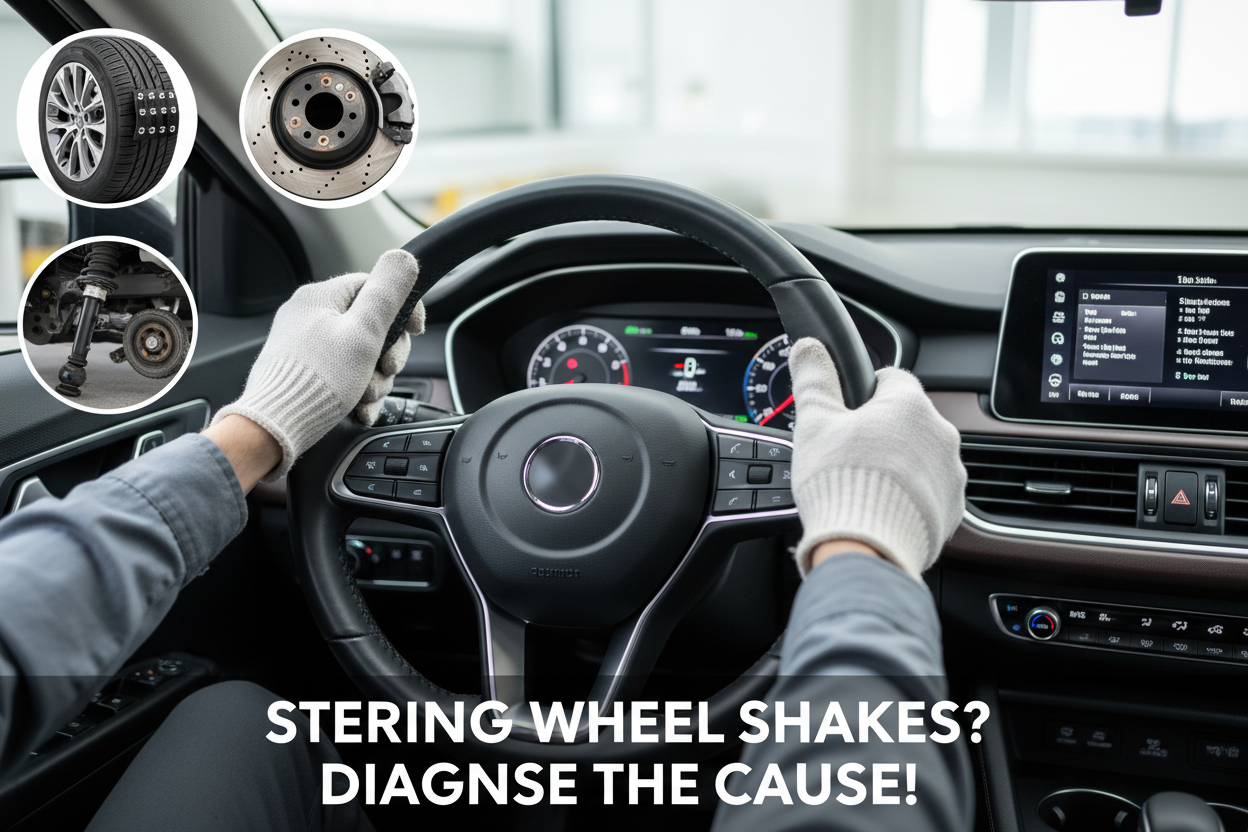
steering wheel shake at highway speeds is usually caused by tire imbalance, damaged wheels, worn parts, or brake issues.
If you drive on U.S. highways and notice your steering wheel shaking between 55 and 75 mph, you are not alone. This problem is common in many cars, trucks, and SUVs. The vibration may feel small at first, but it often points to an issue that needs attention.
From years of reviewing vehicle problems and repair patterns, I have found that the key to fixing this issue is finding when the shake happens. A steering wheel that shakes only at highway speeds usually has a different cause than one that shakes during braking or at low speeds.
This guide explains what causes steering wheel shake at highway speeds, how to identify the source, and what steps can help restore a smooth driving experience.

Why Does Steering Wheel Shake Happen at Highway Speeds?
A steering wheel shake at highway speeds happens when a rotating part creates an uneven force. Since tires and wheels spin hundreds of times each minute, even a small problem can create noticeable vibration.
At lower speeds, small issues may stay hidden. But as speed increases, the force becomes stronger. This is why many drivers notice shaking only after entering a highway or reaching higher speeds.
The steering system connects your hands directly to the front wheels. Because of this, front-end problems often send vibration straight through the steering wheel.
- ✦ Speed-related vibration
Many problems appear between 50 and 80 mph because rotating parts create stronger forces at higher speeds.
- ✦ Front wheel connection
Issues with front tires, wheels, and steering parts are often felt directly through the steering wheel.
How Speed Helps Identify the Problem
The speed range where vibration begins gives useful clues. A shake that starts around 60 mph often points toward wheel balance or tire problems.
A vibration that changes when you brake may suggest brake rotor problems. A shake that continues at different speeds may involve suspension or steering parts.
Unbalanced Tires and Wheels Are Common Causes of Highway Vibration
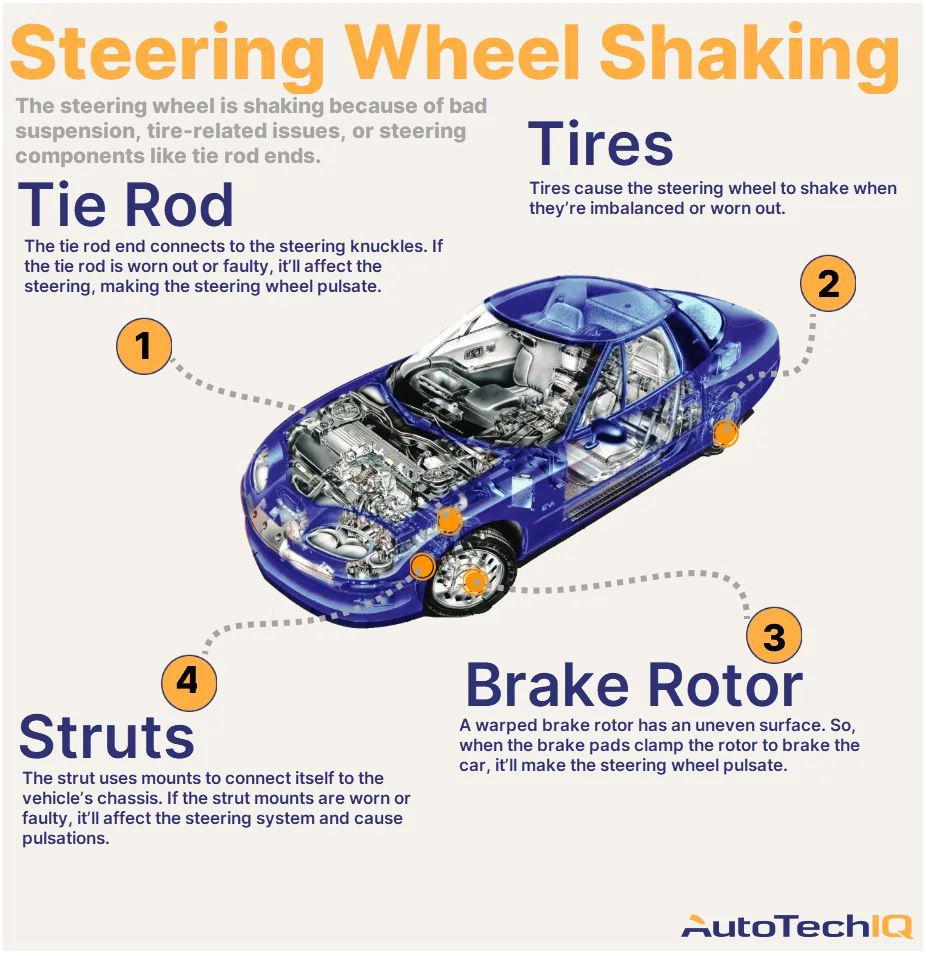
One of the most common answers to what causes steering wheel shake at highway speeds is an unbalanced tire and wheel assembly. Every tire has a weight balance point, and even a small imbalance can create vibration.
During tire balancing, a technician uses a machine to find uneven weight distribution. Small weights are added to the wheel to create smoother rotation.
Drivers often notice this issue after installing new tires, hitting a pothole, or losing a wheel weight.
- ✦ Missing wheel weights
A lost balancing weight can quickly create vibration that appears only at highway speeds.
- ✦ Uneven tire wear
Worn or uneven tread patterns can cause the tire to rotate unevenly.
Signs of Tire Balance Problems
Common signs include a shaking steering wheel, vibration between certain speeds, and no major change when braking.
A tire shop can usually confirm the issue with a wheel balance check.
Tire Damage and Uneven Tire Wear Can Create Steering Shake
Tires are the only parts of your vehicle that touch the road. When they become damaged, the entire vehicle can feel unstable at higher speeds.
A tire with a separated belt, flat spot, or uneven tread can cause a repeating vibration. This problem may become more noticeable after long highway drives.
Regular tire inspections help find problems before they become dangerous.
- ✦ Tire belt separation
Internal tire damage can change the tire shape and create vibration.
- ✦ Uneven tread wear
Poor alignment or worn suspension parts can cause irregular tire wear patterns.
Wheel Alignment Problems Can Cause Highway Steering Shake
Wheel alignment controls the direction and angle of your tires. When alignment is incorrect, the tires may not move smoothly across the road.
Misalignment often causes uneven tire wear, pulling to one side, and steering wheel vibration. It can happen after hitting potholes, curbs, or road debris.
A professional alignment check can measure camber, caster, and toe settings to find problems.
- ✦ Vehicle pulling
A car that drifts left or right may have alignment problems.
- ✦ Uneven tire wear
Abnormal wear patterns often appear when wheel angles are incorrect.
Brake Problems That Cause Steering Wheel Vibration
If your steering wheel shakes mainly when you press the brake pedal, the braking system may be the source. Brake-related vibration is different from normal highway speed vibration.
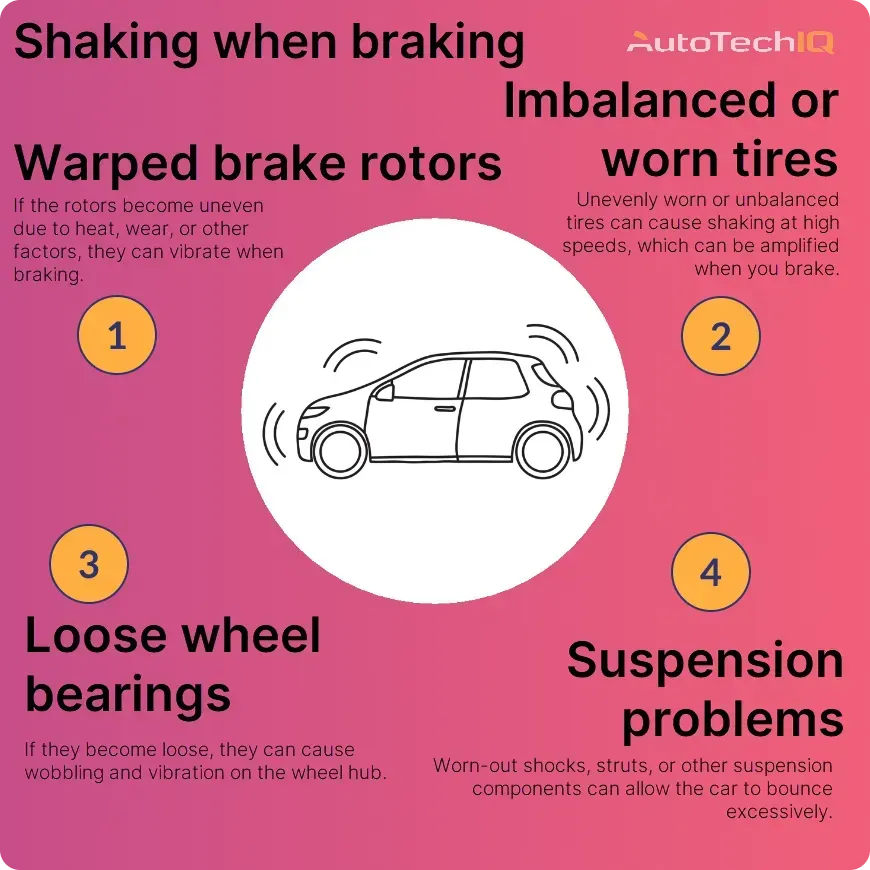
Warped brake rotors, uneven brake pad contact, or brake system issues can transfer vibration through the steering system.
Many drivers describe this as a shaking feeling when slowing down from highway speeds.
- ✦ Warped brake rotors
Uneven rotor surfaces can create vibration when brake pads apply pressure.
- ✦ Brake pad problems
Uneven pad wear can affect braking smoothness.
Worn Suspension and Steering Components Can Cause Vibration
Suspension and steering parts keep your wheels stable while driving. When these parts wear out, they can allow extra movement that becomes noticeable at highway speeds.
Common worn parts include tie rods, ball joints, control arm bushings, and wheel bearings.
Ignoring worn steering parts can affect handling and may increase tire wear.

- ✦ Loose tie rods
Damaged tie rods can create steering play and vibration.
- ✦ Bad wheel bearings
A worn wheel bearing can create humming sounds and steering vibration.
Why Suspension Inspection Matters
A visual check may not always reveal worn suspension parts. Professional inspection often requires checking movement and looseness in each component.
Fixing worn parts can improve steering control and driving comfort.
