**The Lisle 28100 is my top pick, while OTC and ARES offer excellent options for demanding automotive repair work.**
Imagine working on an engine in your home garage or a busy American auto repair shop. You have already tightened a cylinder head bolt to the correct torque, but the service manual calls for another 90 degrees of rotation. A regular torque wrench cannot measure that extra turn with enough clarity. This is where an automotive torque angle tool helps. It measures bolt rotation in degrees and helps you follow the correct tightening steps. I compare ten options here to help you choose a dependable tool for engine work, repairs, and routine garage jobs.
🏆 Top 3 Products

Lisle 28100 Torque Angle Meter, 1/2 Inch Drive, Universal Fit, Skin-Pack
Its straightforward 1/2-inch drive design makes it a practical choice for common automotive angle-tightening jobs.

OTC 4554 Torque Angle Gauge with Male and Female 1/2 Drives
Its male and female drive design makes it a strong choice for engine work that calls for torque-to-yield fasteners.

Alltooetools SF0136 1/2 Inch Torque Angle Gauge
Its 360-degree marked scale and male and female drive connections offer useful features in a simple mechanical gauge.
Lisle 28100 1/2-Inch Torque Angle Meter
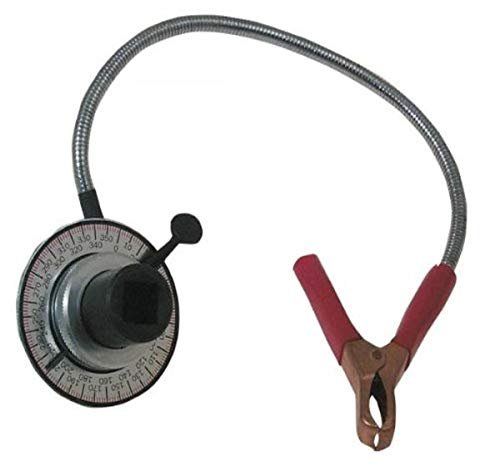
The Lisle 28100 is my first choice for a simple automotive torque angle gauge. It uses a 1/2-inch drive, which fits many common automotive socket and wrench setups. Its universal-fit design makes it useful for several types of repair jobs. I like this style because it keeps the main task simple. You can focus on the required bolt rotation instead of dealing with extra electronic settings.
This tool suits engine work where the repair manual calls for a specific turning angle after an initial torque setting. That step matters on many modern engines. Some cylinder head bolts and other fasteners require a measured rotation to reach the correct clamp load. The Lisle 28100 gives mechanics a direct way to follow those instructions. When comparing the Best Automotive Torque Angle Tools, I value this simple approach for home garages and professional workshops.
✅ Pros
- ✔ The 1/2-inch drive fits a common socket size used in automotive repair.
- ✔ The universal-fit design makes it useful for different repair applications.
- ✔ A mechanical angle gauge avoids dependence on batteries or electronic settings.
- ✔ It helps mechanics follow degree-based tightening instructions from vehicle service manuals.
- ✔ Its straightforward layout suits both experienced technicians and home garage users.
- ✔ It works alongside a separate torque wrench for staged bolt-tightening procedures.
⚠️ Cons
- ✖ It does not replace a calibrated torque wrench for the initial torque stage.
- ✖ A mechanical scale needs careful viewing during use.
- ✖ Its basic design lacks the extra functions found on digital torque tools.
My Recommendation
I recommend the Lisle 28100 to anyone who wants a practical and simple angle gauge for automotive work. It makes sense for mechanics who already own a suitable 1/2-inch torque wrench and socket set. Its universal-fit design also makes it a sensible addition to a general engine repair toolbox. I would choose it for regular bolt-angle work when I do not need digital readings or extra electronic features. Among the Best Automotive Torque Angle Tools, it offers a useful balance of simplicity and everyday workshop function.
| Best For | Why |
|---|---|
| Home Mechanics | Its simple design makes basic angle-tightening jobs easier to manage. |
| Engine Repairs | It helps follow degree-based tightening instructions for engine fasteners. |
| General Garages | The 1/2-inch drive suits many common automotive socket setups. |
VASTOOLS 1/2-Inch Torque Angle Gauge

The VASTOOLS torque angle meter offers a useful feature for mechanics who work around crowded engine bays. It has a 1/2-inch drive and a 14-inch flexible clip arm. The flexible arm helps position the gauge and keep its reference point in place during a tightening job. Its CR-V steel construction is another detail worth considering when choosing a workshop tool. This combination makes it a practical option for mechanics who want more positioning freedom.
I would consider this gauge for cylinder head work, engine assembly, and other jobs that require a measured bolt rotation. The flexible arm can help when a fixed reference point is difficult to arrange. It also makes the tool useful in different working positions. However, correct setup still matters. You must secure the arm properly and keep the scale visible while turning the fastener. The VASTOOLS model deserves attention among the Best Automotive Torque Angle Tools for its flexible positioning design.
✅ Pros
- ✔ The 14-inch flexible clip arm offers more freedom when positioning the gauge.
- ✔ The 1/2-inch drive works with many common automotive socket setups.
- ✔ CR-V steel construction provides a practical material choice for workshop use.
- ✔ The flexible arm helps establish a reference point during angle measurement.
- ✔ Its mechanical design avoids battery replacement and electronic setup.
- ✔ It can support different engine and automotive fastener applications.
⚠️ Cons
- ✖ The flexible arm needs proper positioning before each measurement.
- ✖ The long arm may require extra space in very tight work areas.
- ✖ It does not provide a digital angle display.
My Recommendation
I recommend the VASTOOLS gauge for mechanics who want a flexible reference arm with a standard 1/2-inch drive. It can be useful when the nearby engine parts make it hard to hold a basic gauge in position. The CR-V steel construction also makes it worth considering for a regular tool collection. Before buying, check the product listing for its exact scale details and included parts. I would place it high on a shortlist of Best Automotive Torque Angle Tools for users who value positioning flexibility.
| Best For | Why |
|---|---|
| Crowded Engine Bays | The flexible clip arm gives more options for gauge placement. |
| Regular Mechanics | Its 1/2-inch drive suits common automotive repair equipment. |
| Engine Assembly | It helps maintain a reference point during angle tightening. |
OTC 4554 Dual-Drive Torque Angle Gauge
The OTC 4554 is a strong option for mechanics who work on modern engines. Its male and female 1/2-inch drive connections give it a useful dual-drive design. This setup can help the user connect the gauge to different compatible tools and sockets. The product is also listed as suitable for late-model engines that use torque-to-yield fasteners. That makes it especially relevant for engine jobs where the service procedure calls for an exact bolt rotation.
Torque-to-yield fasteners need careful handling because their tightening process differs from that of ordinary bolts. A repair manual may specify an initial torque value followed by one or more angle stages. The OTC 4554 helps measure the rotation required for those stages. I like its direct focus on this type of automotive work. It is a sensible choice for technicians who handle engine repairs and want a dedicated mechanical gauge. It earns a place among the Best Automotive Torque Angle Tools for its useful drive configuration.
✅ Pros
- ✔ Male and female 1/2-inch drives offer useful connection flexibility.
- ✔ Its design suits many common torque-to-yield fastener procedures.
- ✔ It targets late-model engine service applications.
- ✔ A mechanical gauge does not need batteries or charging.
- ✔ It helps measure bolt rotation after the initial torque stage.
- ✔ Its focused design suits mechanics who perform engine assembly work.
⚠️ Cons
- ✖ It does not provide electronic angle readings or digital memory.
- ✖ Users must read and track the mechanical scale carefully.
- ✖ It still requires a suitable torque wrench for the initial tightening stage.
My Recommendation
I would recommend the OTC 4554 to mechanics who regularly service engines with torque-to-yield fasteners. Its dual-drive design gives it a useful advantage over basic single-connection gauges. It also has a clear purpose for late-model engine repair work. If your jobs often involve cylinder head bolts or other angle-tightened fasteners, this model deserves serious consideration. I see it as one of the strongest Best Automotive Torque Angle Tools for focused engine service.
| Best For | Why |
|---|---|
| Professional Mechanics | Its dual-drive design supports different compatible tool connections. |
| Torque-To-Yield Repairs | The tool targets fasteners that require angle-based tightening. |
| Late-Model Engines | Its stated application includes modern engine service procedures. |
BSBMIEQM 360-Degree Torque Angle Gauge
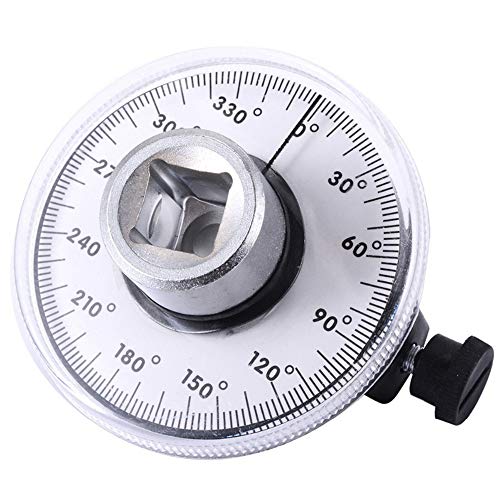
The BSBMIEQM torque angle gauge is a 1/2-inch drive tool with a 360-degree adjustable design. It focuses on measuring the angle of rotation during automotive fastener work. A full circular scale gives the user a way to track the turning movement through a complete rotation. This type of gauge can be useful for engine repairs where a manual gives a degree target. Its simple mechanical approach also makes it easy to understand without learning a digital interface.
I would consider this model for a home garage or a small repair shop that needs an angle measurement tool. It can help with staged tightening jobs when used with a suitable torque wrench. The important point is to set the gauge correctly and keep the reference position steady. You should also check the scale markings and supplied instructions before starting a critical engine job. Among the Best Automotive Torque Angle Tools, this model is worth considering if you want a basic 360-degree measurement setup.
✅ Pros
- ✔ The 360-degree design supports measurement across a full rotation.
- ✔ The 1/2-inch drive fits a common automotive tool size.
- ✔ Its mechanical operation avoids battery and charging concerns.
- ✔ The angle scale helps users follow degree-based service instructions.
- ✔ It can support different automotive bolt-tightening applications.
- ✔ Its straightforward design is suitable for home garage tool collections.
⚠️ Cons
- ✖ The mechanical scale requires careful reading during use.
- ✖ It does not offer digital angle memory or electronic alerts.
- ✖ Buyers should verify the exact scale markings and included accessories.
My Recommendation
I recommend the BSBMIEQM gauge to users who want a basic 360-degree angle measurement tool. It can make sense for occasional engine work and general automotive repair tasks. Its standard 1/2-inch drive is also convenient for mechanics with existing sockets and torque wrenches. I would check the listing details before using it for a critical repair. It is a reasonable option when comparing affordable Best Automotive Torque Angle Tools for a home workshop.
| Best For | Why |
|---|---|
| DIY Mechanics | Its simple mechanical design suits occasional garage repairs. |
| Angle Tightening | The circular scale helps track the required bolt rotation. |
| Basic Tool Collections | Its 1/2-inch drive fits many existing automotive sockets. |
ARES 43008 Digital Torque And Angle Wrench

The ARES 43008 stands apart from the basic angle gauges in this list. It is a 1/2-inch drive flex-head digital torque wrench that provides torque and angle readings. This combination makes it useful for mechanics who want more than a separate mechanical angle meter. The digital format can help users read measurements without relying only on a small printed scale. Its flex-head design also offers another way to approach fasteners in different working positions.
I would consider this tool for mechanics who perform regular engine work and want torque and angle functions in one device. It can reduce the need to switch between separate tools during a job. Still, a digital wrench needs proper setup and calibration checks. Buyers should review its stated torque range, angle functions, accuracy, battery requirements, and calibration instructions before purchase. For anyone comparing the Best Automotive Torque Angle Tools, the ARES 43008 deserves attention as a more feature-rich option.
✅ Pros
- ✔ It combines torque and angle readings in one digital wrench.
- ✔ The 1/2-inch drive suits many common automotive socket applications.
- ✔ The flex-head design can help reach fasteners from different positions.
- ✔ Digital readings can make measurement values easier to view.
- ✔ It offers more functions than a basic mechanical angle gauge.
- ✔ It can support mechanics who perform several types of torque-controlled repairs.
⚠️ Cons
- ✖ A digital wrench needs battery power and proper electronic setup.
- ✖ Its advanced functions may be unnecessary for occasional home repairs.
- ✖ Users should check calibration requirements and the exact torque range before buying.
My Recommendation
The ARES 43008 is my recommendation for buyers who want torque and angle measurement in one tool. It offers a different level of convenience from the mechanical gauges in this comparison. I would consider it for a busy home workshop or a professional garage that handles regular engine assembly and repair work. It is especially appealing if you prefer digital readings and a flex-head design. Among the Best Automotive Torque Angle Tools, this is my preferred option for users who want combined functions rather than a simple angle-only gauge.
| Best For | Why |
|---|---|
| Professional Workshops | It combines torque and angle measurement in one wrench. |
| Digital Tool Users | Its digital format provides electronic torque and angle readings. |
| Engine Assembly | Combined functions suit jobs with several tightening stages. |
Craedli Magnetic Torque Angle Meter

The Craedli torque angle meter brings together a magnetic design, a flexible arm, and CR-V steel construction. It uses a universal 1/2-inch drive and targets automotive angle measurement jobs. The magnetic feature can help hold the gauge in position when the working surface supports a suitable magnetic connection. Its flexible arm also gives the user more freedom when setting the reference point. These features make it an interesting choice for mechanics who want a little more positioning support.
I would look at this tool for engine repairs where the user needs to track a specific bolt rotation. A flexible arm can help when the nearby parts make a fixed setup difficult. The magnetic feature may also make setup easier on suitable metal surfaces. However, the user must check that the magnet holds firmly and does not move during tightening. This is important because even a small shift can affect the angle reading. The Craedli model earns a place among the Best Automotive Torque Angle Tools for its combination of positioning features.
✅ Pros
- ✔ The magnetic design can help secure the gauge on suitable metal surfaces.
- ✔ The flexible arm offers more freedom when setting the reference point.
- ✔ CR-V steel construction provides a practical material choice.
- ✔ The universal 1/2-inch drive suits many automotive sockets.
- ✔ Its mechanical design avoids battery and charging needs.
- ✔ It can help with angle-based engine and automotive fastener procedures.
⚠️ Cons
- ✖ The magnetic connection may not work on every surface or material.
- ✖ The flexible arm needs careful adjustment before each measurement.
- ✖ Users should confirm that the gauge stays fixed during bolt rotation.
My Recommendation
I recommend the Craedli model for users who value a magnetic attachment and flexible positioning arm. These features can make the setup more convenient during some engine repair jobs. It is worth considering for mechanics who work with compatible metal surfaces and common 1/2-inch drive tools. I would not rely on the magnet without checking its hold before applying force. For buyers comparing the Best Automotive Torque Angle Tools, this model offers a useful combination of practical design features.
| Best For | Why |
|---|---|
| Engine Mechanics | Its flexible arm helps position the gauge around engine parts. |
| Magnetic Setup Users | The magnetic feature can help hold the reference position. |
| DIY Garages | Its universal drive and mechanical design suit general repair work. |
Alltooetools SF0136 Torque Angle Gauge
The Alltooetools SF0136 is a practical mechanical angle gauge for automotive repair. It features a 360-degree marked scale and male and female 1/2-inch drive connections. This combination gives it a straightforward setup for measuring fastener rotation. The product listing also identifies manifold bolts and torque-to-yield fasteners as suitable applications. I like its direct focus because many engine repair jobs need a simple and clear way to measure turning angles.
This tool can help users follow service instructions that call for an initial torque setting and a final angle stage. Its dual-drive arrangement gives it useful connection flexibility. The full-circle scale also makes it suitable for procedures that need a large amount of rotation. I would check the gauge markings and make sure the reference stays steady before starting. It does not offer the advanced features of a digital wrench, but that may not matter to every buyer. For practical Best Automotive Torque Angle Tools, the SF0136 is a strong no-frills option.
✅ Pros
- ✔ The 360-degree marked scale supports full-rotation angle measurement.
- ✔ Male and female 1/2-inch drives offer useful connection options.
- ✔ Its stated applications include manifold bolts and TTY fasteners.
- ✔ Mechanical operation removes the need for batteries.
- ✔ The simple layout helps users focus on the required turning angle.
- ✔ It can work with a suitable torque wrench during staged tightening.
⚠️ Cons
- ✖ It does not provide digital readings or electronic alerts.
- ✖ The user must watch the scale during the tightening process.
- ✖ It requires a separate torque wrench for initial torque settings.
My Recommendation
I recommend the Alltooetools SF0136 for mechanics who want a straightforward 360-degree gauge with male and female drive connections. It is a good candidate for engine service and common angle-tightening procedures. I especially like its stated focus on manifold bolts and torque-to-yield fasteners. It makes sense for buyers who do not need a digital display or advanced settings. When comparing the Best Automotive Torque Angle Tools, I consider it a strong value-focused choice for basic mechanical angle measurement.
| Best For | Why |
|---|---|
| Budget-Minded Mechanics | Its mechanical design focuses on the main angle measurement task. |
| TTY Fastener Work | The listed applications include torque-to-yield fasteners. |
| Manifold Repairs | The product listing identifies manifold bolts as a suitable use. |
JOYFUL&HOPEFUL 1/2-Inch Torque Angle Gauge

The JOYFUL&HOPEFUL torque angle gauge is another mechanical option for automotive fastener work. It uses a 1/2-inch drive and features a 360-degree angle measurement design. The flexible clip arm helps the user set a reference point while turning a bolt. This can be useful when working around engine components or other parts that limit hand movement. Its design focuses on the main job of tracking bolt rotation rather than adding complex electronic features.
I would consider this model for a home garage or a mechanic who needs an angle gauge for occasional engine service. The flexible clip arm gives it an advantage over a basic gauge that lacks an adjustable reference arm. Still, the user must secure the arm correctly and check that it does not move during the job. The scale also needs to remain easy to see throughout the turning process. It is a useful candidate among the Best Automotive Torque Angle Tools for buyers who want a simple gauge with flexible positioning.
✅ Pros
- ✔ The 1/2-inch drive suits many common automotive socket setups.
- ✔ The 360-degree design supports a full range of angle measurement.
- ✔ The flexible clip arm helps maintain a reference point.
- ✔ Its mechanical design does not need batteries.
- ✔ The simple operation suits home mechanics and general repair users.
- ✔ It can support bolt tightening jobs that specify an angle.
⚠️ Cons
- ✖ The clip arm needs proper setup to prevent unwanted movement.
- ✖ It lacks the electronic features of a digital angle wrench.
- ✖ Users must read the mechanical scale while tightening the fastener.
My Recommendation
I recommend the JOYFUL&HOPEFUL gauge to users who want a flexible clip arm and a simple mechanical measurement system. It can be useful for common engine jobs and occasional automotive repairs. Its 1/2-inch drive also works with a familiar size of automotive equipment. I would check the arm connection and scale visibility before using it for important fasteners. It is worth comparing with other Best Automotive Torque Angle Tools if flexible positioning matters more to you than digital features.
| Best For | Why |
|---|---|
| Home Garage Users | Its simple mechanical operation suits occasional repairs. |
| Flexible Positioning | The clip arm helps establish a stable reference point. |
| Engine Fasteners | The 360-degree design supports angle-based tightening steps. |
BUBUCAM US0020 360-Degree Angle Gauge

The BUBUCAM US0020 is a 1/2-inch drive torque angle gauge with a 360-degree adjustable design. It targets users who need to measure the rotation of automotive fasteners. A circular angle scale gives the user a direct way to track turning movement. Its mechanical format keeps the basic operation simple. This can be useful for people who want an angle gauge without the added cost and setup of a digital torque wrench.
I would consider this model for general engine repair and home workshop tasks. It can work alongside a separate torque wrench when a repair procedure calls for a torque stage followed by an angle stage. The user should take time to position the gauge correctly and check the scale before applying force. This helps reduce reading errors during the job. I would also inspect the connection and included components when the tool arrives. The BUBUCAM model deserves a place in comparisons of the Best Automotive Torque Angle Tools for its straightforward 360-degree format.
✅ Pros
- ✔ The 360-degree adjustable design supports complete angle measurement.
- ✔ The 1/2-inch drive suits many standard automotive sockets.
- ✔ Mechanical operation avoids electronic settings and battery concerns.
- ✔ It offers a direct way to track bolt rotation.
- ✔ The basic design can suit home mechanics and small workshops.
- ✔ It can support automotive jobs with specified angle-tightening steps.
⚠️ Cons
- ✖ It does not offer digital measurement or saved readings.
- ✖ Users must watch the scale to track the turning angle.
- ✖ Buyers should verify the supplied parts and exact scale layout.
My Recommendation
I recommend the BUBUCAM US0020 for users who want a simple mechanical gauge with a full-circle measurement design. It can be a useful addition to a general automotive tool collection. The 1/2-inch drive also makes it a familiar option for mechanics with standard sockets. I would choose it for occasional angle-tightening work rather than advanced digital measurement needs. It is a practical candidate among the Best Automotive Torque Angle Tools for basic garage use.
| Best For | Why |
|---|---|
| DIY Automotive Repair | Its simple design supports common garage tightening tasks. |
| 360-Degree Measurement | The circular scale tracks a complete rotation. |
| Basic Tool Collections | Its standard drive size works with common automotive sockets. |
Girnfac Digital 1/2-Inch Angle Gauge

The Girnfac torque angle gauge is listed as a digital 1/2-inch drive adapter with a 360-degree adjustable rotation scale. Its digital positioning makes it an interesting alternative to the mechanical gauges in this list. A digital angle measurement tool can make readings easier to view when the display and controls are well designed. The adapter format also gives buyers another option when building an automotive tool collection. I would compare its display and measurement functions with those of a traditional angle meter before making a decision.
This model may suit mechanics who prefer electronic measurement instead of reading a printed mechanical scale. It could also be useful for users who want an angle measurement adapter for automotive repair. However, the supplied product title does not state its exact accuracy, torque range, battery type, or calibration process. I would verify those details on the product listing before using it for critical engine work. These details matter more than extra features when measuring the rotation of important fasteners. The Girnfac model is worth reviewing among the Best Automotive Torque Angle Tools for buyers interested in a digital-style option.
✅ Pros
- ✔ The product is listed as a digital angle measurement adapter.
- ✔ Its 1/2-inch drive suits many common automotive socket connections.
- ✔ The 360-degree rotation design targets full-angle measurement jobs.
- ✔ A digital format may make readings easier to view.
- ✔ The adapter style offers another measurement option for automotive tool collections.
- ✔ It can interest users who prefer electronic tools over printed scales.
⚠️ Cons
- ✖ The supplied product information does not confirm its exact accuracy rating.
- ✖ Buyers should verify battery, display, and calibration details before purchase.
- ✖ It may require more setup than a basic mechanical angle gauge.
My Recommendation
I recommend considering the Girnfac model if you prefer a digital-style angle measurement adapter. Its 360-degree design and 1/2-inch drive make it relevant to automotive repair work. However, I would not buy it without checking the full technical details first. Pay close attention to accuracy, calibration, display quality, and operating instructions. For buyers comparing the Best Automotive Torque Angle Tools, it is an interesting electronic option, but verified specifications should guide the final decision.
| Best For | Why |
|---|---|
| Digital Tool Buyers | Its listed digital format offers an alternative to mechanical scales. |
| Automotive DIY Users | The adapter targets common automotive angle measurement work. |
| Tool Enthusiasts | Its electronic design adds another option to a workshop collection. |
Final Verdict: Which Should You Buy?
After comparing these ten options, I would choose the Lisle 28100 as the best overall mechanical torque angle meter for general automotive work. Its universal-fit design and 1/2-inch drive make it a practical choice for many garage tasks. The OTC 4554 is my preferred option for mechanics who often handle torque-to-yield fasteners and want male and female drive connections. For users who want torque and angle readings in one device, the ARES 43008 is the stronger feature-rich choice. The Alltooetools SF0136 also deserves attention as a straightforward 360-degree gauge.
The Best Automotive Torque Angle Tools help you follow accurate tightening steps and protect important engine fasteners. Choose a gauge that fits your tools, repair needs, and service manual. Check its accuracy and setup before every critical job. The right tool can make engine assembly safer, clearer, and more consistent.
FAQs Of Best Automotive Torque Angle Tools
Q What Is An Automotive Torque Angle Tool?
Q Do I Need A Torque Wrench With An Angle Gauge?
Q What Is The Difference Between A Torque Angle Gauge And A Digital Torque Wrench?
Q Why Do Mechanics Use Torque Angle Gauges For TTY Bolts?
Q How Do I Choose The Best Automotive Torque Angle Tools?