The best automotive voltage drop testers help check circuit voltage, polarity, and electrical faults with ease.
Your car will not start before work. The battery looks fine, but the starter turns slowly. You check the fuses, yet the problem remains. A loose ground, rusty terminal, or damaged wire could cause voltage loss. These faults can waste hours if you use the wrong tool. I look for a tester that gives clear readings, reaches tight spots, and makes basic electrical checks simple. The Best Automotive Voltage Drop Testers can help with many of these jobs. Still, there is one key detail: a digital multimeter remains the better tool for measuring exact voltage drop across a loaded circuit. Most products in this list are circuit testers and test lights, not dedicated voltage drop meters.
🏆 Top 3 Products
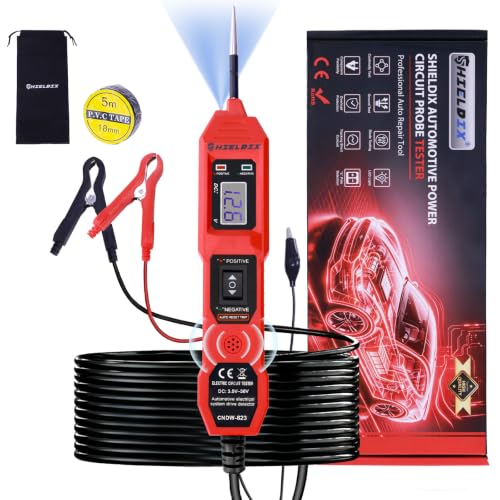
Power Circuit Probe Tester 3.5V-36V DC
Its long 14.7-foot cable, LCD display, and listed overload protection make it a strong choice for general circuit checks.
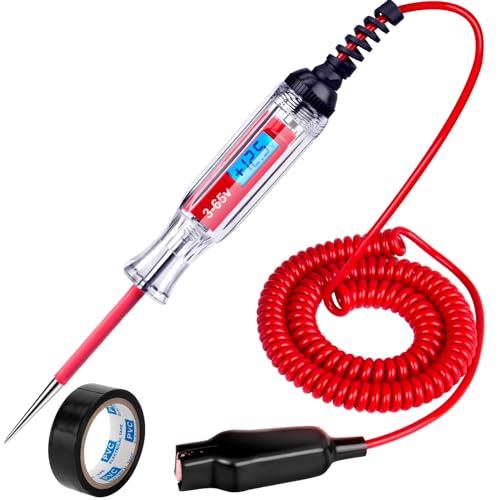
Heavy Duty 3-65V DC Automotive Test Light
Its bidirectional voltage checking, backlit LCD, and extended spring wire offer useful features for busy garages.
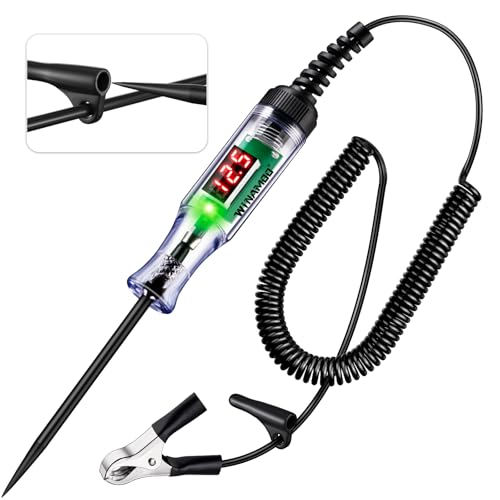
WINAMOO 3-48V Digital Automotive Test Light
It offers a simple digital voltage display, polarity indication, and a stainless steel probe for routine vehicle checks.
WINAMOO 3-48V Digital Automotive Test Light
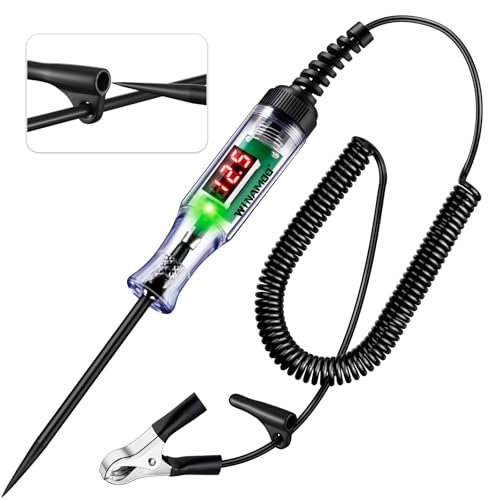
The WINAMOO 3-48V automotive test light is a simple tool for everyday electrical checks. It has a digital LED voltage display and a dual-color polarity indicator. Its listed range covers many common low-voltage vehicle circuits. The stainless steel probe also gives you a firm point for checking accessible electrical contacts.
I like the idea of having voltage information and polarity feedback in one compact tool. It can help when checking fuses, power feeds, and basic wiring faults. The 3-48V range also gives it wider stated coverage than a basic 12V test light. However, a digital display does not make this a precision voltage drop meter. I would pair it with a quality multimeter when a repair calls for exact voltage drop readings.
✅ Pros
- ✔ Covers a stated 3-48V DC testing range.
- ✔ Digital LED display makes voltage readings easier to view.
- ✔ Dual-color indicator helps identify circuit polarity.
- ✔ Stainless steel probe supports contact with accessible test points.
- ✔ Useful for basic fuse and wiring checks.
- ✔ Suitable for several common car, truck, and SUV electrical tasks.
⚠️ Cons
- ✖ The supplied specifications do not state measurement accuracy.
- ✖ It does not replace a digital multimeter for exact voltage drop tests.
- ✖ The supplied information does not confirm the cable length.
- ✖ It may not suit advanced electrical diagnosis on its own.
My Recommendation
I would recommend this WINAMOO model to DIY car owners who want a simple digital circuit tester. Its main appeal is the mix of a voltage display and polarity indication. You can use those features during routine checks without carrying a large diagnostic kit. It also makes sense as a second tool in a home garage. For a true voltage drop test, use a multimeter across the circuit section while the circuit carries its normal load. I would not rely on this test light alone to judge a small voltage loss. It works best as a quick first check before deeper testing.
| Best For | Why |
|---|---|
| Home garage owners | The digital display and polarity light help with common electrical checks. |
| Basic fuse testing | Its probe offers a simple way to check accessible fuse contacts. |
| DIY vehicle maintenance | The compact design and broad stated range suit routine work. |
3-48V Digital Automotive Circuit Test Light
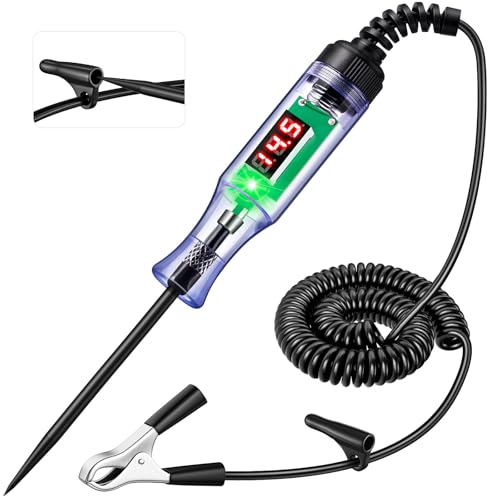
This automotive test light offers a 3-48V DC range and a digital voltage readout. It also includes a polarity indicator and a stainless steel test probe. The design focuses on basic vehicle electrical checks. You can use this style of tester to check accessible power points, fuse contacts, and other suitable low-voltage circuits.
I see this model as a practical choice for drivers who want more information than a standard bulb-style test light can provide. The digital readout gives a clearer view of the voltage present at a test point. The polarity light adds another useful clue during diagnosis. Still, the product details do not list its display accuracy or resolution. I would treat it as a circuit tester and keep a digital multimeter nearby for proper voltage drop measurements.
✅ Pros
- ✔ Offers a stated 3-48V DC operating range.
- ✔ Digital readout helps show the voltage at a test point.
- ✔ Polarity indicator helps distinguish positive and negative connections.
- ✔ Stainless steel probe supports direct circuit contact.
- ✔ Can assist with routine automotive fuse checks.
- ✔ Compact test-pen style is easy to store in a tool drawer.
⚠️ Cons
- ✖ No stated accuracy rating appears in the supplied details.
- ✖ The product title does not confirm an overload protection feature.
- ✖ It cannot provide every measurement offered by a multimeter.
- ✖ The supplied information does not give a cable length.
My Recommendation
I would consider this tester for a beginner who wants an easy way to check basic automotive circuits. Its digital display is useful when a simple yes-or-no light does not provide enough information. The polarity indicator can also help when checking an unfamiliar connection. It is a sensible addition to a small home tool kit. However, I would not choose it as my only electrical diagnostic tool. Voltage drop diagnosis needs a measurement across a wire, connector, or ground path under load. A multimeter provides the control and detail needed for that task. Choose this product for quick circuit checks rather than advanced fault finding.
| Best For | Why |
|---|---|
| New DIY mechanics | The digital display and polarity light make basic checks easier to understand. |
| Car fuse checks | The probe can help check suitable accessible fuse test points. |
| Small tool kits | The test-pen format takes up little storage space. |
WINAMOO 3-120V Wide-Range Digital Test Light
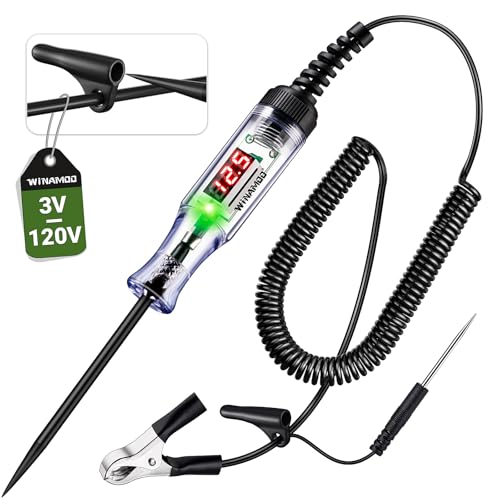
This WINAMOO automotive test light lists a 3-120V DC testing range. It combines a digital LED voltage display with a dual-color polarity indicator. The stainless steel probe gives it a familiar test-pen design. The product title also lists cars, trucks, and SUVs as suitable vehicle types.
The wider stated range is the main feature that sets this model apart from the other basic WINAMOO tester. It may appeal to mechanics who work with several compatible low-voltage electrical systems. I also like the combination of a visible voltage display and polarity feedback. However, the 120V figure must not be mistaken for a high-voltage safety rating. It does not establish that the tool is suitable for hybrid or electric vehicle traction circuits. Always follow the tool instructions and vehicle service data.
✅ Pros
- ✔ Lists a wide 3-120V DC testing range.
- ✔ Digital LED display provides voltage information.
- ✔ Dual-color polarity indication helps identify circuit direction.
- ✔ Stainless steel probe supports contact with suitable test points.
- ✔ Useful for basic checks across compatible vehicle electrical systems.
- ✔ The test-pen format is simple to carry and store.
⚠️ Cons
- ✖ A wide voltage range does not confirm high-voltage safety.
- ✖ The supplied product details do not state measurement accuracy.
- ✖ It is not a replacement for a precision digital multimeter.
- ✖ No cable length or display resolution is specified.
My Recommendation
I would choose this WINAMOO model when the stated 3-120V range is useful for the circuits I need to check. It offers more listed voltage coverage than the 3-48V version. Its digital display and polarity indicator also make basic checks more convenient. That said, I would not buy it just because the maximum number looks high. The tool must match the circuit, its safety category, and the manufacturer’s instructions. Never use it on EV or hybrid high-voltage systems based only on the 120V range printed in the title. For normal automotive electrical diagnosis, it is best viewed as a general circuit tester. A separate multimeter remains essential for accurate voltage drop readings.
| Best For | Why |
|---|---|
| Multi-vehicle DIY users | Its listed range may cover more compatible low-voltage checks. |
| Basic polarity testing | The dual-color indicator gives a quick visual polarity clue. |
| General garage use | The digital display supports routine circuit inspections. |
3.5-36V Power Circuit Probe Tester
This power circuit probe tester offers a listed 3.5-36V DC range. Its feature set includes an HD LCD display, a 14.7-foot cable, and overload protection. The product title also mentions fuse testing and short-circuit finding. The long cable is a useful feature when you need to reach different parts of a vehicle without moving the tester every few seconds.
I would place this model near the top of my list for general garage circuit checks. Its long lead can help when testing areas away from the battery. The LCD also gives you a clear place to view the voltage information. The listed overload protection is another useful feature, although I would still follow the exact operating limits in the manual. Do not assume that protection makes every circuit safe to test. This is a circuit probe, not a substitute for a multimeter during precise voltage drop diagnosis.
✅ Pros
- ✔ Covers a stated 3.5-36V DC range.
- ✔ Long 14.7-foot cable offers useful reach around a vehicle.
- ✔ HD LCD display makes voltage information easier to read.
- ✔ Lists overload protection as part of its design.
- ✔ The product title includes short-circuit finding support.
- ✔ Useful for compatible fuse and circuit inspection tasks.
⚠️ Cons
- ✖ Its stated maximum is lower than some other testers here.
- ✖ The long cable may need careful storage after use.
- ✖ The supplied details do not give a measurement accuracy rating.
- ✖ It does not replace a multimeter for exact voltage drop readings.
My Recommendation
This is my top choice among the listed circuit probes for users who value reach and a more complete feature set. The 14.7-foot cable can make a real difference when working around a truck, SUV, or larger vehicle. The LCD and stated overload protection also add practical value. I would consider it for a busy home garage or a technician who wants a dedicated circuit probe. Before use, I would check the manual for its supported tests and safe connection method. For voltage drop work, I would still use a multimeter and test both the power and ground sides under load. Its strongest role is general circuit inspection, not precision measurement.
| Best For | Why |
|---|---|
| Large vehicle owners | The 14.7-foot cable offers extra reach around trucks and SUVs. |
| Busy home garages | The LCD and listed overload protection add useful features. |
| Circuit fault checks | The product title includes fuse testing and short-finding functions. |
6-48V Dual LED Automotive Circuit Probe
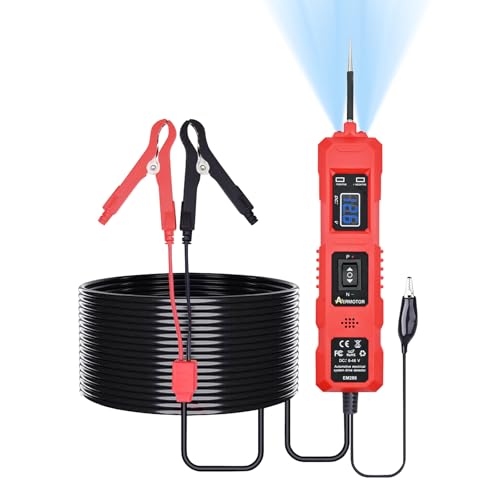
This automotive circuit probe lists a 6-48V DC range and uses dual LED lights. It also has a digital display and a 4.5-meter cable. That longer lead can help when checking circuits in different areas of a vehicle. Its stated voltage range gives it coverage for many common automotive electrical checks.
I like the simple focus of this tester. The dual LED setup gives a visual indication, while the digital display adds voltage information. The 4.5-meter cable is a useful detail for users who work around larger vehicles. It may reduce the need to keep repositioning the tool during a basic inspection. Still, the product details do not list a precision rating or a dedicated voltage drop measurement function. I would use it for circuit checks and keep a multimeter for accurate readings.
✅ Pros
- ✔ Lists a 6-48V DC testing range.
- ✔ Dual LED lights provide a clear visual indication.
- ✔ Digital display adds voltage information.
- ✔ The 4.5-meter cable gives useful working reach.
- ✔ Can assist with suitable fuse and circuit checks.
- ✔ The design may suit cars, trucks, and other compatible vehicles.
⚠️ Cons
- ✖ The 6V minimum may not suit every low-voltage application.
- ✖ The supplied details do not state measurement accuracy.
- ✖ No specific overload protection feature is listed.
- ✖ It is not a dedicated voltage drop meter.
My Recommendation
I would recommend this circuit probe to people who want a longer cable without moving to a large diagnostic unit. Its 4.5-meter lead is the main reason to consider it. The digital display and dual LED lights also offer useful feedback during routine electrical work. It may suit owners of trucks, SUVs, and recreational vehicles with compatible circuits. I would check the minimum voltage requirement before buying. If your main goal is to find a small voltage loss across a cable or ground connection, use a multimeter under load. This tester can help locate basic circuit issues, but it should not be your only diagnostic tool.
| Best For | Why |
|---|---|
| Truck owners | The 4.5-meter cable helps reach distant test points. |
| Routine electrical checks | Dual LEDs and a digital display provide useful feedback. |
| Home mechanics | Its circuit probe format suits basic garage work. |
3-65V Heavy Duty Digital Automotive Test Light
This heavy-duty automotive test light lists a 3-65V DC range. It has a blue-backlit LCD display, bidirectional voltage testing, and a stainless steel probe. The product title also lists a 140-inch spring wire. These features give it a useful mix of reach, visibility, and basic circuit testing support.
I like the combination of the extended spring wire and backlit display. A clear screen can help when the test point sits in a dark area under a dashboard or hood. The bidirectional feature is also useful for checking different circuit polarities. Its listed voltage range covers many common automotive applications. However, a test light with a digital display is not automatically a calibrated voltage drop meter. I would use it for initial checks and turn to a multimeter for accurate loaded-circuit measurements.
✅ Pros
- ✔ Lists a 3-65V DC testing range.
- ✔ Blue-backlit LCD supports viewing in dim work areas.
- ✔ Bidirectional testing helps check different circuit polarities.
- ✔ The 140-inch spring wire offers useful reach.
- ✔ Stainless steel probe supports contact with test points.
- ✔ The heavy-duty design is aimed at regular garage use.
⚠️ Cons
- ✖ The supplied details do not list measurement accuracy.
- ✖ Spring wire may need careful handling and storage.
- ✖ It does not replace a dedicated digital multimeter.
- ✖ The display resolution is not specified in the supplied information.
My Recommendation
This model is one of the stronger choices for people who want an extended lead and a readable display. I would consider it for a home mechanic who often checks circuits in tight or poorly lit areas. The 140-inch spring wire gives useful reach, while the blue LCD can make voltage information easier to see. Bidirectional testing also adds flexibility. It is a good option for general circuit work, but I would not use its display as the final word on a voltage drop problem. A digital multimeter can measure the difference between two points while a circuit operates. That is the measurement I want before replacing a starter cable, ground strap, or other expensive part.
| Best For | Why |
|---|---|
| Professional garage users | The extended wire and heavy-duty design suit regular use. |
| Dark engine bays | The blue-backlit LCD helps improve screen visibility. |
| Polarity checks | Bidirectional testing supports different circuit checks. |
WINAMOO 5-90V Digital Bidirectional Test Light
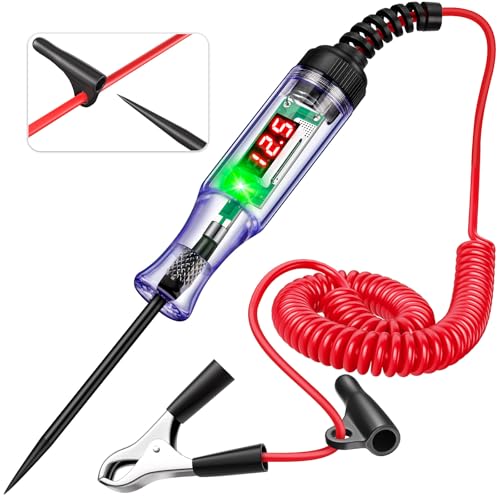
The WINAMOO 5-90V test light offers a digital LED voltage display and bidirectional voltage testing. It also features an extended spring wire and a probe for suitable circuit checks. The listed range covers several common low-voltage vehicle systems. The product title also mentions cars, RVs, and fuse checking.
I would look at this model if I wanted a digital test light with a higher listed voltage range than a basic 3-48V pen. The spring wire can help when the test point is not close to the tool’s main body. Its bidirectional function also adds value during polarity checks. One thing to note is the 5V minimum. That may matter when you work with circuits that operate below that level. I would check the manual and use a separate multimeter when I need an exact voltage drop reading.
✅ Pros
- ✔ Lists a 5-90V DC voltage range.
- ✔ Digital LED display provides voltage information.
- ✔ Bidirectional testing supports polarity checks.
- ✔ Extended spring wire offers added working reach.
- ✔ Suitable for many compatible car and RV checks.
- ✔ The test-light format is easy to handle.
⚠️ Cons
- ✖ The 5V minimum may limit some low-voltage checks.
- ✖ The supplied information does not state cable length.
- ✖ No measurement accuracy rating is provided.
- ✖ A separate multimeter is still needed for precise voltage drop tests.
My Recommendation
I would recommend this WINAMOO model to RV owners and DIY mechanics who want a digital circuit tester with an extended spring wire. Its 5-90V range may be useful across several compatible systems. The bidirectional function also helps when you need to check circuit polarity. I would first confirm that the tool supports the voltage and test method required by my vehicle. It is not a replacement for a multimeter or a proper electrical load test. For someone who performs regular fuse and power-feed checks, this tester could be a useful addition to a garage kit. For exact voltage drop work, choose a dedicated measuring instrument.
| Best For | Why |
|---|---|
| RV owners | Its listed range and spring wire suit compatible RV circuit checks. |
| Polarity testing | Bidirectional operation adds flexibility during circuit inspection. |
| DIY mechanics | The digital display makes basic voltage checks more convenient. |
K Tool International Cordless Circuit Tester
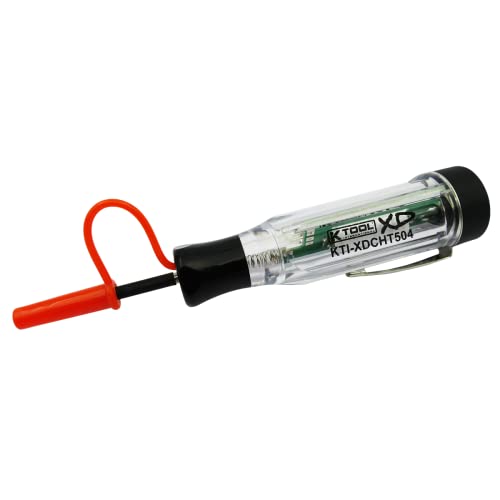
The K Tool International XDCHT504 is a cordless circuit tester designed for DC voltage detection. It has a dual-color LED polarity indicator and an audible beep alert. A built-in lithium battery powers the unit. Its cordless design gives it a different feel from the wired test lights in this list.
I see the main benefit in its simple operation and freedom from a long cable. The LED gives a visual clue, while the beep can help when you cannot keep your eyes on the tool. This can be handy in tight work areas. However, the supplied product details do not state a voltage range or provide a digital voltage readout. That makes it harder to compare with testers that show a numerical value. I would treat it as a basic voltage detection tool, not a precision tester for voltage drop diagnosis.
✅ Pros
- ✔ Cordless design avoids a long external test lead.
- ✔ Dual-color LED indicator helps identify polarity.
- ✔ Audible beep provides an extra alert.
- ✔ Built-in lithium battery powers the tester.
- ✔ Compact format may suit quick inspection tasks.
- ✔ The design offers a simple alternative to wired test lights.
⚠️ Cons
- ✖ The supplied details do not state the DC voltage range.
- ✖ No numerical digital voltage display is listed.
- ✖ Battery condition must be considered before use.
- ✖ It does not measure voltage drop across a loaded circuit.
My Recommendation
I would consider the K Tool International tester if cordless operation matters more than a numerical voltage display. Its LED and audible alert offer simple feedback during basic checks. It may suit technicians who want a quick detection tool in addition to their main diagnostic equipment. I would confirm its supported voltage range in the manufacturer’s instructions before purchase. I would also keep a multimeter in the tool box. A beep or polarity light cannot show the small voltage difference across a cable or connection. If that is the main problem you need to diagnose, a proper loaded voltage drop test is essential. This K Tool model is better suited to quick detection than detailed electrical analysis.
| Best For | Why |
|---|---|
| Mobile mechanics | The cordless design avoids managing a long test cable. |
| Quick circuit checks | The LED and audible alert provide simple feedback. |
| Secondary tool kits | It can complement a multimeter and other diagnostic tools. |
AWBLIN 3-60V Digital Automotive Test Light
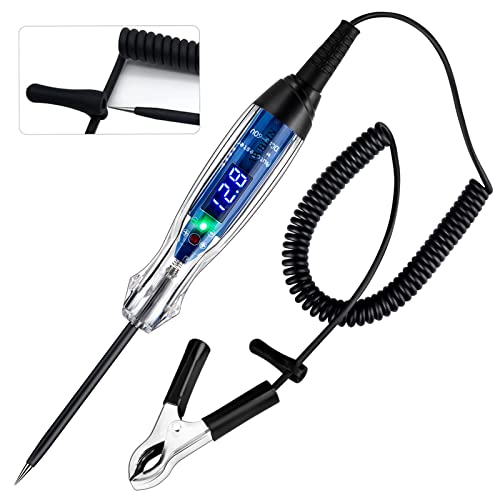
The AWBLIN automotive test light lists a 3-60V DC range. It includes a digital LED circuit tester and a voltmeter-style display. The product title also describes it as a heavy-duty bidirectional voltage tester. Its test-pen design makes it suitable for basic checks on compatible vehicle circuits.
I like that this model focuses on two useful functions: voltage indication and bidirectional testing. Those features can help when checking a power feed or identifying polarity. Its 3-60V range also covers many common automotive low-voltage applications. The supplied details do not list a cable length, accuracy rating, or screen resolution. I would therefore compare it with the other testers based on its stated features rather than assume it offers professional multimeter accuracy. It can be a useful first-check tool in a home garage.
✅ Pros
- ✔ Lists a 3-60V DC testing range.
- ✔ Digital LED display shows voltage information.
- ✔ Bidirectional testing supports polarity-related checks.
- ✔ Heavy-duty design is aimed at automotive work.
- ✔ Useful for basic circuit and fuse inspections.
- ✔ The test-pen format is easy to store.
⚠️ Cons
- ✖ The supplied specifications do not state measurement accuracy.
- ✖ No cable length is listed in the product details.
- ✖ It does not offer all multimeter functions.
- ✖ A dedicated voltage drop measurement still requires suitable test equipment.
My Recommendation
I would consider the AWBLIN tester for a DIY mechanic who wants a straightforward digital test light with bidirectional operation. The 3-60V range is useful for many common automotive checks. Its digital display also makes it more informative than a simple light-only tester. I would use it to narrow down basic power and polarity issues before moving to more detailed tests. If a starter motor turns slowly or a ground connection seems weak, I would not rely on this tool alone. I would measure voltage across the suspected cable or connection with a multimeter while the circuit is loaded. That extra step helps prevent unnecessary part replacement.
| Best For | Why |
|---|---|
| DIY car owners | Its digital display makes routine circuit checks easier. |
| Polarity diagnosis | Bidirectional operation supports positive and negative circuit checks. |
| Basic garage testing | The 3-60V range covers many common low-voltage applications. |
6V-24V Basic Automotive Circuit Test Light

This automotive test light is a basic tool for checking 6V, 12V, and 24V DC circuits. It comes with an alligator clip and a long steel probe. The product title also lists continuity, voltage, and fuse testing. Its simple design may appeal to people who prefer a traditional test light over a digital circuit probe.
I like basic tools when they have a clear purpose. This tester does not try to offer a large screen or several extra features. Instead, it gives users a simple way to check suitable circuits and fuse contacts. The alligator clip can provide a convenient connection point, while the steel probe reaches accessible contacts. The lack of a digital readout is a limitation if you need to compare small voltage changes. For proper voltage drop diagnosis, I would pair it with a digital multimeter.
✅ Pros
- ✔ Supports listed 6V, 12V, and 24V DC circuits.
- ✔ Alligator clip provides a convenient connection point.
- ✔ Long steel probe reaches suitable test contacts.
- ✔ The product title includes continuity testing.
- ✔ Can assist with basic automotive fuse checks.
- ✔ Simple design may suit beginners and home mechanics.
⚠️ Cons
- ✖ It does not include a digital voltage display.
- ✖ The supplied details do not state a measurement accuracy rating.
- ✖ The 6V minimum may not cover lower-voltage circuits.
- ✖ It cannot replace a multimeter for precise voltage drop diagnosis.
My Recommendation
I would recommend this tester to people who want a basic and simple circuit test light. It may be a good fit for older vehicles, common 12V cars, and compatible 24V truck systems. The alligator clip and steel probe offer a familiar setup for basic electrical checks. It is also worth considering if you do not need a digital screen. However, I would not choose it as my main tool for diagnosing hard-to-find voltage loss. A basic test light cannot show the exact voltage difference across a cable or connection. Keep a multimeter nearby for those jobs. This is a simple supporting tool rather than a complete automotive electrical diagnostic solution.
| Best For | Why |
|---|---|
| Older vehicle owners | The listed 6V and 12V support may suit compatible older systems. |
| Basic fuse checks | The steel probe and clip support simple test connections. |
| Budget tool kits | The simple design focuses on basic circuit testing. |
Final Verdict: Which Should You Buy?
Among these options, I would choose the 3.5-36V Power Circuit Probe Tester as the best overall circuit tester. Its 14.7-foot cable, HD LCD, and listed overload protection make it a strong choice for general automotive electrical checks. The Heavy Duty 3-65V tester is another excellent option for users who want bidirectional testing and an extended spring wire. For a simpler tool, the WINAMOO 3-48V model offers a useful digital display and polarity indicator. Remember that none of these product titles confirms precision voltage drop measurement. A quality digital multimeter remains essential for that task.
The Best Automotive Voltage Drop Testers can make routine electrical checks easier, but the right tool depends on the job. Choose a circuit tester for basic power and polarity checks. Choose a multimeter for accurate loaded-circuit voltage drop tests. Check the voltage range, safety limits, and vehicle manual before every test. The right tools can help you find electrical faults faster and avoid replacing good parts.
FAQs Of Best Automotive Voltage Drop Testers
Q What is an automotive voltage drop tester?
Q Can I use a test light for a voltage drop test?
Q What is a normal voltage drop in a car?
Q Can I use an automotive circuit tester on a 24V truck?
Q What should I look for when buying an automotive voltage tester?