
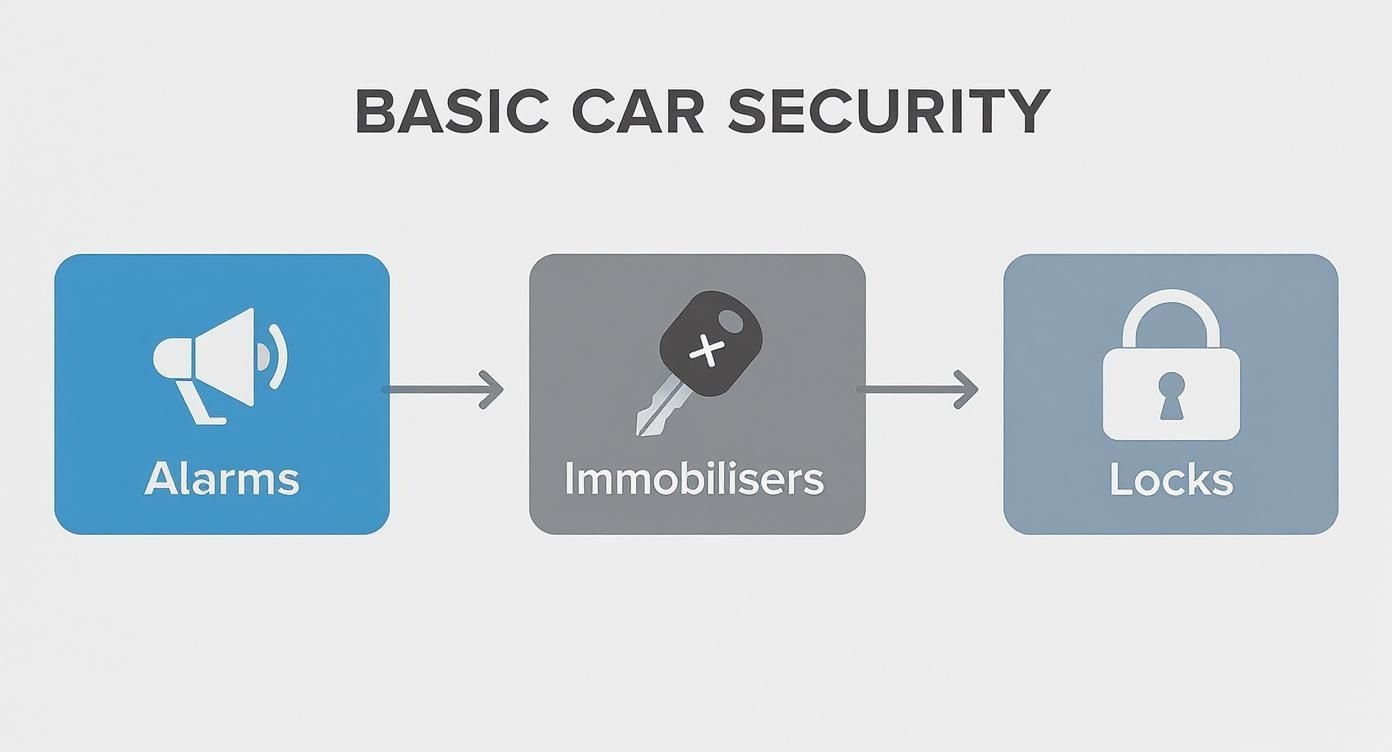
Modern vehicle anti theft systems use sensors, digital keys, immobilizers, and tracking technology to block theft.
Learning How Modern Vehicle Anti Theft Systems Work helps drivers understand the technology protecting their cars every day. In the United States, most new vehicles use multiple security layers because criminals have also developed more advanced methods.
From my experience studying automotive technology, the biggest change is the move from simple mechanical locks to smart electronic systems. A modern vehicle does not depend on one device. It uses several systems that communicate together before allowing access or engine operation.

What Are Modern Vehicle Anti Theft Systems?
Modern vehicle anti theft systems are security technologies designed to stop unauthorized entry, starting, and movement of a vehicle. They combine hardware and software to identify trusted users and detect unusual actions.
Understanding How Modern Vehicle Anti Theft Systems Work starts with knowing that vehicles now act like connected computers. The security system can monitor doors, ignition systems, keys, and communication signals.
- ✦ Electronic immobilizers
These systems prevent the engine from starting unless the correct digital key signal is detected.
- ✦ Alarm systems
Sensors detect forced entry, broken glass, movement, or unusual activity and create alerts.
- ✦ Connected security
Some vehicles use apps, GPS, and wireless services to notify owners about possible theft.
Why Cars Need Multiple Security Layers
A single lock is no longer enough because vehicle theft methods have changed. Multiple security layers make unauthorized access harder and increase the chance of detection.
How Vehicle Immobilizers Prevent Engine Theft
A vehicle immobilizer is one of the most important parts of modern car security. It prevents the engine from running unless the vehicle recognizes an approved key or digital code.
The immobilizer communicates with the engine control unit. If the signal does not match, the system blocks fuel delivery, ignition, or engine operation.

- ✦ Transponder keys
A small chip inside the key sends an encrypted signal that confirms ownership.
- ✦ Engine control protection
The ECU checks authorization before allowing the vehicle to start.
How Smart Keys Improve Vehicle Protection
Smart keys allow keyless entry and push-button starting. They use encrypted wireless signals to confirm that the correct key is nearby.
How Car Alarm Systems Detect Theft Attempts
Car alarm systems use different sensors to detect threats. These sensors can monitor doors, windows, vehicle movement, and impact.
When the system detects a possible theft attempt, it activates warning signals. Some vehicles also send notifications through connected smartphone apps.

- ✦ Door and hood sensors
These detect unauthorized opening of vehicle entry points.
- ✦ Motion sensors
These identify unusual movement inside or around the vehicle.
- ✦ Glass break sensors
These recognize sound patterns linked to broken windows.
The Role of GPS Tracking and Connected Car Security
GPS tracking has changed how owners protect vehicles after theft. Instead of only preventing theft, these systems can help locate a stolen vehicle.
Connected vehicles can communicate with mobile apps and security platforms. Owners may receive alerts about unusual movement, location changes, or unauthorized access.

- ✦ Real-time location tracking
GPS systems provide location information that can assist recovery efforts.
- ✦ Mobile notifications
Apps can alert owners when security events happen.
How Connected Technology Changes Car Security
Modern connected systems allow vehicles to share security information quickly. This creates a stronger relationship between the car, owner, and service provider.
How Encryption Protects Modern Vehicle Keys
Modern vehicles use encrypted communication between keys and onboard computers. This prevents simple copying of signals used by older systems.
Manufacturers continue improving security because criminals attempt new methods such as signal interception and unauthorized key programming.
- ✦ Encrypted signals
Digital codes make unauthorized key duplication more difficult.
- ✦ Authentication checks
The vehicle confirms whether communication comes from an approved device.
