
Learning how to protect a keyless car from relay theft is important for modern vehicle owners. Many newer cars use keyless entry systems because they are simple and convenient, but the same wireless technology can create new security concerns.
From my experience researching vehicle security systems, the strongest protection does not come from one product alone. A layered approach using signal protection, parking habits, and extra anti-theft tools gives your vehicle a better defense against relay attacks.

understand How Relay Theft Targets Keyless Cars
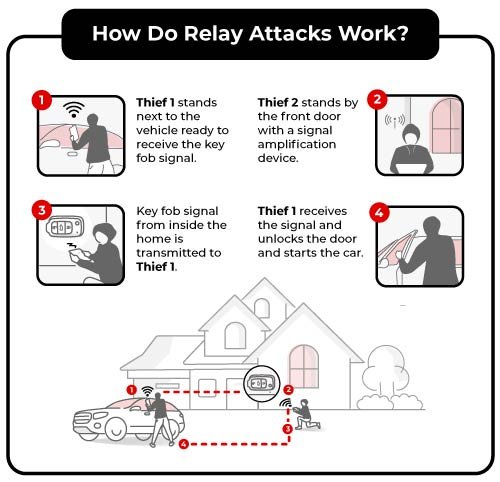
Before learning how to protect a keyless car from relay theft, it helps to understand how the attack works. A relay attack tricks the vehicle into believing the key fob is nearby.
The thief does not need to break the key or copy its code. Instead, they use devices that capture and extend the wireless signal between your key fob and your vehicle.

- ✦ Signal extension
A device near your home captures the key fob signal and sends it to another device near your car.
- ✦ Vehicle response
The car detects the extended signal and may unlock or start because it thinks the real key is close.
Why Keyless Systems Can Be Vulnerable
Keyless entry systems are designed for convenience. They allow drivers to unlock and start vehicles without removing the key from their pocket.
The risk appears when criminals exploit the communication between the key fob and vehicle. This does not mean every keyless car is unsafe, but owners should understand basic protection steps.
- ✦ Wireless communication
Keyless systems depend on radio signals that can sometimes be intercepted.
Use a Faraday Pouch to Block Key Fob Signals
One of the easiest ways to protect a keyless car from relay theft is using a Faraday pouch. These small cases contain materials that block wireless signals from reaching your key fob.
A good Faraday pouch should fully cover the key and prevent communication when the key is stored inside. Test the pouch after purchase by checking whether your vehicle detects the key nearby.

- ✦ Store every key
Keep spare keys and backup key fobs inside signal-blocking protection as well.
- ✦ Replace damaged pouches
Worn or damaged shielding materials may reduce protection over time.
Avoid Common Faraday Pouch Mistakes
Many drivers buy a signal-blocking pouch but leave the key partly exposed. This can allow the signal to escape and reduce the benefit.
Make sure the key is completely inside the pouch whenever you store it at home.
Change Where You Store Your Car Keys at Home
Small changes inside your home can improve keyless car security. Avoid leaving your keys near front doors, windows, or walls that face your driveway.
Criminals often try to capture signals from outside a property. Increasing the distance between your key and your vehicle can make relay attacks harder.
- ✦ Choose a safe storage area
Keep keys in an interior room away from exterior walls and entrances.
- ✦ Do not leave keys in visible areas
Avoid placing key fobs near windows where they may be easier to target.
Add Physical Security Devices for Extra Protection
Technology-based theft prevention works best when combined with physical security. A thief who cannot quickly drive away from a vehicle may abandon the attempt.
Physical devices add another layer of protection and can discourage opportunistic theft.

- ✦ Steering wheel locks
These visible devices prevent normal vehicle operation and act as a strong deterrent.
- ✦ Wheel locks
Wheel security devices can prevent unauthorized movement of the vehicle.
- ✦ GPS trackers
Tracking systems can help locate a vehicle if theft occurs.
Why Layered Security Works Better
No single security method guarantees complete protection. Modern vehicle security works best when several barriers protect the car.
A combination of signal protection, physical locks, and smart parking choices creates more obstacles for thieves.
Use Vehicle Settings and Manufacturer Security Features
Many modern vehicles include security features that owners do not always activate. Check your owner’s manual or vehicle settings to understand available options.
Some manufacturers offer features that reduce keyless risks, such as motion-based key sleep modes or the ability to disable passive entry.
- ✦ Enable available security settings
Review your vehicle settings and activate protective features when available.
- ✦ Keep software updated
Vehicle software updates may improve security and system performance.
Practice Safer Parking Habits
Your parking choices can reduce theft risk. When possible, park in secure areas with good lighting and visible surroundings.
At home, parking inside a garage adds another physical barrier. If garage parking is unavailable, consider using additional security tools.

- ✦ Park in visible locations
Choose areas with lighting, cameras, or regular activity.
- ✦ Remove valuables
Visible items inside a vehicle can attract unwanted attention.
