Timing Belt Vs Serpentine Belt: Which Is Better?
Timing belt controls engine timing; serpentine belt runs accessories—both vital, different jobs and risks.
I’ve worked on dozens of cars and helped owners decide between concerns like engine damage, maintenance cost, and replacement timing. This guide clearly explains timing belt vs serpentine belt, how each works, common failures, costs, and real-world tips so you can make smart maintenance choices and avoid costly repairs.

What is a timing belt?
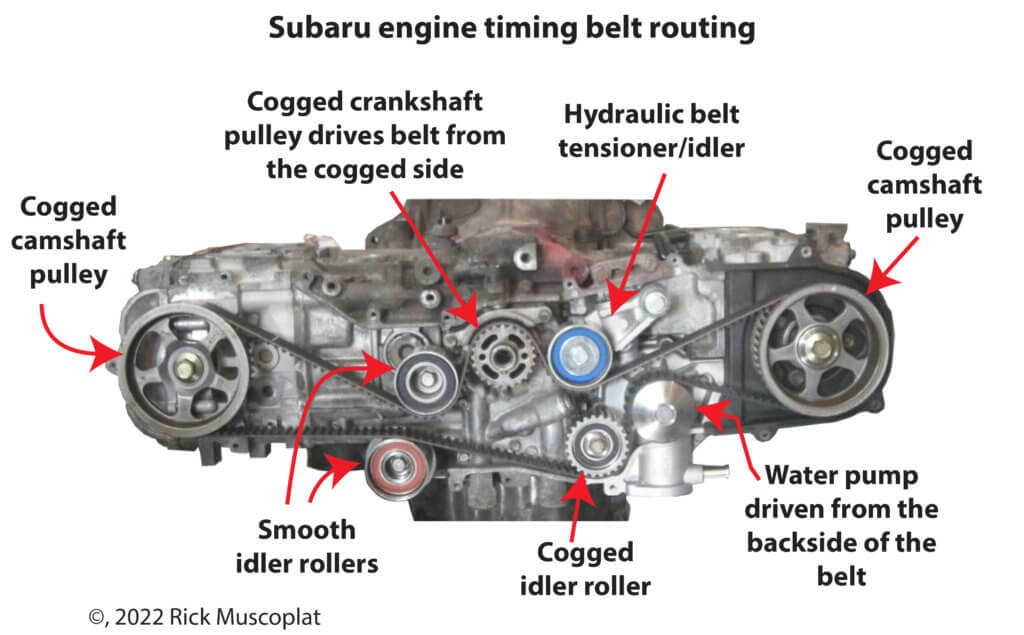
A timing belt is a toothed rubber belt that links the crankshaft to the camshaft or camshafts. It keeps engine valves and pistons in exact sync so the engine runs properly. Many modern engines use timing chains instead, but many cars still rely on timing belts. Timing belt replacement is critical because a snapped belt can cause severe engine damage.

What is a serpentine belt?
A serpentine belt is a long, smooth-ribbed belt that drives accessories such as the alternator, power steering pump, A/C compressor, and water pump on some engines. It’s one continuous belt that routes around several pulleys. Serpentine belts are easier and cheaper to replace than timing belts, but failure can leave you stranded and cause accessory damage.
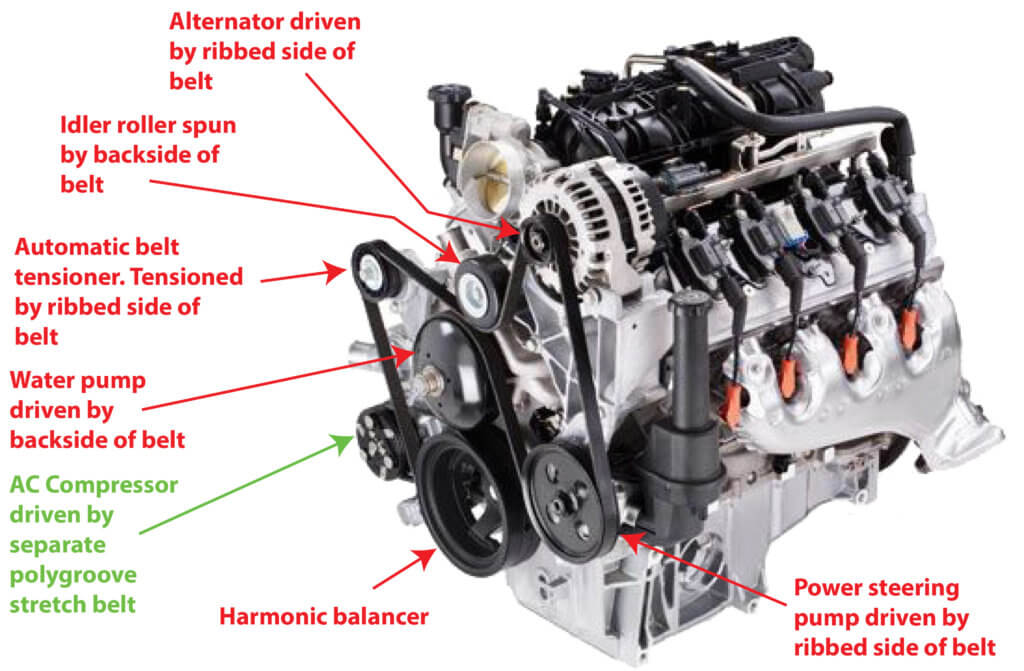
Key differences: timing belt vs serpentine belt
Understanding timing belt vs serpentine belt helps you prioritize maintenance. Below are clear, concise comparisons.
- Function
- Timing belt synchronizes engine valves and pistons.
- Serpentine belt powers accessories outside the combustion cycle.
- Design and material
- Timing belts use teeth and reinforced rubber to prevent slippage.
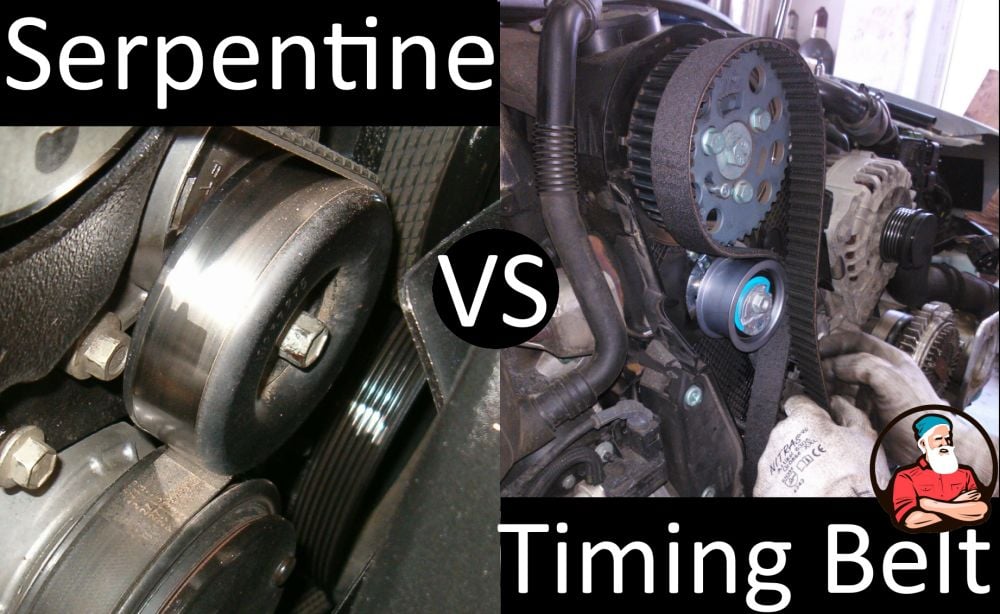
- Serpentine belts use ribbed surfaces for friction and flexibility.
- Location and access
- Timing belts sit inside an engine cover and are harder to reach.
- Serpentine belts are easier to access and usually visible under the hood.
- Consequences of failure
- Timing belt failure can bend valves and ruin the engine on interference engines.
- Serpentine belt failure disables accessories and can overheat or kill the battery.
- Lifespan and intervals
- Timing belts often need replacement at 60,000–100,000 miles.
- Serpentine belts typically last 50,000–100,000 miles depending on conditions.
- Cost to replace
- Timing belt jobs are labor-heavy and cost more, especially if water pump and tensioners are replaced at the same time.
- Serpentine belt replacement is usually quicker and less expensive.
Timing belt vs serpentine belt is often a trade-off between higher risk (timing belt) and easier, cheaper service (serpentine belt). Knowing these differences helps you budget and plan maintenance.
Symptoms and signs of failure
Spotting early signs helps you avoid bigger problems. Watch for these common symptoms.
- Timing belt failure signs
- Ticking or rattling from the timing cover area, rough idle, or engine misfire.
- Sudden loss of power or the engine refusing to start after a snapped belt.
- Serpentine belt failure signs
- Squealing noise on startup or during turns, loss of power steering, or dead battery.
- Overheating if the water pump is belt-driven, or A/C stops cooling.
- Visual checks
- Look for cracks, fraying, missing ribs, or glazing on belts.
- Check tensioner movement and pulley alignment during service visits.
If you hear new noises or see belt wear, schedule service right away. Quick fixes on serpentine belts are easy; timing belt concerns need prompt action to prevent engine damage.
Maintenance, replacement intervals, and cost
A predictable maintenance plan prevents surprises. Here’s how to plan.
- Recommended replacement
- Follow your vehicle’s manual for timing belt intervals—commonly 60,000–100,000 miles.
- Check serpentine belts at every oil change and replace when showing wear or at recommended intervals.
- What to replace together
- When changing a timing belt, replace tensioners, idlers, and water pump if accessible.
- For serpentine belts, inspect pulleys and tensioner; replace if bearings or parts show wear.
- Typical costs
- Timing belt replacement: varies widely, often $500–$1,500 depending on labor and if water pump is included.
- Serpentine belt replacement: often $50–$200, with diagnostics and pulley replacement adding costs.
- Saving tips
- Bundle parts during scheduled service to reduce overall labor costs.
- Use reputable OEM or high-quality aftermarket belts to avoid premature failure.
Timing belt vs serpentine belt costs differ a lot. Plan and save by handling major timing belt work before it becomes an emergency.
Which is better for your car? Choosing between timing belt vs serpentine belt
There isn’t a “better” belt—each serves a different job. Select maintenance and replacement timing based on risk and usage.
- If your car has a timing belt
- Prioritize scheduled replacement to avoid catastrophic engine damage.
- Budget for higher labor costs and consider replacing related parts at the same time.
- If your car uses a serpentine belt
- Inspect frequently; a sudden failure is inconvenient but usually not engine-ending.
- Replace at first signs of cracking or glazing to avoid multiple accessory failures.
- For buyers and DIYers
- Check the owner manual and service history to confirm if the car uses a timing belt or chain.
- If unsure, ask a trusted mechanic to inspect and document belt condition.
When comparing timing belt vs serpentine belt for decision-making, think about the cost of failure, not just replacement cost. Timing belt failure can lead to engine rebuild costs far exceeding any replacement savings.
My experience and practical tips
I’ve changed belts on sedans, trucks, and a few classic cars. Those jobs taught me what to watch for.
- Real-life lessons
- One car I worked on had a snapped timing belt at 95,000 miles—owner delayed service to save money. Engine repair cost triple the scheduled service estimate.
- A different car had repeated serpentine belt squeal; replacing a worn tensioner fixed noise and saved the alternator.
- Practical tips
- Keep service records and set calendar reminders for timing belt intervals.
- Use quality parts and replace tensioners and pumps with the timing belt job.
- After replacement, test drive and listen closely for new noises; a small misalignment shows early.
- Mistakes to avoid
- Don’t skip water pump replacement if it’s driven by the timing belt.
- Don’t assume a quiet belt is healthy—inspect for cracks and wear regularly.
These tips come from hands-on repairs and talking with many owners. They help avoid the common pitfalls of timing belt vs serpentine belt maintenance.
Frequently Asked Questions of timing belt vs serpentine belt
What happens if a timing belt breaks while driving?
If a timing belt breaks on an interference engine, valves and pistons can collide, causing serious engine damage that often requires a rebuild. On non-interference engines, the engine will stop running but may avoid internal damage.
How often should I replace a serpentine belt?
Inspect the serpentine belt at every service and expect replacement between 50,000 and 100,000 miles, depending on wear and driving conditions. Replace sooner if you see cracks, glazing, or hear persistent squeal.
Can I drive with a failing timing belt?
You should not drive long with a failing timing belt; it can snap without warning and cause major engine damage. Arrange for immediate service to avoid catastrophic costs.
Is a timing chain better than a timing belt?
Timing chains usually last longer and are often inside the engine, but they can be noisier and costly to repair if problems arise. Manufacturer design and maintenance history determine which is better for a given vehicle.
Can I replace a serpentine belt myself?
Yes, many serpentine belts are DIY-friendly if you have basic tools and a tensioner tool or breaker bar. Always follow the belt routing diagram and confirm proper tension after installation.
Conclusion
Timing belt vs serpentine belt comes down to function, risk, and maintenance. Timing belts control engine timing and demand careful, scheduled replacement to prevent engine failure. Serpentine belts power accessories and are easier and cheaper to service, but still require regular checks to avoid breakdowns. Take action now: check your owner’s manual, inspect belts at routine services, and schedule needed replacements. Leave a comment with your car model and mileage if you want tailored advice, or subscribe for more practical vehicle maintenance guides.