
If you are searching for What Causes a Hard Brake Pedal, the problem usually starts with the brake assist system. Modern vehicles use a brake booster to reduce the effort needed to slow down. When this system fails, the pedal can feel stiff and difficult to press.
During brake inspections, technicians often find that drivers mistake a hard pedal for a brake pad problem. Brake pads can affect stopping performance, but a very hard pedal usually points to a problem with vacuum pressure, the brake booster, or related components.
 display: block; margin: 0 auto; border-radius: 12px; box-shadow: 0 8px 25px rgba(0, 0, 0, 0.12);”>
How the Brake System Creates Pedal Pressure
To understand What Causes a Hard Brake Pedal, it helps to know how the braking system works. When you press the brake pedal, the brake booster uses vacuum force to multiply your foot pressure. This allows the master cylinder to send brake fluid through the system with less effort.
When the brake booster or vacuum supply fails, the driver loses this extra assistance. The brakes may still work, but the pedal feels heavy because your foot must create the pressure alone.
- ✦ Brake booster
The booster provides extra force to make braking easier. A failed booster often causes a stiff pedal.
- ✦ Vacuum supply
Many gasoline engines create vacuum pressure that helps the brake booster operate correctly.
- ✦ Master cylinder
The master cylinder converts pedal movement into hydraulic pressure for the brakes.
Failed Brake Booster Is a Common Cause of a Hard Brake Pedal
One of the most common answers to What Causes a Hard Brake Pedal is a failing brake booster. The booster sits between the brake pedal and the master cylinder. It helps multiply the force you apply with your foot.
When the booster fails, the pedal becomes much harder to push. Many drivers notice the issue suddenly, especially when starting the vehicle or during normal driving.

- ✦ Signs of brake booster failure
A stiff brake pedal, longer stopping distance, hissing sounds, and increased pedal effort can indicate a bad booster.
- ✦ Brake booster testing
A technician can test booster operation by checking pedal behavior with the engine off and running.
How to Test a Brake Booster at Home
You can perform a simple brake booster check. Turn off the engine and press the brake pedal several times until it becomes firm. Then hold pressure on the pedal while starting the engine.
If the booster works correctly, the pedal should move slightly downward. If it stays hard, the booster or vacuum system may have a problem.
- ✦ Engine test
A working booster normally creates pedal movement when engine vacuum becomes available.
Vacuum Leaks Can Make the Brake Pedal Hard
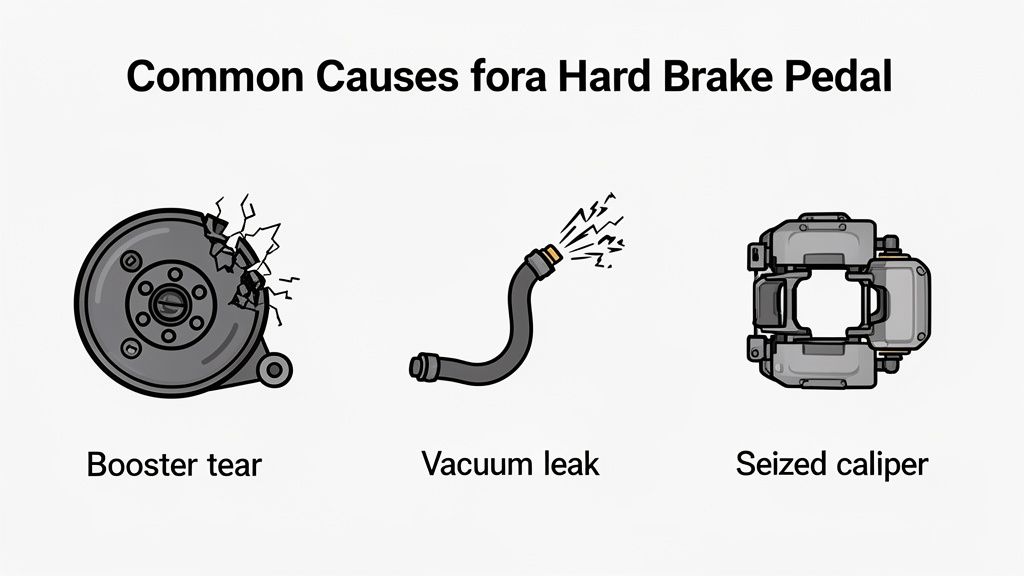
A vacuum leak is another major reason behind a hard brake pedal. The brake booster needs a steady vacuum source to provide assistance. If air enters the system through a damaged hose or connection, the booster cannot work properly.
Vacuum problems are common in older vehicles because rubber hoses can crack over time. A small leak may reduce braking assistance and create a noticeable change in pedal feel.

- ✦ Damaged vacuum hose
Cracked or loose hoses can prevent the brake booster from receiving enough vacuum.
- ✦ Vacuum pump failure
Some diesel and modern vehicles use vacuum pumps that can fail and cause hard pedal symptoms.
Engine Problems That Affect Brake Assistance
Because many vehicles use engine vacuum for braking assistance, engine problems can contribute to a hard brake pedal. If the engine cannot create enough vacuum, the brake booster may not receive the support it needs.
This issue can happen after engine repairs, vacuum hose replacement mistakes, or problems with engine performance.
- ✦ Rough engine operation
Poor engine performance can reduce available vacuum in some vehicles.
- ✦ Recent repairs
Incorrectly connected vacuum lines after repairs can affect brake booster operation.
Other Causes of a Hard Brake Pedal
Although the brake booster and vacuum system are the most common causes, several other problems can explain What Causes a Hard Brake Pedal. A complete brake inspection should check every related component.
Ignoring a hard brake pedal can increase stopping effort and make emergency braking more difficult, especially during highway driving or heavy traffic.

- ✦ Blocked brake line
A restricted hydraulic line can prevent proper brake fluid movement.
- ✦ Faulty check valve
The booster check valve helps maintain vacuum pressure and can cause issues when damaged.
- ✦ Incorrect brake modifications
Aftermarket brake changes may affect system balance and pedal feel.
How to Diagnose a Hard Brake Pedal Problem
Finding What Causes a Hard Brake Pedal requires checking symptoms carefully. Start by noticing when the pedal becomes hard. Does it happen only when the engine is off, during driving, or all the time?
A professional mechanic will check vacuum pressure, booster function, hydraulic parts, and brake system components before recommending repairs.

- ✦ Check pedal behavior
Compare pedal feel with the engine off and running to identify brake booster issues.
- ✦ Inspect vacuum parts
Look for damaged hoses, leaks, and failed vacuum components.
- ✦ Scan modern vehicles
Some newer cars store brake system fault codes that help locate problems.
