
Quick Answer: Uneven brake pad wear is caused by caliper problems, alignment issues, damaged parts, or uneven braking pressure.
When drivers ask what causes uneven brake pad wear, the answer is usually linked to how brake force moves through the braking system. A healthy brake system should apply pressure evenly across both pads. When that balance changes, one pad may wear much faster than the other.
From years of reviewing brake problems, one pattern appears often: small brake issues can create larger repair bills if ignored. Regular inspections help catch uneven wear before it damages rotors, calipers, or other parts.

What Is Uneven Brake Pad Wear?
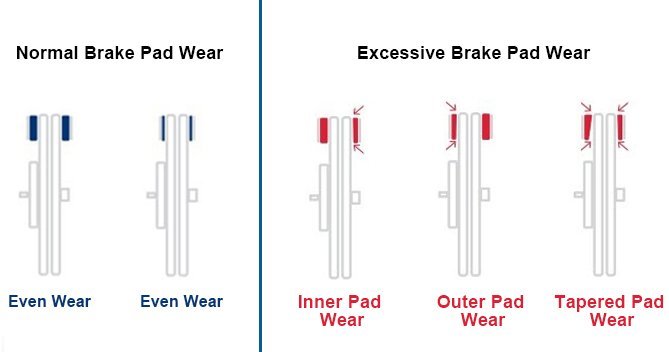
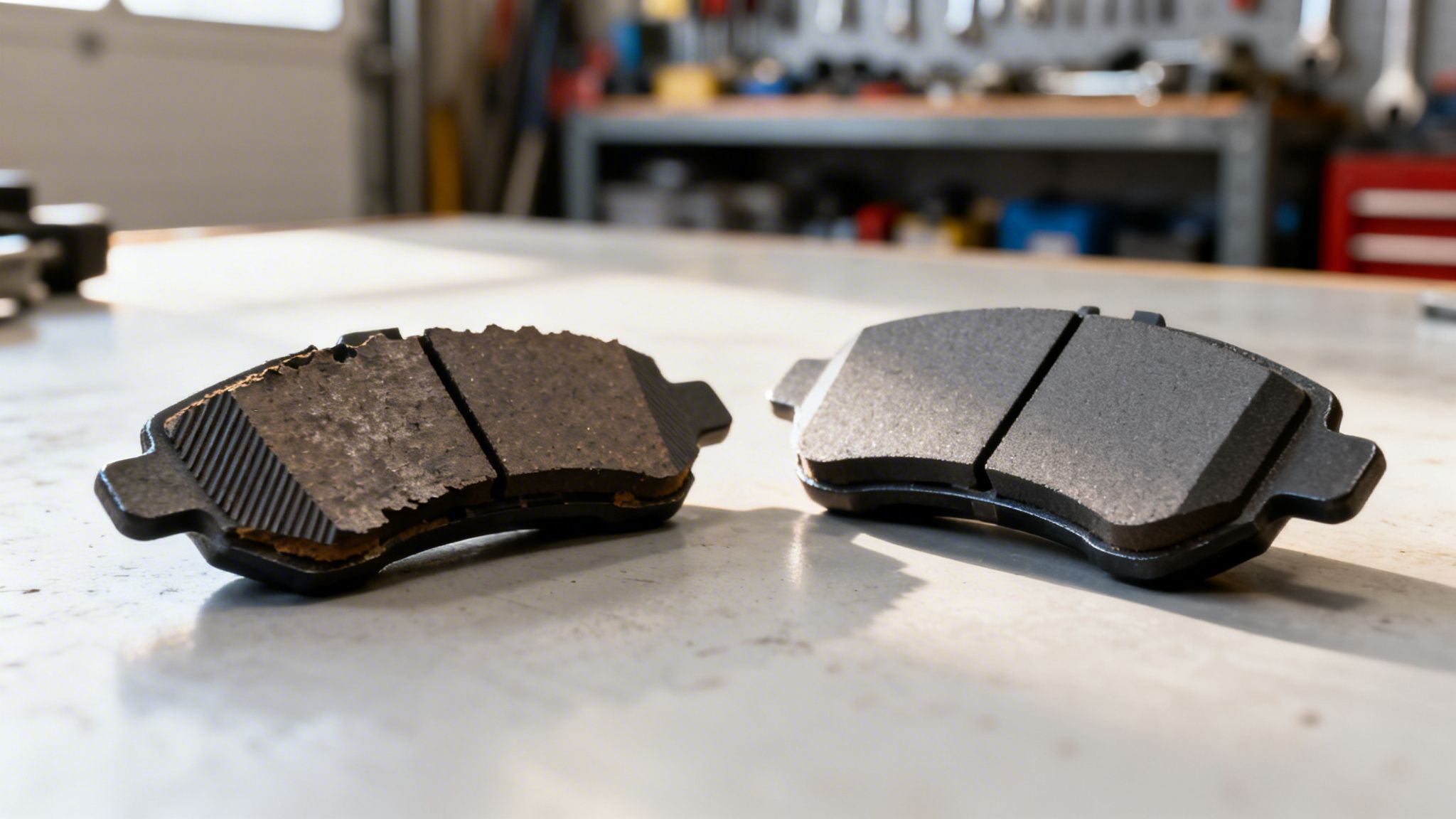
Uneven brake pad wear means the brake pads do not wear at the same speed or in the same pattern. One pad may become thinner than the other, or one side of a pad may wear more than the opposite side.
This problem matters because brake pads work as a matched set. If pressure is not equal, the vehicle may stop less smoothly and other brake parts may experience extra stress.
- ✦ Inner and outer pad wear
The inside pad may wear faster when the caliper cannot move freely or pressure is not balanced.
- ✦ Tapered pad wear
A pad that becomes thinner on one edge often points to alignment or hardware problems.
Sticking Brake Caliper Is a Common Cause of Uneven Brake Pad Wear
A sticking brake caliper is one of the most common answers to what causes uneven brake pad wear. The caliper controls how the pads press against the rotor. If it sticks, one pad may stay in contact longer than it should.
A stuck caliper can create extra heat, faster pad wear, and reduced fuel efficiency. Drivers may also notice the vehicle pulling to one side while braking.

- ✦ Frozen caliper slide pins
Dirty or dry slide pins can stop the caliper from moving correctly.
- ✦ Damaged caliper piston
A piston that does not retract properly can keep pressure on one brake pad.
How Caliper Problems Affect Brake Pads
The brake system needs smooth movement to spread force evenly. When a caliper cannot move, the pad pressure becomes uneven and creates abnormal wear patterns.
- ✦ Heat buildup
Constant contact between the pad and rotor creates excess heat that speeds up wear.
Worn or Damaged Brake Hardware Can Create Uneven Wear
Brake hardware includes clips, shims, springs, and other small parts that help pads move correctly. When these parts wear out or become damaged, the pads may not sit evenly.
Many drivers focus only on replacing brake pads. However, old hardware can cause new pads to wear unevenly again.

- ✦ Broken pad clips
Damaged clips can allow unwanted movement and uneven contact.
- ✦ Missing lubrication
Dry contact points can restrict pad movement and create uneven pressure.
Brake Rotor Problems Can Cause Uneven Brake Pad Wear
Brake rotors provide the surface where pads create friction. If a rotor has uneven thickness, grooves, rust buildup, or damage, the brake pad may not touch it evenly.
Rotor problems are often overlooked because drivers notice the pad first. A new brake pad cannot solve uneven wear if the rotor surface remains damaged.
- ✦ Warped rotors
Rotor thickness changes can create inconsistent contact with the brake pads.
- ✦ Rust or contamination
Rust spots or oil contamination can reduce even friction.
Driving Habits That Increase Uneven Brake Pad Wear
Driving style can influence how brake pads wear. Frequent hard braking, heavy traffic, and carrying heavy loads can increase brake stress.
In the United States, many drivers deal with stop-and-go city traffic and highway driving. These conditions can expose small brake problems faster.

- ✦ Aggressive braking
Hard stops create more heat and faster friction material loss.
- ✦ Heavy vehicle loads
Extra weight increases braking force and can speed up wear.
Signs You May Have Uneven Brake Pad Wear
Knowing the warning signs helps drivers fix brake problems before they become serious. Uneven brake pad wear often creates noticeable changes during braking.
A professional inspection can confirm the cause because several brake problems can create similar symptoms.
- ✦ Vehicle pulling
The car may move left or right when braking because one side creates more stopping force.
- ✦ Squealing or grinding sounds
Noise may appear when pads wear unevenly or reach the wear indicator.
- ✦ Brake vibration
Uneven contact between pads and rotors may cause shaking during stops.
