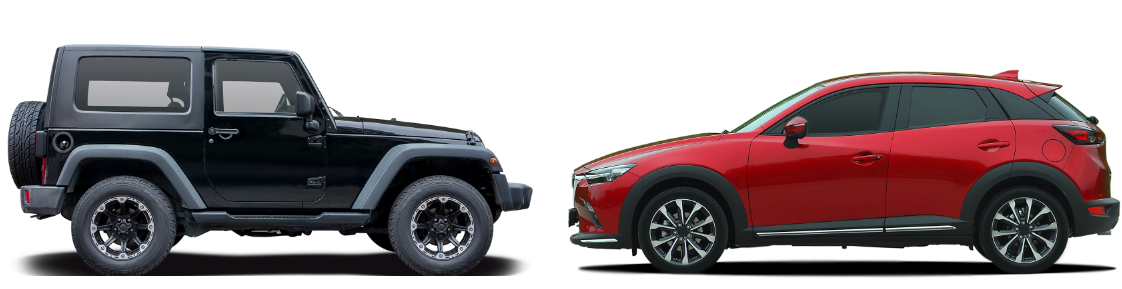
Crossovers are car-based for comfort and efficiency; SUVs are truck-based for strength and towing.
I’ve spent years testing vehicles and advising buyers, so I know the nuances that matter when weighing suv vs crossover differences. This guide breaks down the key technical, practical, and ownership gaps between the two. Read on for clear, experience-backed advice that helps you pick the best ride for your life.
| Factor | Crossover | Traditional SUV |
|---|---|---|
| Platform | Unibody (car-based) | Body-on-frame or reinforced unibody (truck-based) |
| Ride quality | Smoother, more car-like | Firmer, more truck-like |
| Fuel economy | Generally better | Generally lower |
| Towing capacity | Lower, typically car-based limits | Higher, especially body-on-frame models |
| Off-road capability | Limited to mild trails on most models | Stronger on models with low-range gearing and skid plates |
| Typical buyer | Daily commuting, family use, city driving | Towing, hauling, rugged or off-road use |

Understanding suv vs crossover differences
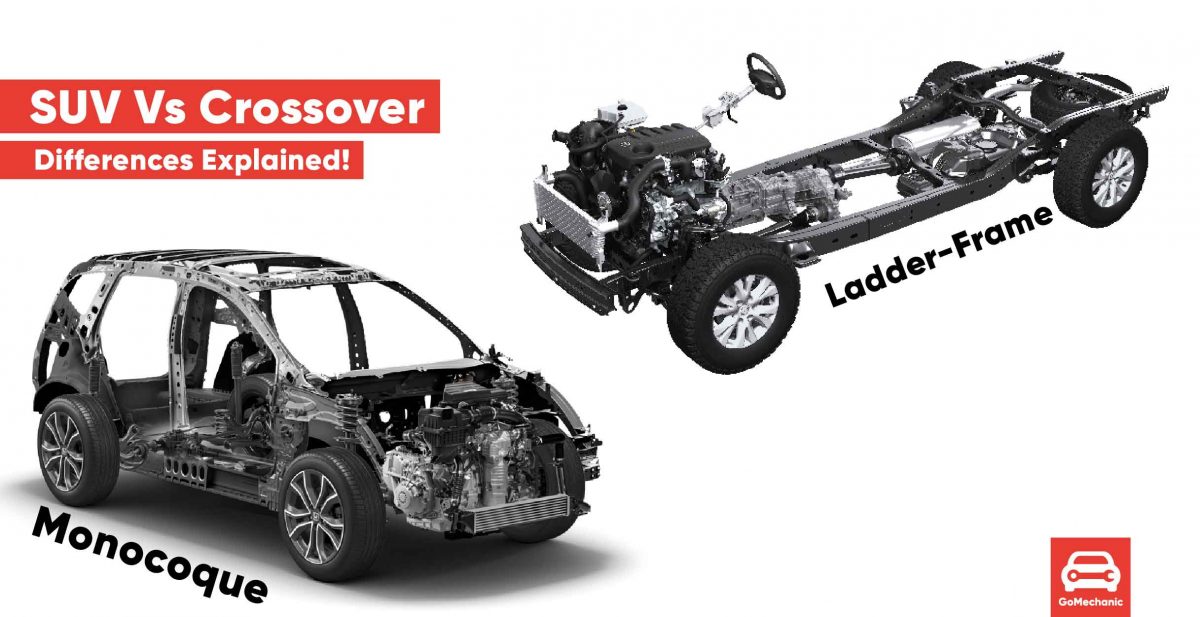
The core difference comes down to platform and intent. Crossovers use a unibody car platform. SUVs often use a body-on-frame truck platform or a rugged unibody tuned for heavier loads. That platform choice shapes ride, handling, towing, and long-term durability.
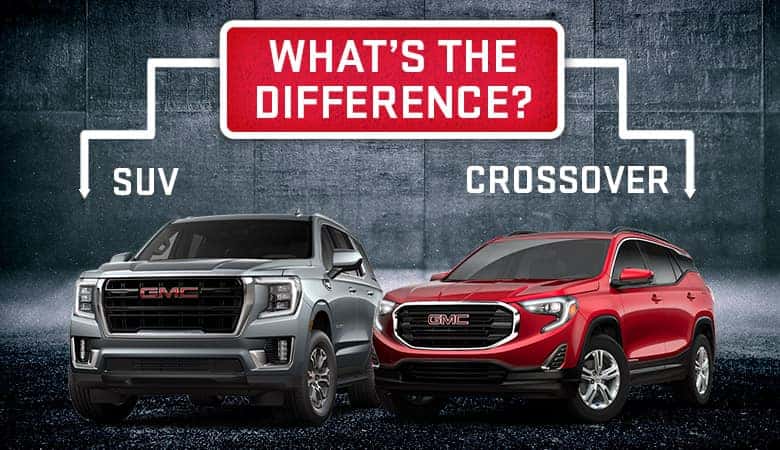
Knowing suv vs crossover differences helps you match a vehicle to your needs. I’ll map those differences to real-world uses like family travel, off-road use, and towing. One reason this gets confusing at the dealership is that the industry itself doesn’t use the terms consistently. Many automakers and even some reviewers call any tall, boxy vehicle an “SUV,” whether it’s actually body-on-frame or a unibody crossover wearing SUV styling. When you see the word “SUV” in a listing or ad, it’s worth checking the actual platform rather than assuming from the name alone.

Source: satjapan.com
Design and platform: core suv vs crossover differences
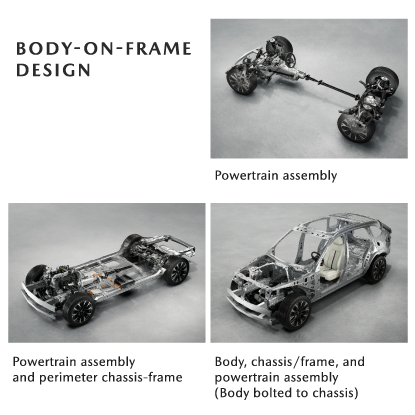
Crossovers are built like cars. They use unibody frames that combine the body and frame into one piece. This makes them lighter, quieter, and easier to drive in town.
SUVs often use body-on-frame design or a reinforced unibody. That adds weight and strength. It helps when towing, carrying heavy cargo, or driving off-road.
How this affects you
- Ride comfort: Crossovers feel smoother on pavement.
- Durability: SUVs hold up better in heavy-duty use.
- Noise: Crossovers tend to be quieter at highway speeds.
COMMON UNIBODY CROSSOVERS | COMMON BODY-ON-FRAME SUVs
Common Unibody Crossovers Common Body-on-Frame SUVs Toyota RAV4 Toyota 4Runner Honda CR-V Toyota Sequoia Toyota Highlander / Grand Highlander Ford Bronco Mazda CX-5 Ford Expedition Subaru Forester Jeep Wrangler Hyundai Santa Fe / Tucson Chevrolet Tahoe / Suburban Kia Sportage GMC Yukon Honda Pilot Nissan Armada Nissan Pathfinder Cadillac Escalade Platforms occasionally change between generations, so it’s worth confirming a specific model year’s construction before assuming it matches an older generation of the same nameplate.
Source: mazdausa.com
Performance, handling, and fuel economy differences
Platform and weight shape performance. Crossovers usually have car-like handling and better fuel economy. They use smaller engines or tuned hybrids to cut fuel use.
SUVs offer stronger engines and higher towing capacity. That comes with more fuel use and a firmer ride. Off-road tuned SUVs may include low-range gearing and heavy-duty suspension.
Practical examples
- City driving: Choose a crossover for easier parking and better MPG.
- Towing or hauling: An SUV often has higher towing ratings.
- Mixed roads: Crossovers excel in ride comfort on mixed surfaces.
Source: gomechanic.in
Space, comfort, and towing: suv vs crossover differences
Interior space can be similar, but how it’s used differs. Crossovers prioritize passenger comfort and cargo flexibility. Many crossovers offer clever storage, fold-flat seats, and low lift-over height.
SUVs focus on cargo volume and payload. They may have higher rooflines and stronger cargo floors. That makes them better for heavy gear, trailers, and roof racks.
Towing and payload basics
- Towing: SUVs typically have higher tow ratings and stronger chassis.
- Payload: SUVs often carry more weight on the body and roof.
- Passenger comfort: Crossovers lean toward ride and noise comfort.
Source: bertogdenmissionautooutlet.com
Safety and technology differences
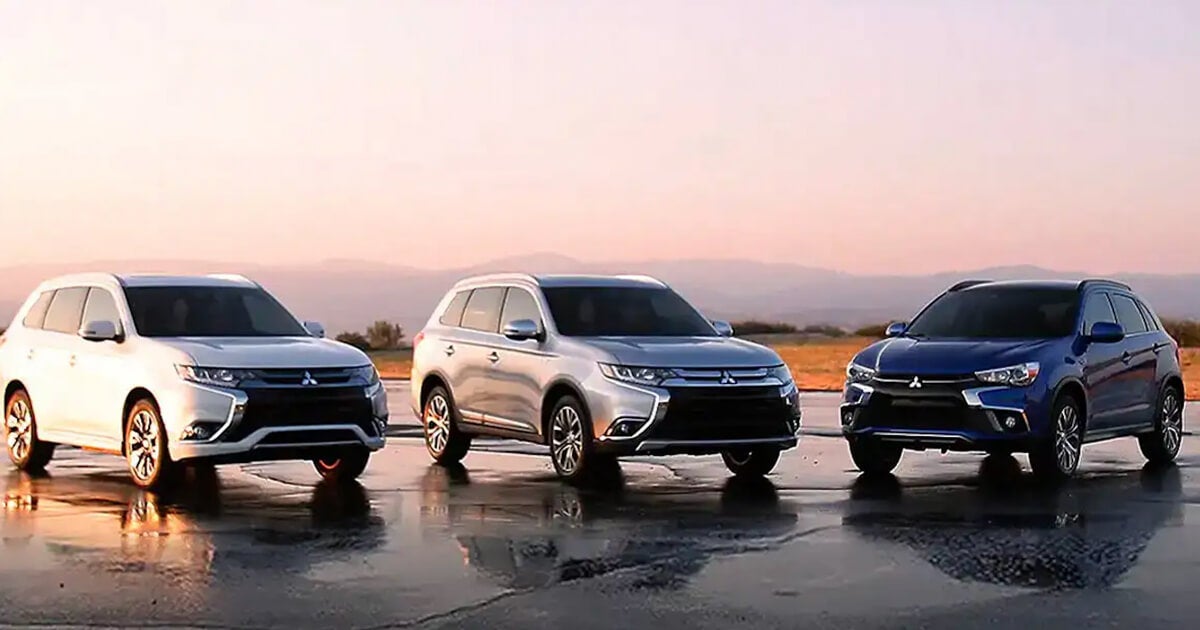
Both classes now aim high for safety. Crossovers often include advanced driver aids as standard. Their lower center of gravity usually helps avoid rollovers.
SUVs may offer more off-road safety gear like hill descent control and skid plates. Their stronger frames can perform well in some crash scenarios, while higher mass can be a downside in collisions with smaller cars.
Tech and safety trade-offs
- Active safety: Crossovers often get the latest driver-assist tech first.
- Passive safety: SUVs may benefit from stronger structures for certain impacts.
- Rollover risk: Higher SUVs can be more prone to roll events if driven improperly.
The rollover gap shows up in the data: per Insurance Institute for Highway Safety figures, rollovers were involved in roughly 34% of SUV occupant deaths in 2023, compared with about 21% for passenger cars. Modern stability control and lower-profile designs have narrowed this gap over the past two decades, but it hasn’t closed it entirely.
Source: mitsubishicars.com
Ownership costs and maintenance: suv vs crossover differences
Cost to own varies by fuel use, complexity, and repair needs. Crossovers usually cost less to run thanks to better fuel economy and cheaper repairs. Parts are often shared with sedans, which helps parts availability and pricing.
SUVs can cost more to fuel and maintain, especially those with heavy-duty components. However, some SUVs hold value well due to reputation and capability.
Cost factors to consider
- Fuel: Crossovers are normally more efficient.
- Insurance: Bigger, more powerful SUVs can cost more to insure.
- Resale: High-demand SUVs can keep value strong.
Repair costs cut the other way in some cases: because a unibody’s frame and body are a single welded structure, a serious collision can sometimes mean more extensive structural repair than on a body-on-frame vehicle, where the body can occasionally be repaired or replaced somewhat independently of the frame underneath it.

Source: youtube.com
Personal experience and practical buying tips
From test drives and long trips, I’ve learned a few things. On a 1,000-mile family trip in a crossover, we saved fuel and felt less fatigue. On a week of trail camping in an SUV, gear and towing were effortless, but the fuel bill rose.
Tips I use and share with friends
- Define primary use: Daily commutes point to crossovers; towing and heavy loads point to SUVs.
- Test drive both: Pay attention to blind spots, seat comfort, and entry height.
- Check real tow ratings: Manufacturer numbers can vary by trims and options.
- Consider future needs: A growing family or new hobbies can change the best choice.
Practical buying checklist for suv vs crossover differences
Use this checklist when you shop. It keeps decisions focused and simple.
- Use case: Daily driving, hauling, off-road, or towing.
- Fuel economy: Compare real-world MPG estimates.
- Seating and cargo: Measure rear legroom and cargo floor height.
- Towing package: Confirm hitch, cooling, and brakes for towing needs.
- Cost of ownership: Estimate insurance, fuel, and maintenance costs.
Frequently Asked Questions of suv vs crossover differences
What is the main difference between a crossover and an SUV?
The main difference is the platform: crossovers use a unibody car platform, while traditional SUVs use a body-on-frame or reinforced unibody for strength. That choice affects ride, handling, and towing.
Are crossovers less capable off-road than SUVs?
Generally yes. Crossovers are built for on-road comfort and may lack heavy-duty suspension and low-range gearing that many SUVs have. Some crossovers still offer light off-road features for mild trails.
Do crossovers get better gas mileage than SUVs?
Yes. Crossovers tend to be lighter and more aerodynamic, so they usually deliver better fuel economy than heavier, truck-based SUVs. Hybrid crossovers can boost this gap further.
Which is safer: crossover or SUV?
Both can be very safe. Crossovers often score well due to stability and modern active safety tech. SUVs may have stronger structures but can have higher rollover risk if driven improperly.
Should I buy an SUV instead of a crossover for towing?
If you plan to tow heavy loads regularly, an SUV is often the better choice due to stronger frames and higher tow ratings. Check the specific tow rating and equipment for the model you consider.
Is My Vehicle a Crossover or an SUV?
Check the platform, not the name on the window sticker. If your vehicle shares its structure with a sedan or minivan (unibody), it’s a crossover — common examples include the RAV4, CR-V, and Highlander. If it’s built on a separate truck-style frame (body-on-frame), it’s a traditional SUV — examples include the 4Runner, Wrangler, and Tahoe. Automakers often market both types simply as “SUVs,” so the name alone isn’t a reliable guide.
Conclusion
Choosing between suv vs crossover differences comes down to how you use the vehicle. Pick a crossover for daily comfort, better fuel use, and easier city driving. Choose an SUV for towing, heavy loads, and rugged tasks. Use the practical tips and checklist above to match features to your life.
Take action: test drive both types, compare real-world specs, and decide based on use, not just looks. If you found this helpful, leave a comment or subscribe for more buying guides and real-world vehicle tests.