
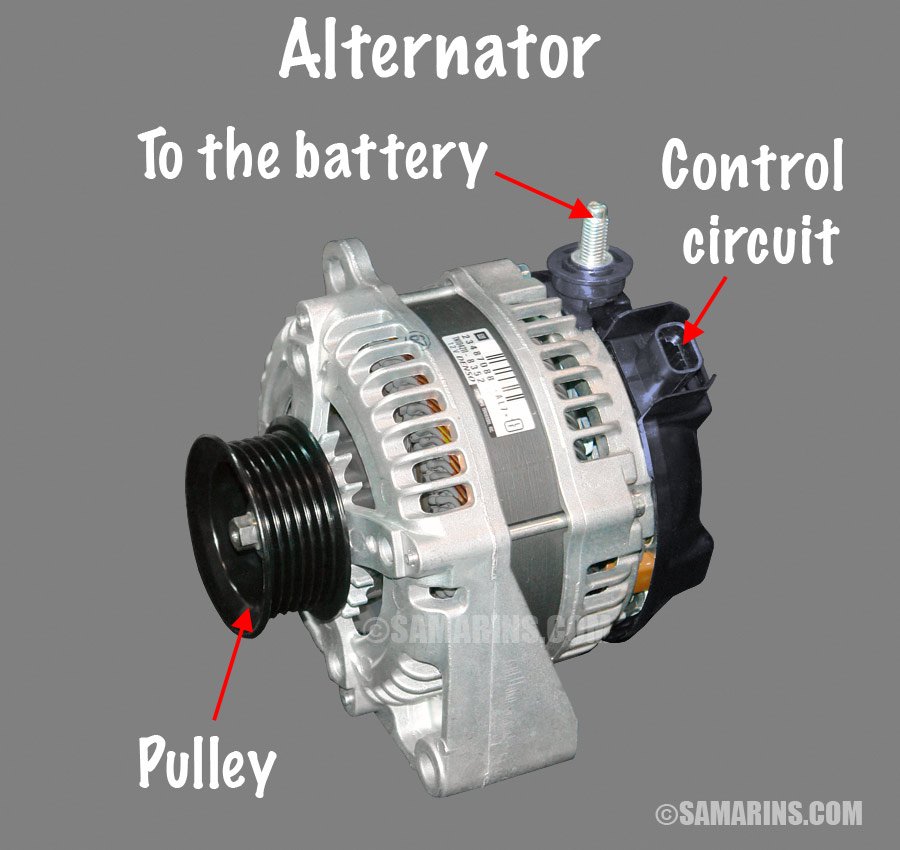
An alternator generates electricity to power your car and recharge its battery.
Understanding what is an alternator and what does it do helps every driver avoid common electrical problems. The alternator is one of the most important parts under your vehicle’s hood because it keeps the electrical system working after the engine starts.
From my experience studying vehicle systems, many drivers replace batteries when their car has starting issues, but the real problem is often a failing alternator. A weak alternator can slowly drain a good battery and leave you stranded without warning.
What Is an Alternator and What Does It Do in a Car?
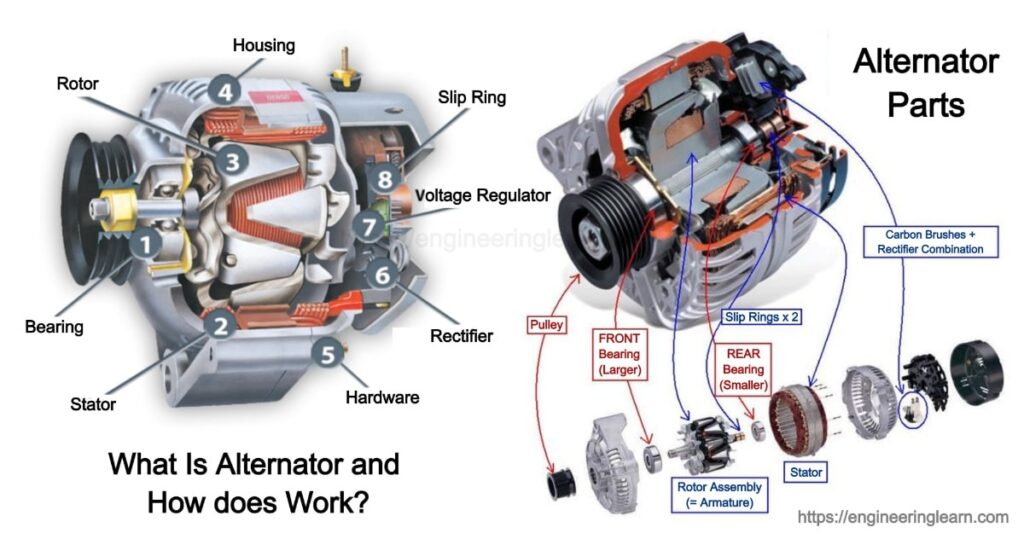
What is an alternator and what does it do? An alternator is a mechanical device that converts energy from your engine into electrical power. It uses a belt connected to the engine to spin internal parts and produce electricity.
Modern vehicles depend on alternators to run many systems, including headlights, climate controls, infotainment systems, safety features, and engine computers. Without a working alternator, your vehicle cannot maintain enough electrical power for normal operation.
- ✦ Produces electricity
The alternator changes mechanical energy from the engine into electrical energy used by the vehicle.
- ✦ Charges the battery
The alternator restores energy used by the battery during engine starting.
- ✦ Supports vehicle systems
It supplies power to electrical components while the engine is running.
Why Cars Need an Alternator
A car battery alone cannot power all electrical systems for a long time. The battery mainly starts the engine, while the alternator keeps electricity flowing during driving.
How Does an Alternator Work?
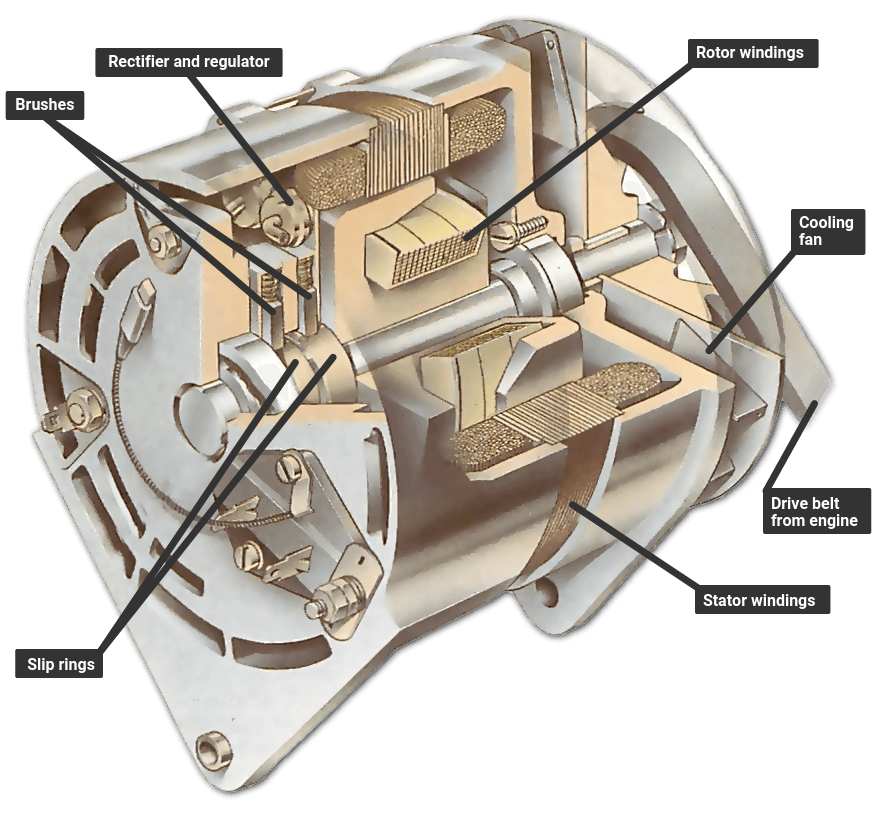
An alternator works through electromagnetic principles. When the engine spins the alternator pulley, it rotates a part called the rotor inside a magnetic field.
This movement creates alternating current electricity. A component called the rectifier changes this electricity into direct current, which the car can use.
- ✦ Engine rotation
The engine turns the alternator through a serpentine belt.
- ✦ Electrical generation
The spinning rotor and stator create electrical energy.
- ✦ Voltage control
The voltage regulator keeps electrical output stable.
Main Parts Inside an Alternator
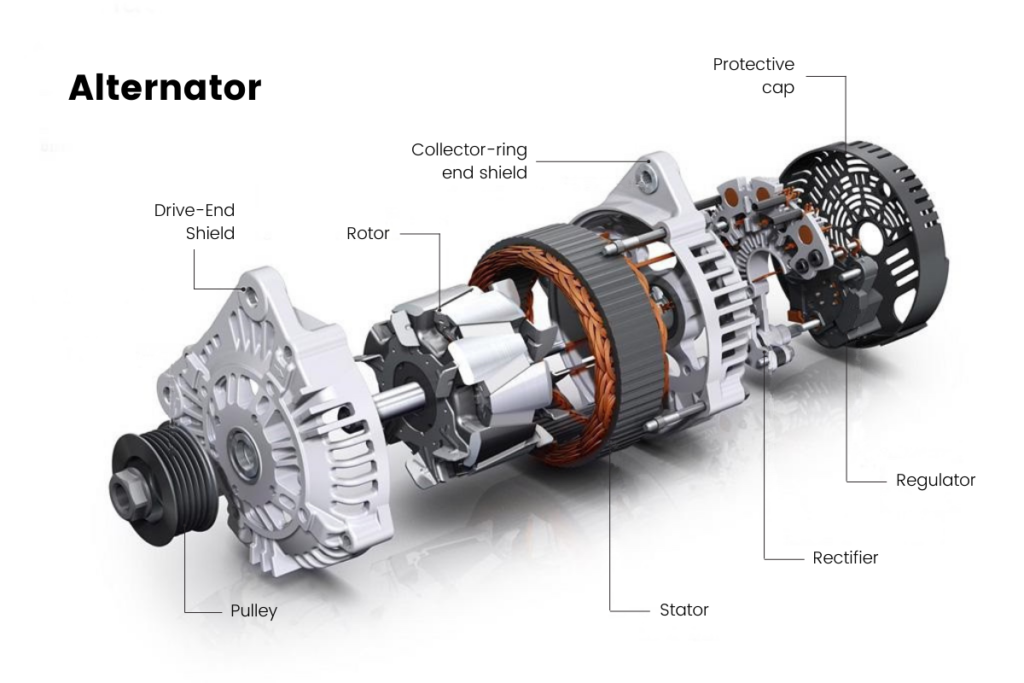
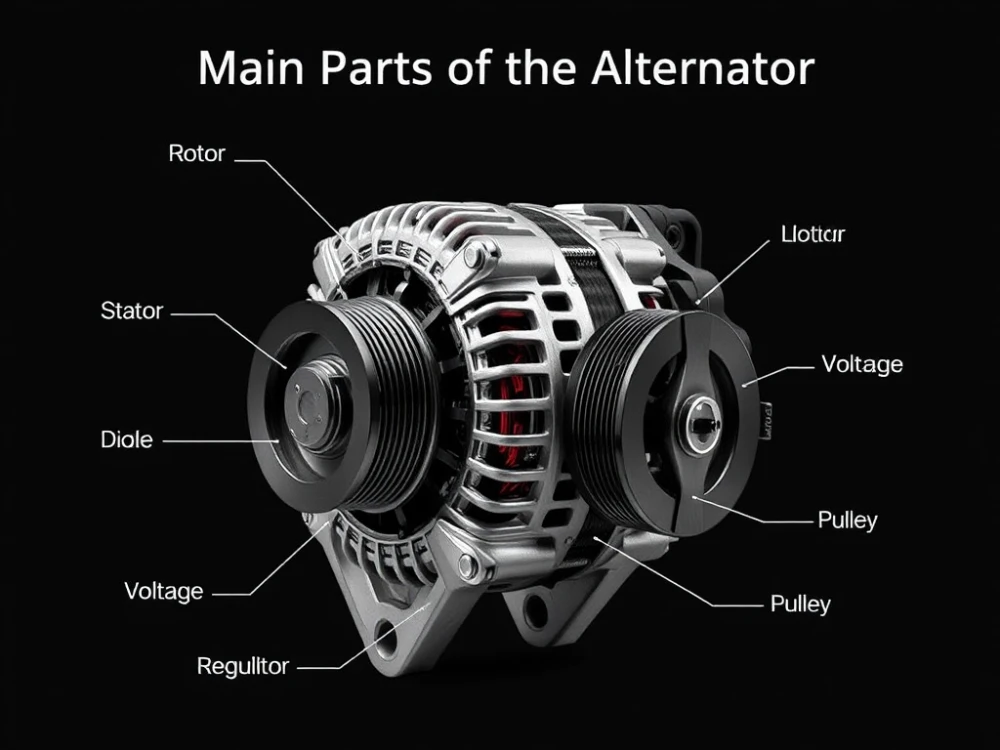
An alternator contains several parts that work together. The rotor, stator, diode assembly, bearings, and voltage regulator each play a role in creating and controlling electricity.
- ✦ Rotor
The rotating part that creates a changing magnetic field.
- ✦ Stator
The stationary part where electrical current is produced.
The Role of an Alternator in the Vehicle Charging System
The charging system includes the alternator, battery, wiring, and voltage regulator. These parts work together to deliver reliable power to your vehicle.
When you start your car, the battery provides the initial energy. After the engine runs, the alternator takes over and supplies power while replacing the battery’s used energy.
- ✦ Battery support
The alternator prevents the battery from losing charge during normal driving.
- ✦ Electrical stability
The charging system maintains steady voltage for vehicle electronics.
Alternator vs Battery
The battery stores electricity, while the alternator creates electricity. Both parts are connected, but they perform different jobs.
Common Signs of a Failing Alternator
Knowing what is an alternator and what does it do also means understanding failure symptoms. Alternator problems often appear slowly before a complete breakdown happens.
Drivers in the United States may notice warning signs during daily trips, highway drives, or cold weather starts. Early detection can prevent expensive towing and repair costs.

- ✦ Dim headlights
Weak alternator output can cause lights to become less bright.
- ✦ Battery warning light
A dashboard battery symbol may indicate a charging system issue.
- ✦ Electrical problems
Power windows, radio systems, or dashboard electronics may behave poorly.
Strange Sounds From the Alternator
Grinding or whining sounds may point to worn bearings or damaged internal parts. These noises should be checked before the alternator stops working completely.
How to Test an Alternator
Testing an alternator helps confirm whether the charging system works correctly. Many technicians use a digital multimeter to measure voltage output at the battery terminals.
A healthy charging system usually produces higher voltage when the engine runs compared with when the engine is off. Exact readings depend on the vehicle design and manufacturer specifications.

- ✦ Check battery voltage
Measure battery voltage before starting the engine.
- ✦ Test running voltage
Measure output while the engine is running.
Professional Alternator Inspection
A professional inspection can check belt condition, wiring, bearings, and charging output. This gives a clearer picture than replacing parts without diagnosis.
How Long Does an Alternator Usually Last?
Alternator lifespan depends on driving habits, vehicle design, climate, and electrical demand. Many alternators last for years, but heavy use can increase wear.
Frequent short trips, extreme temperatures, and additional electrical accessories may place extra stress on the charging system.
- ✦ Driving conditions
City driving with frequent starts can increase charging system workload.
- ✦ Maintenance habits
Checking belts and electrical connections can support longer service life.
Replacing an Alternator
Alternator replacement involves removing the old unit and installing a compatible replacement. Labor time and cost vary by vehicle model and accessibility.
