
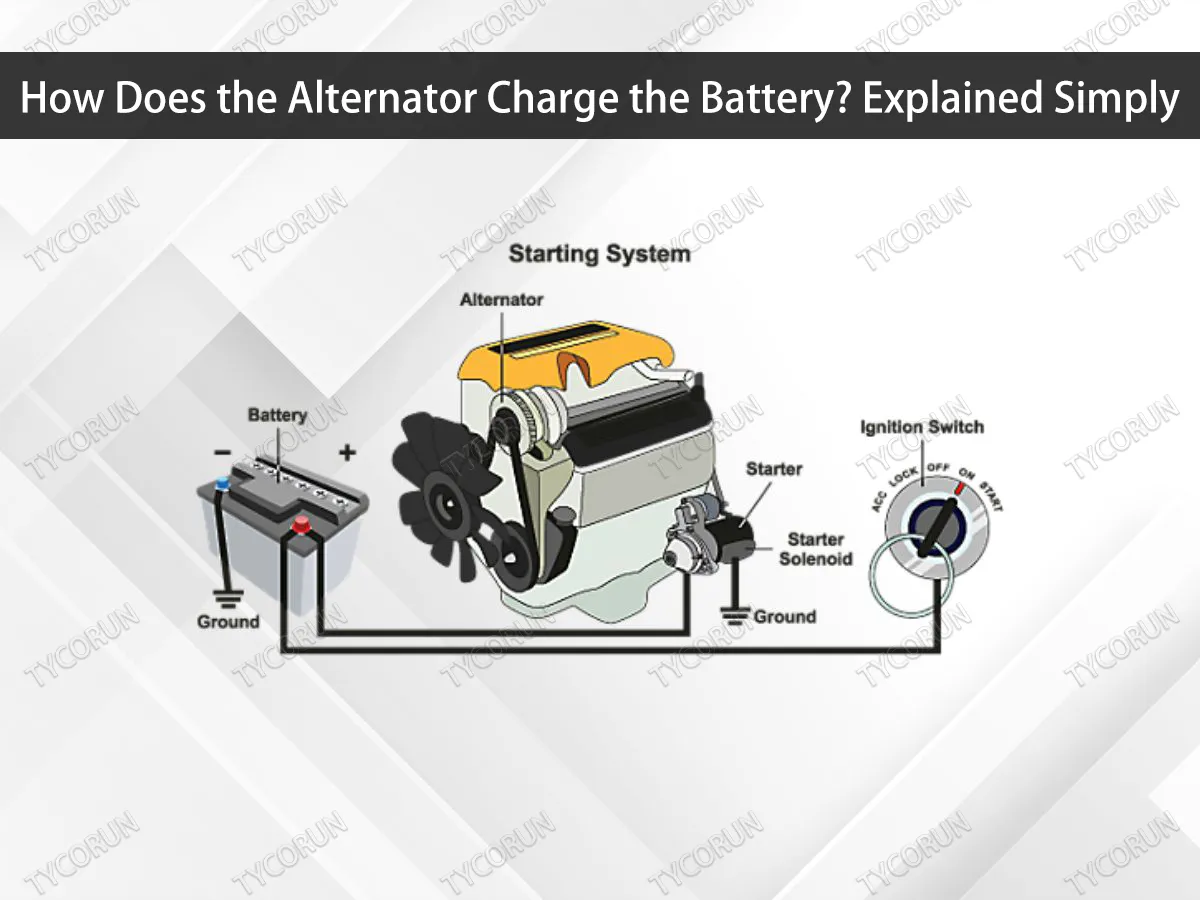
Understanding How a Car Battery and Alternator Work Together helps drivers avoid common breakdowns. In the United States, most people depend on their vehicles every day for work, school, shopping, and travel. A problem in the charging system can leave a driver stuck without warning.
From years of studying automotive systems, one lesson is clear: the battery and alternator are not separate parts working alone. They form a team. The battery stores electrical energy, while the alternator produces power and restores the battery charge after startup.
How a Car Battery and Alternator Work Together becomes easier to understand when you view the system as a repeating cycle. The battery gives the starter motor energy, the engine begins running, and the alternator takes over by supplying electricity to the vehicle.
What Does a Car Battery Do?
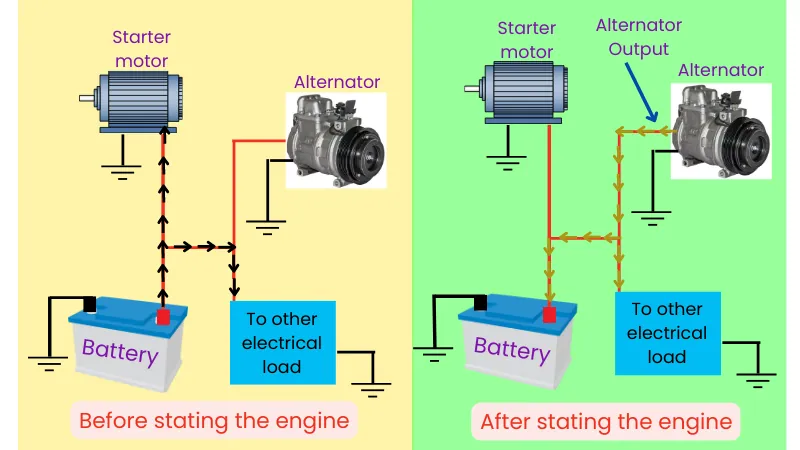
The car battery is the main storage unit for electrical energy. Its first major job is starting the engine. When you turn the key or press the start button, the battery sends a strong electrical current to the starter motor.
The starter motor uses this energy to turn the engine crankshaft. Once the engine starts running, the battery changes from being the main power source to a backup storage device that receives energy from the alternator.
A healthy battery also supports vehicle electronics when the engine is off. This includes lights, security systems, radio memory, and other small electrical features.
- ✦ Engine Starting Power
The battery delivers a high amount of electrical energy for a short time to operate the starter motor.
- ✦ Energy Storage
The battery stores electricity produced by the alternator for future use.
- ✦ Electrical Support
The battery helps maintain power for important systems when the engine is not running.
How a Battery Stores Electrical Energy
Most modern vehicles use lead-acid batteries. Inside the battery, chemical reactions create electrical energy that can be released when needed.
The battery does not continuously create power. It only stores and supplies electricity. The alternator is responsible for replacing the energy used during startup.
What Does an Alternator Do?
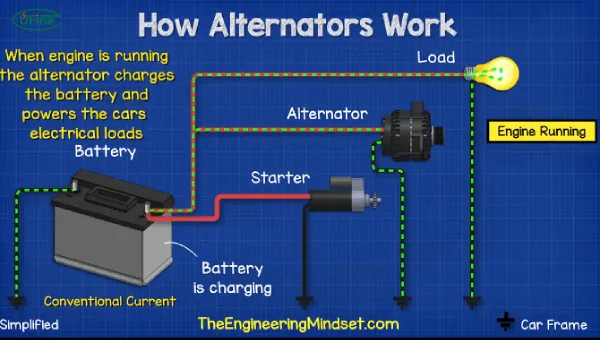
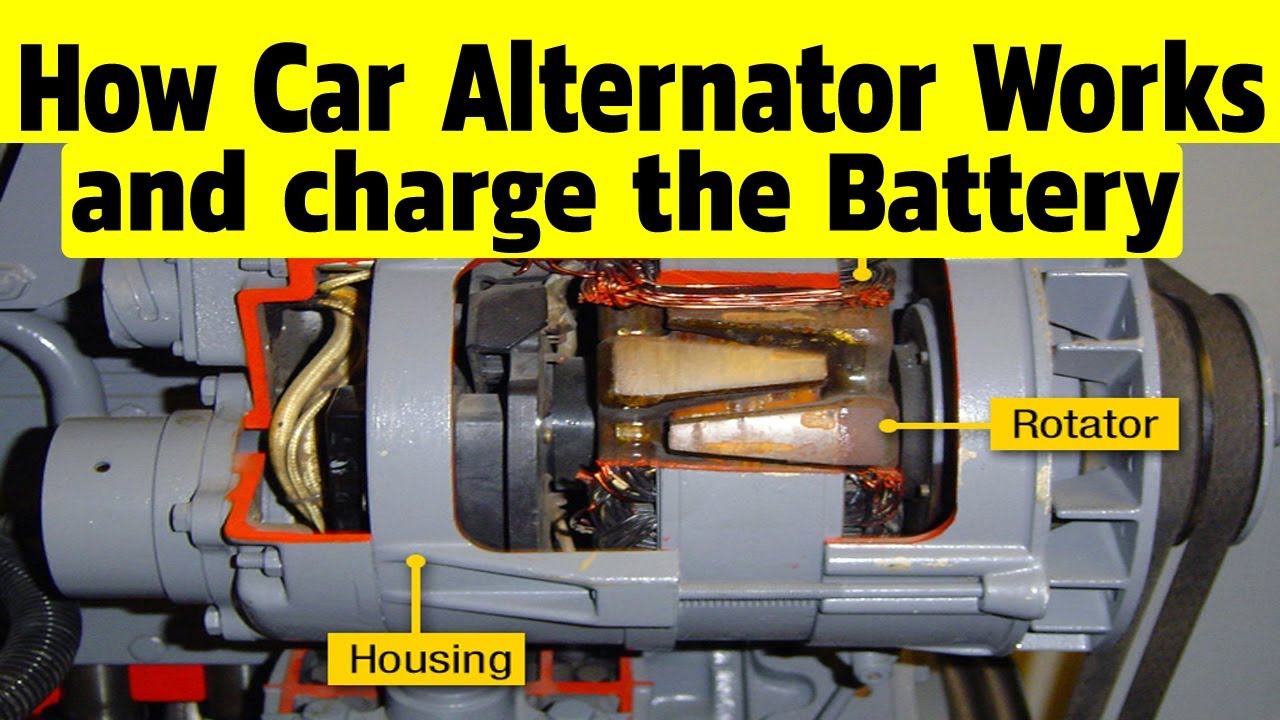
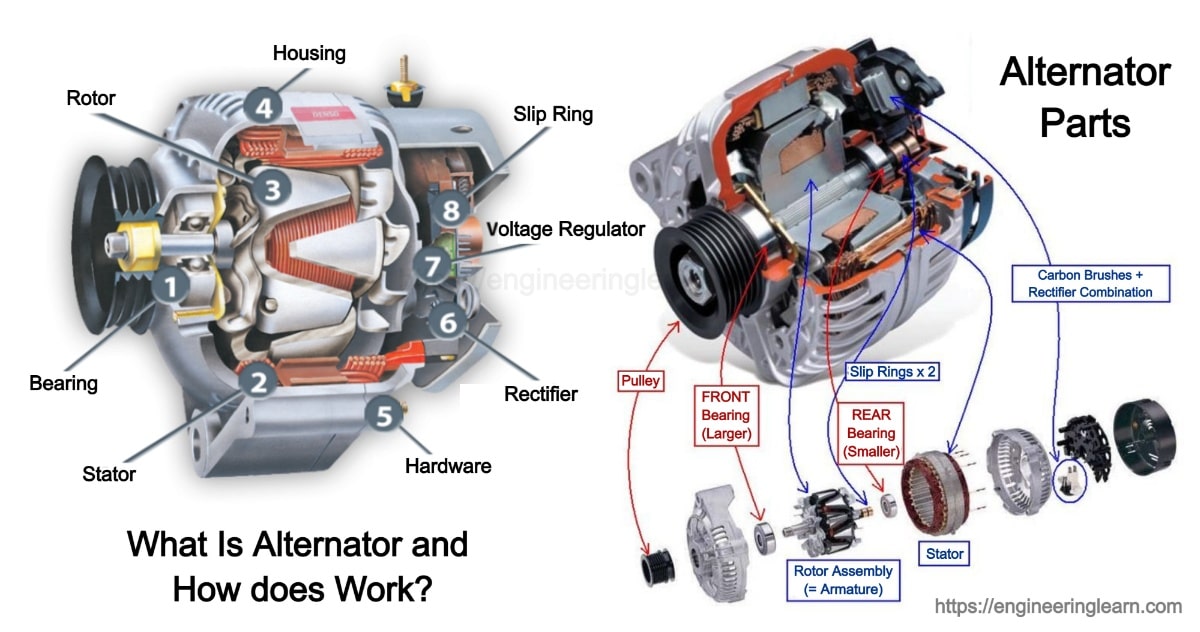
The alternator is the part that creates electricity while the engine is running. It uses mechanical energy from the engine through a belt system and converts it into electrical energy.
A working alternator supplies power to systems such as headlights, air conditioning, dashboard electronics, and entertainment systems. At the same time, it sends electricity back to the battery to replace the energy used during startup.
How a Car Battery and Alternator Work Together depends heavily on the alternator maintaining the correct charging level. Without enough charging power, the battery slowly loses energy until the vehicle cannot start.
- ✦ Power Generation
The alternator converts engine movement into electricity for the vehicle.
- ✦ Battery Charging
The alternator restores the battery charge after the engine starts.
- ✦ Electrical System Support
The alternator powers many vehicle systems during operation.
How an Alternator Produces Electricity
The alternator uses a spinning rotor and magnetic fields to create electrical current. A built-in regulator controls the output so the vehicle receives a stable voltage.
Modern alternators are designed to provide enough power for advanced electronics found in many newer cars, trucks, and SUVs.
How a Car Battery and Alternator Work Together Step by Step
The relationship between these two parts follows a simple process. The battery begins the cycle, and the alternator completes it by restoring energy.
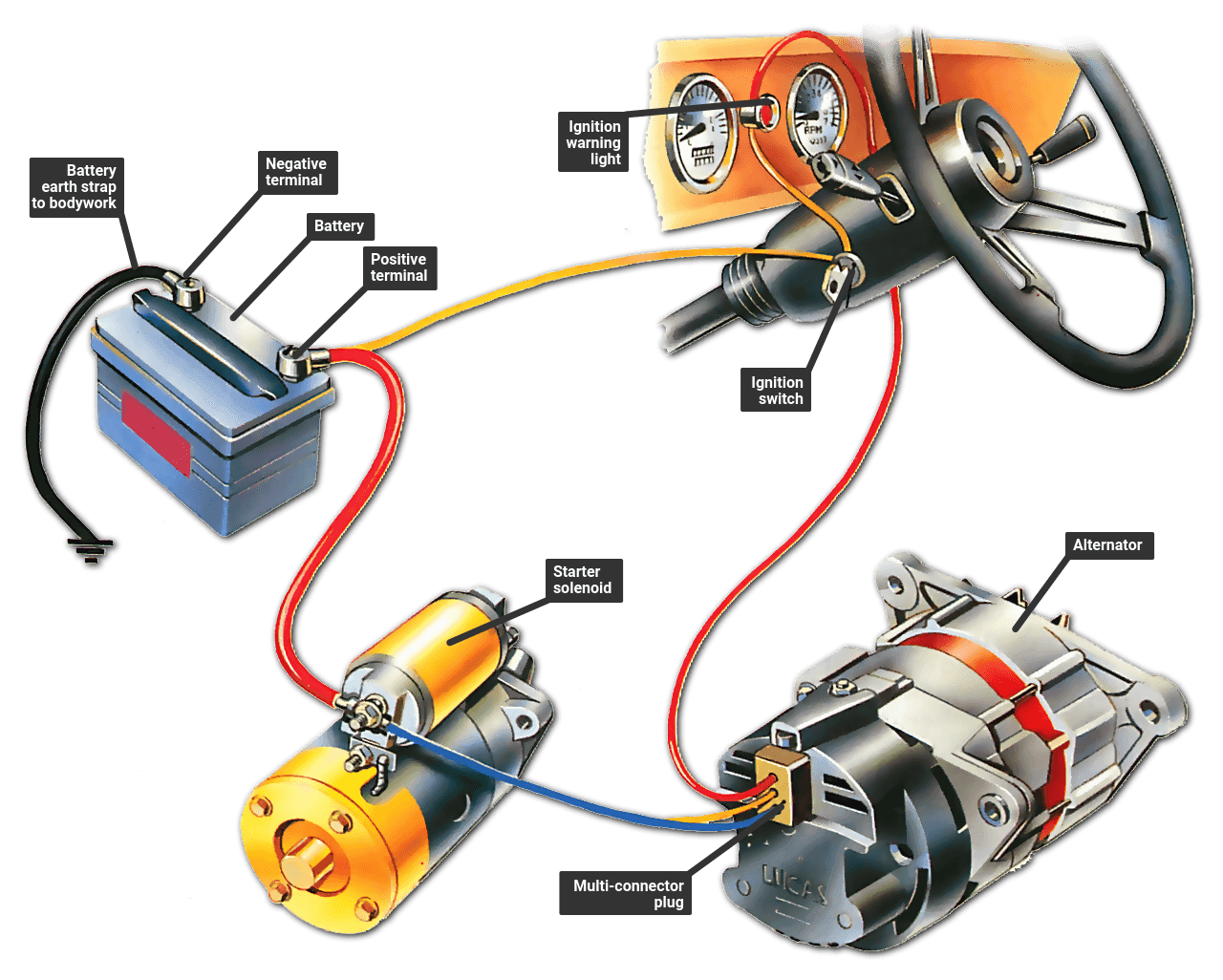
When you start your car, the battery sends power to the starter motor. After the engine runs, the alternator begins producing electricity and takes responsibility for powering the vehicle.
This cycle repeats every time you drive. A failure in either part can interrupt the entire electrical system.
- ✦ Step 1: Battery Starts the Engine
The battery sends electrical power to the starter motor to crank the engine.
- ✦ Step 2: Alternator Activates
Once the engine runs, the alternator starts generating electricity.
- ✦ Step 3: Battery Recharges
The alternator replaces the energy the battery used during startup.
Why Both Parts Must Work Properly
A new battery cannot fix a charging problem caused by a weak alternator. Likewise, a strong alternator cannot help if the battery cannot hold a charge.
Technicians often test both components because their symptoms can look similar. Proper diagnosis saves money and prevents unnecessary replacements.
Signs of Battery or Alternator Problems
Battery and alternator problems often create warning signs before complete failure. Paying attention to these signs can prevent unexpected breakdowns.
Drivers may notice slow engine cranking, dim lights, warning indicators, or electrical problems. These symptoms can point to different causes, so testing is the best way to find the real issue.
- ✦ Slow Engine Start
A weak battery may struggle to provide enough power for the starter motor.
- ✦ Dim Headlights
Low charging output from the alternator can reduce electrical performance.
- ✦ Battery Warning Light
A dashboard charging light may indicate an alternator or electrical system issue.
- ✦ Dead Battery After Driving
A failing alternator may not recharge the battery correctly.
Common Causes of Charging System Failure
Charging problems can happen because of worn belts, damaged wiring, old batteries, failed alternator parts, or poor electrical connections.
Regular inspections help identify small problems before they become expensive repairs.
How to Maintain Your Vehicle Charging System
Maintaining the battery and alternator together helps improve reliability. Simple checks can extend the life of these important components.
Many American drivers make short trips every day. Frequent short drives may not give the alternator enough time to fully recharge a weak battery, especially in extreme weather.
- ✦ Check Battery Connections
Clean and secure terminals help electricity flow correctly.
- ✦ Inspect the Drive Belt
A damaged belt can prevent the alternator from spinning properly.
- ✦ Test Battery Health
Regular testing can identify weak batteries before failure.
Professional Testing Matters
A professional charging system test checks battery condition, alternator output, and electrical connections.
Testing both parts together provides a clearer picture than replacing parts based only on symptoms.
