
What Is CAN Bus in a Car is a common question among drivers who want to understand modern vehicle electronics. Today’s cars are not only mechanical machines. They are also computer networks with many control units working together every second.
From my experience studying automotive electrical systems, I have seen how CAN Bus changed vehicle repair. Older cars used many separate wires for each function. Modern vehicles use a smart communication network that reduces wiring and helps computers share data faster.
In simple terms, CAN Bus in a car works like a digital conversation line between electronic control units. The engine computer, brake system, airbag module, and other parts can exchange information without needing a separate wire for every signal.

What Is CAN Bus in a Car and Why Does It Matter?
CAN Bus stands for Controller Area Network Bus. It is a communication system that allows different electronic control units, also called ECUs, to exchange information inside a vehicle.
When you press the brake pedal, turn on cruise control, or start the engine, several computers need to work together. CAN Bus allows these systems to send and receive messages quickly.
Without CAN Bus, modern cars would need thousands of wires. This would increase weight, cost, and the chance of wiring problems.
- ✦ Fewer wires
CAN Bus reduces the need for separate wires between every vehicle component.
- ✦ Faster communication
Vehicle computers can share important data almost instantly.
- ✦ Better vehicle control
Different systems can work together for safety, comfort, and performance.
How CAN Bus Replaced Older Wiring Systems
Older vehicles often used direct wiring connections. Each switch or sensor needed its own wire to reach a control unit. This approach became difficult as cars gained more electronic features.
CAN Bus created a simpler method. Multiple computers can share the same communication wires while sending specific messages to the correct system.
- ✦ Traditional wiring
Each device often required separate connections.
- ✦ CAN Bus wiring
Many devices share a common communication network.
How Does CAN Bus Work Inside a Vehicle?
CAN Bus in a car uses two main communication wires called CAN High and CAN Low. These wires carry digital signals between connected control modules.
Each message on the CAN network contains information about the sender and the data being shared. Every connected ECU checks the message and decides whether it needs to respond.
The system does not need a central computer to control every message. Each module can communicate based on message priority.

- ✦ CAN High wire
Carries one part of the differential communication signal.
- ✦ CAN Low wire
Works with CAN High to create reliable data transfer.
- ✦ Electronic Control Units
Small computers that send and receive vehicle information.
The Role of ECUs in CAN Bus Communication
A modern vehicle may contain dozens of ECUs. Some control major systems, while others manage comfort features.
For example, the engine control module can share vehicle speed information with the transmission module and cruise control system through CAN Bus.
- ✦ Engine ECU
Controls engine operation and performance data.
- ✦ ABS module
Shares braking and wheel speed information.
Which Car Systems Use CAN Bus?
Most modern vehicles sold in the United States use CAN Bus for many important functions. The network connects safety systems, engine controls, and convenience features.
When multiple systems need shared information, CAN Bus provides a reliable communication path.

- ✦ Engine management
Shares information about fuel, air, temperature, and engine performance.
- ✦ Transmission control
Uses data from other modules to improve shifting.
- ✦ Safety systems
Connects airbags, ABS, stability control, and other safety modules.
- ✦ Infotainment systems
Allows communication between displays, controls, and vehicle functions.
High-Speed and Low-Speed CAN Networks
Many vehicles use different CAN networks for different needs. High-speed CAN handles important systems like engine and brake control.
Low-speed CAN is often used for comfort features such as seats, windows, and interior controls.
- ✦ High-speed CAN
Designed for fast communication where timing is critical.
- ✦ Low-speed CAN
Used for slower comfort and convenience functions.
Common CAN Bus Problems and Failure Symptoms
CAN Bus problems can affect many vehicle systems because multiple computers depend on the same communication network. A small network issue can create several warning messages.
Diagnosing CAN Bus faults requires proper testing tools. Replacing random parts often wastes time and money because the problem may be wiring, connectors, or communication errors.
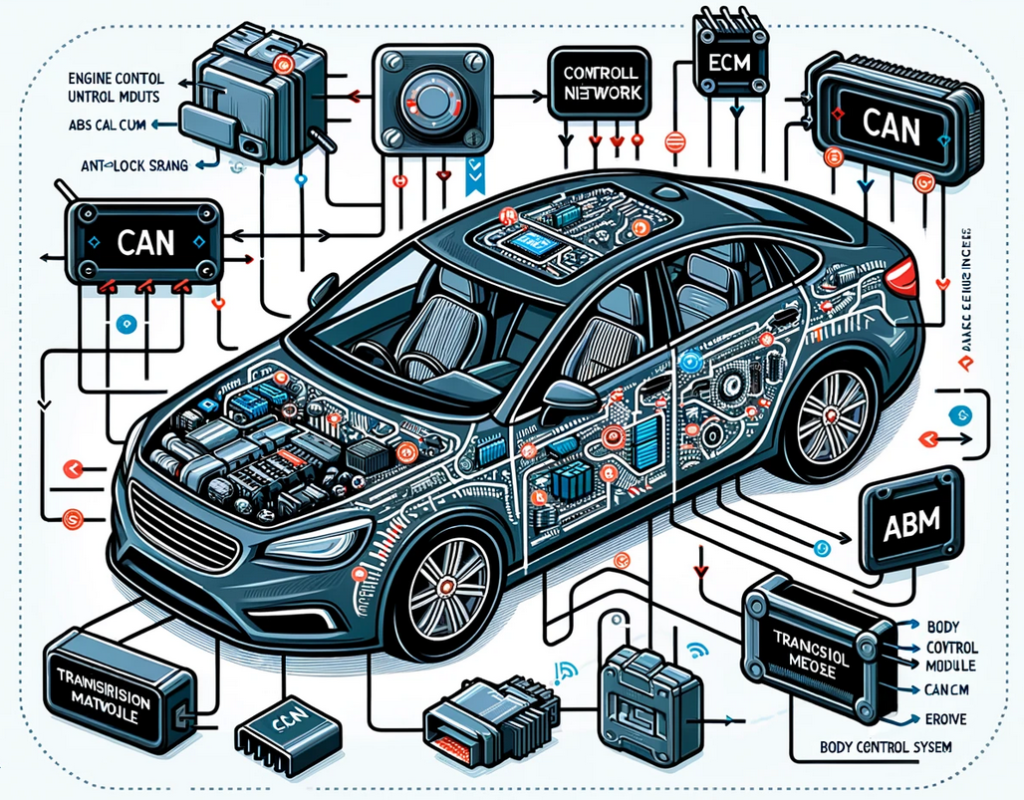
- ✦ Dashboard warning lights
Multiple warning lights may appear when modules cannot communicate.
- ✦ Scanner communication failure
Diagnostic tools may fail to connect with certain vehicle modules.
- ✦ Electrical problems
Features like windows, lights, or infotainment may stop working.
- ✦ Intermittent issues
Loose connections or damaged wires can create random failures.
What Causes CAN Bus Failure?
CAN Bus failures usually happen because of damaged wiring, poor connections, water damage, or faulty control modules.
Technicians often inspect wiring and measure network signals before replacing expensive electronic parts.
- ✦ Damaged wires
Broken insulation or short circuits can interrupt communication.
- ✦ Faulty ECU
A damaged control unit can stop normal network operation.
How Mechanics Diagnose CAN Bus Issues
Professional technicians use scan tools, multimeters, and network testing equipment to diagnose CAN Bus problems. The first step is usually checking communication between vehicle modules.
A technician may inspect diagnostic trouble codes, wiring diagrams, voltage readings, and network resistance values to locate the problem.
A careful testing process prevents unnecessary replacement of expensive electronic components.

- ✦ Scan tool testing
Checks communication with vehicle control modules.
- ✦ Electrical testing
Measures voltage and resistance in the CAN network.
- ✦ Visual inspection
Finds damaged wires, corrosion, and connector problems.
Why Proper Diagnosis Matters
CAN Bus systems connect many important vehicle functions. A wrong repair can create new problems or fail to solve the original issue.
Good diagnosis focuses on finding the actual communication failure instead of replacing parts based only on symptoms.
- ✦ Save repair costs
Accurate testing avoids unnecessary part replacement.
Benefits and Limitations of CAN Bus in Modern Cars
CAN Bus made vehicle design easier and improved communication between electronic systems. It is one of the main technologies behind modern automotive electronics.
However, CAN Bus also has limits. As vehicles add more features, manufacturers often combine CAN Bus with newer communication technologies.
- ✦ Benefits
Lower wiring complexity, reliable communication, and easier system integration.
- ✦ Limitations
Complex diagnosis and possible network problems when communication fails.
