
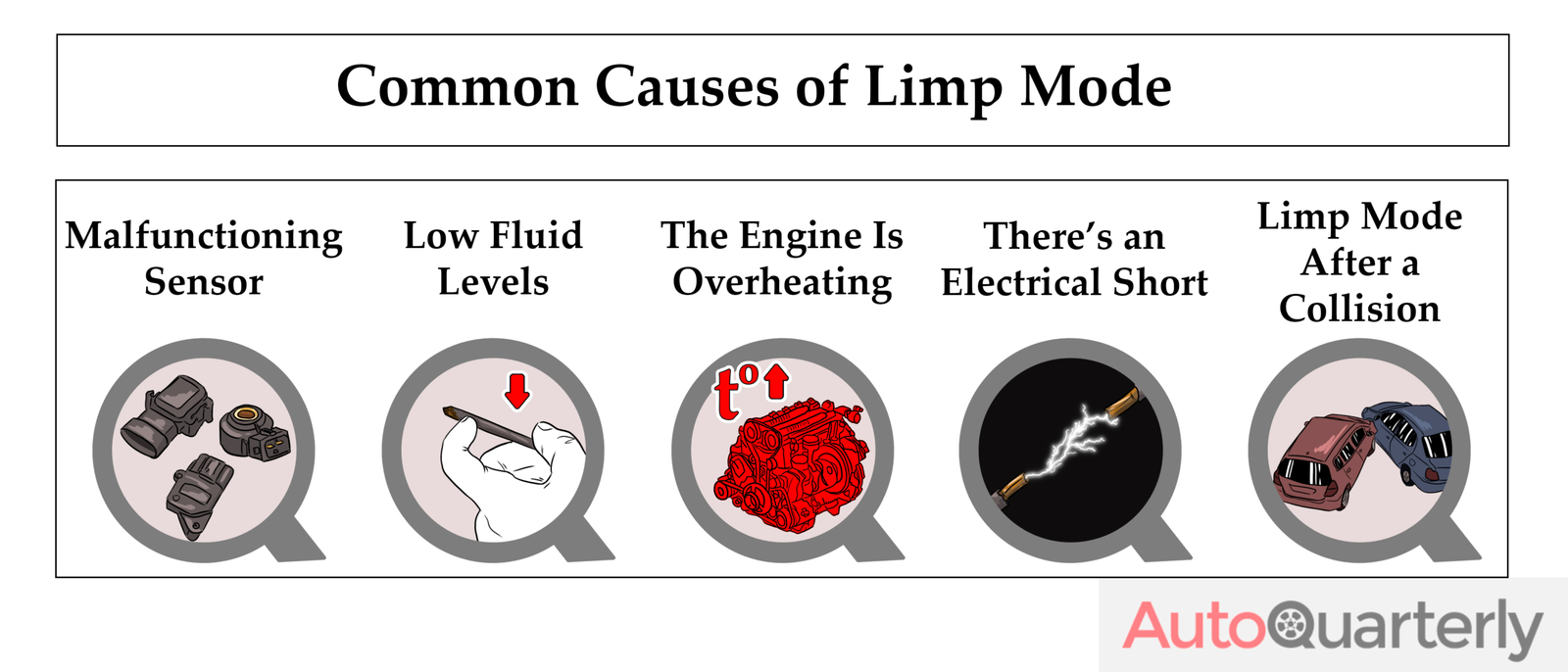
If your vehicle suddenly loses power, stops shifting normally, or refuses to accelerate past a certain speed, you may be experiencing limp mode. Many drivers in the United States first notice this problem during daily commutes, highway trips, or when climbing hills.
In my experience working with automotive troubleshooting topics, the biggest mistake people make is treating limp mode as the actual problem. Limp mode is only a safety response. The real issue is usually a failed sensor, engine problem, transmission fault, or electrical issue that triggered the warning.
Understanding what causes a car to enter limp mode helps you avoid unnecessary part replacements. A proper diagnosis can save money and prevent a small problem from becoming a major repair.

What Is Limp Mode and Why Does a Car Activate It?
Limp mode is a protective setting built into modern vehicles. The engine control module or transmission control module activates this mode when it detects a condition that may harm the vehicle.
When limp mode starts, the computer may reduce engine power, limit turbo boost, lock the transmission into one gear, or lower throttle response. These limits allow the driver to reach a repair shop safely.
The reason what causes a car to enter limp mode can be confusing is that many different systems communicate with the vehicle computer. A fault in one small component can affect the entire driving experience.
- ✦ Reduced Engine Power
The computer may limit fuel delivery, throttle opening, or turbo pressure to protect the engine.
- ✦ Transmission Protection
The vehicle may stay in one gear when the transmission detects a serious problem.
- ✦ Warning Lights
Many vehicles display a check engine light, transmission warning, or reduced power message.
Faulty Engine Sensors Are One of the Most Common Causes of Limp Mode
Modern cars depend on many sensors to control fuel, air, timing, and emissions. When a sensor sends incorrect information, the computer may enter limp mode because it cannot safely control the engine.
A failed sensor does not always mean the sensor itself is broken. Dirt, wiring damage, loose connections, and electrical problems can also create incorrect readings.

- ✦ Mass Airflow Sensor Failure
A bad MAF sensor can send incorrect airflow data, causing poor acceleration and triggering limp mode.
- ✦ Throttle Position Sensor Problems
A faulty throttle sensor can confuse the engine computer and limit throttle operation.
- ✦ Boost Pressure Sensor Issues
Turbocharged engines may enter limp mode when boost pressure readings are outside safe limits.
How Sensors Trigger a Safety Response
The vehicle computer compares sensor data with expected values. If the difference becomes too large, it may reduce power to prevent engine damage.
For example, if a turbo engine shows unsafe boost pressure, the computer may lower power until the problem is repaired.
- ✦ Sensor Data Monitoring
The computer constantly checks information from engine and transmission sensors.
Transmission Problems Can Force a Vehicle Into Limp Mode
Transmission problems are a major reason what causes a car to enter limp mode. Automatic transmissions use sensors, fluid pressure, and electronic controls to select the correct gear.
If the transmission computer detects slipping, overheating, or incorrect gear operation, it may activate limp mode to reduce further damage.

- ✦ Low Transmission Fluid
Low fluid can reduce hydraulic pressure and cause incorrect shifting behavior.
- ✦ Transmission Solenoid Failure
Faulty solenoids can prevent proper gear changes and trigger protection mode.
- ✦ Transmission Overheating
High temperatures can damage internal parts, so the computer may limit operation.
Why Transmission Limp Mode Feels Different
Engine-related limp mode often feels like weak acceleration. Transmission limp mode may feel like the car is stuck in one gear.
Drivers often describe a harsh shift or delayed movement when a transmission protection system activates.
Engine Problems That Can Cause Limp Mode
The engine control system watches many conditions, including fuel pressure, temperature, and combustion quality. When these values become unsafe, the computer may reduce performance.
Many drivers ask what causes a car to enter limp mode after noticing rough running or sudden power loss. In many cases, the engine has detected a problem that needs attention.

- ✦ Turbocharger Problems
Turbo failures, boost leaks, or wastegate problems can cause low or excessive boost pressure.
- ✦ Fuel System Problems
Weak fuel pumps, clogged injectors, or low fuel pressure can affect engine operation.
- ✦ Engine Misfires
Severe misfires can damage the catalytic converter, causing the computer to reduce power.
Electrical Problems and Wiring Faults Can Trigger Limp Mode
Electrical issues are often overlooked when diagnosing limp mode. A damaged wire, weak battery, poor ground connection, or faulty connector can interrupt communication between vehicle systems.
Because modern cars rely heavily on computers, even a small electrical problem can create confusing symptoms.

- ✦ Damaged Wiring
Broken or damaged wires can stop sensors from sending correct information.
- ✦ Weak Battery Voltage
Low voltage can cause electronic modules to behave incorrectly.
- ✦ Communication Errors
Problems between control modules can activate protective settings.
How to Diagnose the Cause of Limp Mode
Finding what causes a car to enter limp mode starts with proper diagnosis. Replacing random parts can waste money because many different failures create similar symptoms.
An OBD2 scanner is one of the most useful tools for identifying stored trouble codes. However, the code is only a starting point and does not always identify the failed part directly.

- ✦ Scan Trouble Codes
Read stored diagnostic codes from the engine and transmission computers.
- ✦ Check Basic Maintenance Items
Inspect fluids, filters, connectors, and visible damage before replacing parts.
- ✦ Test the Suspected Component
Use proper testing methods to confirm the actual failure.
Can You Drive a Car in Limp Mode?
Short trips at low speed may be possible, but driving for a long time in limp mode is not recommended.
The reduced power is a warning that the vehicle needs attention. Continuing to drive may increase repair costs.
