
If you drive a modern vehicle in the United States, your car uses an EVAP system to control fuel vapors. This system keeps gasoline fumes from escaping into the air. When a part fails, the vehicle may detect a leak and turn on the check engine light.
Understanding what causes an EVAP system leak helps drivers avoid unnecessary repairs. In many cases, the problem comes from a small issue like a worn gas cap seal. Other times, the leak comes from aging hoses, valves, or the charcoal canister.
From a repair perspective, EVAP problems are often easier to solve when the cause is found early. A simple inspection can prevent drivers from replacing expensive parts that are still working properly.
 display: block; margin: 0 auto; border-radius: 12px; box-shadow: 0 8px 25px rgba(0, 0, 0, 0.12);”>
How the EVAP System Works and Why Leaks Happen
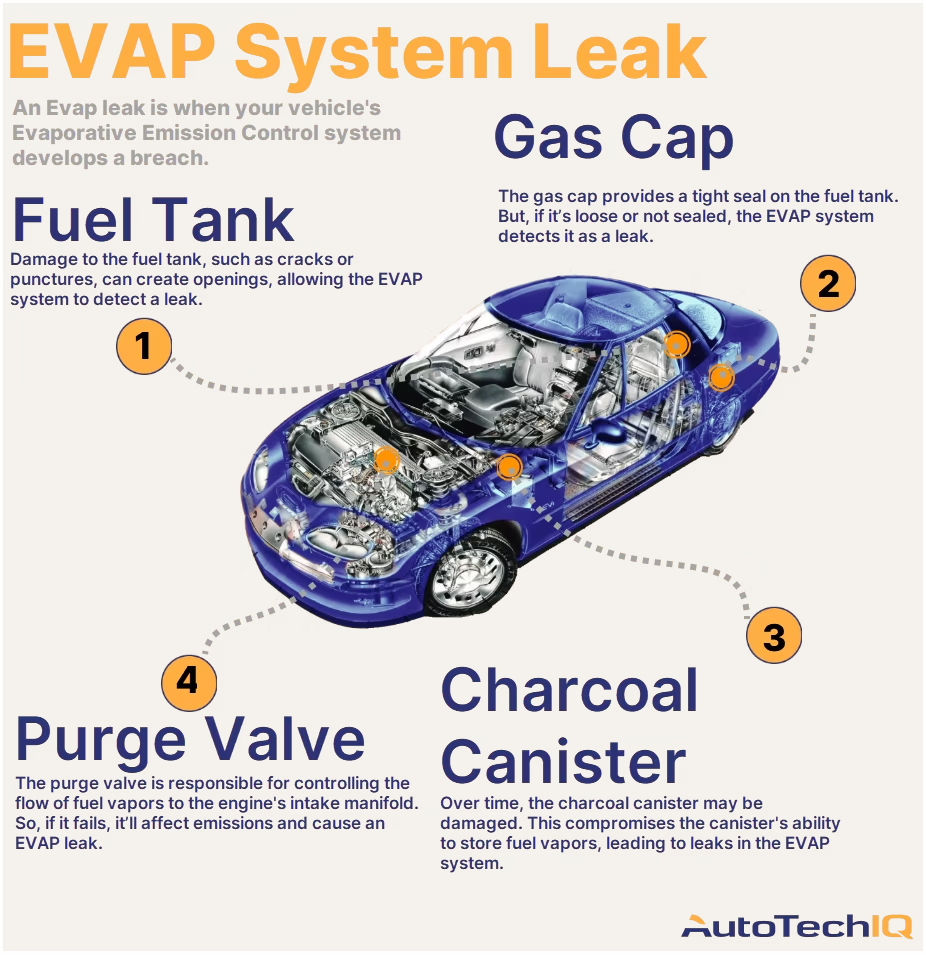
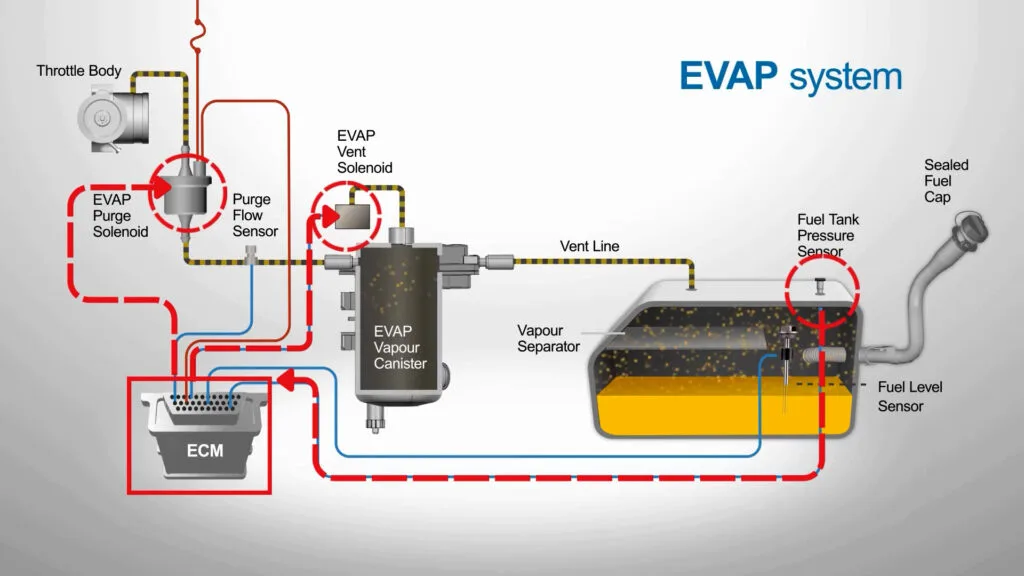
The EVAP system stores gasoline vapors from the fuel tank and sends them back into the engine to burn. It uses parts like the charcoal canister, purge valve, vent valve, fuel tank, and connecting hoses.
An EVAP system leak occurs when the sealed system cannot hold the correct pressure or vacuum. The engine computer checks the system and looks for pressure changes that suggest escaping fuel vapor.
The reasons behind what causes an EVAP system leak can vary from simple maintenance issues to failed mechanical parts.

- ✦ Fuel vapor escape
A leak allows gasoline vapors to leave the sealed EVAP system instead of being stored and reused.
- ✦ Pressure test failure
The vehicle computer may detect that the EVAP system cannot maintain the required pressure level.
Main EVAP System Components
The EVAP system has several connected parts. A failure in any one of these parts can create a leak and trigger diagnostic trouble codes.
- ✦ Charcoal canister
Stores fuel vapors before they enter the engine for combustion.
- ✦ Purge valve
Controls when stored fuel vapors move into the engine.
Common Causes of an EVAP System Leak
The most common answer to what causes an EVAP system leak is a damaged or loose component that prevents the system from staying sealed. These failures can happen because of age, heat, vibration, or improper maintenance.
Some EVAP problems are easy for drivers to fix, while others require professional testing equipment.
- ✦ Loose or damaged gas cap
A gas cap with a worn seal or incorrect installation can allow fuel vapors to escape.
- ✦ Cracked EVAP hoses
Rubber hoses can become brittle over time and develop small cracks that create leaks.
- ✦ Faulty purge valve
A stuck purge valve can prevent proper vapor control and cause EVAP system errors.
- ✦ Bad vent valve
A damaged vent valve can stop the system from sealing correctly during testing.
Loose Gas Cap Problems
A loose gas cap is one of the simplest causes of an EVAP system leak. The cap creates a seal that keeps fuel vapors inside the fuel system.
If the seal becomes worn or the cap is not tightened after refueling, the vehicle may detect a small leak code such as P0456.
- ✦ Easy inspection
Check that the gas cap clicks when tightened and inspect the rubber seal for damage.
Damaged EVAP Hoses and Vacuum Lines
Rubber hoses connect different EVAP components throughout the vehicle. Over time, heat from the engine area and road conditions can damage these lines.
Small cracks may be hard to see but can still allow fuel vapors to escape. These leaks are common in older vehicles with many years of use.
When checking what causes an EVAP system leak, technicians often inspect hoses before replacing major components.

- ✦ Age-related damage
Old rubber becomes harder and may crack from repeated heat cycles.
- ✦ Loose connections
Disconnected or poorly fitted hoses can create openings in the EVAP system.
Signs of Hose Failure
Drivers may notice a check engine light without major driving problems. Some vehicles may also have a fuel smell near the vehicle.
- ✦ Visible cracks
Inspect hoses for splits, damage, or loose connections.
Failed EVAP Valves and Charcoal Canister Issues
The EVAP system depends on valves to control vapor movement. When these valves fail, the system may not open or close at the correct time.
A damaged charcoal canister is another possible cause of an EVAP system leak. The canister stores fuel vapors, but cracks or saturation can affect its operation.
These repairs usually require diagnosis because several failed parts can create similar symptoms.

- ✦ Purge valve failure
A faulty purge valve may allow too much or too little vapor flow.
- ✦ Canister damage
A cracked or fuel-soaked charcoal canister may stop storing vapors correctly.
Why Professional Testing Helps
Technicians often use smoke machines to locate leaks that are too small to see. This method helps identify the exact leak location before repairs begin.
- ✦ Accurate diagnosis
Smoke testing can reveal hidden leaks in hoses and connections.
Symptoms of an EVAP System Leak
An EVAP leak does not always create noticeable driving problems. Many drivers discover the issue after the check engine light appears during normal driving.
Knowing the symptoms can help you identify the problem before it becomes more difficult to diagnose.

- ✦ Check engine light
The vehicle computer turns on the warning light when it detects an EVAP problem.
- ✦ Fuel smell
Escaping fuel vapors may create a gasoline odor around the vehicle.
- ✦ Failed emissions test
An EVAP leak can cause a vehicle to fail emissions testing in many U.S. states.
How Mechanics Diagnose an EVAP System Leak
Finding what causes an EVAP system leak requires a step-by-step diagnosis. Mechanics usually start by scanning the vehicle computer for EVAP-related trouble codes.
Codes such as P0455, P0456, and P0442 provide clues about the size and location of the leak. However, the code alone does not identify the failed part.
A complete diagnosis may include visual inspection, pressure testing, and smoke testing.
- ✦ OBD2 scan
A scanner reads stored trouble codes and system information.
- ✦ Smoke test
Smoke reveals small leaks that cannot be found by normal inspection.
