
Uneven brakes, tire problems, alignment faults, or suspension issues often cause a car to pull while braking.
If you notice your vehicle moving left or right when you press the brake pedal, you may wonder what causes a car to pull to one side while braking. This problem is common in many vehicles and should not be ignored because braking should feel smooth and controlled.
From years of studying vehicle repair issues, one pattern appears often: a pulling car usually means one side of the braking system creates more stopping force than the other side. A careful inspection of brakes, tires, steering, and suspension can usually reveal the cause.
In the United States, where many drivers travel long distances on highways and busy city roads, proper brake balance is important. A small braking issue can become more noticeable during sudden stops or wet road conditions.
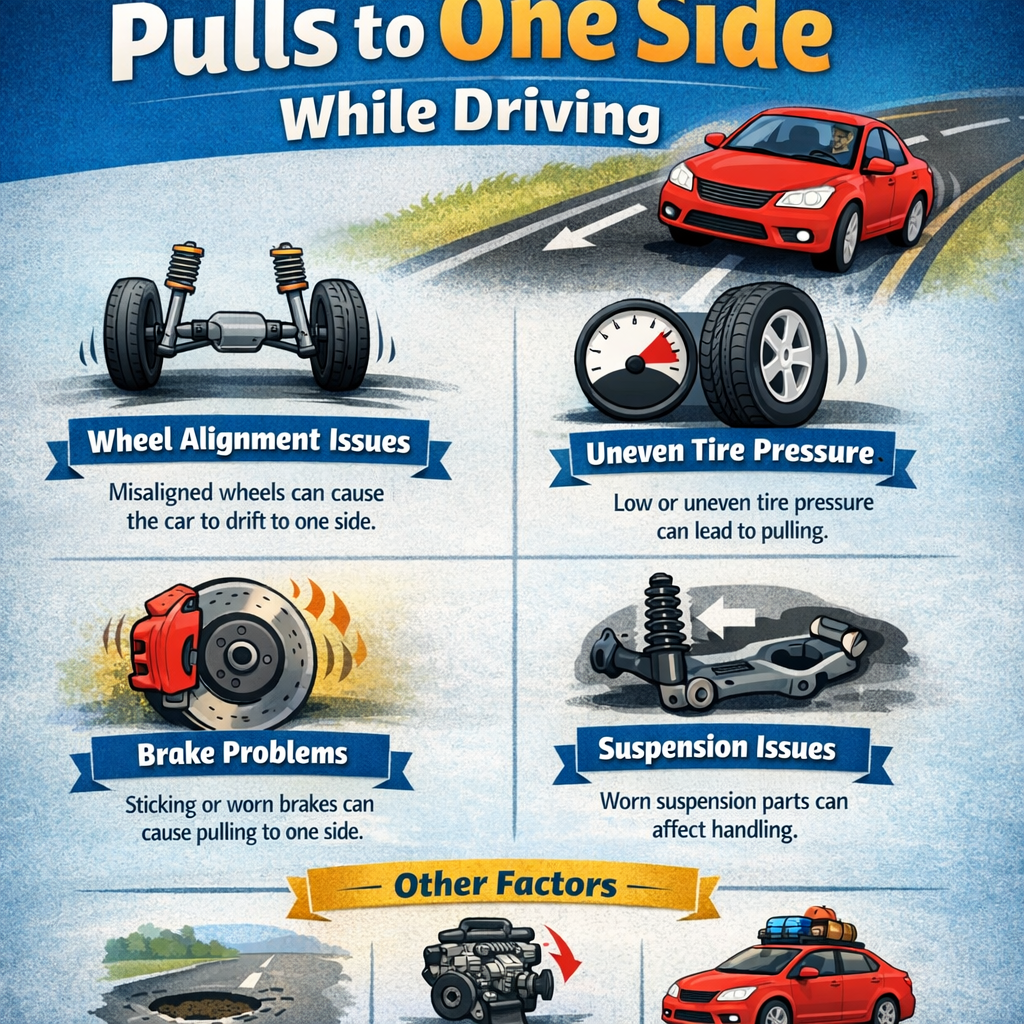
How Brake Pulling Happens During a Stop
A vehicle stays straight during braking when both sides of the braking system work with similar force. When one wheel slows faster than another, the vehicle naturally moves toward the side with more braking power.
Understanding what causes a car to pull to one side while braking starts with the braking balance. The brake system depends on equal pressure, healthy components, and proper wheel contact with the road.
- ✦ Uneven braking force
One brake may create more friction than the opposite brake, causing the vehicle to move sideways.
- ✦ Reduced wheel grip
A tire with poor traction cannot maintain the same control as a properly inflated tire.
Why the Vehicle Moves Toward One Side
When you press the brake pedal, hydraulic pressure pushes brake pads against the rotors. If one side applies more pressure or has better friction, that wheel slows faster and changes the vehicle path.
Stuck or Faulty Brake Calipers Can Cause Pulling
A stuck brake caliper is one of the most common answers to what causes a car to pull to one side while braking. The caliper holds the brake pads and pushes them against the rotor to create stopping power.
If a caliper sticks, one wheel may continue applying pressure even when you release the brake pedal. This can create uneven braking, extra heat, and faster brake wear.
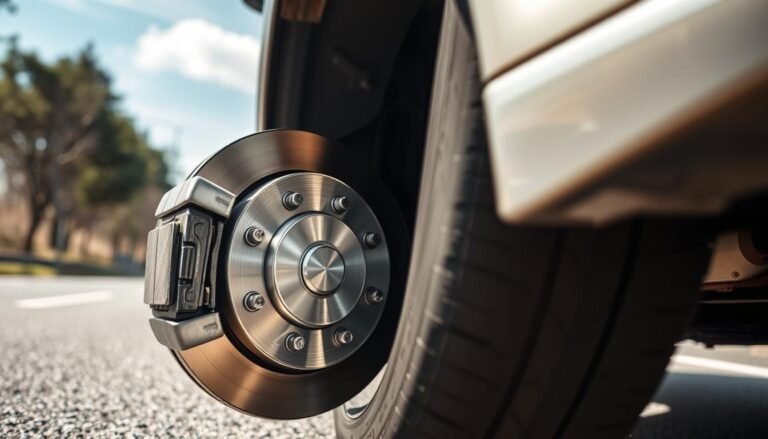
- ✦ Signs of a bad brake caliper
Drivers may notice burning smells, uneven brake pad wear, a hot wheel, or the vehicle pulling strongly during stops.
- ✦ Possible repair
A mechanic may clean, rebuild, or replace the damaged caliper depending on its condition.
Uneven Brake Pad Wear
Brake pads should wear at a similar rate on both sides of an axle. Uneven wear often points to a caliper problem, slide pin issue, or hydraulic problem.
Brake Pad and Rotor Problems That Create Uneven Stops
Worn brake pads or damaged rotors can change how each wheel responds during braking. A rotor with uneven wear may create different friction levels between the left and right sides.
Many drivers search for what causes a car to pull to one side while braking after installing new brakes. Incorrect installation, poor-quality parts, or a missed inspection can sometimes create this issue.

- ✦ Warped brake rotors
A damaged rotor may cause vibration, uneven braking pressure, and steering movement during stops.
- ✦ Contaminated brake pads
Oil, grease, or other materials on brake pads can reduce friction on one wheel.
Tire Problems Can Make a Car Pull During Braking
Tires are the only parts of your vehicle that touch the road, so their condition directly affects braking control. Low pressure, uneven tread, or different tire types can make the vehicle pull.
A tire problem is sometimes mistaken for a brake problem because the pulling becomes stronger when the driver applies the brakes.
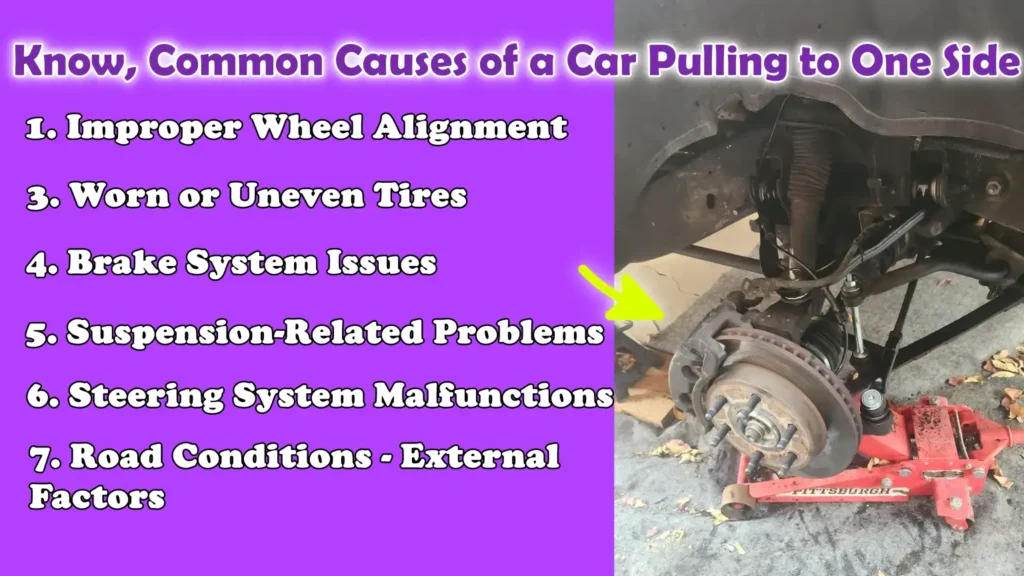
- ✦ Low tire pressure
A tire with less air pressure can create different rolling resistance and reduce stability.
- ✦ Uneven tire wear
Worn tread patterns can change how each side grips the road.
- ✦ Different tires on the same axle
Mismatched tires may affect handling and braking balance.
Wheel Alignment Problems and Suspension Damage
Poor wheel alignment is another important factor when asking what causes a car to pull to one side while braking. Alignment controls how the wheels sit against the road surface.
A vehicle with worn suspension parts may also move during braking because the wheels cannot stay in the correct position.

- ✦ Incorrect wheel alignment
Incorrect toe, camber, or caster settings can affect vehicle direction and steering response.
- ✦ Damaged suspension parts
Worn control arms, bushings, or ball joints can allow unwanted wheel movement.
How Suspension Affects Braking Stability
During braking, weight moves toward the front of the vehicle. Weak suspension parts can make this movement uneven and cause the vehicle to drift.
How to Diagnose a Car That Pulls While Braking
Finding the exact reason behind a pulling vehicle requires checking multiple systems. A professional inspection often starts with simple checks before moving to complex repairs.
A driver can collect useful clues by noticing when the pulling happens, how strong it feels, and whether other symptoms appear.
- ✦ Check tire pressure first
Compare pressure on all tires and follow the vehicle manufacturer’s recommended levels.
- ✦ Inspect brake condition
Look for uneven pad wear, damaged rotors, or signs of overheating.
- ✦ Test alignment and suspension
A repair shop can measure alignment angles and inspect worn parts.
