
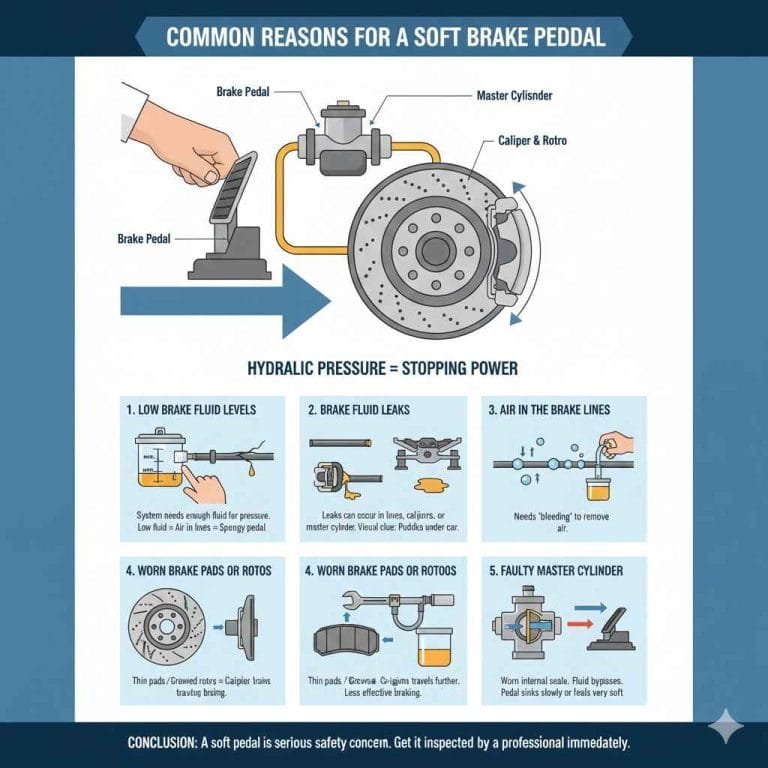
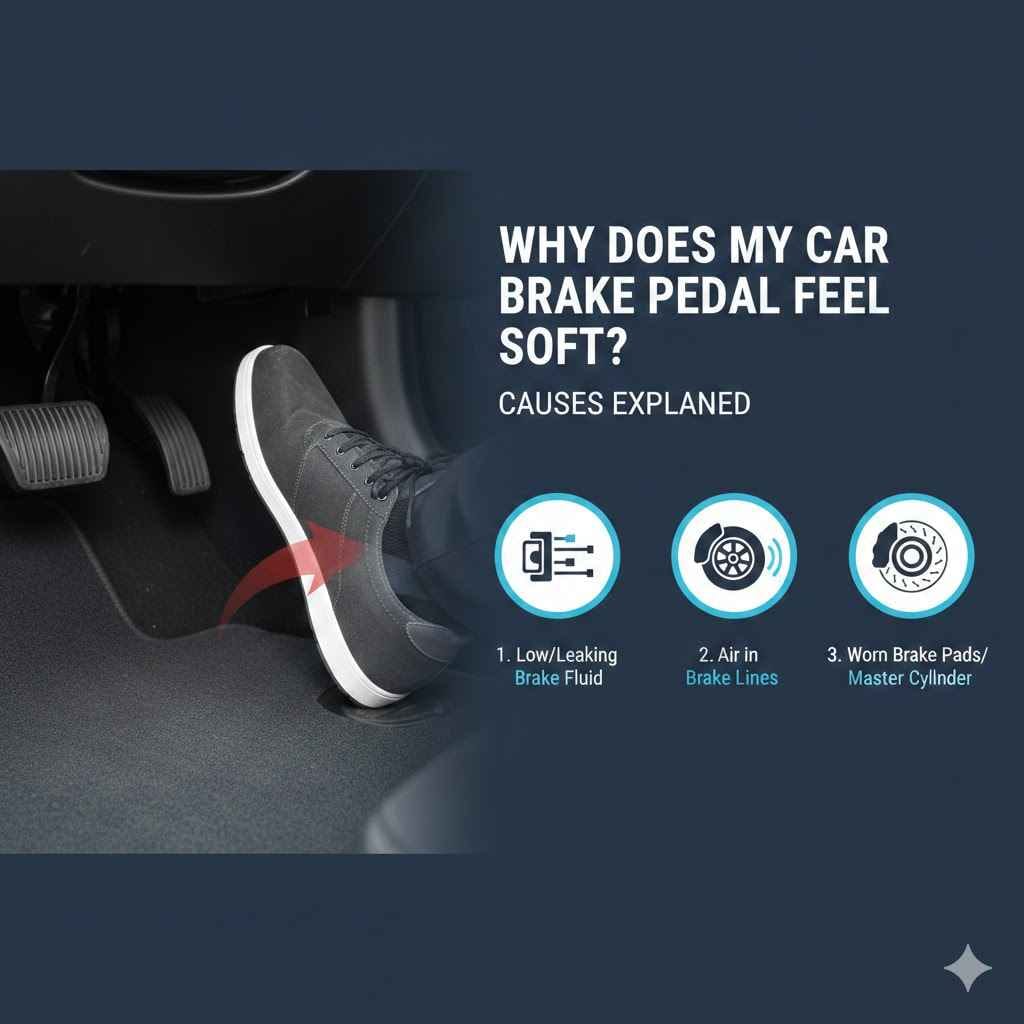
If you notice your brake pedal feels soft, spongy, or sinks lower than normal, your vehicle may have a brake system problem that needs attention. In the United States, where many drivers depend on their cars for daily commuting, a reliable brake system is essential for safety.
From years of reviewing automotive repair issues, one common pattern is that drivers often ignore a soft brake pedal until braking performance becomes worse. Understanding what causes a soft brake pedal helps you identify problems early and avoid more expensive repairs.
 display: block; margin: 0 auto; border-radius: 12px; box-shadow: 0 8px 25px rgba(0, 0, 0, 0.12);”>
How a Brake Pedal Should normally Feel
A healthy brake pedal should feel firm and respond quickly when you press it. The pedal should not travel too close to the floor before the vehicle slows down.
Modern vehicles use a hydraulic brake system. When you press the pedal, brake fluid transfers pressure through the brake lines to the brake calipers or wheel cylinders. Any issue that interrupts this pressure can create a soft brake pedal.
- ✦ Firm pedal response
A normal brake pedal provides steady resistance and allows smooth control during braking.
- ✦ Consistent pedal height
The pedal should stay at the same height each time you apply the brakes.
Air Trapped Inside Brake Lines
One of the most common answers to what causes a soft brake pedal is air inside the brake lines. Brake systems rely on fluid pressure, but air can compress when you press the pedal.
When air enters the system, the pedal may feel spongy because the pressure is used to compress air instead of moving brake fluid. This problem often appears after brake repairs or incorrect maintenance.

- ✦ Brake bleeding can solve the issue
Removing trapped air from brake lines through proper bleeding can restore a firm pedal feel.
How Air Gets Into Brake Lines
Air can enter through low brake fluid levels, leaks, worn seals, or improper brake service. Even a small amount of air can affect braking performance.
- ✦ Common causes
Brake repairs, fluid changes, damaged seals, and neglected maintenance can allow air into the system.
Low Brake Fluid or a Brake Fluid Leak
Low brake fluid is another major reason behind what causes a soft brake pedal. Brake fluid transfers force from the pedal to the brakes, so low levels can reduce hydraulic pressure.
A low fluid level may happen because brake pads wear down over time, but it can also point to a leak. A leaking brake system is a serious safety concern because fluid loss can reduce braking ability.
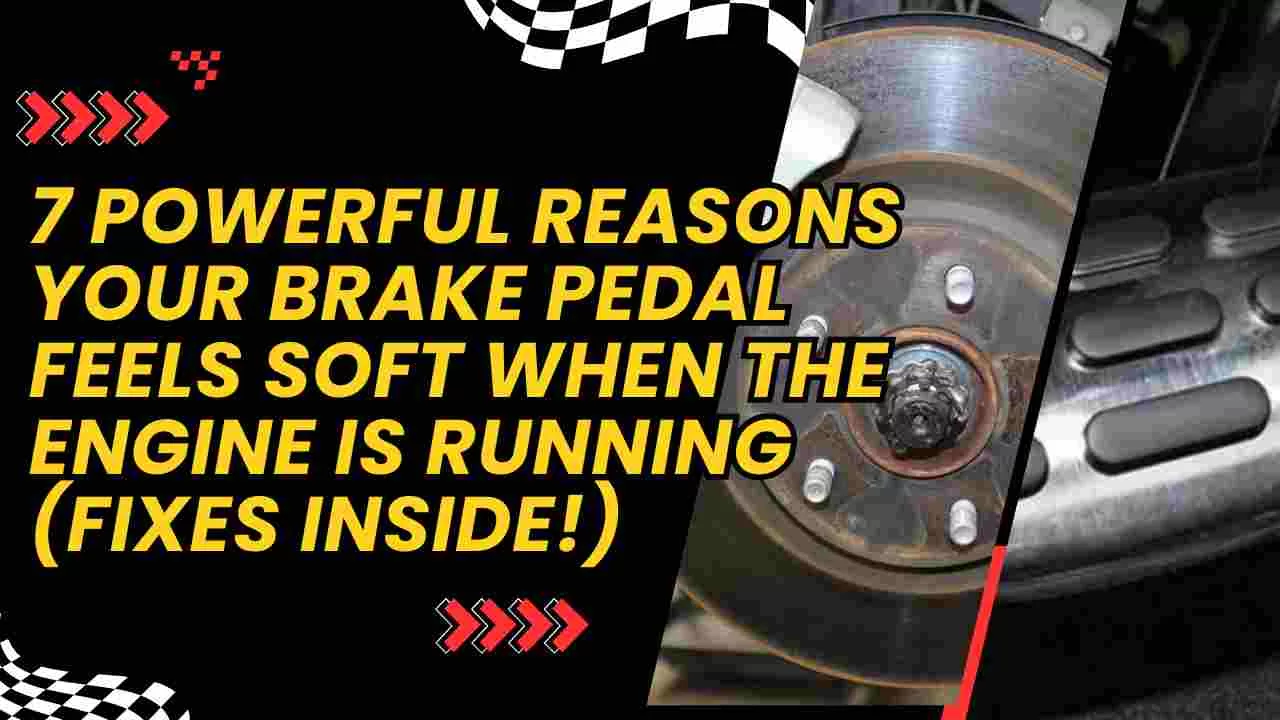
- ✦ Check the brake fluid reservoir
A fluid level below the recommended mark may indicate worn components or a possible leak.
- ✦ Look for warning signs
Brake fluid spots near wheels or under the vehicle can indicate a hydraulic leak.
Worn Brake Pads or Damaged Brake Components
Worn brake pads can change how your brake pedal feels. As brake components wear, the system may require more pedal movement before the brakes fully engage.
A soft brake pedal may also come from damaged calipers, worn wheel cylinders, or problems inside the master cylinder. These parts play important roles in creating proper brake pressure.

- ✦ Worn brake pads
Thin brake pads may increase pedal travel and reduce braking confidence.
- ✦ Faulty brake hardware
Damaged calipers or cylinders can prevent the brake system from building proper pressure.
Why Brake Parts Affect Pedal Feel
The brake system works as a connected unit. When one component fails, the pedal feel can change because the system cannot transfer force correctly.
Master Cylinder Problems
The master cylinder creates hydraulic pressure when you press the brake pedal. If its internal seals fail, brake fluid pressure may leak inside the cylinder.
A failing master cylinder often causes the pedal to slowly sink while you keep pressure on it. This is one of the more serious answers to what causes a soft brake pedal because it directly affects braking force.

- ✦ Common symptom
The brake pedal slowly drops toward the floor even when you keep steady pressure.
Brake Hose Damage and Expansion
Brake hoses carry fluid pressure from the vehicle body to the moving brake parts. Over time, old rubber hoses can weaken and expand under pressure.
When hoses expand, some hydraulic force is lost. This can create a soft brake pedal and make braking feel less responsive.
- ✦ Inspect old hoses
Cracks, swelling, or visible damage may mean a brake hose needs replacement.
How to Diagnose a Soft Brake Pedal
Finding what causes a soft brake pedal starts with checking the basics. Drivers can look for fluid leaks, warning lights, unusual brake noises, and changes in pedal behavior.
A professional technician can perform brake pressure tests and inspect hydraulic components to find hidden problems.

- ✦ Check fluid level
Make sure the brake fluid reservoir contains enough clean fluid.
- ✦ Test pedal behavior
Notice whether the pedal feels soft only when the engine runs or during every brake application.
- ✦ Inspect the brake system
A mechanic can check lines, hoses, calipers, and the master cylinder.
How to Fix a Soft Brake Pedal
The correct repair depends on what causes a soft brake pedal in your vehicle. Some problems need a simple brake bleed, while others require replacement of damaged parts.
Avoid driving with a severely soft brake pedal because reduced braking power can increase stopping distance and create dangerous situations.
- ✦ Bleed the brake system
Remove trapped air to restore proper hydraulic pressure.
- ✦ Repair leaks
Replace damaged brake lines, hoses, seals, or other leaking parts.
- ✦ Replace failed components
Install new brake parts when components like the master cylinder or calipers fail.
