
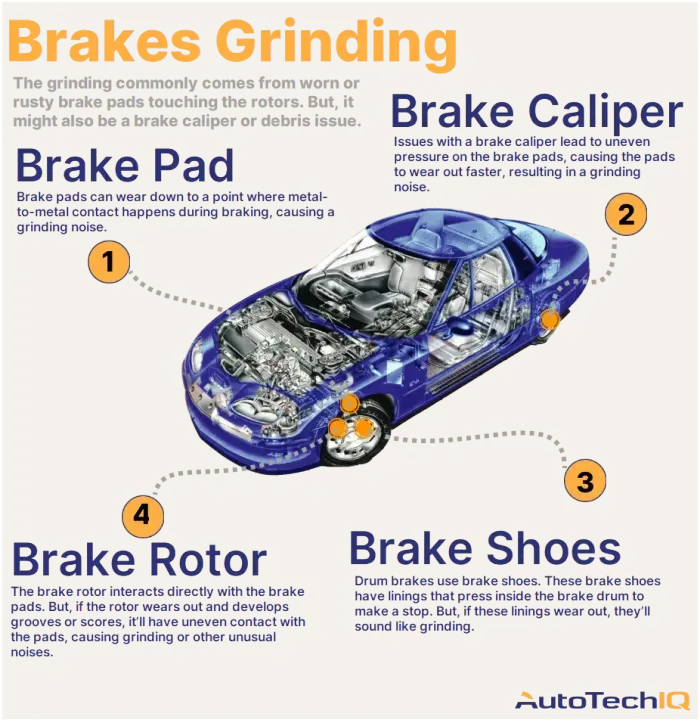
When drivers ask what causes grinding brakes, the answer often starts with a simple issue: brake parts are no longer working smoothly together. In many cases, the brake pads have worn past their safe limit and metal components begin rubbing against the rotor.
From my experience reviewing vehicle maintenance issues, a grinding brake noise is one of the warning signs drivers should never ignore. A small brake problem can become a larger repair if the damaged parts continue to wear each other down.
 display: block; margin: 0 auto; border-radius: 12px; box-shadow: 0 8px 25px rgba(0, 0, 0, 0.12);”>
Why Do Brakes Make a Grinding Noise?
To understand what causes grinding brakes, it helps to know how a brake system works. When you press the brake pedal, brake pads squeeze the rotor to slow the vehicle. These parts normally create controlled friction, not harsh metal-on-metal contact.
A grinding sound means something in the braking system is creating excessive friction. The noise may happen only when braking, or it may continue while driving if a damaged component keeps touching another part.
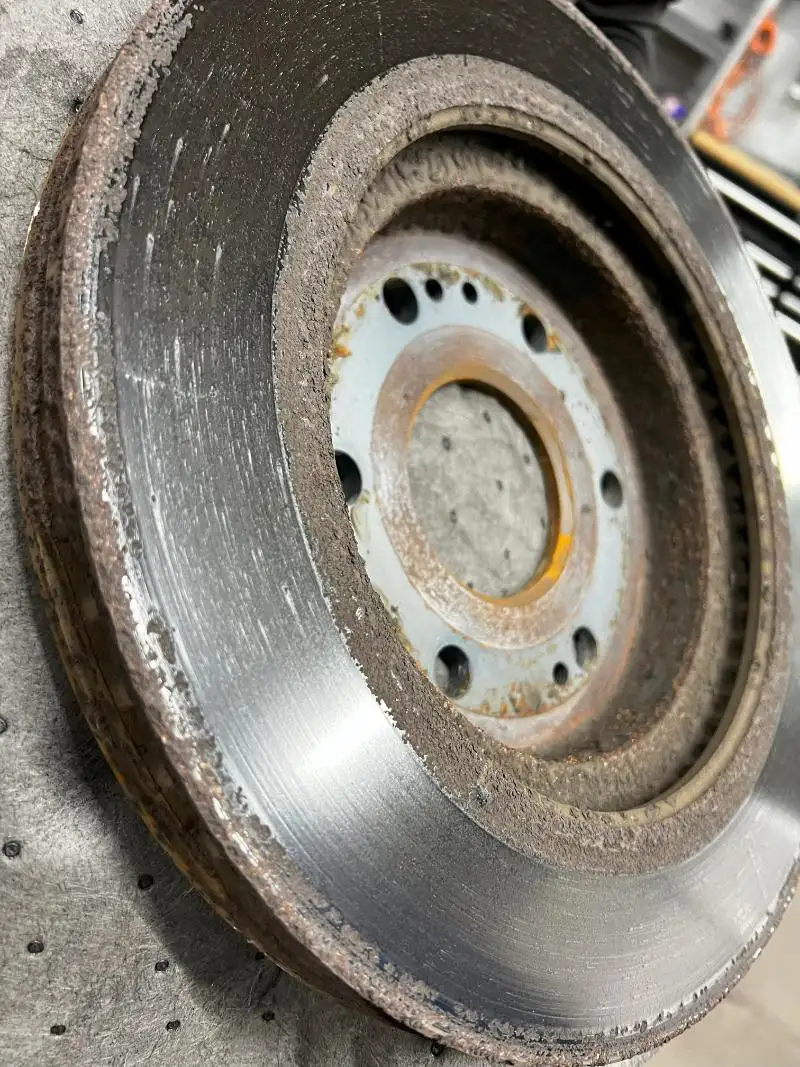
- ✦ Metal-to-metal contact
This happens when brake pads wear away completely and the backing plate touches the rotor.
- ✦ Damaged brake components
Warped rotors, worn hardware, or broken parts can create grinding sounds.
- ✦ Foreign objects
Small rocks, dirt, or road debris can become trapped between brake parts.
How Normal Brake Sounds Differ From Grinding
Some brake noises are normal, such as a light squeak during moisture or cold weather. Grinding is different because it usually indicates physical damage or severe wear.
A grinding brake noise feels rough and harsh. It often sounds like metal scraping against metal and should be inspected quickly.
Worn Brake Pads Are the Most Common Cause of Grinding Brakes
The most common answer to what causes grinding brakes is worn brake pads. Brake pads are designed to wear down over time because they absorb friction every time you stop.
Most brake pads include a wear indicator that creates a warning sound before the pad becomes unsafe. If the warning is ignored, the friction material disappears and the metal backing plate can damage the rotor.
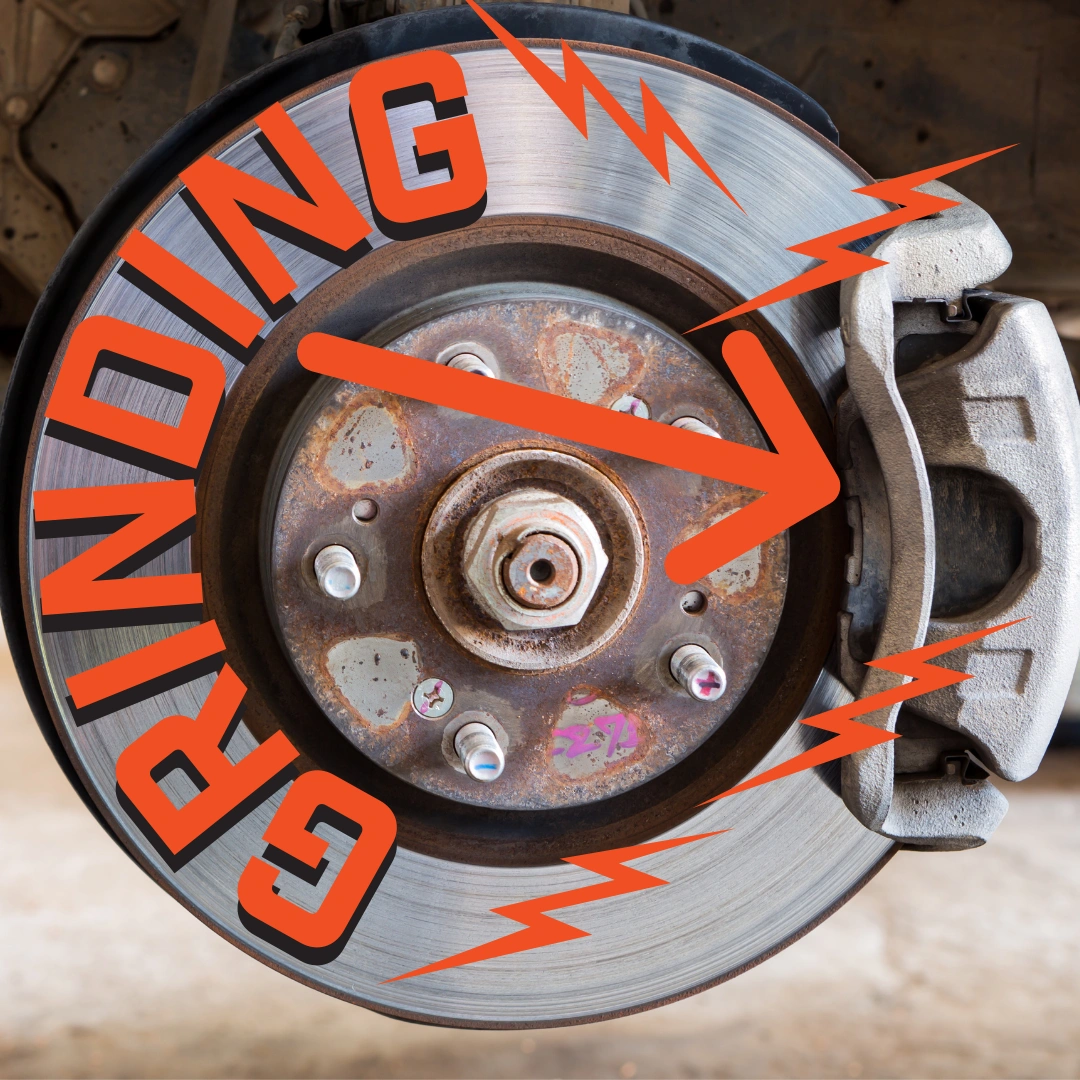
- ✦ Low brake pad thickness
Thin pads cannot protect the rotor from direct contact with metal components.
- ✦ Delayed brake service
Waiting too long for replacement can turn a simple pad job into a larger brake repair.
Signs Your Brake Pads Are Worn Out
Drivers may notice longer stopping distances, squealing sounds, or visible wear through the wheel. A mechanic can measure pad thickness during an inspection.
Replacing worn pads early is usually faster and less expensive than repairing damaged rotors.
Damaged or Worn Brake Rotors Can Cause Grinding
Brake rotors provide the surface that brake pads press against. When rotors become deeply scored, rusty, or damaged, they can create grinding sounds during braking.
Severely worn brake pads often damage rotors because the metal backing plate cuts into the rotor surface. This reduces braking performance and may increase repair costs.

- ✦ Deep rotor grooves
Large grooves can develop when metal parts scrape against the rotor.
- ✦ Rust buildup
Heavy rust can create rough contact between the rotor and brake pads.
Other Reasons Behind Grinding Brake Sounds
Although worn pads and damaged rotors are common answers to what causes grinding brakes, several other issues can create similar sounds. A proper inspection helps identify the exact source.
Brake systems contain many moving parts. Problems with calipers, brake shoes, hardware, or wheel components can sometimes create grinding noises.

- ✦ Stuck brake caliper
A seized caliper may keep pressure on the rotor and cause constant friction.
- ✦ Brake hardware problems
Loose clips or damaged springs may allow parts to rub incorrectly.
- ✦ Debris inside the brake system
Small stones or dirt can become trapped and create scraping sounds.
Grinding Noise Even With Good Brake Pads
Sometimes drivers hear grinding even after replacing brake pads. This can happen if the rotor surface is damaged or another brake component has a problem.
A complete brake inspection is important because replacing only one part may not solve the original issue.
Can You Drive With Grinding Brakes?
Many drivers wonder if they can continue driving after hearing grinding brakes. The answer depends on the cause, but driving with this problem is risky because braking parts may continue to deteriorate.
A short trip to a repair shop may be possible in some cases, but daily driving should be avoided until the brake system is checked.

- ✦ Safety risk
Damaged brakes may reduce stopping ability, especially during emergency braking.
- ✦ Higher repair costs
Ignoring the noise can damage rotors and other expensive components.
How to Prevent Grinding Brakes
Preventing grinding brakes starts with regular inspections and timely maintenance. Brake parts wear naturally, but early attention can prevent major damage.
Many drivers in the U.S. follow routine vehicle service schedules because brake problems can become more serious with heavy traffic, long commutes, and frequent stops.
- ✦ Check brake pads regularly
Inspect pad thickness during routine maintenance visits.
- ✦ Replace worn parts quickly
Early replacement helps protect other brake components.
- ✦ Pay attention to new sounds
Unusual brake noises often provide an early warning.
