
Understanding What Is Brake Assist and How Does It Work helps drivers see how modern vehicles protect them during sudden dangers. In the United States, where drivers often face highways, busy intersections, and unexpected traffic changes, this technology can provide valuable extra support.
From my experience studying automotive safety systems, many drivers press the brake pedal during emergencies but do not apply enough force. Brake Assist was designed to solve this problem by recognizing panic braking and helping the driver achieve maximum stopping power.

What Is Brake Assist in a Car?
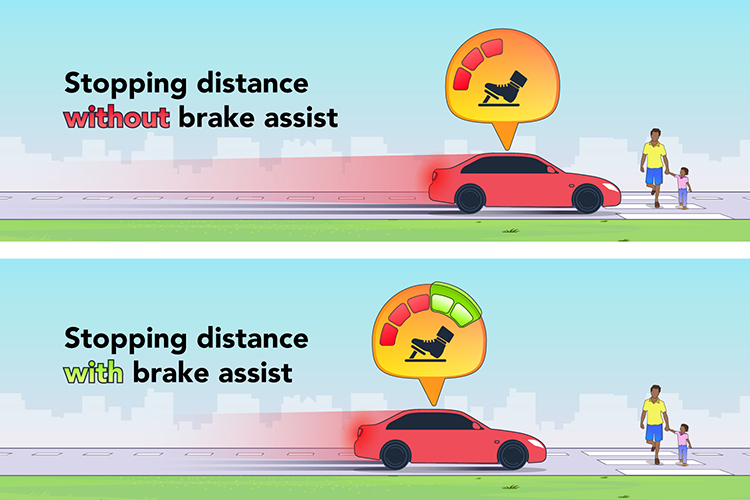
Brake Assist is an active safety feature that helps a vehicle stop faster during emergency braking. It does this by adding extra brake pressure when the system detects that the driver is making a panic stop.
Many people searching for What Is Brake Assist and How Does It Work want to know if the car brakes by itself. The answer is no. Brake Assist does not replace the driver. The driver still presses the brake pedal, while the system increases braking force when needed.
- ✦ Emergency braking support
Brake Assist helps create stronger braking force when a driver reacts quickly but may not press hard enough.
- ✦ Driver-controlled system
The system works with the driver’s braking action instead of fully taking control of the vehicle.
Why Brake Assist Was Developed
Research into driver behavior showed that many people hesitate or fail to apply full brake pressure during stressful moments. Brake Assist was created to help close the gap between human reaction and maximum braking ability.
Modern vehicles combine Brake Assist with systems like Anti-lock Braking System (ABS) and electronic stability control to improve overall safety.
- ✦ Faster emergency response
The system reacts quickly when it identifies a possible collision situation.
How Does Brake Assist Work?
The answer to What Is Brake Assist and How Does It Work starts with sensors and electronic controls. The system monitors how quickly the driver presses the brake pedal and how much force is being applied.
If the vehicle detects a panic braking situation, the brake control unit increases hydraulic pressure. This allows the brakes to apply more force and helps the vehicle stop in a shorter distance.

- ✦ Step 1: Detecting emergency braking
Sensors measure brake pedal speed and pressure to identify sudden panic braking.
- ✦ Step 2: Increasing brake pressure
The system activates extra braking force through the hydraulic brake system.
- ✦ Step 3: Working with ABS
Brake Assist works alongside ABS to maintain control while applying strong braking force.
The Role of Sensors and Vehicle Computers
Modern vehicles use electronic control modules to process information from different sensors. These computers can recognize emergency braking patterns within milliseconds.
This technology allows the vehicle to provide assistance at the exact moment when maximum braking power is needed.
- ✦ Brake pedal sensor
Measures how quickly and strongly the driver presses the brake pedal.
Brake Assist vs Automatic Emergency Braking
Brake Assist and Automatic Emergency Braking are related but different technologies. Brake Assist supports the driver after the driver applies the brakes, while Automatic Emergency Braking can apply the brakes automatically if a collision risk is detected.
Many newer vehicles in the US combine these systems with cameras, radar sensors, and driver assistance technology to improve accident prevention.
- ✦ Brake Assist
Adds braking power after the driver presses the brake pedal during an emergency.
- ✦ Automatic Emergency Braking
Can apply braking automatically when the vehicle detects an immediate collision threat.
How They Work Together
These systems provide different layers of protection. Brake Assist focuses on improving the driver’s braking response, while emergency braking systems focus on avoiding or reducing crashes.
Benefits of Brake Assist Technology
Brake Assist provides several safety benefits for everyday drivers. It is especially useful during sudden events such as a vehicle stopping quickly on a highway or a child running into the road.
The main goal of Brake Assist is to help drivers use the full capability of their braking system when every second matters.

- ✦ Reduced stopping distance
Extra brake pressure can help a vehicle stop sooner during emergency situations.
- ✦ Improved driver confidence
Drivers receive additional support when facing stressful road conditions.
- ✦ Better crash prevention support
The system can reduce the impact of some collisions by improving braking response.
Limitations of Brake Assist You Should Know
Although Brake Assist improves vehicle safety, it is not a replacement for careful driving. The system cannot overcome poor tires, unsafe speeds, or dangerous road conditions.
Drivers should understand that Brake Assist works best when combined with regular maintenance and responsible driving habits.
- ✦ It cannot prevent every crash
The system only provides assistance and cannot guarantee collision avoidance.
- ✦ Maintenance still matters
Brake pads, rotors, tires, and brake fluid must remain in good condition.
Common Brake Assist Warning Signs
A warning light or message related to Brake Assist may indicate a sensor issue, electrical problem, or brake system concern. Drivers should check the vehicle manual and seek professional inspection if warnings continue.
- ✦ Brake Assist warning light
May indicate a problem with the assistance system or related components.
How Brake Assist Has Changed Modern Vehicle Safety
Vehicle safety has evolved from simple mechanical brakes to advanced electronic systems. Brake Assist represents one step in this evolution by helping drivers react better during emergencies.
Today, manufacturers combine Brake Assist with cameras, radar, and intelligent software to create safer driving experiences.

- ✦ Connected safety systems
Modern vehicles use multiple technologies that communicate together for better protection.
