
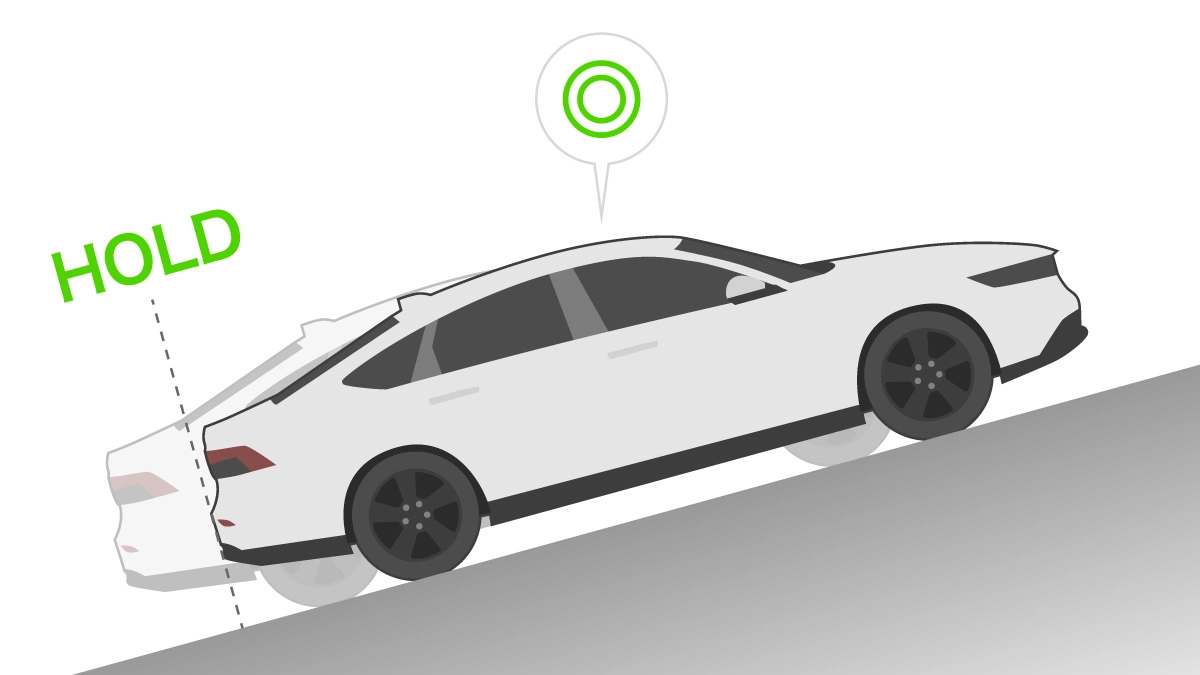
Hill Start Assist keeps the brakes applied briefly so your car does not roll backward on hills.
Understanding how Hill Start Assist works helps drivers know why modern vehicles feel easier and safer on steep roads. This feature is common in many cars sold in the United States because it reduces stress during uphill starts, especially in busy traffic or on steep driveways.
From my experience studying modern vehicle safety systems, Hill Start Assist is one of the simplest driver assistance technologies that solves a common problem. It does not replace good driving skills, but it gives drivers extra control during the few seconds between releasing the brake and pressing the accelerator.
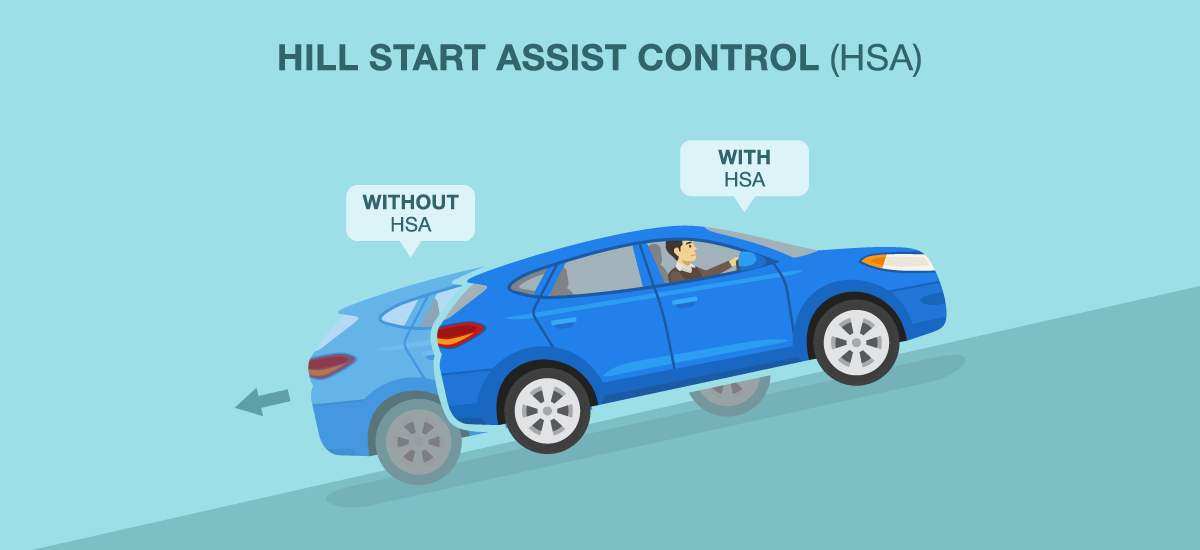
What Is Hill Start Assist?
Hill Start Assist is a vehicle safety feature that prevents a car from rolling backward when starting on an uphill slope. It works by temporarily keeping brake pressure after the driver releases the brake pedal.
The system is also called Hill Hold Control, Hill Assist Control, or HSA. Different manufacturers may use different names, but the main purpose remains the same: provide a smoother and safer hill launch.
- ✦ Temporary Brake Hold
The system keeps the brakes engaged for a few seconds while the driver moves from the brake pedal to the accelerator.
- ✦ Automatic Operation
Drivers usually do not need to activate Hill Start Assist manually because the vehicle manages it automatically.
How Hill Start Assist Works Step by Step
To understand how Hill Start Assist works, it helps to look at the process in simple steps. The system combines information from several vehicle sensors and the brake control computer.
When the vehicle stops on an incline, the system checks the slope angle, brake pedal pressure, wheel movement, and other data. If the conditions match a hill start situation, it activates brake holding pressure.

- ✦ Step 1: Detecting the Hill
Sensors measure vehicle angle and movement to determine whether the car is positioned on an incline.
- ✦ Step 2: Holding Brake Pressure
The electronic brake control unit keeps hydraulic pressure on the brakes after the driver releases the brake pedal.
- ✦ Step 3: Smooth Release
When the driver applies the accelerator, the system gradually releases the brakes so the vehicle moves forward smoothly.
The Role of Vehicle Sensors
Hill Start Assist depends on sensors that constantly monitor vehicle conditions. These include wheel speed sensors, brake pressure sensors, and incline detection systems connected to the electronic stability control system.
- ✦ Wheel Speed Sensors
They detect whether the vehicle begins moving backward or forward.
- ✦ Incline Sensors
They help determine whether the vehicle is on a slope where assistance is needed.
How Hill Start Assist Uses the Brake System
Hill Start Assist works closely with the vehicle’s electronic braking system. It uses components from the anti-lock braking system and electronic stability control to maintain brake pressure.
The driver does not feel the system working in most cases. The brakes simply remain engaged for a short moment, giving enough time to move the foot from the brake pedal to the accelerator.

- ✦ Hydraulic Brake Control
The system controls brake fluid pressure to keep the brakes applied temporarily.
- ✦ Electronic Control Module
The computer decides when to activate and release the brake hold.
Connection With ABS and Stability Control
Modern Hill Start Assist systems often use the same hardware found in ABS and stability control systems. This allows the vehicle to control braking quickly without adding a separate brake mechanism.
Why Hill Start Assist Is Useful for Drivers
Hill Start Assist provides practical benefits in everyday driving. It is especially helpful in areas with steep roads, underground parking ramps, and crowded intersections.
In the United States, many drivers encounter hills during daily commuting, road trips, or parking situations. The feature reduces the chance of rolling backward into another vehicle.

- ✦ Improves Driver Confidence
Drivers can focus on acceleration and steering instead of quickly moving between pedals.
- ✦ Helps Manual Transmission Drivers
It reduces the difficulty of balancing clutch release and acceleration on uphill starts.
- ✦ Adds Safety in Traffic
It helps prevent small backward movements that can happen during slow uphill traffic.
Hill Start Assist in Manual and Automatic Cars
Hill Start Assist works in both manual and automatic vehicles, but the benefit can feel different depending on the transmission type. Manual cars often gain more noticeable assistance because drivers must coordinate the clutch, brake, and accelerator.
Automatic vehicles usually handle hill starts more easily, but Hill Start Assist still provides extra protection when a vehicle stops on a steep incline.

- ✦ Manual Transmission
The system gives drivers more time to release the clutch smoothly without rolling backward.
- ✦ Automatic Transmission
It prevents rollback when the vehicle is stopped before the transmission applies enough driving force.
Limitations of Hill Start Assist
Although Hill Start Assist is helpful, it is not designed to replace careful driving. The system only provides temporary brake support and cannot overcome poor traction, excessive acceleration, or unsafe driving habits.
Drivers should still understand how their vehicle behaves on hills. Each manufacturer may set different activation times and operating conditions.
- ✦ Short Activation Time
The brake hold usually lasts only a few seconds, so drivers must begin moving promptly.
- ✦ Not a Parking Brake Replacement
Hill Start Assist is not designed to hold a parked vehicle on a slope.
- ✦ Depends on System Conditions
Some systems may not activate on very small slopes or under certain driving conditions.
