
How Torque Vectoring Works in Modern Cars has become an important topic as vehicles become smarter and more connected. A modern car does more than send power to the wheels. It constantly measures road conditions, steering input, and wheel movement to create a safer driving experience.
From my experience studying automotive systems, torque vectoring is one of the biggest changes in vehicle handling technology. Drivers may not notice the system working, but they feel the result through smoother turns, better grip, and improved confidence on highways, wet roads, and winding roads.

What Is Torque Vectoring in a Car?
Torque vectoring is a vehicle technology that changes how much driving force each wheel receives. Instead of sending equal power to every wheel, the system can increase or reduce torque where needed.
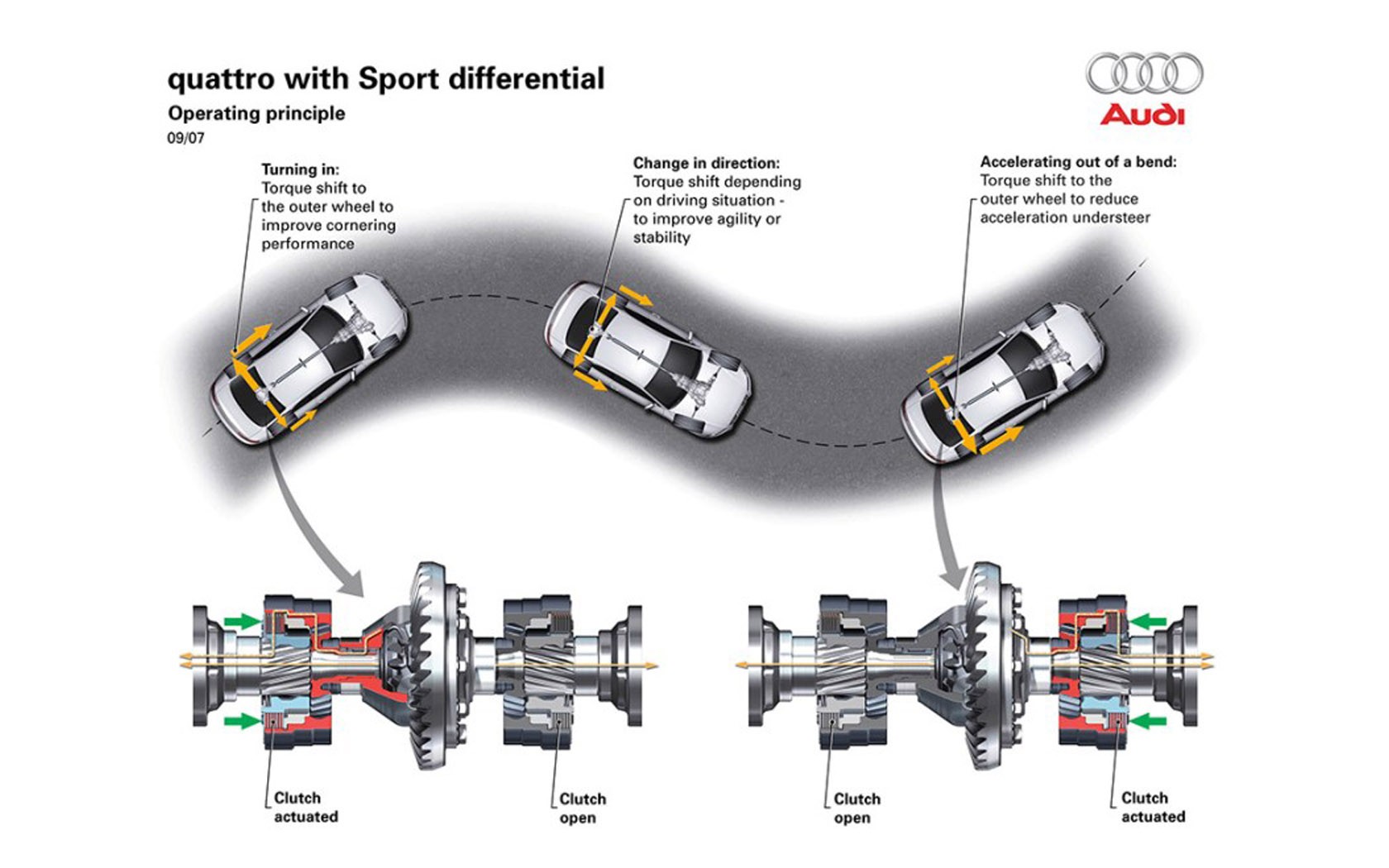
When a car enters a corner, the outside wheels travel farther than the inside wheels. Torque vectoring uses this difference to help the vehicle turn more naturally and maintain stability.
- ✦ Better corner control
The system helps the vehicle follow the driver’s steering direction with less body movement.
- ✦ Improved traction
Power can move away from a slipping wheel and go to a wheel with more grip.
- ✦ Enhanced stability
Torque adjustments reduce unwanted vehicle movement during acceleration and turning.
Why Manufacturers Use Torque Vectoring
Car makers use torque vectoring because traditional differentials cannot always provide the best grip during changing road conditions. Modern drivers expect vehicles to feel stable while also offering better performance.
The technology is now common in sports cars, luxury vehicles, electric cars, and many all-wheel-drive systems.
How Torque Vectoring Works in Modern Cars
Understanding How Torque Vectoring Works in Modern Cars requires looking at the relationship between sensors, computers, and power delivery systems. The vehicle computer collects data many times per second.
The system checks steering angle, wheel speed, throttle position, yaw movement, and road grip. It then decides where torque should be added or reduced.

- ✦ Sensors collect information
Wheel speed sensors, steering sensors, and stability sensors provide real-time vehicle data.
- ✦ Computer calculates adjustments
The control unit decides the ideal torque balance based on driving conditions.
- ✦ Power distribution changes
The system adjusts torque through brakes, differentials, or electric motors.
The Role of Vehicle Computers
Modern torque vectoring systems depend heavily on electronic control units. These computers can react faster than a human driver can notice a traction change.
This quick response helps maintain vehicle balance during emergency maneuvers, sharp turns, and slippery road conditions.
Different Types of Torque Vectoring Systems
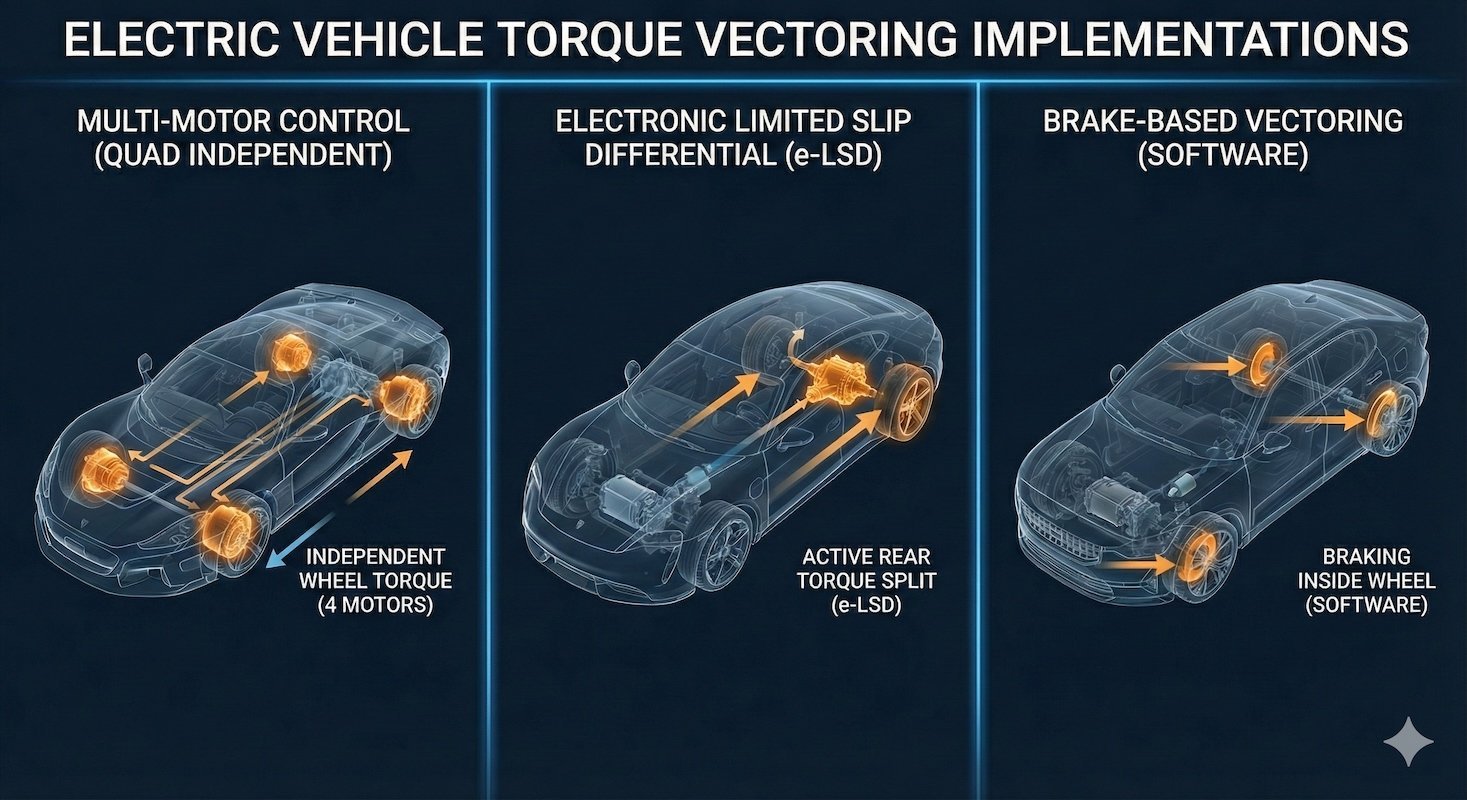
There are several ways manufacturers create torque vectoring. Some systems use braking force, while advanced versions use mechanical or electric power control.
The goal remains the same: send the right amount of torque to the right wheel at the right time.
- ✦ Brake-based torque vectoring
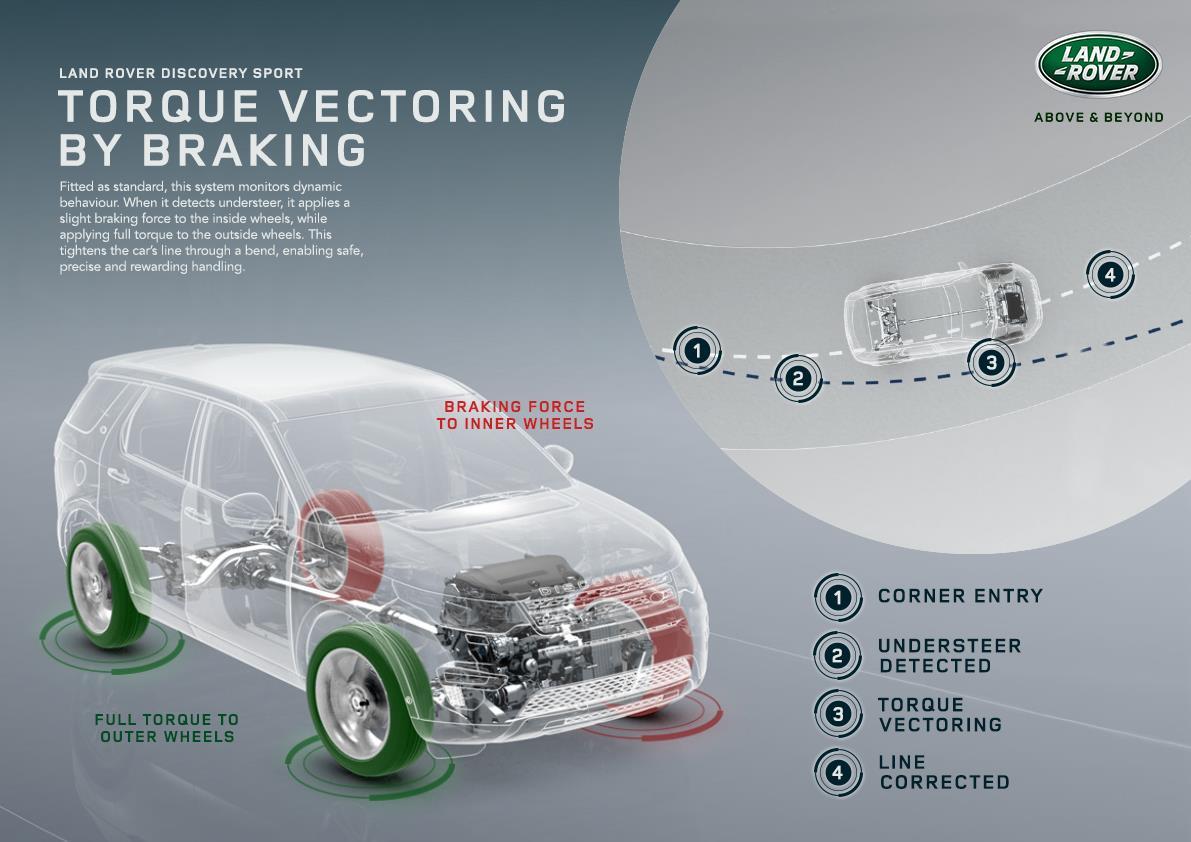
The system lightly applies the brake on a specific wheel to improve cornering balance.
- ✦ Active differential systems
A mechanical differential changes torque distribution between wheels without relying mainly on brakes.
- ✦ Electric torque vectoring
Electric vehicles can control separate motors on different wheels for very precise torque management.
Brake-Based Torque Vectoring
Brake-based systems are common because they are simple and cost effective. They work with existing stability control hardware.
Although effective, they can create extra brake wear because the system uses the brakes to influence vehicle movement.
Electric Motor Torque Vectoring
Electric vehicles provide new possibilities for torque vectoring because each motor can be controlled separately. This allows very fast and accurate power changes.
Many EV engineers see independent motor control as a major advantage for future vehicle design.
How Torque Vectoring Improves Driving Performance
Torque vectoring improves performance by helping the car rotate through corners and maintain traction during acceleration. This is especially useful in powerful vehicles where wheel slip can happen quickly.
For everyday drivers in the United States, the benefit is not only speed. The system also helps during rain, snow, and sudden road changes.
- ✦ More confident cornering
The vehicle feels more balanced when turning at higher speeds.
- ✦ Reduced understeer
The system can help the car turn instead of pushing wide through a corner.
- ✦ Improved acceleration grip
Power delivery becomes smoother when road surfaces have different traction levels.
Torque Vectoring vs Traditional Differential Systems
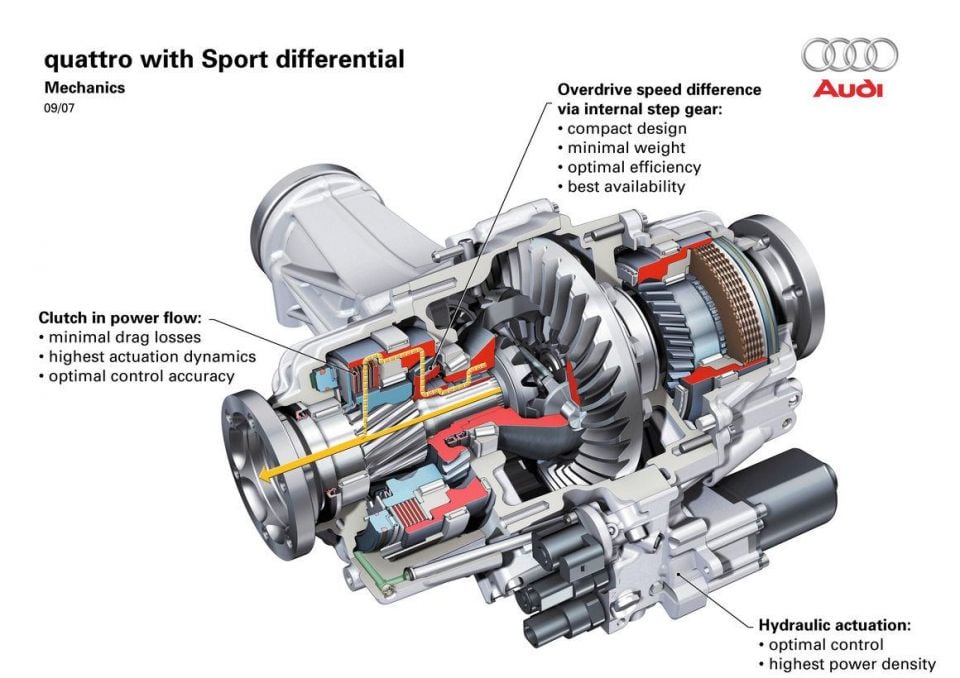
A traditional open differential sends power to wheels but cannot actively decide which wheel needs more torque. This can reduce traction when one wheel loses grip.
Torque vectoring adds intelligence by changing torque distribution based on driving conditions.
- ✦ Traditional differential
Provides basic power distribution but has limited control during traction changes.
- ✦ Torque vectoring system
Uses sensors and controls to actively manage wheel torque.
Advantages and Limitations of Torque Vectoring
Torque vectoring offers many benefits, but it is not a replacement for safe driving or good tires. The system works best when combined with proper vehicle maintenance and responsible driving habits.
Understanding both strengths and limits helps drivers know what this technology can and cannot do.
- ✦ Advantages
Improves handling, traction, stability, and driver confidence.
- ✦ Higher complexity
Advanced systems require more sensors, software, and maintenance knowledge.
- ✦ Added cost
Vehicles with advanced torque vectoring may cost more due to extra hardware.
