
Quick Answer: Brake bedding transfers pad material onto rotors through controlled heat cycles.
How Brake Bedding Works is a common question after installing new brake pads or rotors. Many drivers expect new brakes to deliver maximum performance right away, but fresh brake parts need time to adjust. The bedding process helps the pad and rotor surfaces work together correctly.
In professional brake service, proper bedding is treated as an important final step. It helps create an even friction surface, improves brake feel, and allows the brakes to handle heat better. I have seen many brake issues caused by skipping this simple process after a brake replacement.

What Is Brake Bedding and Why Does It Matter?
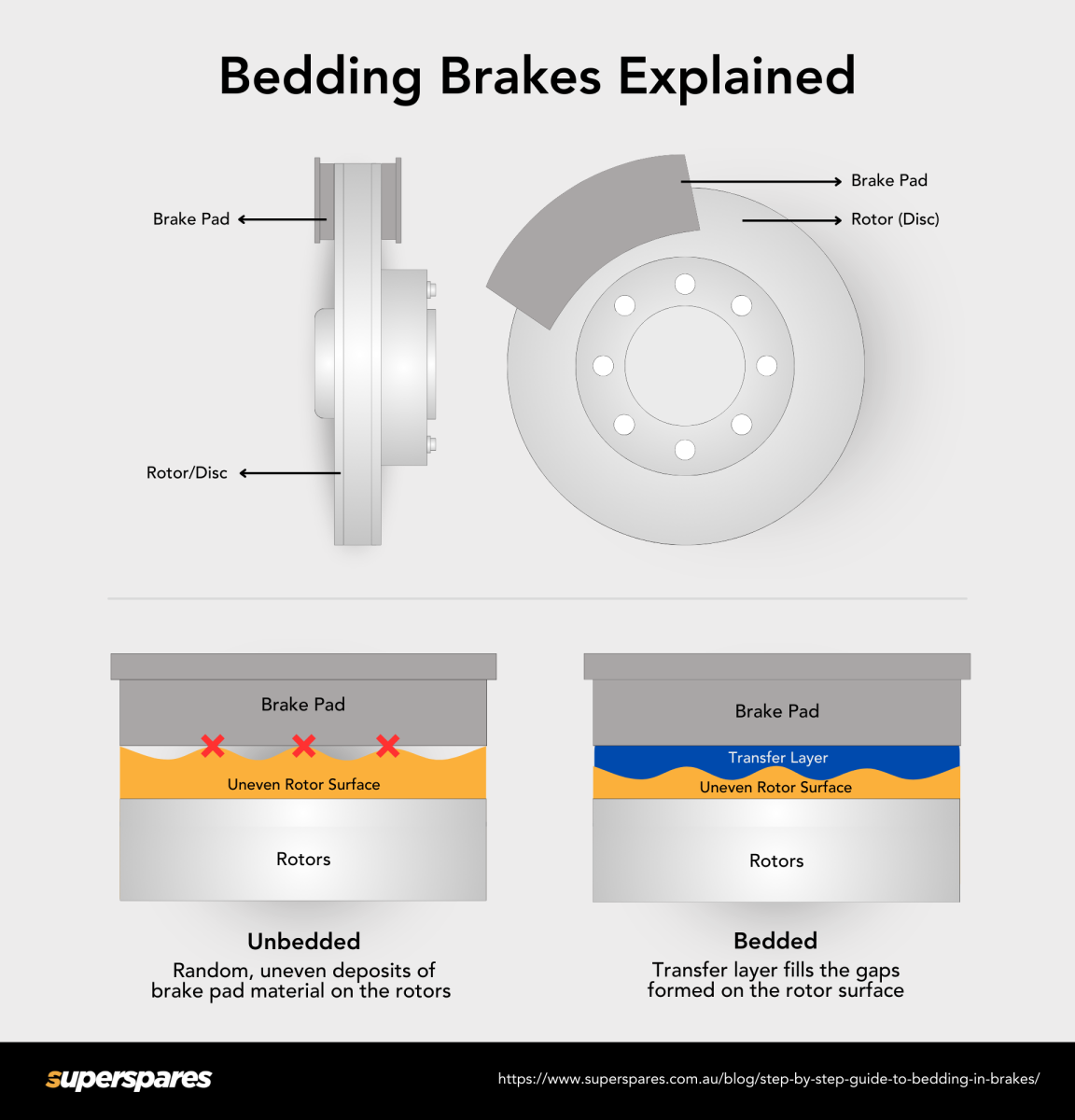
Brake bedding is the process of preparing new brake pads and rotors so they can create a stable friction surface. During this process, a small amount of brake pad material transfers onto the rotor face.
The goal of brake bedding is not simply to wear down new parts. Instead, it creates a matching surface between the pad and rotor. This allows the brakes to work smoothly during normal driving and heavy stops.
When drivers understand how brake bedding works, they can avoid problems such as uneven braking, vibration, and reduced stopping performance.
- ✦ Creates a transfer layer
Brake pad material spreads evenly across the rotor surface, creating a consistent friction layer.
- ✦ Improves brake performance
A properly prepared brake system can provide smoother and more predictable stopping power.
- ✦ Protects brake components
Controlled heat during bedding helps reduce the risk of uneven deposits and surface damage.
Brake Bedding Is Different From Normal Wear
Normal brake wear happens slowly over thousands of miles. Brake bedding is a controlled process done soon after installation to prepare the parts.
The process focuses on heat management and material transfer instead of simply removing material from the pad or rotor.
- ✦ Controlled process
The driver creates specific braking conditions instead of using random daily driving stops.
How Brake Bedding Works Step by Step
How Brake Bedding Works depends on controlled temperature changes. The brakes need enough heat to transfer pad material but should not become overheated.
Most bedding procedures use several medium braking cycles followed by cooling periods. This slowly builds the correct friction surface.
A common mistake is performing very hard stops immediately after installing new brakes. This can create uneven deposits and reduce brake quality.
- ✦ Initial gentle braking
Light stops help the new pads and rotors begin making contact without creating excessive heat.
- ✦ Heat building cycles
Repeated controlled stops increase temperature and help transfer pad material evenly.
- ✦ Cooling period
Allowing the brakes to cool helps stabilize the new friction surface.
The Science Behind Material Transfer
Modern brake systems depend on friction between two surfaces. During bedding, microscopic layers of pad material attach to the rotor.
This transfer layer improves contact because the brake pad works against its own material rather than only bare metal.
- ✦ Even friction
A smooth transfer layer helps create consistent braking force across the rotor.
Why New Brake Pads and Rotors Need Bedding
New brake pads and rotors often have surfaces that are not perfectly matched. Even high-quality components need adjustment before they reach their best performance.
Bedding allows the brake system to adapt gradually. This is especially important for vehicles that experience frequent city driving, highway speeds, or heavy loads.
Understanding how brake bedding works helps drivers protect their investment after a brake replacement.

- ✦ Better pedal feel
Proper bedding can create a more consistent and responsive brake pedal.
- ✦ Less brake noise
An even friction surface may reduce common noises caused by poor contact.
- ✦ Longer component life
Balanced contact can help brake parts wear more evenly.
Signs That Brakes Were Not Properly Bedded
Poor bedding can lead to brake vibration, uneven rotor marks, or inconsistent braking force. These issues may appear shortly after installation.
If new brakes feel unusual, inspection by a qualified technician is recommended.
- ✦ Steering wheel vibration
Uneven friction areas may cause shaking during braking.
Common Brake Bedding Mistakes to Avoid
Many drivers damage the bedding process by treating new brakes like fully prepared brakes. Simple mistakes can prevent proper material transfer.
Avoiding these mistakes helps new brake components perform as designed.

- ✦ Hard emergency stops too early
Extreme heat before the surfaces are ready can create uneven deposits.
- ✦ Holding the brake pedal after hot stops
Keeping pressure on hot brakes can leave uneven pad material on the rotor.
- ✦ Skipping the process completely
Ignoring bedding may lead to inconsistent brake performance.
Following Manufacturer Instructions
Brake manufacturers may provide specific bedding steps based on pad compound and vehicle use. High-performance brakes often require more detailed procedures.
Always check the instructions supplied with the brake components.
- ✦ Different materials behave differently
Ceramic, semi-metallic, and performance brake pads may need different heat cycles.
How Long Does Brake Bedding Take?
The time needed for brake bedding depends on the brake type, vehicle, and manufacturer recommendations. Many street vehicles can complete the process within a short drive.
A typical bedding process includes several controlled stops and a cooling period. The exact method may vary, so drivers should follow the brake supplier’s guidance.
The key part of understanding how brake bedding works is knowing that heat control matters more than speed.

- ✦ Street brakes
Most daily-use vehicles need a simple series of moderate braking cycles.
- ✦ Performance brakes
Track-focused brake systems often require more precise temperature control.
When Bedding Is Complete
A properly bedded brake system usually provides smooth braking, consistent pedal response, and even rotor appearance.
The brakes should feel predictable during normal driving conditions.
- ✦ Smooth operation
The brake system should work without unusual vibration or noise.
