
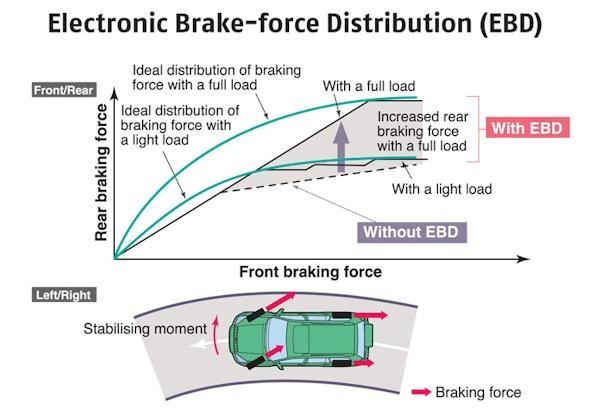
When drivers ask what is Electronic Brake Force Distribution, they are asking about one of the key safety systems found in many modern vehicles. EBD helps a car use braking force more effectively by changing pressure based on weight, speed, and road conditions.
From my experience studying automotive safety systems, many drivers know about ABS but do not realize that EBD works behind the scenes to improve everyday braking. In U.S. traffic, where vehicles often carry passengers, cargo, and travel through changing weather, balanced brake control is very important.

What Is Electronic Brake Force Distribution?
Electronic Brake Force Distribution, often called EBD, is an electronic safety system that controls how much braking force reaches each wheel. It prevents too much pressure from being sent to wheels that may lose grip.
Traditional brake systems use a fixed balance between front and rear brakes. EBD improves this by using sensors and computer controls to make small adjustments while the vehicle is moving.

- ✦ Smart Brake Balance
EBD changes brake pressure according to vehicle conditions instead of using one fixed setting.
- ✦ Improved Stability
The system helps reduce wheel lock and keeps the vehicle more stable during hard braking.
Why Brake Force Balance Matters
During braking, weight moves toward the front of the vehicle. The front wheels usually need more braking force because they carry more load.
If rear wheels receive too much pressure, they can lose traction and affect vehicle stability. EBD helps solve this problem by adjusting force in real time.
How Does Electronic Brake Force Distribution Work?
EBD uses wheel speed sensors, brake pressure sensors, and an electronic control unit. These parts work together to measure driving conditions and adjust brake pressure.
When a driver presses the brake pedal, the system checks wheel movement and vehicle behavior. It then sends the correct amount of pressure to each wheel.

- ✦ Wheel Speed Sensors
These sensors monitor how fast each wheel rotates and help detect differences in traction.
- ✦ Electronic Control Unit
The computer analyzes sensor information and controls brake pressure changes.
- ✦ Hydraulic Brake Control
The system adjusts hydraulic pressure so each wheel receives suitable braking force.
EBD and ABS Relationship
EBD and ABS work together but perform different jobs. ABS prevents wheels from locking during heavy braking, while EBD manages brake force before wheel lock becomes a problem.
Most modern vehicles combine both systems because they improve control in emergency braking situations.
Main Components of an Electronic Brake Force Distribution System
Understanding what is Electronic Brake Force Distribution becomes easier when you know the main parts that make the system work. Each component provides information or controls brake operation.
These parts work together in milliseconds, allowing the vehicle to respond quickly during braking.

- ✦ Wheel Sensors
Measure wheel speed and help identify traction differences.
- ✦ Brake Control Module
Processes data and decides how brake pressure should be distributed.
- ✦ Hydraulic Valves
Control the amount of brake fluid pressure reaching each wheel.
Benefits of Electronic Brake Force Distribution
The main purpose of EBD is to improve vehicle control and braking efficiency. It helps drivers maintain confidence during normal driving and sudden stops.
For American drivers, EBD is useful during highway travel, rain, snow, and situations where vehicle weight changes because of passengers or cargo.

- ✦ Better Emergency Braking
EBD helps the vehicle slow down with better balance when the driver brakes suddenly.
- ✦ Improved Cornering Control
Balanced brake pressure helps reduce instability while braking during turns.
- ✦ Works With Modern Safety Systems
EBD supports ABS and other electronic stability technologies.
Common Signs of Electronic Brake Force Distribution Problems
EBD systems are designed to work without driver input, but problems can occur if sensors or electronic components fail. Many issues appear through warning lights or unusual braking behavior.
A brake warning should never be ignored because braking systems are critical safety equipment.
- ✦ ABS or Brake Warning Light
A dashboard warning may indicate a problem with EBD, ABS, or related sensors.
- ✦ Uneven Braking
The vehicle may pull to one side if brake force is not balanced correctly.
- ✦ Reduced Stability
The car may feel less controlled during hard braking.
How EBD Problems Are Diagnosed
Technicians usually scan the vehicle computer for error codes and inspect wheel sensors, wiring, and brake components.
A proper diagnosis is important because EBD shares components with other safety systems.
Electronic Brake Force Distribution vs Traditional Brake Systems
Traditional brake systems rely on mechanical balance methods that cannot react to changing driving conditions. EBD adds electronic control that allows faster and more accurate adjustments.
The difference is similar to comparing a fixed setting with a smart system that adapts while the vehicle moves.
- ✦ Traditional System
Uses a mostly fixed brake balance designed for average conditions.
- ✦ EBD System
Uses sensors and computers to adjust brake force based on real-time conditions.
