
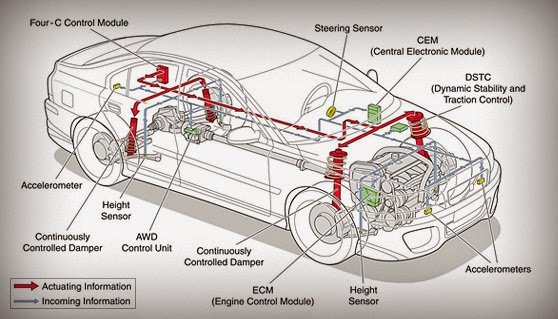
Modern vehicles need to handle many different driving situations. A family SUV may need a smooth ride on highways, while a sports sedan needs firm control during fast cornering. Electronic suspension systems solve this challenge by changing how the suspension reacts while the vehicle is moving.
From my experience studying automotive systems, the biggest change with electronic suspension is the move from fixed mechanical parts to smart systems that make decisions every second. Instead of using one suspension setting for every road, the vehicle can adjust damping, ride height, and stiffness based on real driving conditions.

What Is an Electronic Suspension System?
An electronic suspension system is an advanced vehicle suspension setup that uses electronic controls to manage suspension behavior. Traditional suspension systems use fixed springs and shock absorbers, but electronic systems can change their response when driving conditions change.
The system uses sensors, an electronic control unit, and adjustable suspension components. Together, these parts monitor the vehicle and make small adjustments to improve comfort, safety, and handling.
- ✦ Smart suspension control
The vehicle computer analyzes road and driving information to select the best suspension setting.
- ✦ Real-time adjustments
The suspension can react quickly to bumps, braking, acceleration, and cornering forces.
Electronic Suspension vs Traditional Suspension
Traditional suspension systems have fixed settings that cannot adapt easily. They must balance comfort and performance with the same hardware all the time.
Electronic suspension systems provide more flexibility because they can change damping force electronically. This helps vehicles feel softer during normal driving and more controlled during aggressive driving.
- ✦ Traditional suspension
Uses mechanical components with limited adjustment ability.
- ✦ Electronic suspension
Uses sensors and computers to adjust suspension behavior automatically.
How Electronic Suspension Systems Work Step by Step
Understanding how electronic suspension systems work starts with the sensors. These sensors collect information about vehicle movement, road conditions, and driver actions.
The electronic control unit processes this information and sends commands to suspension components. These adjustments happen very quickly, often many times during a single drive.

- ✦ Step 1: Sensors collect data
Sensors measure wheel movement, body movement, steering input, braking force, and vehicle speed.
- ✦ Step 2: Control unit analyzes information
The computer decides whether the suspension should become softer, firmer, higher, or lower.
- ✦ Step 3: Suspension components adjust
Electronic dampers or air suspension parts change settings based on the computer’s instructions.
The Role of Suspension Sensors
Sensors are the foundation of electronic suspension systems. They act like the vehicle’s nervous system by constantly measuring changes around the car.
Common sensors include ride height sensors, acceleration sensors, steering angle sensors, and wheel speed sensors. These inputs help the system understand what the vehicle needs.
- ✦ Ride height sensors
Measure the distance between the vehicle body and wheels.
- ✦ Acceleration sensors
Detect body movement during braking, turning, and road impacts.
Main Components of an Electronic Suspension System
Electronic suspension systems combine several technologies into one connected system. Each component has a specific role in controlling vehicle movement.
The quality of the suspension depends on how well these parts communicate. A fast computer is not useful without accurate sensors and responsive suspension hardware.

- ✦ Electronic Control Unit
The ECU acts as the brain of the system and controls suspension adjustments.
- ✦ Adaptive dampers
These shock absorbers change their resistance to control ride quality.
- ✦ Air suspension components
Some systems adjust vehicle height using air springs and compressors.
Adaptive Dampers Explained
Adaptive dampers are one of the most common parts of electronic suspension systems. They use electronically controlled valves to change how oil flows inside the shock absorber.
When the vehicle needs comfort, the damper allows more movement. During hard cornering, it increases resistance to reduce body roll.
- ✦ Comfort mode
Creates a softer ride by allowing more suspension movement.
- ✦ Sport mode
Creates firmer control for sharper handling.
Types of Electronic Suspension Systems
There are several types of electronic suspension systems used in modern cars, trucks, and SUVs. Each type uses different technology to improve vehicle performance.
Manufacturers choose systems based on vehicle purpose. Luxury vehicles often focus on comfort, while performance vehicles focus on handling response.

- ✦ Adaptive suspension
Changes damper stiffness electronically based on driving conditions.
- ✦ Active suspension
Uses powered components to actively control vehicle movement.
- ✦ Air suspension
Uses air springs to adjust ride height and comfort.
Semi-Active vs Active Suspension
Semi-active suspension systems mainly adjust damping force. They do not create movement but control how quickly suspension parts move.
Active suspension systems can apply force to control the vehicle body. These systems are more complex and are usually found in advanced vehicles.
- ✦ Semi-active systems
Adjust resistance without directly moving the suspension.
- ✦ Active systems
Use actuators to control suspension movement directly.
Benefits of Electronic Suspension Systems
Electronic suspension systems improve the driving experience by balancing comfort and control. They help vehicles feel smoother on rough roads while maintaining stability during demanding situations.
For U.S. drivers, this technology is useful because vehicles often face different road conditions, from highways to uneven city streets and rural roads.

- ✦ Improved ride comfort
The suspension can soften impacts from bumps and rough surfaces.
- ✦ Better handling
The system reduces body roll and improves cornering stability.
- ✦ Enhanced safety
Better suspension control can improve tire contact with the road.
Limitations and Maintenance of Electronic Suspension Systems
Although electronic suspension systems offer many advantages, they are more complex than traditional suspension setups. More sensors and electronic parts mean more possible failure points.
Repair costs can also be higher because specialized diagnostic tools may be required. Regular inspections help identify problems before they become major repairs.

- ✦ Higher repair costs
Electronic components can cost more to replace than traditional suspension parts.
- ✦ Complex diagnosis
Technicians need special equipment to find electronic suspension faults.
- ✦ Component wear
Dampers, sensors, and compressors may require service over time.
Common Electronic Suspension Problems
Common issues include warning lights, uneven ride height, unusual noises, and poor suspension response.
When these symptoms appear, drivers should have the system inspected because ignoring problems may affect ride quality and vehicle control.
- ✦ Warning messages
The dashboard may display suspension system alerts.
- ✦ Uneven vehicle height
A failed air suspension component may cause one side of the vehicle to sit lower.
