
How EV Charging Speed Is Determined is a common question among new electric vehicle owners in the United States. Drivers want to know why one EV can charge quickly at a public station while another takes much longer, even when both use the same charger.
After studying EV charging systems, battery technology, and real-world driving patterns, one thing becomes clear: charging speed is not controlled by the charger alone. The EV, battery management system, charging station, and outside conditions all work together to decide the final charging rate.
 display: block; margin: 0 auto; border-radius: 12px; box-shadow: 0 8px 25px rgba(0, 0, 0, 0.12);”>
What Determines EV Charging Speed?
Understanding How EV Charging Speed Is Determined starts with the basic idea of power flow. Charging speed measures how fast electricity moves from the charging source into the vehicle battery. This rate is usually measured in kilowatts (kW).
A higher kW rating usually means faster charging, but the vehicle must be able to accept that power. If a charger can provide 250 kW but the vehicle only accepts 100 kW, the charging session will stay near the lower limit.
- ✦ Charger power output
The charger sets the maximum amount of electricity available, such as Level 1, Level 2, or DC fast charging.
- ✦ Vehicle charging limit
Every EV has a maximum charging rate controlled by its battery system and electrical design.
- ✦ Battery condition
Battery temperature and charge level can reduce or increase charging speed.
The Role of Kilowatts in EV Charging
Kilowatts show how much electrical power enters the battery at a given moment. A 7 kW home charger adds energy much slower than a 150 kW public fast charger.
However, charging speed is not only about the highest number. The vehicle must safely manage heat, voltage, and battery health during charging.
How Charger Type Affects Charging Speed
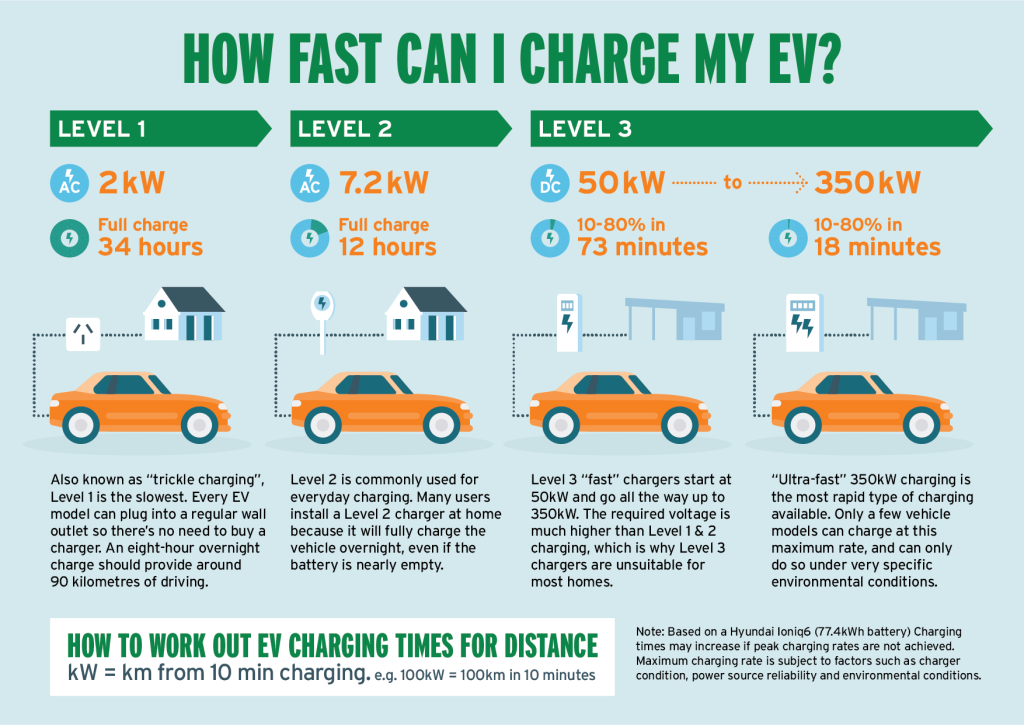
The type of charger has a major impact on how EV charging speed is determined. In the US, drivers usually see three main charging options: Level 1, Level 2, and DC fast charging.
Each charger type delivers electricity at a different rate. Home charging is often slower but convenient, while public DC fast chargers are designed for quick energy recovery during long trips.

- ✦ Level 1 charging
Uses a standard household outlet and provides slow charging suitable for overnight use.
- ✦ Level 2 charging
Uses higher electrical power and is common in homes, workplaces, and public locations.
- ✦ DC fast charging
Provides high power directly to the battery and is designed for rapid charging stops.
Why DC Fast Charging Is Faster
DC fast chargers send direct current electricity directly to the battery. This avoids some conversion steps that happen during AC charging.
The vehicle still controls the final charging rate because the battery system must prevent overheating and damage.
How Battery Size Changes EV Charging Time
Battery capacity plays an important role in How EV Charging Speed Is Determined. Larger batteries store more energy, so they usually require more time to reach a full charge.
For example, charging a large battery from empty to full takes longer than charging a smaller battery with the same charger. However, many drivers rarely charge from zero because daily charging usually covers only part of the battery.

- ✦ Battery capacity
Measured in kilowatt-hours (kWh), it shows how much energy the battery can store.
- ✦ Charging percentage
A battery near full charge often charges slower to protect battery life.
Why EVs Slow Down Near Full Charge
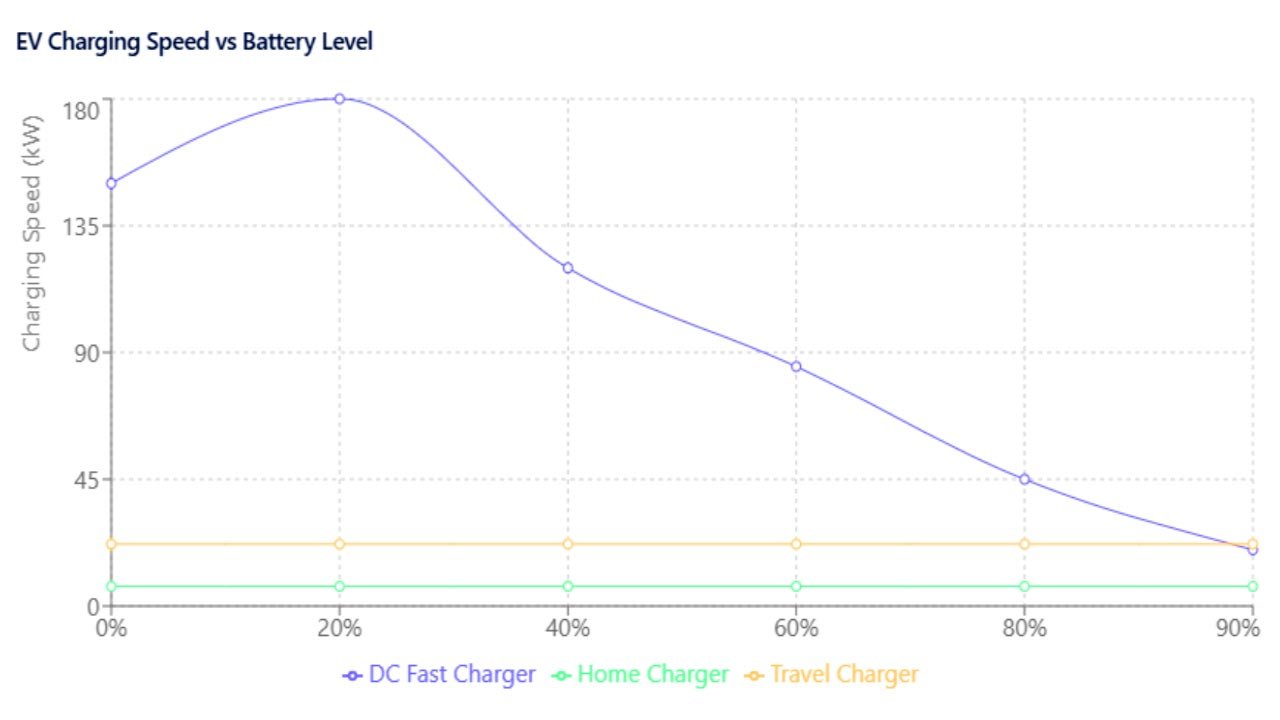
Most EV batteries use a charging curve. The vehicle accepts high power when the battery is low, then reduces power as the battery fills.
This slower final stage helps control heat and reduces stress on battery cells.
How Temperature Impacts EV Charging Speed
Battery temperature is another key factor in How EV Charging Speed Is Determined. Lithium-ion batteries work best within a specific temperature range.
Cold weather can slow charging because the battery management system limits power to protect the cells. Hot temperatures can also reduce charging speed because the system must remove extra heat.
- ✦ Cold battery
A cold battery may accept less power until it reaches a suitable temperature.
- ✦ Hot battery
High temperatures can trigger charging limits to prevent damage.
- ✦ Battery preconditioning
Some EVs warm or cool the battery before charging for better performance.
How the Vehicle Controls Charging Speed
Many drivers assume a powerful charger always means faster charging, but the vehicle decides how much power it accepts. The battery management system constantly checks battery health, temperature, and voltage.
This system protects the battery while balancing charging speed and long-term reliability.

- ✦ Battery management system
Monitors battery conditions and adjusts charging power in real time.
- ✦ Maximum charging rate
Each EV model has a specific charging capability listed by the manufacturer.
Charging Speed Differences Between EV Models
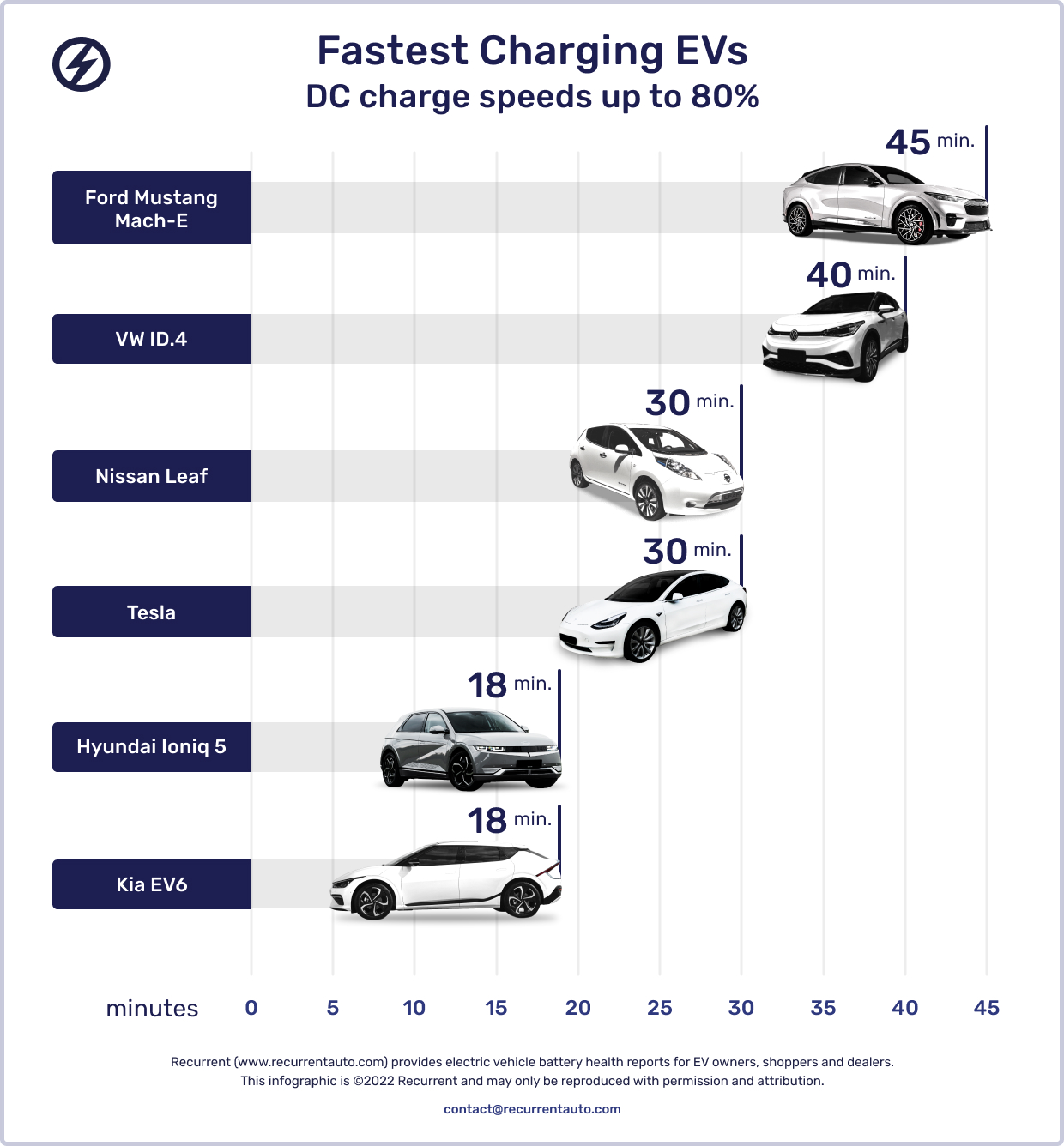
Two EVs connected to the same charger may charge at different speeds because their battery systems have different designs.
Vehicle software, battery chemistry, and thermal systems all influence the final charging rate.
Real-World Factors That Change Charging Speed
Real driving conditions can change charging results. Even when the charger and vehicle support fast charging, outside factors can reduce the actual speed.
Understanding these factors helps US drivers plan road trips and avoid unexpected charging delays.
- ✦ Battery state of charge
A battery at a low charge level usually accepts power faster than one near full.
- ✦ Shared charging stations
Some stations reduce power when multiple vehicles charge at the same time.
- ✦ Vehicle software
Updates can improve charging performance and battery management.
