
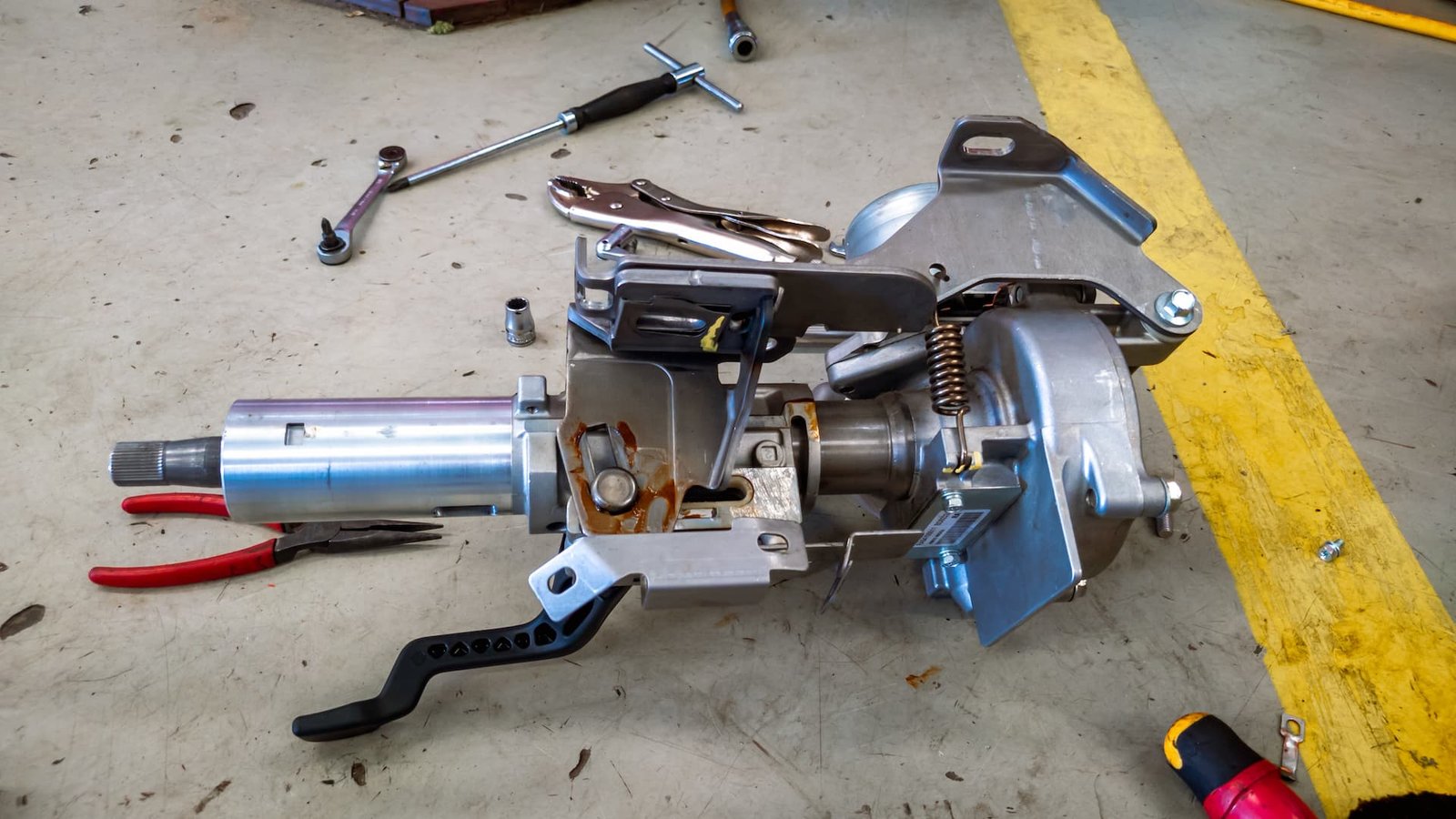
Electric power steering (EPS) has become common in modern vehicles across the United States. Unlike older hydraulic systems, EPS uses an electric motor, sensors, and a control module to help drivers turn the wheel with less effort.
When people ask what causes electric power steering failure, the answer is usually related to the electrical parts that control steering assistance. In my experience reviewing vehicle systems, many EPS problems begin with simple issues like a weak battery or loose wiring before becoming larger repairs.
A failed EPS system does not always mean the entire steering assembly is damaged. Proper testing can often identify whether the problem comes from the power source, steering motor, sensors, or electronic control unit.

How Electric Power Steering Works
To understand what causes electric power steering failure, it helps to know how the system works. EPS uses an electric motor that provides steering assistance based on signals from sensors.
A steering torque sensor measures how much force the driver applies to the wheel. The control module then decides how much assistance the motor should provide.
Because EPS depends on electronics, even a small electrical problem can affect steering performance. This makes regular battery and electrical system checks important.
- ✦ Electric Motor
The motor provides extra steering force and helps reduce driver effort, especially during low-speed turns.
- ✦ Steering Sensors
Sensors measure steering input, wheel position, and vehicle conditions to control assistance.
- ✦ EPS Control Module
The computer processes sensor data and controls how much power the steering motor receives.
Weak Battery or Low Voltage Can Cause Electric Power Steering Failure
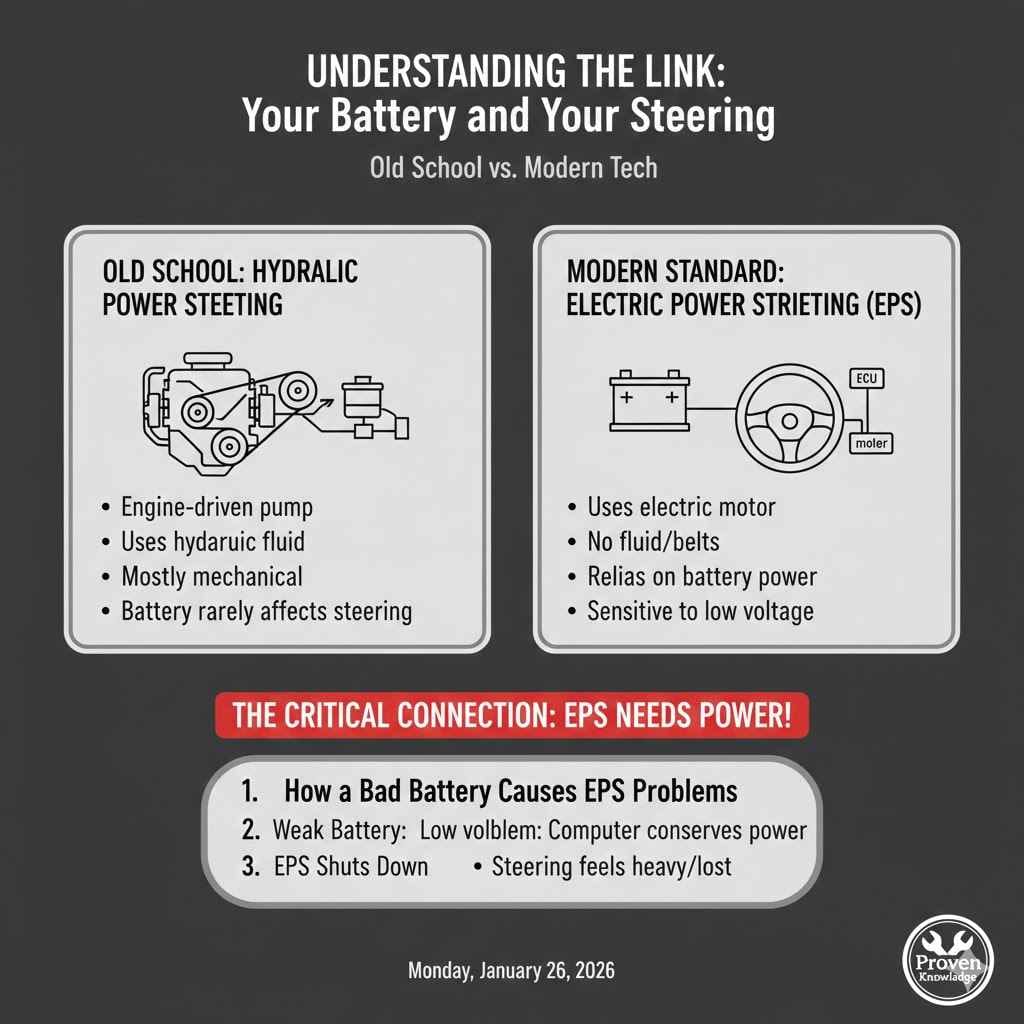
One of the most common answers to what causes electric power steering failure is low electrical voltage. EPS motors need stable power to operate correctly.
A weak battery, failing alternator, or poor electrical connection can prevent the system from receiving enough energy. Some vehicles may disable steering assistance to protect electronic components.
Drivers in the United States often notice this issue after cold weather starts, because batteries lose strength in low temperatures.
- ✦ Battery Problems
An aging or weak battery can reduce voltage and trigger EPS warning lights.
- ✦ Alternator Failure
A failing alternator may stop charging the battery and affect steering electronics.
Signs of Low Voltage EPS Problems
Common signs include temporary loss of steering assistance, dim dashboard lights, slow engine starting, and warning messages. Testing battery voltage is often the first step in diagnosis.
- ✦ Intermittent Steering Assist
The steering may feel normal at times and heavy at other times.
Faulty Electric Steering Motor Problems
The electric motor is one of the most important parts of an EPS system. When the motor wears out or fails, the steering wheel can become much harder to turn.
Motor failure may happen because of age, excessive heat, moisture exposure, or internal electrical damage. In many cases, a diagnostic scan can reveal motor-related fault codes.
A failed steering motor does not always create noise like older hydraulic systems. Instead, drivers often notice reduced assistance or a sudden heavy steering feel.

- ✦ Internal Motor Wear
Repeated use over many years can wear electrical and mechanical motor parts.
- ✦ Heat Damage
High temperatures can reduce motor performance and damage internal components.
Steering Sensor Failure and Calibration Issues
Sensor problems are another major reason behind electric power steering failure. EPS systems rely on accurate information from torque sensors and steering angle sensors.
If a sensor sends incorrect data, the control module may reduce or remove steering assistance. The vehicle may also display an EPS warning light on the dashboard.
After certain repairs, some vehicles require steering sensor calibration. Without proper calibration, the system may not operate correctly.

- ✦ Torque Sensor Failure
A damaged torque sensor can prevent the system from understanding driver steering input.
- ✦ Steering Angle Sensor Issues
Incorrect wheel position data can affect steering assistance.
Wiring, Connector, and Electrical Control Problems
Electrical connections play a major role in EPS performance. Damaged wires, corrosion, or loose connectors can interrupt communication between system parts.
Modern vehicles contain many electronic control units. A communication problem between modules can cause steering assistance errors.
When diagnosing what causes electric power steering failure, technicians often inspect wiring before replacing expensive components.

- ✦ Corroded Connectors
Rust or moisture can interrupt electrical signals between EPS components.
- ✦ Damaged Wiring
Broken wires can stop power or communication from reaching the steering system.
Common Symptoms of Electric Power Steering Failure
Knowing the warning signs can help prevent unexpected steering problems. EPS failures often provide signals before the system stops working completely.
Drivers should pay attention to changes in steering feel, dashboard warnings, and unusual behavior during normal driving.

- ✦ Heavy Steering Wheel
The wheel becomes harder to turn because the electric assistance is reduced or unavailable.
- ✦ EPS Warning Light
A steering warning symbol may appear when the system detects a fault.
- ✦ Intermittent Assistance
Steering help may disappear and return because of unstable electrical connections.
