
How Suspension Geometry Affects Handling is one of the most important topics in vehicle dynamics. The suspension is not only about springs and shocks. The angles and positions of suspension parts decide how the tires behave when the car moves.
From my experience studying vehicle setups, small geometry changes can create major differences in steering feel. A family sedan, pickup truck, or sports car can all feel completely different when suspension angles are adjusted correctly or incorrectly.
For drivers in the United States, suspension geometry matters during daily commutes, highway trips, mountain roads, and towing situations. Good geometry helps a vehicle track straight, respond smoothly, and maintain tire grip.

What Is Suspension Geometry and Why Does It Matter?
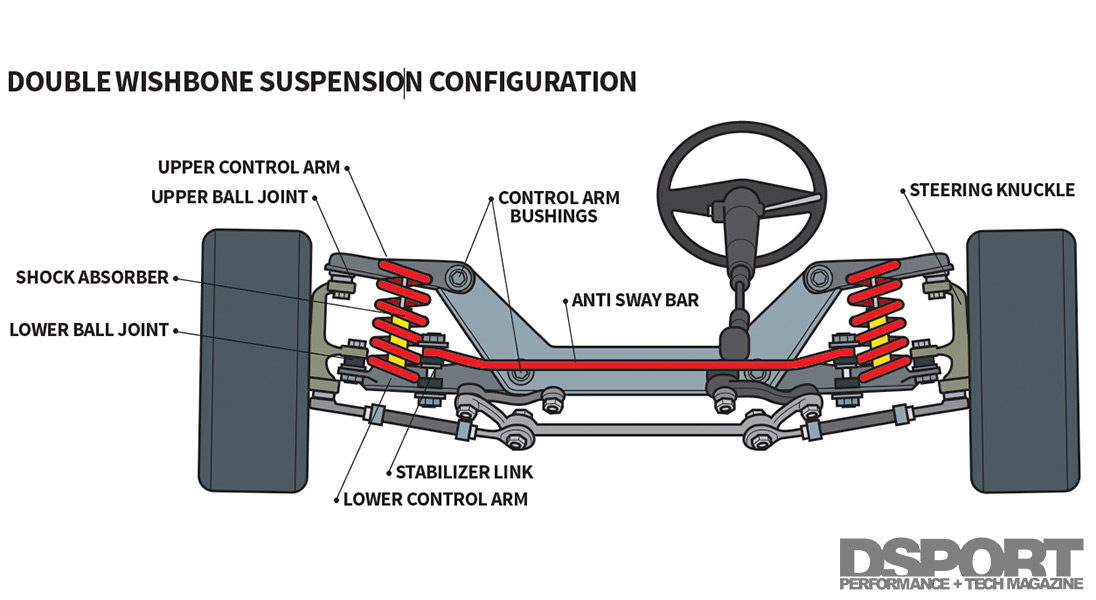
Suspension geometry describes the design, angles, and movement relationship between suspension parts. These parts include control arms, ball joints, steering links, springs, and dampers.
Understanding How Suspension Geometry Affects Handling starts with knowing that tires do not always stay flat on the road. As the suspension moves, wheel angles change. Engineers design geometry to keep tire contact strong in different driving conditions.

- ✦ Tire contact control
Suspension geometry keeps the tire surface connected with the road to improve grip during acceleration, braking, and turns.
- ✦ Vehicle balance
Correct geometry helps distribute weight movement between the front and rear suspension.
The Link Between Geometry and Vehicle Feel
Drivers often notice suspension geometry through steering feedback. A vehicle with well-designed geometry feels stable and predictable, while poor geometry can create pulling, wandering, or uneven tire wear.
How Camber Angle Changes Handling Performance
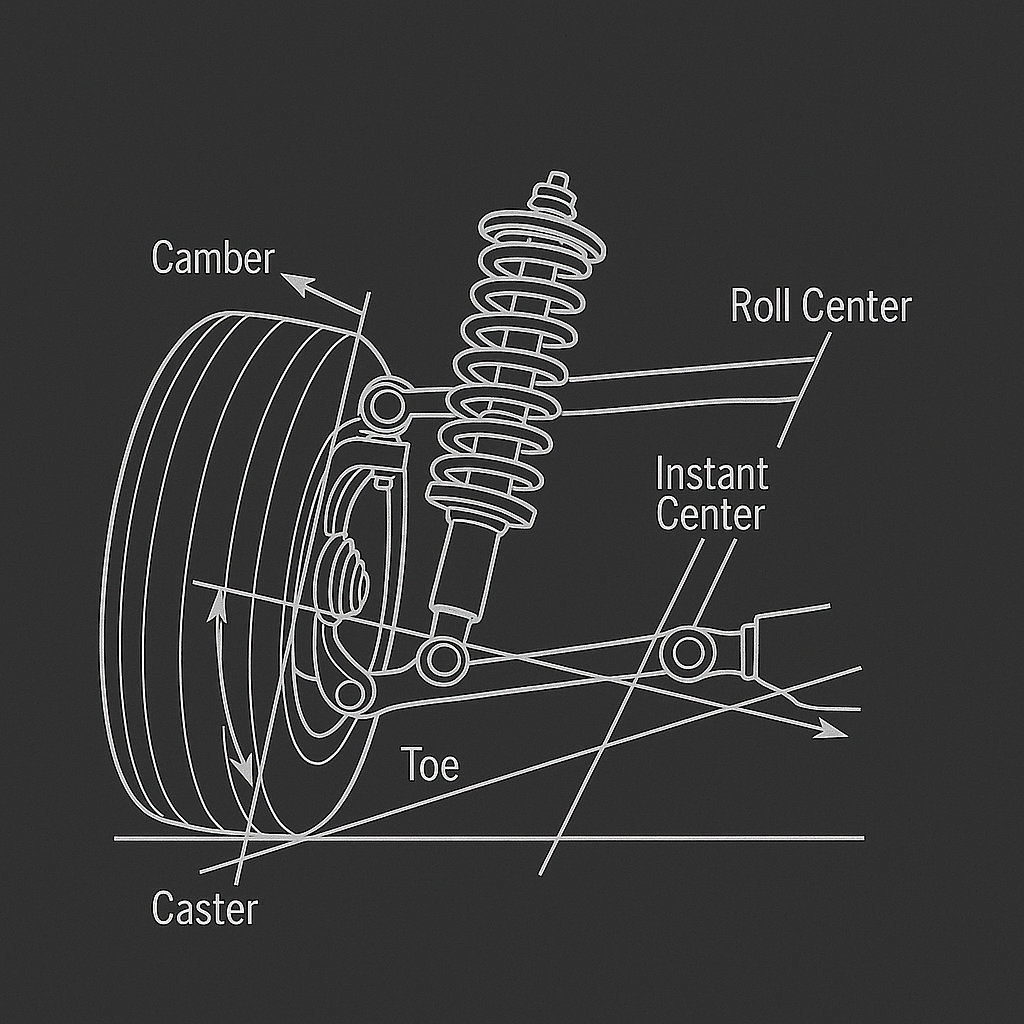
Camber is the inward or outward tilt of the wheel when viewed from the front of the vehicle. It plays a major role in How Suspension Geometry Affects Handling because it changes how much tire surface touches the road during cornering.
Negative camber tilts the top of the wheel inward. Many performance cars use controlled negative camber because it helps maintain grip when the body rolls through a turn.

- ✦ Too much negative camber
Excessive negative camber can reduce straight-line grip and increase inner tire wear.
- ✦ Too much positive camber
Positive camber can reduce cornering stability because the tire loses effective contact during turns.
Camber Effects on Everyday Driving
Most street vehicles use moderate camber settings because comfort, tire life, and stability are more important than maximum cornering speed.
How Caster Angle Affects Steering and Stability
Caster is the angle of the steering axis when viewed from the side of the vehicle. It strongly influences steering effort, straight-line stability, and steering return.
How Suspension Geometry Affects Handling becomes clear when caster changes. More positive caster usually improves highway stability and helps the steering wheel return after a turn.
- ✦ Positive caster
Positive caster improves tracking, steering feel, and high-speed stability.
- ✦ Caster imbalance
Different caster angles from side to side can cause the vehicle to pull toward one direction.
How Toe Settings Influence Tire Wear and Handling
Toe describes whether the front or rear edges of tires point inward or outward. It is one of the most sensitive alignment settings because small changes can quickly affect handling.
When examining How Suspension Geometry Affects Handling, toe is critical because it changes how the vehicle responds to steering inputs and maintains direction.

- ✦ Toe-in
Toe-in can improve straight-line stability but may increase tire scrub if set incorrectly.
- ✦ Toe-out
Toe-out can improve steering response but may reduce stability during highway driving.
Why Alignment Matters After Modifications
Lowering springs, larger wheels, and suspension upgrades can change factory geometry. A professional alignment helps restore balanced handling after modifications.
Roll Center, Suspension Travel, and Body Control
Roll center is the point around which the vehicle body rolls during cornering. Its location affects body movement, weight transfer, and tire loading.
How Suspension Geometry Affects Handling is also connected to suspension travel. As wheels move up and down, geometry changes can influence grip and steering behavior.

- ✦ Roll center height
A properly designed roll center helps control body roll without creating unwanted handling problems.
- ✦ Suspension travel
Enough travel allows tires to follow uneven roads while maintaining contact.
How Suspension Geometry Affects Different Types of Vehicles
Different vehicles require different suspension geometry goals. A sports car focuses on cornering grip, while a truck may focus on load control, comfort, and durability.
How Suspension Geometry Affects Handling depends on vehicle purpose, tire choice, weight distribution, and driving conditions.
- ✦ Sports cars
Performance vehicles often use geometry designed for fast steering response and strong cornering grip.
- ✦ Trucks and SUVs
Utility vehicles need geometry that supports stability, towing, and uneven road conditions.
- ✦ Daily drivers
Passenger cars usually balance comfort, tire life, and predictable handling.
Common Signs of Poor Suspension Geometry
Drivers may notice uneven tire wear, steering vibration, poor cornering confidence, or a vehicle that drifts from its lane.
- ✦ Uneven tire wear
Incorrect angles can place extra stress on specific tire areas.
- ✦ Poor steering response
Wrong geometry can make the vehicle feel slow, unstable, or difficult to control.
