Wheel alignment is the precise adjustment of a car’s wheel angles for safe handling and even tire wear.
I’ve worked on dozens of alignment jobs and studied OEM specs, so I’ll walk you through what is wheel alignment in cars with clear, practical advice. This guide explains the core angles, symptoms of bad alignment, how technicians measure and fix alignment, and real-life tips to keep your ride steady and your tires lasting longer. Read on for proven steps you can use today.
What is wheel alignment in cars?
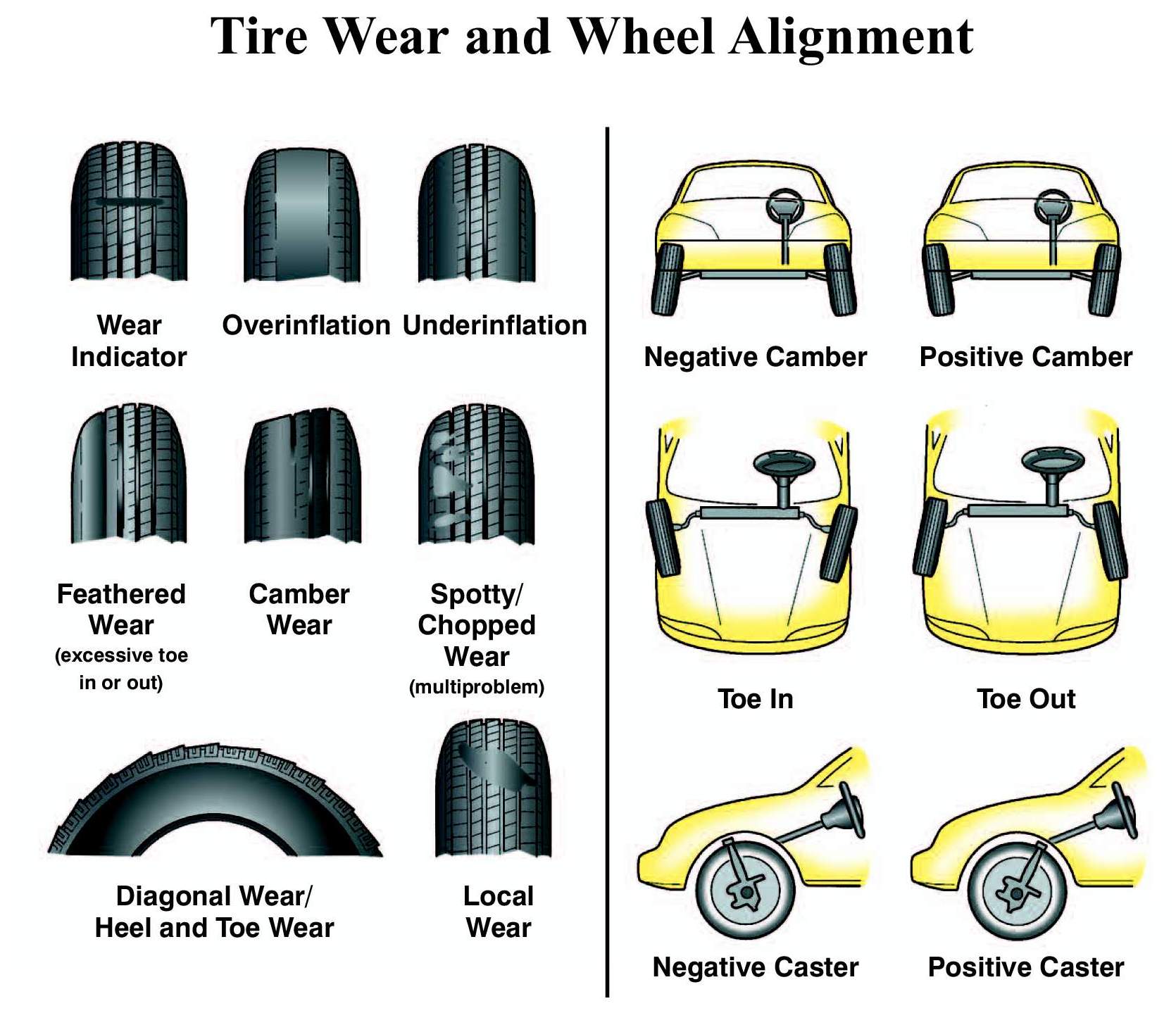
Wheel alignment is the process of setting the angles of the wheels to the vehicle maker’s specifications. The goal is to make the wheels point in the proper direction and track straight. When you know what is wheel alignment in cars, you avoid uneven tire wear, steering pull, and unstable handling. The main angles adjusted are toe, camber, and caster. Proper alignment ties the suspension geometry, tire contact patch, and steering into a balanced system.
I often compare alignment to tuning a musical instrument. If one string is off, the whole chord sounds wrong. In the same way, one misaligned wheel affects braking, steering, and tire life. Over years as a technician, I learned that small angle corrections yield big improvements in feel and safety.

Key alignment angles and what they mean
Understanding the main angles helps when you ask a shop for an alignment.
- Toe
- Toe is the angle the wheels point inward or outward when viewed from above. Small toe errors cause rapid, feathered tire wear and a vague steering feel. Proper toe keeps the car tracking straight.
- Camber
- Camber is the tilt of the wheel when viewed from the front. Negative camber means the top of the tire tilts inward. Excessive camber wears the inside or outside of the tire unevenly and reduces traction if out of spec.
- Caster
- Caster is the tilt of the steering axis when viewed from the side. Correct caster helps the steering self-center and improves straight-line stability. Caster does not cause much tire wear but affects steering feel.
- Thrust angle
- Thrust angle is how the rear axle lines up with the car’s centerline. Incorrect thrust causes the car to track crooked even if front angles are perfect.
Knowing what is wheel alignment in cars means knowing which of these angles is off when you see a symptom. Shops use measurements in degrees and minutes to correct them precisely.

Signs your car needs an alignment
Spotting issues early saves money. Common symptoms include:
- Uneven tire wear
- One edge worn faster than the other often points to camber or toe problems.
- Steering wheel off-center
- If the wheel is not straight when the car is driving straight, alignment is likely needed.
- Vehicle pulling to one side
- A pull under light braking or steady driving usually signals alignment or tire pressure issues.
- Vibration or wandering
- While balancing and tire damage can cause vibration, poor alignment often makes the car feel loose.
- Rapid tire wear
- If tires last much less than expected, alignment should be checked.
When you notice these signs, checking what is wheel alignment in cars early prevents premature tire replacement.
How wheel alignment is measured and performed
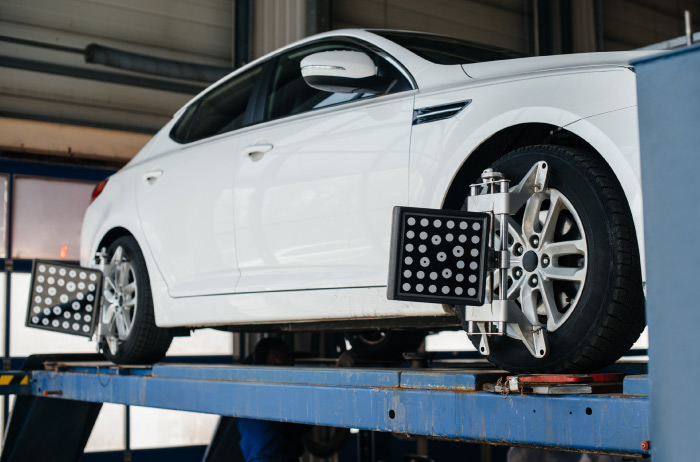
Technicians follow steps and use alignment machines to adjust angles.
- Pre-checks and setup
- They inspect tires, suspension, and steering parts for wear. Bent components must be fixed before alignment.
- Mounting sensors or targets
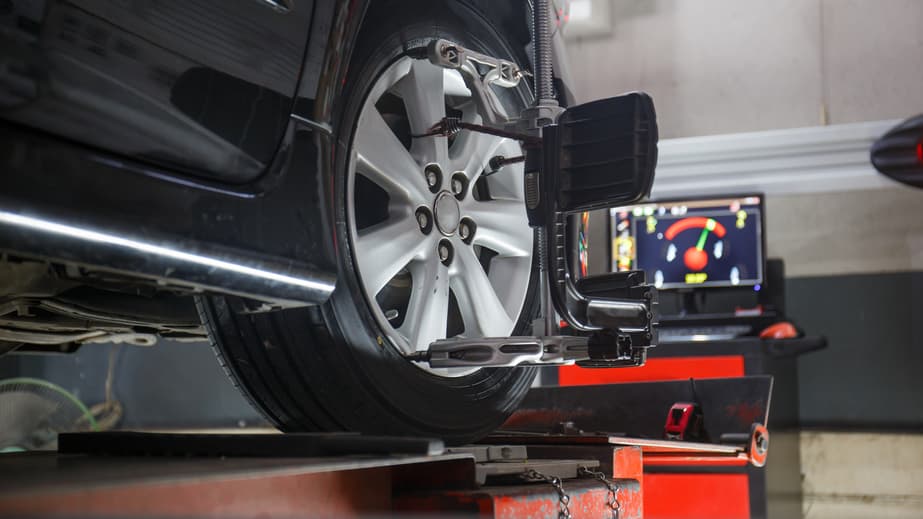
- Modern racks use laser cameras or optical sensors attached to wheels to read angles.
- Measuring current angles
- The machine reports toe, camber, caster, and thrust versus factory specs.
- Making adjustments
- Technicians adjust tie rods, control arms, strut mounts, or shims to reach specs.
- Road test and verify
- A short test drive confirms the car tracks straight and the steering feels centered.
For what is wheel alignment in cars, accuracy matters. Many shops offer two-wheel or four-wheel alignment. Four-wheel alignment adjusts all corners and is best for modern vehicles. Alignment readings are precise to tenths of a degree, so small changes matter.
Types of wheel alignment
Different vehicles and problems call for different services.
- Two-wheel alignment
- Adjusts only the front wheels. OK for some older rear-wheel-drive cars.
- Four-wheel alignment
- Adjusts front and rear angles. Recommended for most modern cars and SUVs.
- Thrust-angle alignment
- Focuses on putting the rear axle in line with the vehicle centerline. Useful when rear toe or thrust is off.
Knowing what is wheel alignment in cars includes knowing which service fits your vehicle and driving needs. Four-wheel is the safest default.

Costs, frequency, and factors that affect alignment
Costs vary by region and vehicle. Typical ranges and tips:
- Cost range
- Alignment often costs between $50 and $150 for a standard four-wheel alignment. Luxury or specialty vehicles can cost more.
- How often to check
- Inspect alignment every 6,000 miles or at least once a year. Check after hitting a curb or pothole.
- Factors that affect alignment
- Driving style, road quality, and suspension wear dictate how fast the alignment drifts.
- Tire and suspension changes
- After installing new tires, lowering or lifting a car, or replacing suspension parts, you should check alignment.
If you know what is wheel alignment in cars, you’ll plan checks after major impacts and during regular service intervals.

DIY vs professional alignment
You can check basic indicators at home, but professional alignment has clear advantages.
- DIY checks you can do
- Measure tire wear patterns. Observe steering centering and pull. Check tire pressures and steering linkage for play.
- Why choose a pro
- Professionals have calibrated machines, lift space, and the ability to make precise adjustments, especially for caster and thrust angle.
- When DIY makes sense
- Use DIY only for preliminary checks. Minor toe tweaks are possible, but misadjusting can lead to worse wear.
From my experience, DIY saved time for simple checks, but I always took the car to a shop for final alignment. For safety and accuracy, a professional setup is the best choice.

Benefits and limitations of proper alignment
Proper alignment brings clear upsides, with a few realistic limits.
- Benefits
- Longer tire life, better fuel economy, improved steering control, and safer braking feel.
- Limits
- Alignment cannot fix worn suspension parts, bent rims, or damaged tires. It also can’t compensate for incorrect ride height or incompatible tires.
- Practical impact
- Even a small alignment correction can improve fuel economy slightly and noticeably improve handling.
Understanding what is wheel alignment in cars helps set expectations: it optimizes geometry, but it is not a cure-all for mechanical damage.
Quick questions people ask (PAA-style)
How long does an alignment take?
A standard alignment takes about 30 to 90 minutes depending on adjustments and repairs needed. If parts must be replaced, time increases.
Will alignment fix steering pull?
If the pull is caused by misaligned angles, yes. If the cause is brakes, tires, or bent suspension, alignment alone won’t fix it.
Can poor alignment cause vibrations?
Yes. Poor alignment that leads to uneven tire wear can create vibration, though wheel balance and tire damage are also common causes.
Frequently Asked Questions of what is wheel alignment in cars
What causes wheel alignment to go out?
Alignment drifts from hitting curbs, potholes, normal wear of suspension parts, and after collision repairs. Changes in ride height and aftermarket parts also affect alignment.
How often should I check alignment?
Check alignment at least once a year or every 6,000 miles, and after any impact like a curb strike or large pothole. Also check after new tires or suspension work.
Can I drive with bad alignment?
You can drive, but it increases tire wear, reduces fuel efficiency, and can make handling unsafe. Fix alignment promptly to avoid higher costs later.
Does wheel balancing replace alignment?
No. Balancing evens tire weight to avoid vibration. Alignment sets wheel angles for correct tracking and wear. Both services are important.
Is alignment covered by warranty?
Alignment coverage depends on the vehicle warranty or service agreement. New tires sometimes come with a free alignment coupon, but always confirm with the dealer or shop.
Will lowering or lifting my car require alignment?
Yes. Any change in ride height alters suspension geometry and requires a fresh alignment to meet new specs.
Conclusion
Wheel alignment improves safety, handling, and tire life by adjusting toe, camber, caster, and thrust to factory specs. Know what is wheel alignment in cars so you can spot symptoms early, choose the right service, and avoid costly tire replacements. Check alignment regularly, especially after impacts or suspension changes, and trust a trained technician for precise adjustments. If you noticed signs like uneven wear or steering pull, schedule an alignment soon — it’s a small step that pays off in comfort, savings, and safety. Share your experiences, ask a question below, or subscribe for more car care guides.