
Quick Answer: A failing starter motor shows clicking sounds, slow cranking, grinding noises, and repeated no-start problems.
Knowing what are the signs of a failing starter motor can save you from being stuck in a parking lot or driveway. The starter motor is the part that turns the engine when you press the ignition button or turn the key. When it becomes weak, your vehicle may struggle or refuse to start.
From my experience working with vehicle troubleshooting guides, many drivers first blame the battery when starting problems appear. While a weak battery can cause similar symptoms, starter motor issues often have unique warning signs. Learning these signs helps you take action before the starter fails completely.
What Does a Starter Motor Do?
A starter motor is a small electric motor that begins the engine starting process. When you turn the key or push the start button, the starter receives power from the battery and spins the engine’s flywheel.
Once the engine starts running on its own, the starter stops working. A healthy starter motor works quickly and smoothly. A damaged starter may struggle to create enough force, causing slow starts or complete failure.
- ✦ Receives electrical power
The starter draws energy from the battery through cables and electrical connections.
- ✦ Turns the engine
The starter uses a gear system to rotate the engine until combustion begins.
- ✦ Works only during startup
The starter is designed for short periods of use, not continuous operation.
Common Signs of a Failing Starter Motor
The most important part of understanding what are the signs of a failing starter motor is recognizing changes in your vehicle’s behavior. Starter problems usually develop slowly before complete failure happens.
Drivers in the United States often notice these issues during daily commutes, especially when starting a vehicle after sitting overnight or during extreme weather.

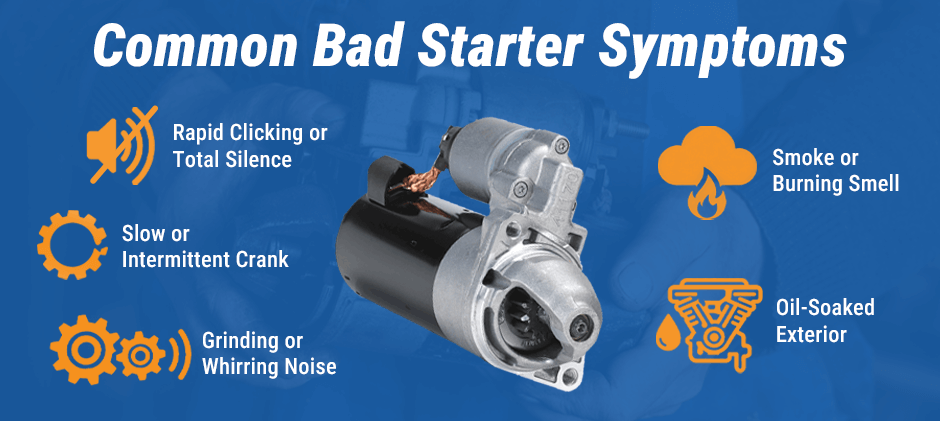
- ✦ Clicking sound when starting
A repeated clicking noise may mean the starter solenoid is engaging but the motor cannot turn the engine.
- ✦ Slow engine cranking
A weak starter may turn the engine slower than normal before it starts.
- ✦ No response when turning the key
A failed starter may cause silence when you try to start the vehicle.
- ✦ Grinding noise
Grinding can happen when the starter gear does not properly connect with the flywheel.
Clicking Without Engine Movement
A clicking sound is one of the most common signs of a failing starter motor. It may happen because the solenoid receives power but the starter motor cannot complete the job.
However, clicking can also come from a weak battery. Testing battery voltage helps separate a battery problem from a starter problem.
Intermittent Starting Problems
Some failing starters work one day and fail the next. This happens because internal parts such as brushes or electrical contacts may wear unevenly.
If your vehicle starts after several attempts, do not ignore the problem. Intermittent failure often becomes a complete no-start situation later.
How to Tell a Bad Starter From a Bad Battery
Battery problems and starter problems often create similar symptoms. A weak battery may cause slow cranking, dim lights, or clicking sounds. A bad starter may still show strong battery power but fail to turn the engine.
A simple inspection can help identify the difference. Check battery terminals, measure battery voltage, and observe what happens when you attempt to start the vehicle.

- ✦ Check dashboard lights
Dim lights during startup may suggest a weak battery.
- ✦ Listen carefully
A single click with no engine movement may point toward a starter issue.
- ✦ Test electrical connections
Loose or corroded cables can prevent power from reaching the starter.
Why Proper Diagnosis Matters
Replacing a starter motor can be expensive, so confirming the cause before replacement is important. Many starting problems come from batteries, cables, relays, or electrical connections.
A proper diagnosis prevents unnecessary repairs and helps you fix the actual issue.
What Causes a Starter Motor to Fail?
Understanding what causes starter failure makes it easier to prevent future problems. Like most electrical parts, starters wear out because of heat, repeated use, and damaged components.
Most starter motors last many years, but driving habits, vehicle age, and electrical system condition can affect their lifespan.

- ✦ Normal wear and tear
Internal brushes, bearings, and contacts wear down after many starting cycles.
- ✦ Electrical problems
Poor connections, damaged wires, or voltage issues can stress the starter.
- ✦ Oil or fluid leaks
Leaks near the starter can damage electrical parts over time.
Starter Solenoid Failure
The starter solenoid controls power flow to the starter motor. When it fails, the motor may not receive enough power to operate.
A faulty solenoid can create clicking sounds or complete starting failure.
How to Diagnose a Failing Starter Motor
Diagnosing a failing starter motor starts with checking the simple things first. Confirm the battery condition, inspect connections, and listen carefully during startup attempts.
A professional technician may use electrical testing tools to check voltage flow and starter performance. This helps confirm whether replacement is needed.

- ✦ Inspect battery terminals
Clean and tight connections allow proper electrical flow.
- ✦ Test starter voltage
Voltage testing shows whether the starter receives enough power.
- ✦ Check starter sounds
Unusual clicks, grinding, or silence provide diagnostic clues.
Can You Drive With a Bad Starter Motor?
A vehicle with a failing starter motor may continue working after it starts, but the risk comes when you turn the engine off. A weak starter can leave you unable to restart the vehicle.
If you notice repeated starting issues, schedule an inspection soon. Waiting too long can turn a small repair into an emergency situation.
- ✦ Risk of sudden failure
A starter can stop working without much warning after early symptoms appear.
- ✦ Possible inconvenience
A failed starter may leave you stranded away from home.
