
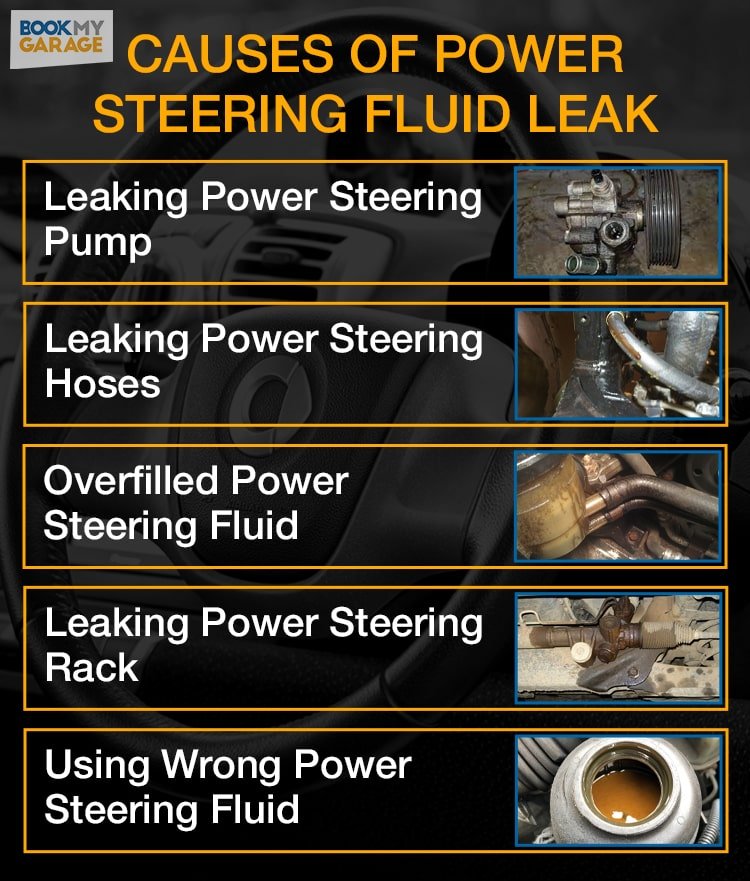
Power steering fluid leaks are usually caused by worn hoses, seals, pumps, or steering rack damage.
If you notice a reddish or amber fluid under your vehicle, a power steering fluid leak may be the reason. Many drivers in the United States depend on their cars every day for work, family trips, and daily errands, so steering problems can quickly become a serious concern.
Understanding what causes power steering fluid to leak helps you find the issue before it turns into a costly repair. In my experience reviewing vehicle maintenance problems, most leaks start with small worn parts that become worse when ignored.
This guide explains the common causes of power steering fluid leaks, the warning signs, repair options, and simple steps that can help protect your steering system.
How the Power Steering System Uses Fluid
Before learning what causes power steering fluid to leak, it helps to understand how the system works. Traditional hydraulic power steering systems use fluid pressure to make turning the steering wheel easier.
The power steering pump pushes fluid through hoses to the steering gear or rack. This pressure helps move the steering components with less effort from the driver.
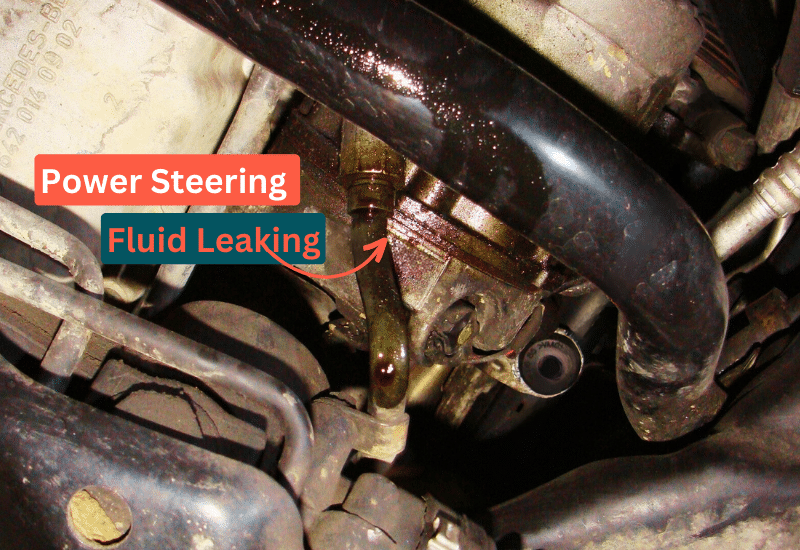
When any part of this sealed system becomes damaged, fluid can escape. A small leak may slowly lower the fluid level, while a larger leak can quickly affect steering performance.
- ✦ Power steering pump
The pump creates hydraulic pressure and can leak if internal seals or the housing become damaged.
- ✦ Fluid hoses
High-pressure and return hoses carry fluid and may crack, loosen, or develop weak spots over time.
- ✦ Steering rack or gearbox
These parts contain seals that can wear out and allow fluid to escape.
Common Causes of Power Steering Fluid Leaks
The answer to what causes power steering fluid to leak often depends on the age of the vehicle and the condition of its steering parts. Most leaks happen because seals, hoses, or connections lose their ability to keep fluid inside.
Heat, pressure, road conditions, and normal wear all affect the power steering system. Vehicles that spend years on the road may eventually develop leaks even with regular maintenance.

- ✦ Damaged power steering hoses
Rubber hoses can crack, become soft, or break because of heat and age. A damaged hose is one of the most common reasons for fluid loss.
- ✦ Worn seals and O-rings
Seals keep fluid contained inside pumps, racks, and connections. When they harden or break, fluid can leak out.
- ✦ Failing power steering pump
A worn pump may leak around its shaft, housing, or seals and may also create whining noises.
- ✦ Leaking steering rack
A damaged steering rack can allow fluid to escape near the boots or ends of the rack assembly.
Why Old Vehicles Develop More Leaks
Older vehicles often experience more power steering leaks because rubber parts lose flexibility over time. Seals and hoses become less resistant to pressure and heat.
Regular inspections can help identify aging parts before they fail completely.
- ✦ Age-related wear
Long-term exposure to heat and pressure slowly weakens steering components.
Signs Your Vehicle Has a Power Steering Fluid Leak
Knowing the warning signs can help you catch a power steering leak early. A vehicle usually provides clues before the steering system stops working properly.
Many drivers first notice a fluid spot in their driveway or a change in how the steering wheel feels. These signs should not be ignored because low fluid can damage the pump.
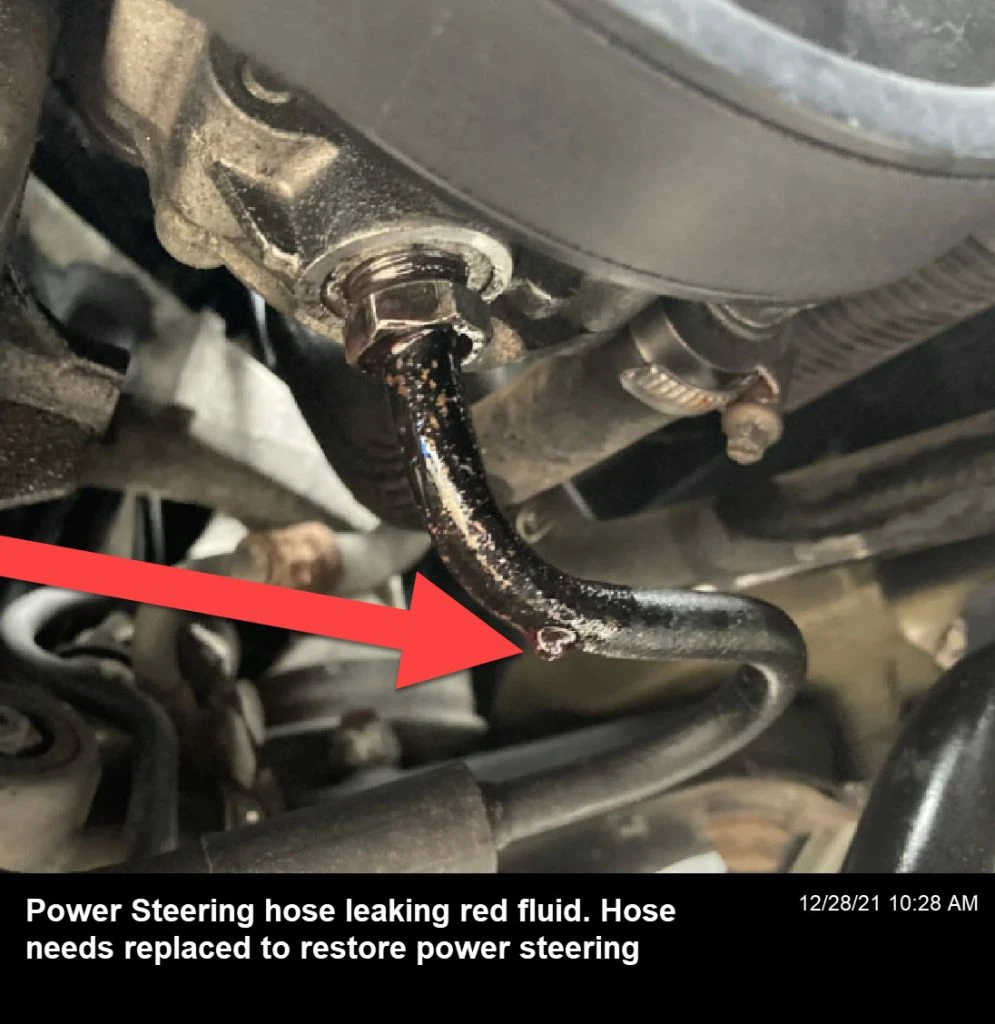
- ✦ Fluid under the vehicle
Power steering fluid often appears as a red, pink, or brown oily spot near the front of the vehicle.
- ✦ Hard steering
Low fluid levels reduce hydraulic assistance and can make the steering wheel harder to turn.
- ✦ Whining or groaning sounds
The power steering pump may make noise when fluid levels are low or air enters the system.
- ✦ Low fluid reservoir level
A repeatedly empty reservoir usually indicates an active leak somewhere in the system.
Can You Drive With a Power Steering Fluid Leak?
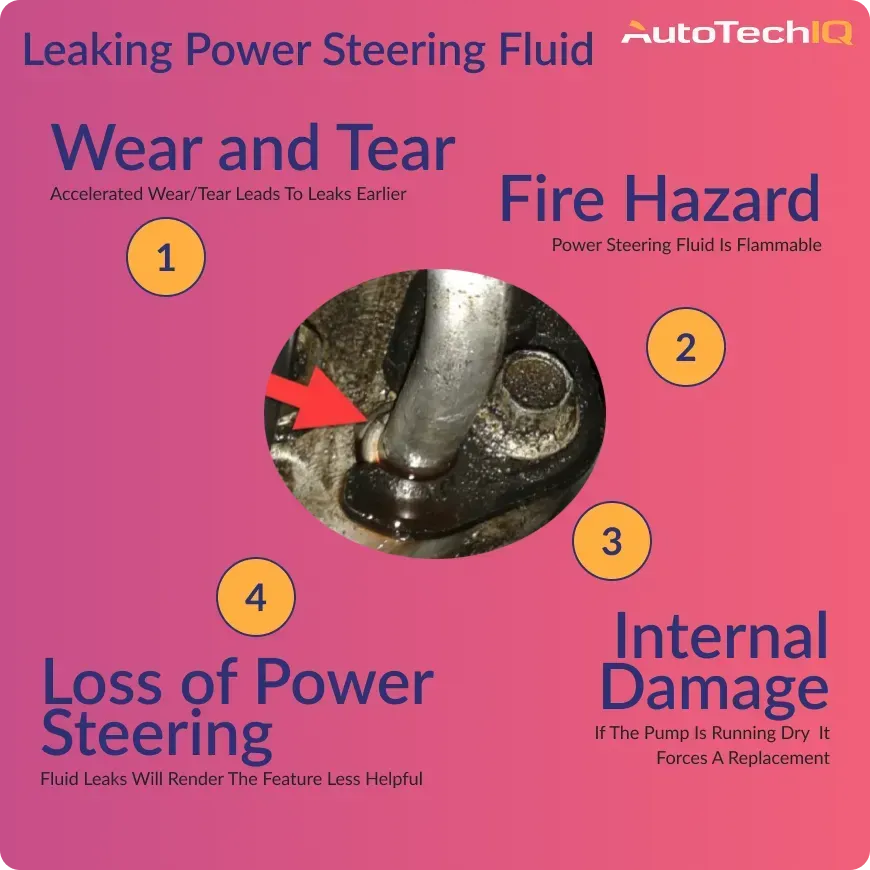
Driving with a power steering fluid leak may be possible for a short time, but it is not recommended. As fluid levels drop, steering assistance can decrease and make the vehicle harder to control.
A leak can also cause the power steering pump to run without enough lubrication. This can turn a simple hose repair into a much more expensive pump replacement.
- ✦ Small leak
A slow leak may allow limited driving, but it should still be inspected soon.
- ✦ Large leak
A fast leak can quickly remove steering assistance and requires immediate attention.
How Mechanics Diagnose Power Steering Fluid Leaks
Finding what causes power steering fluid to leak requires a careful inspection. Mechanics usually start by checking the fluid level, color, and location of the leak.
They may clean the steering components and run the system to identify the exact leak point. This prevents replacing the wrong part.
In some cases, a special dye may be added to the fluid so the leak becomes easier to locate under inspection lighting.

- ✦ Visual inspection
Technicians inspect hoses, connections, pumps, and steering racks for wet areas or damaged parts.
- ✦ Pressure testing
Testing can reveal leaks that only appear when the system is under pressure.
- ✦ Fluid tracking
Leak tracing methods help identify the exact source of fluid loss.
Power Steering Fluid Leak Repair Options and Costs
The repair cost depends on which component is causing the leak. A simple hose replacement usually costs much less than replacing a steering rack or power steering pump.
The best repair approach is to fix the damaged part instead of repeatedly adding fluid. Temporary fixes may hide symptoms but do not solve the root problem.
- ✦ Hose replacement
Replacing a damaged hose is often one of the simpler and less expensive repairs.
- ✦ Seal replacement
Some components can be rebuilt with new seals if the main part is still in good condition.
- ✦ Pump or rack replacement
Major component failure may require replacing the pump or steering rack assembly.
How to Prevent Power Steering Fluid Leaks
Preventing leaks starts with regular vehicle care. Simple checks can help you find problems before they affect steering performance.
Following the manufacturer’s maintenance schedule and checking fluid levels can extend the life of steering components.
- ✦ Check fluid regularly
Inspect the power steering reservoir and look for changes in fluid level.
- ✦ Use the correct fluid
Using the wrong fluid type can damage seals and steering components.
- ✦ Inspect during maintenance
Ask for hose and steering system checks during routine service visits.
