When people ask, “What Is an EV Battery Management System,” they are asking about the technology that keeps an electric vehicle battery safe and reliable. The BMS works like the brain of the battery pack. It checks important battery data and makes decisions every second while you drive or charge.
From my experience studying vehicle technology, many battery problems are not caused by the cells alone. Poor temperature control, incorrect charging, and battery imbalance can reduce performance. A well-designed EV Battery Management System helps prevent these issues and allows modern EVs in the United States to deliver consistent performance.
What Is an EV Battery Management System?
An EV Battery Management System is an electronic control system that manages an electric vehicle’s battery pack. It collects information from battery cells and uses that data to maintain safe operation.
The battery pack in an EV contains hundreds or thousands of individual cells. These cells must work together with similar voltage levels and temperatures. The BMS keeps these cells balanced and prevents damage during driving and charging.
- ✦ Battery monitoring
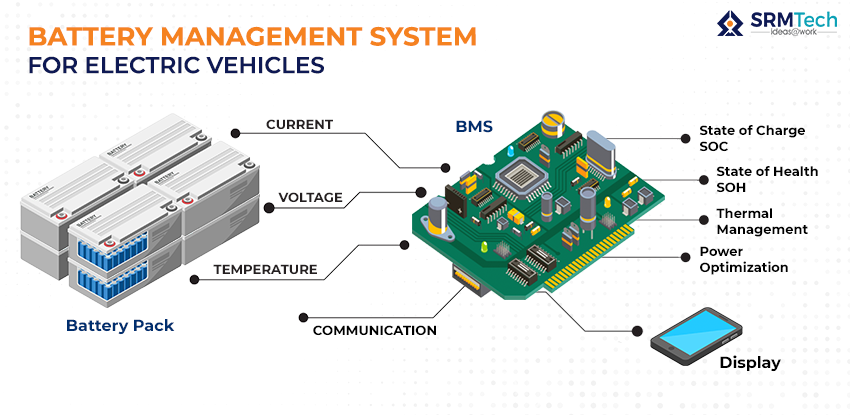
The BMS measures key battery conditions such as voltage, current, temperature, and state of charge.
- ✦ Battery protection
The system protects cells from overheating, overcharging, deep discharge, and electrical faults.
- ✦ Performance control
The BMS helps the vehicle use energy efficiently and maintain battery health.
Why EVs Need a Battery Management System
Lithium-ion batteries provide high energy density, but they need careful control. A small problem in one cell can affect the entire battery pack.
The EV Battery Management System creates a safety layer between the battery cells and the vehicle. It helps drivers get reliable range while protecting a very expensive vehicle component.
How Does an EV Battery Management System Work?
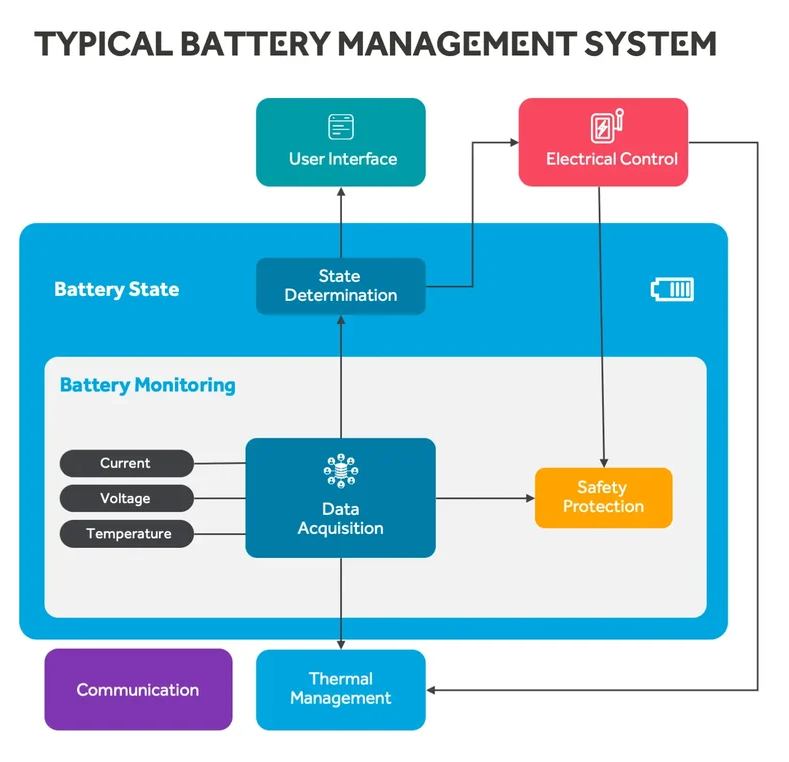
An EV Battery Management System works by collecting data from sensors placed throughout the battery pack. The system analyzes this information and controls charging, cooling, and power delivery.
During a normal drive in the U.S., the BMS constantly checks battery conditions. If temperatures rise too high or voltage becomes unsafe, it can reduce power output or stop charging to protect the battery.

- ✦ Data collection
Sensors gather information from individual battery cells and send it to the BMS controller.
- ✦ Data analysis
The controller calculates battery status and identifies possible risks.
- ✦ System response
The BMS adjusts charging speed, cooling systems, or power limits when needed.
Battery Sensors Used by a BMS
A modern BMS uses different sensors to understand battery conditions. These sensors provide the information needed for accurate control.
Voltage sensors check each cell, temperature sensors track heat levels, and current sensors measure electricity flow into and out of the battery.
- ✦ Voltage sensors
Measure individual cell voltage to detect imbalance or unsafe conditions.
- ✦ Temperature sensors
Monitor heat changes to prevent battery damage.
Main Functions of an EV Battery Management System
The main purpose of an EV Battery Management System is to keep the battery safe while improving efficiency. It performs several important tasks throughout the vehicle’s life.
Without a BMS, battery cells could experience uneven charging, excessive heat, and faster degradation. These problems could reduce driving range and increase repair costs.
- ✦ State of charge calculation
The BMS estimates how much energy remains in the battery, similar to a fuel gauge.
- ✦ State of health monitoring
The system tracks battery aging and performance changes over time.
- ✦ Cell balancing
The BMS adjusts energy levels between cells to keep the battery pack balanced.
- ✦ Thermal management
The system works with cooling and heating systems to maintain safe temperatures.
Key Components Inside an EV Battery Management System
An EV Battery Management System includes both hardware and software components. Each part works together to control battery operation.
The design can vary between manufacturers, but most systems include monitoring circuits, controllers, communication networks, and safety devices.
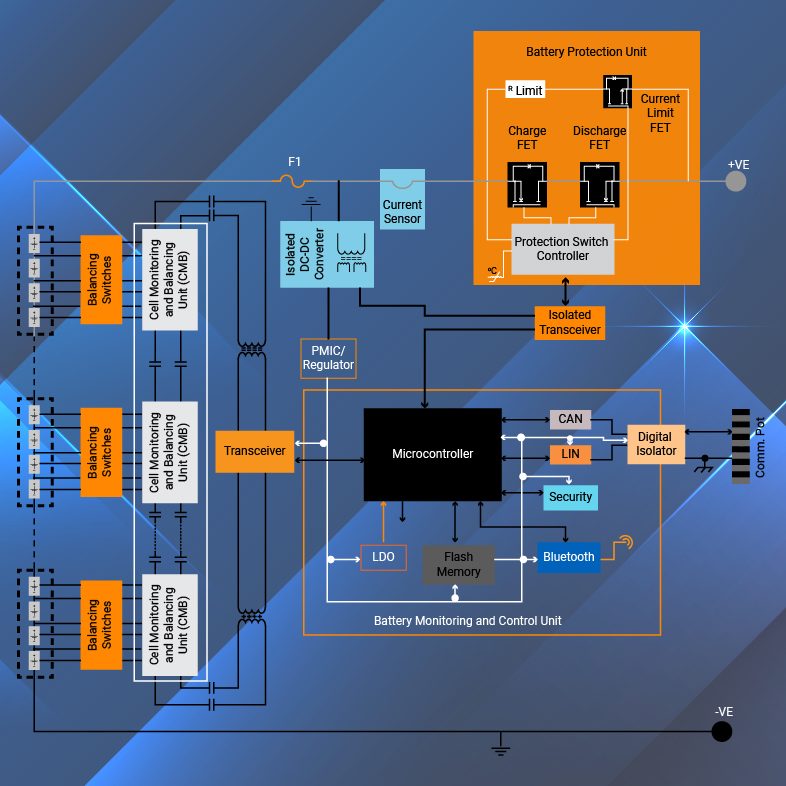
- ✦ Battery control unit
The main computer that processes battery information and makes control decisions.
- ✦ Cell monitoring units
Small electronic modules that measure individual battery cells.
- ✦ Communication systems
Allow the BMS to exchange information with the vehicle control systems.
BMS Hardware and Software Connection
The hardware collects information, while software interprets the data. Together, they create a smart control system for the EV battery.
Manufacturers continue improving BMS software with better algorithms that estimate battery range and predict battery aging.
Benefits of an EV Battery Management System
A strong EV Battery Management System improves the ownership experience by protecting the battery and maintaining reliable performance.
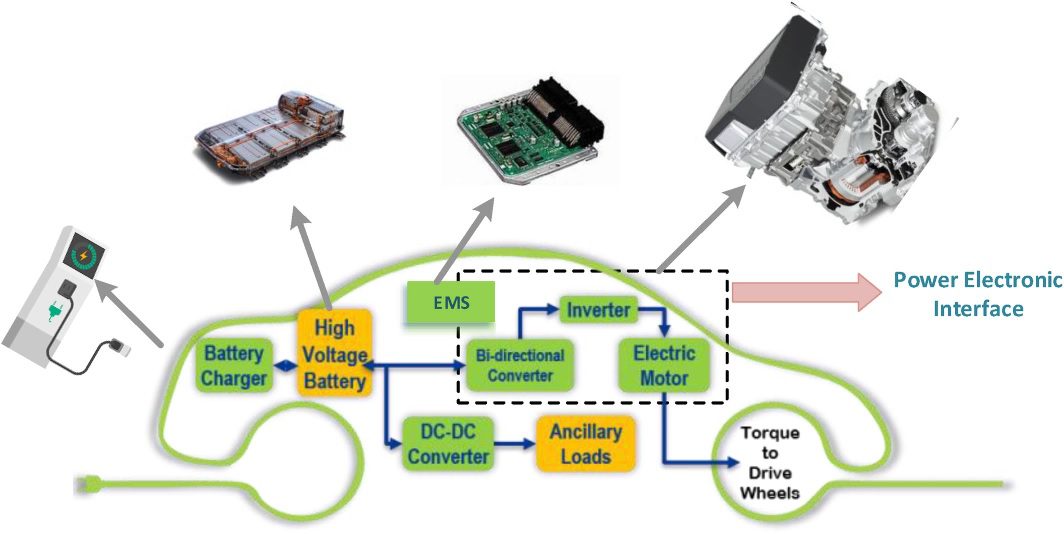
For American EV owners, battery protection matters because battery replacement can be one of the most expensive repairs on an electric vehicle.
- ✦ Longer battery life
Proper monitoring reduces stress on battery cells and helps slow degradation.
- ✦ Improved safety
The BMS reduces risks caused by overheating and electrical problems.
- ✦ Better charging performance
The system controls charging conditions to protect battery health.
Common EV Battery Management System Problems
Although BMS technology is advanced, problems can still occur. Most issues come from sensor faults, software errors, wiring problems, or damaged battery cells.
A faulty BMS may show incorrect range estimates, limit charging speed, or trigger warning messages on the vehicle dashboard.
- ✦ Sensor failure
Incorrect sensor readings can affect battery monitoring accuracy.
- ✦ Software issues
Programming errors may cause incorrect battery calculations.
- ✦ Communication faults
Broken connections can prevent proper data sharing between systems.