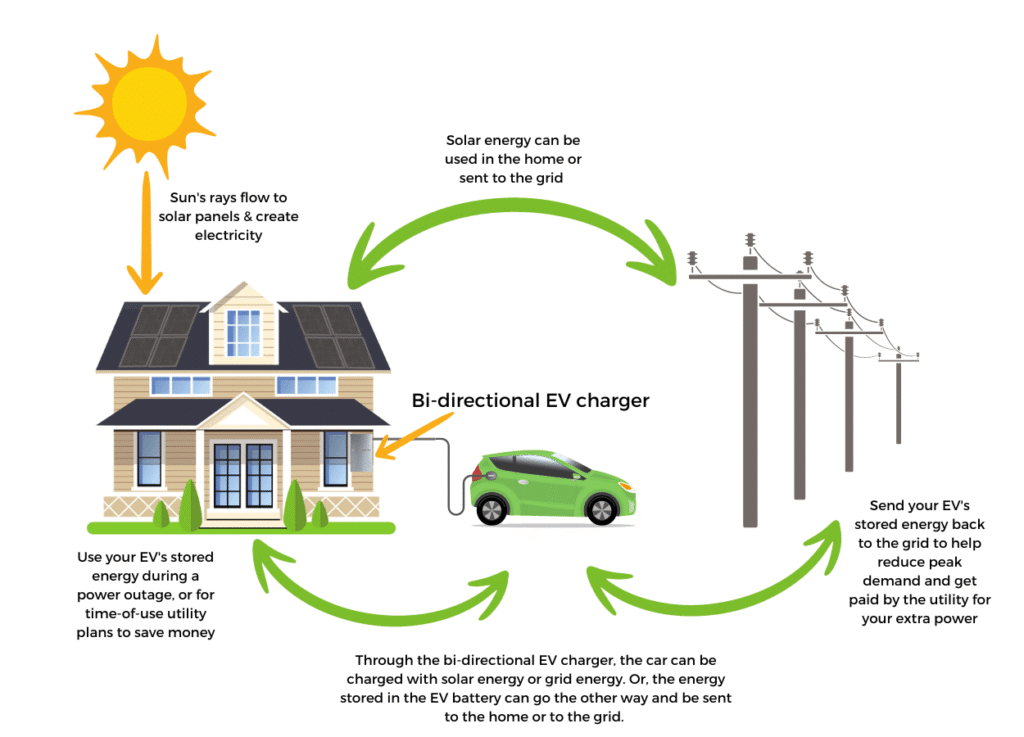
What Is Bidirectional EV Charging is a common question as electric cars become more connected with home energy systems. Unlike regular EV charging, which moves electricity in one direction from the charger to the battery, bidirectional charging allows power to flow both ways.
From a consumer perspective in the United States, this technology can turn an EV into a mobile energy source. A parked electric vehicle could help power a home during an outage, support the grid during high demand, or run small devices while traveling.

How Does Bidirectional EV Charging Work
Bidirectional EV charging works by allowing electricity to move between an electric vehicle battery and another energy system. A normal charger converts grid electricity into battery power. A bidirectional charger can also reverse this flow and send stored energy back.
The process uses power electronics inside the charger and vehicle. These systems control voltage, current, and safety checks before electricity moves back into a home, device, or grid connection.

- ✦ Two-way power flow
The EV battery can store electricity and later release it through a compatible charging system.
- ✦ Smart energy control
Software manages when the battery charges or sends power based on user settings and energy needs.
The Role of the EV Battery
An EV battery is much larger than most home backup batteries. Bidirectional charging uses this stored energy in a controlled way without replacing normal driving needs.
- ✦ Energy storage
The vehicle stores electricity when energy costs are low or when renewable energy is available.
Types of Bidirectional EV Charging Systems
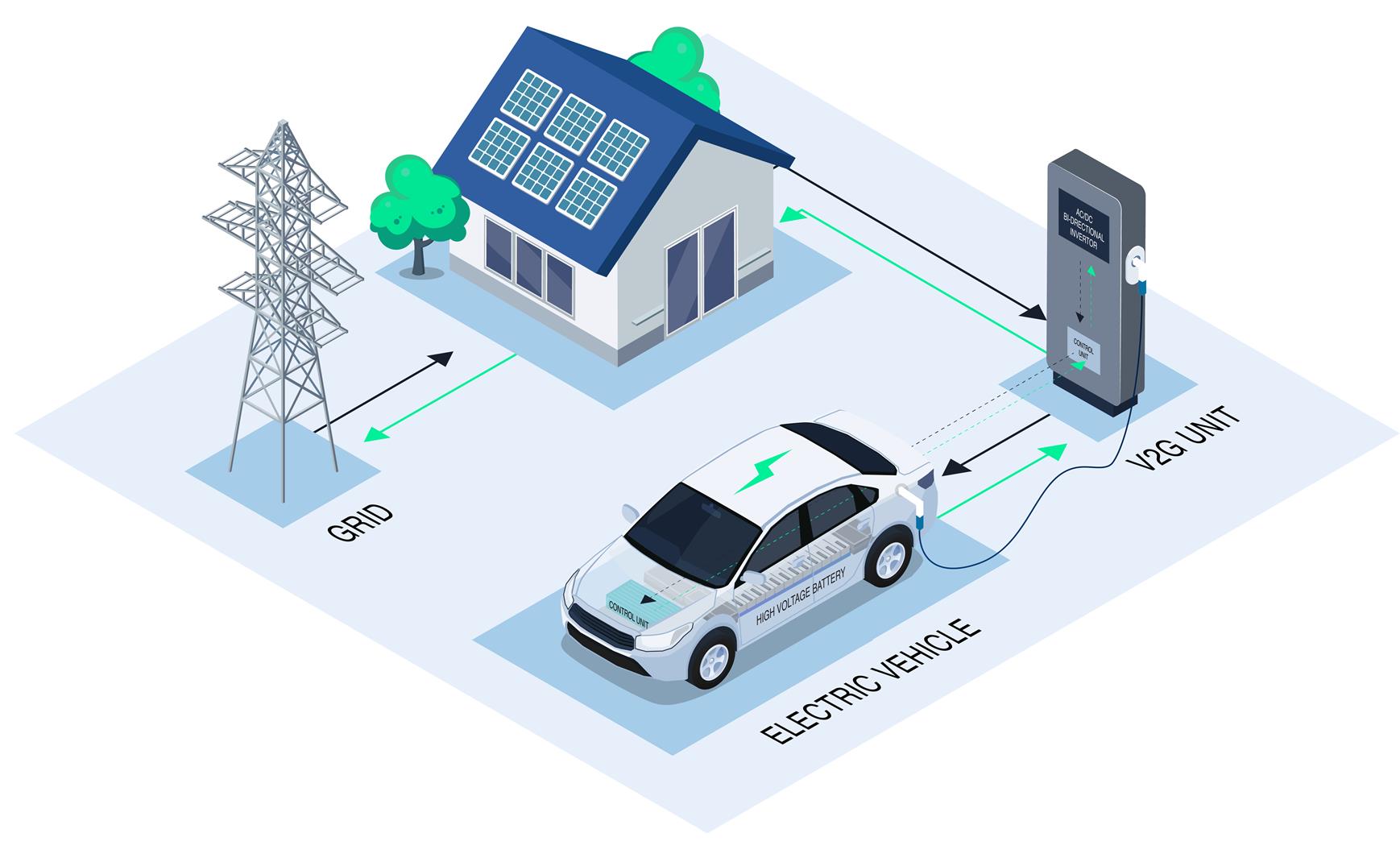
Bidirectional EV charging includes several systems designed for different uses. The main difference is where the electricity goes after leaving the vehicle battery.
Understanding these types helps drivers know how their EV can support daily energy needs.
- ✦ Vehicle to Home (V2H)
V2H allows an EV to supply electricity to a house during outages or high energy demand periods.
- ✦ Vehicle to Grid (V2G)
V2G allows EVs to send energy back to the public power grid and support grid management.
- ✦ Vehicle to Load (V2L)
V2L allows an EV to power external devices such as tools, camping equipment, or small appliances.
Benefits of Bidirectional EV Charging for Drivers
Bidirectional EV charging can change how drivers think about their electric vehicles. Instead of viewing an EV as only a transportation tool, owners can use it as part of a wider energy system.
For American households, the biggest value often comes from backup power and smarter energy use.

- ✦ Backup power during outages
A compatible EV can provide temporary electricity during power failures when connected to the right equipment.
- ✦ Better renewable energy use
EV owners with solar panels can store extra solar energy in their vehicle battery for later use.
- ✦ Potential energy savings
Smart charging systems may help users charge when electricity prices are lower.
Real-World Home Example
A homeowner may charge an EV during the afternoon using solar power. Later, the stored energy can help run important home systems during the evening or a short outage.
Challenges and Limitations of Bidirectional EV Charging
Although bidirectional EV charging offers many benefits, the technology still has limits. Vehicle support, charger availability, and installation costs can affect adoption.
Drivers should check vehicle specifications before buying equipment because many EVs still support only one-way charging.

- ✦ Limited vehicle compatibility
Only certain EV models include the hardware and software needed for two-way energy flow.
- ✦ Higher equipment costs
Bidirectional chargers often cost more than standard home EV chargers.
- ✦ Battery wear concerns
Extra charging cycles may affect battery aging, although modern battery systems manage usage carefully.
Why Standards Matter
The EV industry continues to develop charging standards that improve safety and compatibility. Clear standards help more vehicles and chargers work together.
Which Electric Vehicles Support Bidirectional Charging
Not all electric vehicles can perform bidirectional charging. The feature depends on the vehicle design, battery system, charging port, and manufacturer software.
Some manufacturers have introduced models with V2L, V2H, or V2G features, while others are developing future solutions.

- ✦ Check manufacturer details
Always confirm whether a specific EV model supports two-way charging before purchasing equipment.
- ✦ Check charger compatibility
The vehicle and charger must work together to safely transfer electricity.