A car cooling system keeps the engine at safe temperature by circulating coolant and shedding heat.
I’ve spent over a decade working on cars and teaching people how engines stay cool. This article explains how car cooling system works in clear, practical steps. You’ll learn components, how heat moves from the engine to the air, common failures, and simple checks you can do yourself.

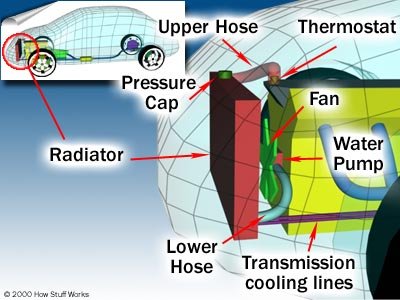
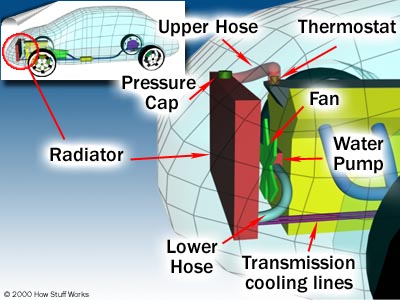
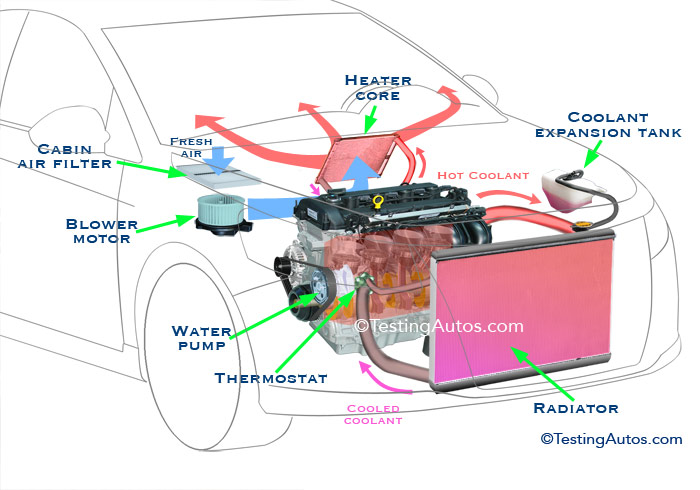
Main components of the car cooling system
The best way to understand how car cooling system works is to know the parts. Each part plays a clear role in moving heat away from the engine.
- Radiator — A heat exchanger where hot coolant gives off heat to passing air.
- Water pump — Forces coolant through the engine, hoses, and radiator.
- Thermostat — A temperature-sensitive valve that controls coolant flow to the radiator.
- Coolant (antifreeze) — The fluid that absorbs heat and resists freezing and boiling.
- Cooling fan — Pulls air through the radiator when the car is slow or stopped.
- Hoses and clamps — Carry coolant between parts and keep the system sealed.
- Pressure cap — Raises boiling point and seals the system; releases pressure when needed.
- Heater core — A small radiator that provides cabin heat and helps cool the engine a bit.
Each component is straightforward. When any one fails, the whole system’s ability to cool drops. Knowing these parts helps you diagnose problems faster.
Step-by-step: how the cooling process works
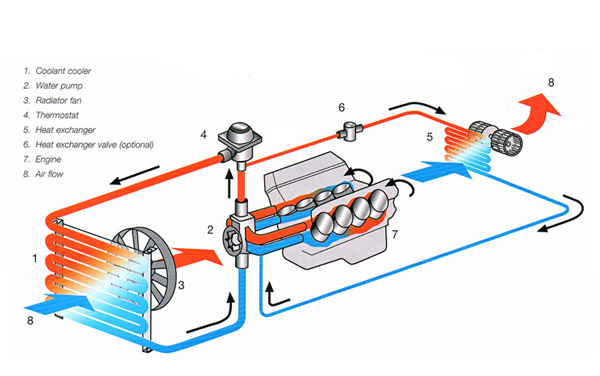
Here’s the flow from a cold start to running temperature and beyond.
-
Cold start and warm-up
- Engine generates heat immediately.
- Thermostat stays closed so coolant circulates only inside the engine and heater core.
- This helps the engine reach ideal temperature fast.
-
Reaching operating temperature
- Thermostat opens at a set temperature.
- Water pump pushes hot coolant to the radiator.
- Radiator transfers heat from coolant to outside air.
-
Continuous cooling while driving
- Coolant cycles: engine → thermostat → radiator → back to engine.
- Cooling fan aids airflow when vehicle speed is low.
- Pressure cap keeps the system sealed and raises coolant boiling point.
-
When extra cooling is needed
- Fan runs at higher speed or radiator shutters open.
- If cooling fails, warning lights or temperature gauge show high temps.
This sequence describes how car cooling system works in normal use. Short cycles repeat many times per minute while the engine runs.
Heat transfer and thermodynamics made simple
Understanding how car cooling system works goes back to three basic ideas: conduction, convection, and phase stability.
- Conduction — Heat moves from hot engine metal into coolant.
- Convection — Moving coolant carries heat to the radiator.
- Airflow — Air removes heat from the radiator fins.
Raising the system pressure raises the coolant boiling point. That prevents steam pockets that block heat transfer. Steam is a poor conductor. Avoiding steam keeps cooling efficient and prevents hotspots in the engine.

Types of cooling systems and design variations
Different engines and vehicles use slightly different setups. Knowing the types helps when you shop, repair, or explain a problem.
- Liquid-cooled engines — The common modern choice. Uses coolant, radiator, pump, and thermostat.
- Air-cooled engines — Used in some small engines; rely on fins and airflow around the engine.
- Open vs closed systems — Modern cars use closed, pressurized systems for better control.
- Electric water pumps — Found on some newer cars for variable flow and efficiency.
No matter the type, the basic goal is the same: move heat away from the engine to avoid damage. This is the core idea behind how car cooling system works across vehicle models.
Common problems, causes, and signs to watch for
Recognizing symptoms helps you act before damage occurs. I’ve seen many of these in the shop.
- Overheating — Caused by low coolant, failed thermostat, bad pump, clogged radiator, or lost fan function.
- Coolant leaks — Look for puddles, oily residue, or low coolant reservoir.
- Thermostat stuck closed — Engine runs hot quickly and may overheat soon after start.
- Air in system — Causes inconsistent temperature gauge and hot spots.
- Radiator corrosion or clog — Reduces heat transfer and flow.
Find the cause quickly. A simple pressure test or visual check of hoses often points to the issue. These are real problems I’ve fixed many times; catching them early saves big repairs later.

Maintenance and troubleshooting tips you can use
Routine care keeps the cooling system reliable. These are low-cost checks I recommend to anyone.
- Check coolant level monthly — Top off with correct mix if low.
- Inspect hoses and clamps — Look for cracks, softness, or swelling.
- Test the thermostat — Swap with a known good unit or check temperature change.
- Replace coolant on schedule — Follow vehicle guide or every 2–5 years depending on coolant type.
- Check radiator cap — A bad cap can lower boiling point and cause boil-over.
- Bleed the system after repairs — Remove trapped air to restore proper flow.
When the car overheats, pull over safely, turn off the engine, and let it cool before opening the cap. Running a hot engine can cause severe burns. These tips come from hands-on experience and standard repair practice.
Real-world examples and lessons learned
A few short stories from my time turning wrenches will make these ideas stick.
I once had a car that overheated only at stoplights. The coolant level was fine. The fan clutch was slipping. Replacing the clutch fixed it. Lesson: not all cooling problems are leaks.
Another time a customer used water instead of coolant to save money. In winter, the block cracked. The fix cost far more than proper coolant would have. Lesson: follow the coolant spec.
From these cases I learned to look for small signs early and to explain risks clearly to owners. These experiences shaped how I teach people how car cooling system works.
Benefits and limitations of common cooling designs
Understanding trade-offs helps you pick repairs and upgrades.
Benefits
- Efficient heat removal in liquid-cooled systems.
- Stable engine temperature for emissions and fuel economy.
- Cabin heating available from the heater core.
Limitations
- More parts can mean more failure points.
- Coolant must be maintained and replaced.
- Damage from neglect can be costly, such as a warped head or cracked block.
Knowing these pros and cons makes it easier to weigh repair choices and maintenance budgets. The design is robust when you follow simple care rules for how car cooling system works.
Frequently Asked Questions of how car cooling system works
What does the thermostat do in the cooling system?
The thermostat controls when coolant flows to the radiator by opening at a set temperature. It helps the engine warm up quickly and keeps temperature steady.
How often should I change my coolant?
Most manufacturers recommend changing coolant every 2–5 years, depending on the type and driving conditions. Follow your vehicle’s service guide for exact intervals.
Can I drive if my car is overheating?
No. Driving when overheating risks engine damage. Pull over, let the engine cool, and seek repair or a tow if needed.
Why is my coolant reservoir bubbling?
Bubbles can mean trapped air, a head gasket leak, or boiling coolant due to low pressure. Have the system checked to find the cause.
Is distilled water OK to mix with coolant?
Distilled water is fine as part of the mix if used with proper coolant. Pure water alone lacks corrosion inhibitors and can harm the system.
How can I test a failing water pump?
Listen for bearing noise, check for coolant leaks near the pump, or inspect for wobble. Low flow or overheating despite other parts working suggests the pump may be bad.
Conclusion
Understanding how car cooling system works gives you the power to prevent costly failures and keep your engine healthy. Keep an eye on coolant level, hoses, and the thermostat, and address odd signs early. Use routine checks and simple fixes to avoid major repairs.
Take action today: check your coolant, note any leaks, and schedule service if you see warning signs. If this guide helped, subscribe or leave a comment with your cooling-system question.