
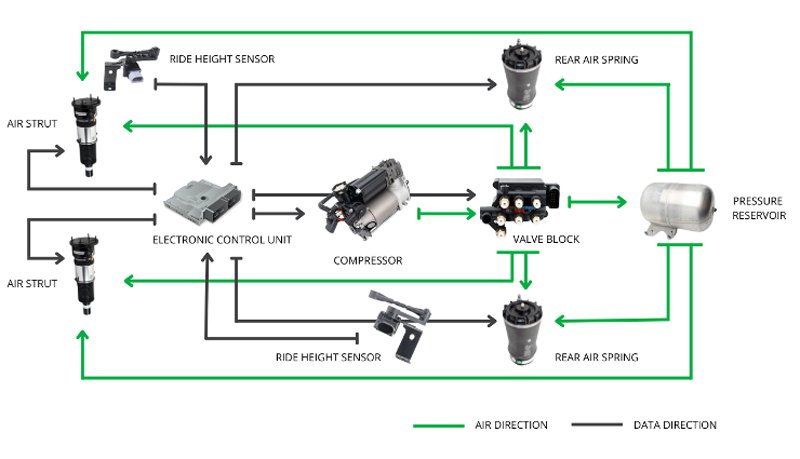
Understanding how air suspension systems work helps drivers make better choices when buying, maintaining, or repairing modern vehicles. Many luxury cars, SUVs, pickup trucks, and commercial vehicles in the United States use this technology because it can provide a smoother ride than traditional steel springs.
From my experience studying automotive systems, the biggest difference with air suspension is its ability to change. A normal spring has a fixed rate, but an air suspension system can adjust based on road conditions, vehicle load, and driving needs.

What Is an Air Suspension System?
An air suspension system is a vehicle suspension setup that uses compressed air instead of traditional coil springs or leaf springs. The system uses air bags, also called air springs, to support the vehicle body and absorb road impacts.
When learning how air suspension systems work, it is important to understand that air pressure controls the height and firmness of the suspension. More air pressure can raise the vehicle, while less pressure can create a softer ride.

- ✦ Air springs
Flexible rubber containers filled with compressed air that replace conventional metal springs.
- ✦ Air compressor
A small pump that creates compressed air and sends it to the air springs.
- ✦ Electronic controls
Sensors and control modules adjust the system based on driving conditions.
How Air Suspension Systems Work Step by Step
The process behind how air suspension systems work begins when sensors measure vehicle height, road movement, and load changes. The control module uses this information to decide whether the vehicle needs more or less air.
If the vehicle sits too low, the compressor sends air into the air springs. If the vehicle is too high, the system releases air through valves until the correct ride height returns.

- ✦ Step 1: Sensors collect information
Height sensors monitor the distance between the vehicle body and suspension components.
- ✦ Step 2: The control unit reacts
The electronic control module decides how much adjustment is needed.
- ✦ Step 3: Air pressure changes
Valves and compressors add or remove air to maintain the desired ride height.
The Role of Air Pressure
Air pressure is the main force that supports the vehicle. The system changes pressure to manage comfort, handling, and load balance.
This is why understanding how air suspension systems work is useful for owners of vehicles that carry different loads, such as SUVs, towing vehicles, and trucks.
- ✦ Higher pressure
Provides more support for heavy loads and can increase ride height.
- ✦ Lower pressure
Creates a softer ride when extra support is not needed.
Main Components of an Air Suspension System
A modern air suspension system has several parts working together. A failure in one component can affect the entire system because each part depends on accurate air pressure and electronic control.
Knowing the main components makes it easier to understand how air suspension systems work and identify possible warning signs before a major repair is needed.

- ✦ Air bags
Rubber and fabric air chambers that replace traditional springs.
- ✦ Compressor
Creates compressed air and keeps the system supplied.
- ✦ Air reservoir
Stores compressed air for quick suspension adjustments.
- ✦ Ride height sensors
Measure suspension position and send data to the control system.
Electronic Control Module
The control module acts like the brain of the system. It receives information from sensors and manages valves, compressors, and air pressure changes.
Many advanced vehicles combine air suspension with driving modes, allowing drivers to choose comfort, sport, or off-road settings.
Benefits of Air Suspension Systems
The main reason manufacturers use air suspension is improved flexibility. Unlike fixed spring systems, air suspension can adapt to changing driving situations.
The benefits become clear when looking at how air suspension systems work during daily driving, highway travel, towing, and heavy loads.

- ✦ Improved ride comfort
Air springs absorb bumps and road vibrations more smoothly.
- ✦ Automatic ride height control
The vehicle can maintain proper height even with passengers or cargo.
- ✦ Better handling
The system helps maintain balance during turns and braking.
- ✦ Flexible driving modes
Some vehicles adjust suspension settings for comfort, performance, or off-road use.
Common Air Suspension Problems and Maintenance Tips
Although air suspension provides many advantages, it has more parts than a traditional suspension system. More components mean more areas that may require service over time.
Learning how air suspension systems work can help drivers notice problems early. A vehicle that sits lower on one side or produces unusual compressor sounds may need inspection.

- ✦ Air leaks
Small cracks or damaged seals can allow air to escape from the system.
- ✦ Compressor failure
A worn compressor may struggle to maintain proper air pressure.
- ✦ Sensor issues
Faulty height sensors can cause incorrect ride height adjustments.
Maintenance Best Practices
Regular inspections, checking for leaks, and following manufacturer service schedules can extend system life. Keeping the suspension clean also helps protect sensitive parts.
Professional diagnosis is often needed because electronic suspension faults require specialized tools.
- ✦ Inspect air springs
Look for cracks, damage, or signs of aging rubber.
Air Suspension vs Traditional Suspension Systems
Traditional suspension systems use fixed springs made from steel, while air suspension uses adjustable air pressure. Each system has strengths depending on the vehicle purpose and owner needs.
When comparing how air suspension systems work with standard suspension, the key difference is adaptability. Air suspension can change its behavior, while traditional springs usually provide a fixed response.
- ✦ Comfort
Air suspension often provides a smoother ride because it can adjust to conditions.
- ✦ Cost
Traditional systems are usually simpler and less expensive to repair.
- ✦ Complexity
Air suspension requires electronic controls and additional components.
