
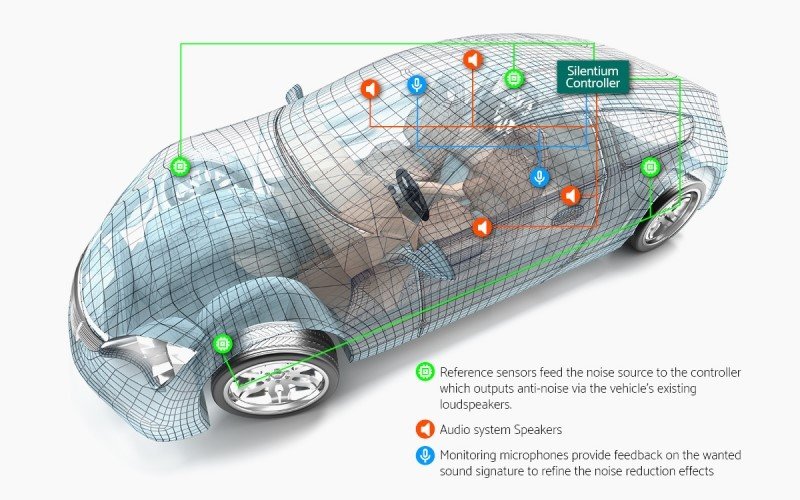
What Is Active Noise Cancellation in Cars is a common question among drivers looking for a quieter and more comfortable ride. Modern vehicles use advanced sound control systems to reduce engine noise, tire vibration, and road sounds that enter the cabin.
From my experience studying automotive technology, I have seen how vehicle comfort has moved beyond soft seats and premium materials. Sound quality is now a major part of the driving experience, especially for American drivers who spend long hours commuting on highways.
Unlike traditional insulation that blocks sound, active noise cancellation in cars uses electronics to fight unwanted noise in real time. The system listens to the cabin environment and creates a response sound that helps reduce specific unwanted frequencies.

How Active Noise Cancellation in Cars Works
Active noise cancellation in cars works through a simple idea: detect unwanted sound and create another sound to reduce it. The vehicle uses microphones placed inside the cabin to capture noise patterns.
A control unit analyzes these sounds and sends signals to the car speakers. The speakers then produce sound waves with opposite timing, which helps cancel parts of the unwanted noise.
This process happens very quickly, often within milliseconds. The goal is not to create silence but to make the cabin calmer and more pleasant.
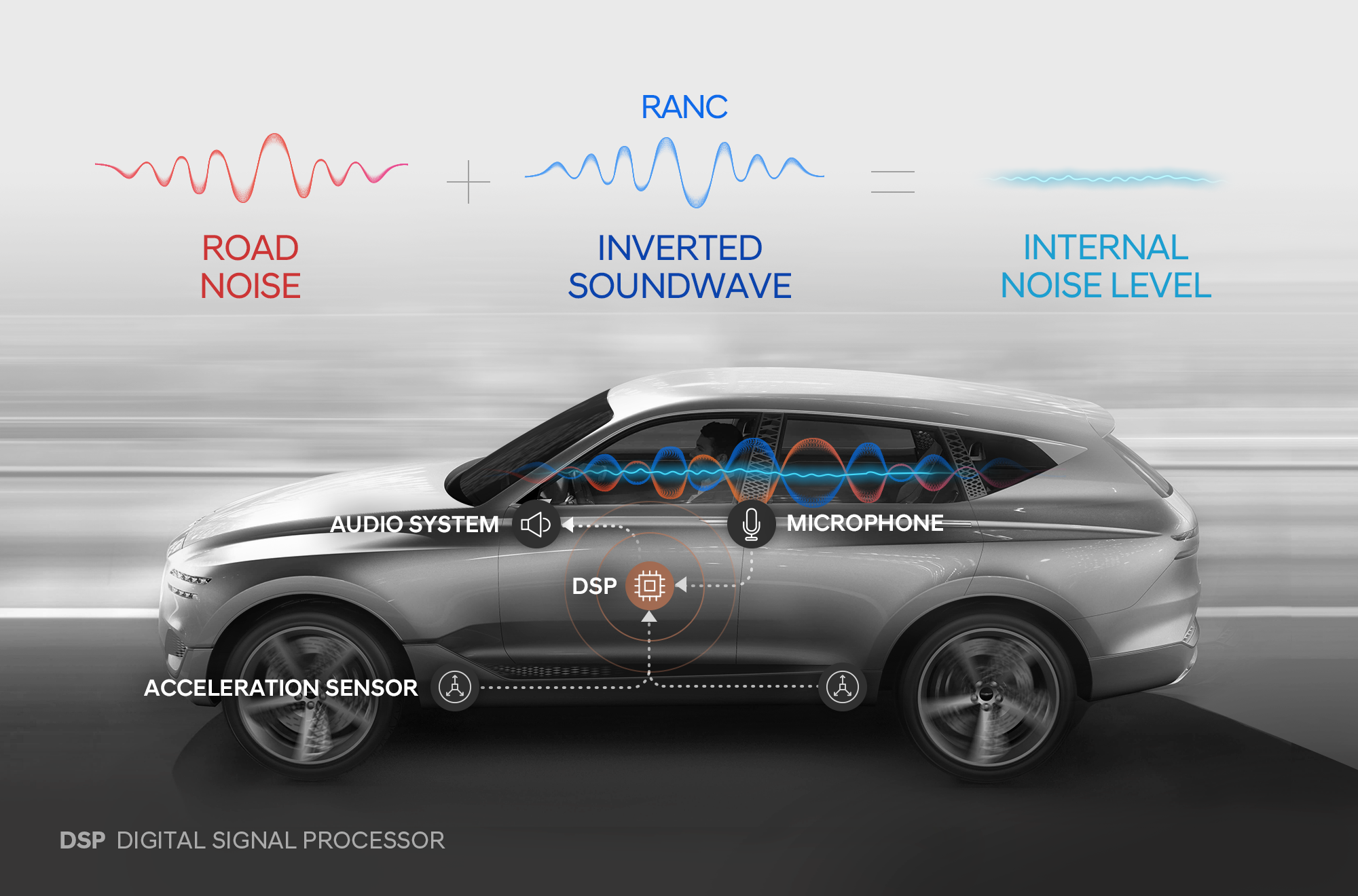
- ✦ Microphones
Small microphones measure unwanted sounds inside the vehicle cabin.
- ✦ Control Module
The computer system analyzes sound patterns and creates the correct cancellation signal.
- ✦ Vehicle Speakers
Speakers produce balancing sound waves that reduce unwanted noise.
The Science Behind Sound Wave Cancellation
Sound travels as waves through the air. When two opposite sound waves meet, they can reduce each other’s strength through a process called destructive interference.
Automotive engineers use this principle to target repeating sounds such as engine vibration or tire noise. The system works best when the unwanted noise has a predictable pattern.
Why Automakers Use Active Noise Cancellation Technology
Vehicle manufacturers use active noise cancellation in cars because customers expect a quieter driving experience. Luxury vehicles were early adopters, but the technology is now available in many mainstream vehicles.
A quiet cabin can improve conversations, music quality, and overall driving comfort. It also helps electric vehicles because their silent motors make road and wind noise more noticeable.

- ✦ Better Cabin Comfort
Reducing constant noise helps drivers and passengers enjoy a more relaxed ride.
- ✦ Improved Audio Quality
Lower background noise allows car audio systems to deliver clearer sound.
- ✦ Enhanced Premium Feel
A quieter cabin creates a more refined and comfortable vehicle experience.
What Sounds Can Active Noise Cancellation in Cars Reduce
Active noise cancellation in cars is designed mainly for low-frequency and repeating sounds. These noises are difficult to block only with traditional materials because they travel through the vehicle structure.
The system can reduce certain sounds, but it cannot completely remove sudden noises like horns, construction sounds, or loud conversations outside the vehicle.

- ✦ Engine Noise
ANC can reduce repeating engine sounds, especially at certain speeds and RPM ranges.
- ✦ Road Noise
The technology can lower tire and road vibration sounds entering the cabin.
- ✦ Exhaust and Vibration Sounds
Some systems reduce unwanted vibration-related sounds created by the vehicle.
Active Noise Cancellation vs Sound Insulation
Traditional insulation uses physical barriers such as foam, glass, and thicker materials to block sound. Active noise cancellation uses electronics to manage sound after it enters the cabin.
Many modern vehicles combine both methods. Physical insulation handles a wide range of noises, while ANC focuses on specific sounds that are harder to control.
Types of Active Noise Cancellation Systems in Vehicles
Different vehicle brands use different approaches to active noise cancellation in cars. Some systems focus only on engine sounds, while newer systems target road noise using advanced sensors.
The technology continues to improve as vehicles become more connected and software-driven.

- ✦ Engine Harmonic Cancellation
This system reduces specific engine frequencies that enter the cabin.
- ✦ Road Noise Cancellation
This technology detects tire and road vibration sounds and reduces them.
- ✦ Hybrid Sound Control
Some vehicles combine noise reduction with enhanced engine sound features.
Active Noise Cancellation in Electric Vehicles
Electric vehicles have fewer engine sounds, which changes the role of ANC. Without engine noise covering other sounds, tire and wind noise become more noticeable.
Manufacturers use active sound systems to maintain a quiet cabin while improving the overall EV driving experience.
Benefits and Limitations of Active Noise Cancellation in Cars
Understanding the advantages and limits of active noise cancellation in cars helps buyers know what to expect. The system improves comfort, but it is not a complete replacement for good vehicle design.
The best results come when ANC works together with quality materials, proper engineering, and a well-designed cabin.
- ✦ Benefits
Provides a quieter cabin, improves music clarity, and reduces driver fatigue during long trips.
- ✦ Limitations
Cannot eliminate all sounds and may perform differently depending on vehicle design.
- ✦ Maintenance Considerations
Electronic systems depend on working microphones, software, and audio components.
