
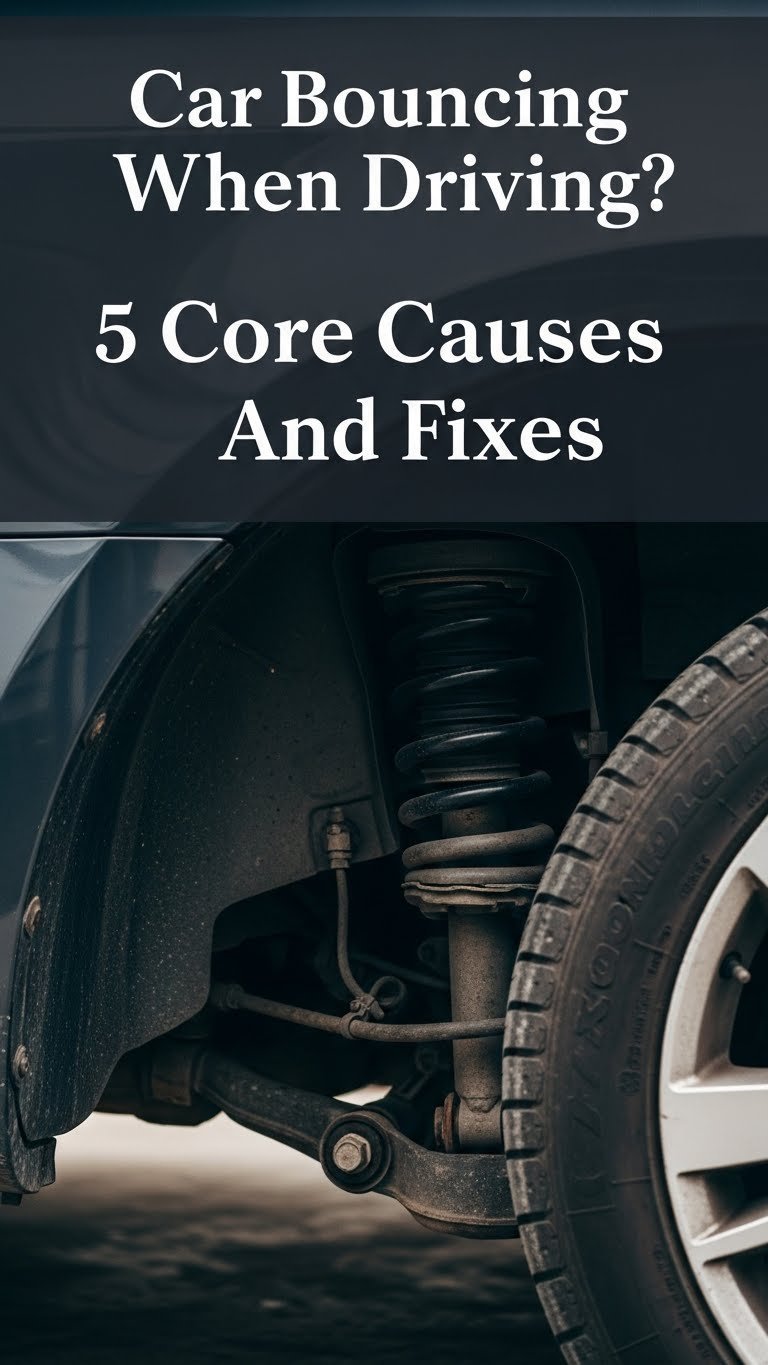
If you notice your car keeps moving up and down after a bump, your suspension system may not be controlling movement correctly. The suspension should absorb road impacts and help the tires stay connected to the road.
In my experience reviewing vehicle repair issues, excessive bouncing is one of the clearest signs that a car needs attention. Many drivers ignore it because the vehicle still moves, but poor suspension control can affect comfort, handling, braking, and safety.

How the Suspension System Controls Car Movement
To understand what causes a car to bounce excessively, it helps to know how the suspension works. The suspension system uses shocks, struts, springs, and other parts to control the movement of the vehicle body.
Springs support the weight of the car, while shocks and struts slow down the spring movement. Without proper damping, the car can continue bouncing several times after hitting a bump.

- ✦ Springs
Springs hold the vehicle weight and absorb large road impacts.
- ✦ Shock absorbers
Shocks reduce bouncing by controlling how fast the suspension moves.
- ✦ Struts
Struts combine suspension support and damping control in many modern vehicles.
Worn Shock Absorbers Are the Most Common Cause of Excessive Bouncing
The most common answer to what causes a car to bounce excessively is worn shock absorbers. Over time, shocks lose their ability to control suspension movement.
A vehicle with bad shocks may continue bouncing after speed bumps, feel floaty on highways, or lean more during turns. This problem is common in older vehicles or cars that regularly drive on rough roads.

- ✦ Repeated bouncing after bumps
The car keeps moving up and down instead of quickly returning to normal.
- ✦ Poor highway stability
The vehicle may feel loose or harder to control at higher speeds.
- ✦ Uneven tire wear
Weak shocks can allow tires to lose steady contact with the road.
How to Check for Bad Shocks
A basic bounce test can provide clues. Push down firmly on one corner of the car and release it. If the vehicle continues bouncing several times, the shocks may be worn.
- ✦ Look for leaks
Oil around the shock body can indicate internal damage.
Damaged or Weak Suspension Springs Can Make a Car Feel Bouncy
Suspension springs support the vehicle and help maintain ride height. When a spring becomes weak, broken, or damaged, the car may sit lower and bounce more than normal.
A broken spring can create uneven suspension behavior. The driver may notice one corner of the vehicle sitting lower than the others or hear unusual noises while driving.
- ✦ Broken coil springs
A damaged spring can reduce suspension support and change vehicle balance.
- ✦ Sagging suspension
Weak springs may cause the vehicle body to sit too close to the wheels.
Tire Problems Can Cause a Car to Bounce While Driving
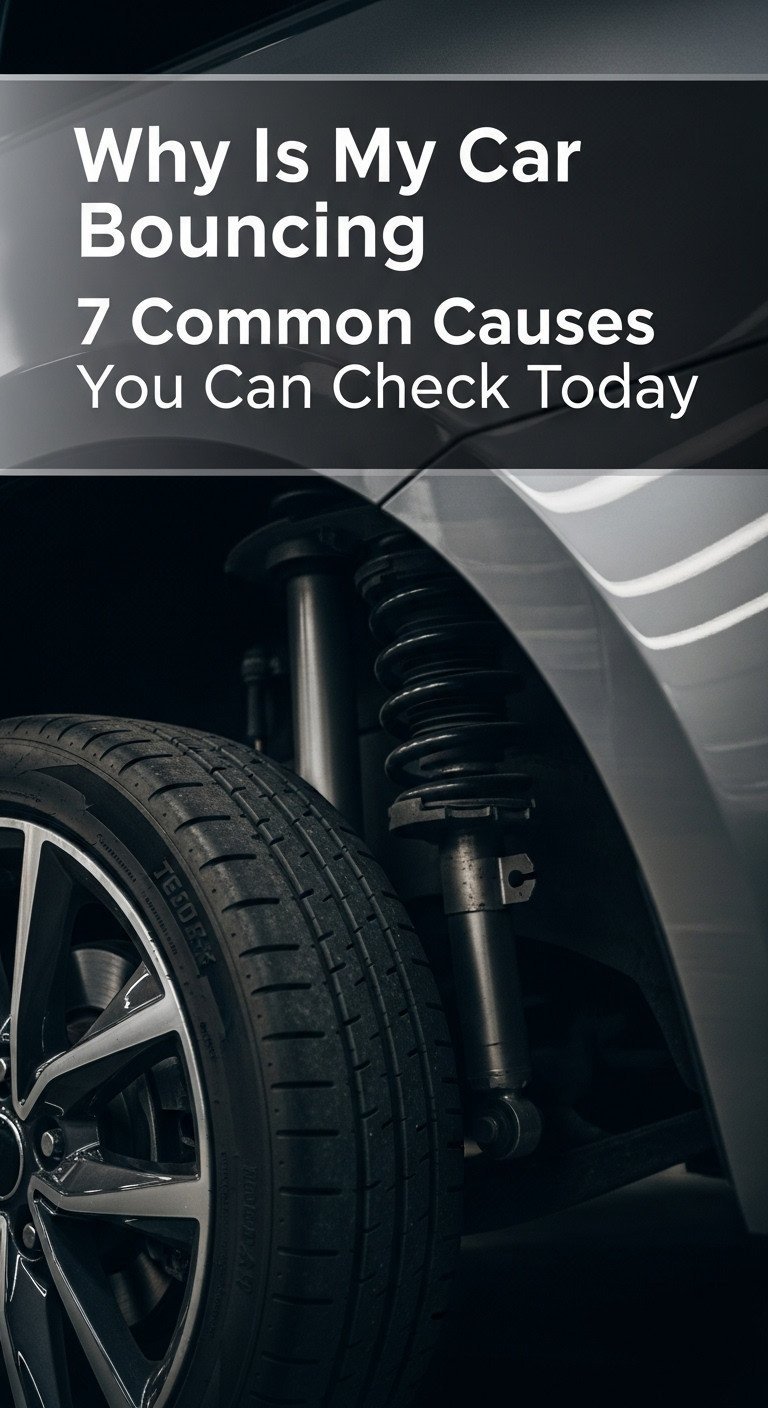
Tires are the only parts of the vehicle that touch the road, so tire problems can create a bouncing feeling. Incorrect tire pressure, uneven wear, or damaged tires can affect ride quality.
Many drivers focus only on suspension parts, but tire condition should always be checked when finding what causes a car to bounce excessively.
- ✦ Overinflated tires
Too much air pressure can make the ride harsh and increase bouncing over bumps.
- ✦ Tire damage
A bulge or internal tire problem can create vibration and bouncing.
- ✦ Uneven tread wear
Irregular wear can reduce smooth road contact.
Other Suspension Parts That Can Cause Excessive Bouncing
The suspension system has many connected parts. A failure in one area can affect the entire ride system and create a bouncing sensation.
Bushings, ball joints, and control arms help keep suspension movement controlled. When these parts wear out, the vehicle may feel unstable or noisy.

- ✦ Worn suspension bushings
Damaged rubber parts can allow too much movement between suspension components.
- ✦ Bad ball joints
Loose ball joints can affect steering control and suspension stability.
- ✦ Damaged control arms
Bent or worn control arms can change how the suspension moves.
How Driving Conditions Affect Vehicle Bouncing
Road conditions play a major role in suspension wear. Vehicles that frequently travel over potholes, rough roads, and speed bumps can develop suspension problems faster.
In the United States, drivers in areas with harsh winters may also experience faster wear because road salt and moisture can damage suspension components.
- ✦ Pothole damage
Strong impacts can bend or weaken suspension parts.
- ✦ Heavy loads
Carrying extra weight can put more stress on springs and shocks.
Signs You Should Inspect a Car That Bounces Excessively
Knowing the warning signs can help prevent bigger repair costs. A bouncing car often gives several clues before a major suspension failure happens.
If you notice multiple symptoms together, schedule a professional inspection. A mechanic can test suspension movement and identify worn parts.
- ✦ Vehicle keeps bouncing
The car continues moving after bumps instead of settling quickly.
- ✦ Nose diving during braking
The front of the car drops too much when stopping.
- ✦ Body rolling in turns
The vehicle leans more than normal during cornering.
