An engine knocking noise usually comes from abnormal fuel combustion, low engine oil, worn internal engine parts, or problems with engine timing. A light metallic ping during acceleration may indicate combustion knock, while a deep rhythmic pounding can point to serious internal damage. Check the oil level, watch the temperature gauge, and stop driving if the noise is loud or the oil pressure warning appears.
American drivers depend on their vehicles for daily commutes, highway trips, family travel, and long drives across different states. A sudden metallic sound under the hood can quickly turn a normal trip into a stressful problem. You might hear it while pulling away from a stoplight, climbing a hill, towing a trailer, or sitting in traffic. The sound may be small at first, but its cause can range from poor fuel quality to serious engine damage.
Not every knocking sound means the engine needs replacement. Some noises come from fuel combustion, while others come from moving metal parts, loose components, or problems with lubrication. The difference matters because each problem needs a different repair. This guide explains how to recognize the sound, understand its likely cause, perform safe basic checks, and decide when your vehicle needs professional service.
Source: procarmanuals.com
What Does an Engine Knocking Noise Sound Like?
An engine knock usually sounds like repeated metallic tapping, pinging, or pounding from under the hood. The exact sound depends on the part or process causing it. Some knocks are light and sharp, while others sound deep and heavy.
A combustion-related knock often sounds like small metal balls rattling inside a can. You may hear it when you press the accelerator, climb a hill, or place a heavy load on the engine. It may become less noticeable when you ease off the gas.
A mechanical knock usually sounds deeper and more rhythmic. It may follow engine speed and become louder as the engine runs faster. This type of noise deserves quick attention because it can indicate excessive clearance between moving engine parts.
Source: mechlesson.com
Light metallic ping
A sharp rattling or pinging sound during acceleration may indicate abnormal combustion. Low fuel octane, excess heat, and incorrect ignition timing are possible causes.
Deep metallic pounding
A heavy knocking sound that follows engine speed may indicate worn connecting rod or crankshaft bearings.
Fast tapping or ticking
A rapid ticking sound may come from valve lifters, rocker arms, fuel injectors, or low oil supply to the upper engine.
Rattling near the front of the engine
A loose timing chain, damaged tensioner, pulley, or accessory may create a rattling noise that changes with engine speed.
Is Engine Knocking Different From Ticking?
Yes. Knocking usually sounds heavier than ticking. A knock may come from abnormal combustion or excessive movement between internal engine parts. Ticking is often faster and lighter.
However, sound alone cannot confirm the problem. A damaged bearing can make a lighter noise at first, while a loose exhaust part can create a sound that resembles an engine knock. The noise location, timing, and operating conditions all matter.
Knocking
Usually a metallic ping, thud, or rhythmic pounding sound.
Ticking
Usually a quick and light tapping sound from the valve train, injectors, or exhaust system.
Rattling
Often a loose or vibrating part, timing component, or heat shield.
How Does Engine Knocking Happen?
A gasoline engine produces power by burning a mixture of air and fuel inside its cylinders. The spark plug starts the combustion process at the correct time. The burning mixture creates pressure that pushes the piston down and turns the crankshaft.
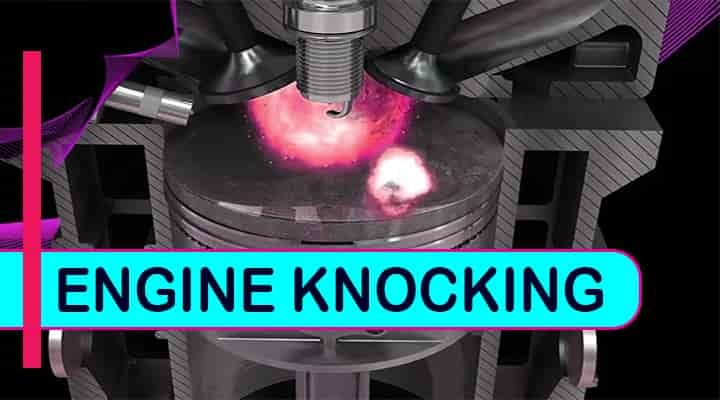
Combustion knock happens when part of the remaining unburned air-fuel mixture ignites on its own before the normal flame front reaches it. This creates rapid pressure waves inside the cylinder. Those waves produce the metallic ping that drivers hear.
This condition is also called detonation or spark knock. It is different from pre-ignition. Pre-ignition happens when a hot spot inside the cylinder ignites the mixture before the spark plug fires. Both conditions can create harmful heat and pressure, but they are not the same event.
Modern gasoline engines use knock sensors to monitor certain engine vibrations. The sensor sends information to the engine control module. The computer can then adjust ignition timing to reduce combustion knock. However, this system has limits and cannot protect an engine from every underlying problem.
Source: oards.com
Normal combustion
The spark plug starts a controlled burn, and the flame moves through the air-fuel mixture.
Abnormal combustion
Part of the remaining mixture ignites too soon on its own, creating pressure waves and a metallic ping.
Possible engine damage
Repeated or severe knock can increase heat and stress on pistons, cylinder heads, valves, and other engine parts.
What Does a Knock Sensor Do?
A knock sensor detects vibrations that are associated with abnormal combustion. It is commonly mounted on the engine block or another location specified by the manufacturer. Inside the sensor, a piezoelectric element converts vibration into an electrical signal.
The engine computer uses this signal to manage ignition timing. If the sensor or its wiring fails, the computer may not detect knock correctly. A faulty sensor can also cause a check engine light or reduced engine performance. Replacing the sensor without checking the fuel, cooling, and ignition systems may leave the real problem unresolved.
Sensor function
Detects vibration patterns linked to combustion knock.
Computer response
May adjust ignition timing to reduce abnormal combustion.
Failure symptoms
Possible symptoms include a check engine light, reduced power, poor fuel economy, or continued pinging.
Common Causes of Engine Knocking Noise
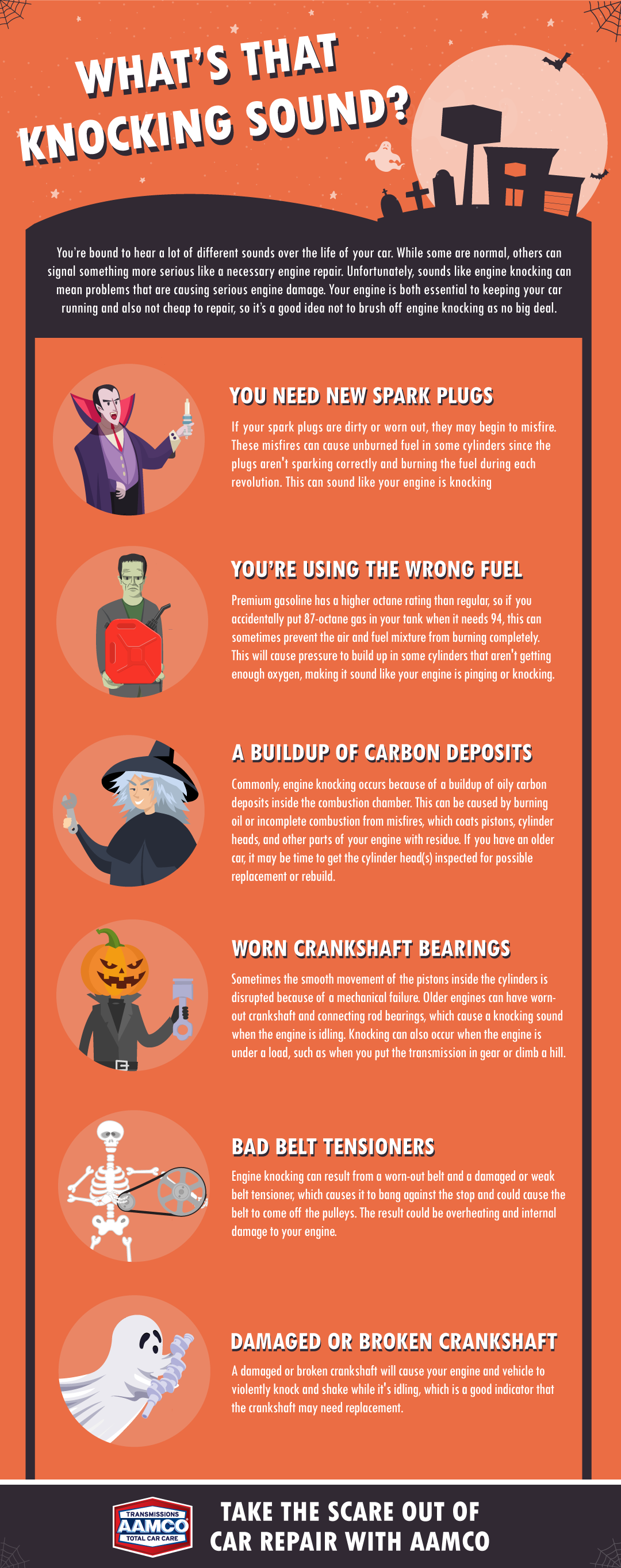
Several problems can create an engine knock. Some affect fuel combustion, while others involve lubrication, engine temperature, or worn mechanical parts. Finding the correct cause is more useful than trying random repairs.
Start by looking at the conditions under which the noise occurs. A ping during acceleration suggests a different set of problems from a deep knock that continues while the engine idles. The following causes are common possibilities, but a proper diagnosis is needed before replacing parts.
Source: automadesimply.com
Low-octane or incorrect fuel
Fuel with an octane rating below the manufacturer’s requirement can increase the chance of combustion knock, especially under heavy engine load.
Low engine oil
Insufficient oil can reduce lubrication and increase contact between moving engine parts. It can also affect hydraulic lifters and timing components.
Overheating
Excessive engine temperature can raise combustion chamber temperatures and make abnormal combustion more likely.
Carbon deposits
Deposits inside the combustion chamber can create hot spots and reduce the space available for the air-fuel mixture.
Lean air-fuel mixture
A vacuum leak, fuel delivery problem, or sensor fault may cause the engine to run with too much air compared with fuel.
Incorrect ignition timing
Incorrect spark timing can increase cylinder pressure at the wrong time and contribute to combustion knock.
Worn engine bearings
Excessive clearance between bearings and rotating engine parts can create a deep mechanical knocking sound.
Low-Quality or Low-Octane Gasoline
Low-octane gasoline is one possible reason for a metallic ping during acceleration. Octane measures a fuel’s resistance to knock. It does not measure how much energy the gasoline contains.
In the United States, gasoline pumps commonly display regular, midgrade, and premium fuel. Their octane ratings are usually shown using the anti-knock index, written as (R+M)/2. Many vehicles use regular 87-octane gasoline, while some engines require or recommend higher grades.
Always follow the fuel requirement in your owner’s manual or on the vehicle’s fuel label. Buying 93-octane gasoline will not repair worn bearings, a cooling system fault, or a damaged piston. Higher octane is useful when the manufacturer requires it or specifies it for certain operating conditions.
Check the required rating
Confirm the minimum octane rating for your exact engine.
Review your last fill-up
Check whether you recently used a lower grade or an incorrect fuel type.
Avoid random additives
Do not use unapproved octane boosters or fuel treatments as a substitute for diagnosis.
Low Oil Level or Oil Pressure
Engine oil forms a protective layer between moving metal surfaces. It reduces friction, carries heat, and helps protect bearings, pistons, camshafts, and other parts. When the oil level becomes too low, the pump may not supply enough oil to every area.
This can create tapping, rattling, or deep knocking sounds. Worn connecting rod bearings may produce a particularly heavy and rhythmic knock. Adding oil may restore the correct level, but it cannot reverse damage that has already occurred.
A red oil pressure warning is more serious than a routine maintenance reminder. Stop the engine as soon as you can do so safely. Do not keep driving to see whether the sound disappears.
Oil level below the minimum mark
The engine may not have enough oil for proper lubrication.
Oil pressure warning
The lubrication system may not be maintaining adequate pressure.
Incorrect oil specification
Oil that does not meet the required viscosity or manufacturer specification may affect lubrication.
Mechanical Problems That Cause Deep Engine Knocking
A deep metallic knock can indicate damage inside the engine. Unlike a light combustion ping, this type of noise may continue at idle and become more frequent as engine speed rises. It can also become louder under load.
Mechanical knocking often develops when moving parts have too much clearance, poor lubrication, or physical damage. Some problems can cause major engine failure if the vehicle continues to run. Stop driving when you hear a heavy or worsening knock.
Worn connecting rod bearings
Connecting rod bearings support the connection between the rods and crankshaft. Wear creates excess clearance and may produce a deep rhythmic knock.
Damaged main bearings
Main bearings support the crankshaft inside the engine block. Excessive wear or oil starvation can create abnormal movement and knocking.
Piston slap
Excessive clearance between a piston and cylinder wall can create a hollow tapping or knocking sound, sometimes more noticeable when the engine is cold.
Worn piston wrist pin
A damaged or worn wrist pin can create a metallic tapping noise as the piston changes direction.
Damaged timing components
A stretched timing chain, worn guide, or failed tensioner can cause rattling or clattering near the timing cover.
Loose flexplate or torque converter bolts
Problems where the engine connects to an automatic transmission can create repetitive knocking or rattling that sounds like an internal engine fault.
What Is Rod Knock?
Rod knock is a mechanical noise linked to excessive clearance at a connecting rod bearing. The bearing helps the connecting rod move around the crankshaft journal while keeping metal surfaces properly separated by oil.
When the bearing wears, the connecting rod can move more than it should. This movement may create a repeated metallic pounding sound each time the affected cylinder completes its firing cycle.
Rod knock is a serious warning. It can lead to damaged crankshaft journals, a broken connecting rod, or a complete engine failure. Do not try to fix it by adding thicker oil or an engine treatment. Have the vehicle inspected and transported if the sound is heavy.
Typical sound
A deep, rhythmic metallic knocking that may increase with engine speed.
Possible related signs
Low oil pressure, metal particles in the oil, engine vibration, or reduced performance.
Proper repair
A technician may need to inspect the oil system, bearing clearances, crankshaft, and other internal parts.
Can a Loose Exhaust Part Sound Like Engine Knock?
Yes. A loose exhaust heat shield, damaged exhaust bracket, or leaking exhaust manifold can create a metallic tapping or rattling sound. These noises may change as the exhaust system heats up and expands.
This matters because an exhaust problem may be less serious than internal engine damage. However, an exhaust leak can also allow harmful gases to enter areas where they should not. A leak near the cabin should receive prompt attention.
Loose heat shield
Often produces a thin metallic rattle, especially at certain engine speeds.
Exhaust manifold leak
May create a sharp ticking sound that is more noticeable during a cold start.
Loose brackets
Can allow exhaust parts to strike nearby components and create repeated knocking.
Why Does My Engine Knock in Different Driving Conditions?
The moment when the noise appears can help narrow down the cause. An engine that knocks only during acceleration may have a combustion problem. A noise that continues at idle may point toward lubrication, bearings, or other moving parts.
These patterns are clues, not final diagnoses. Engine design, temperature, fuel type, and transmission operation can change how a fault sounds. Do not deliberately rev a knocking engine or place it under heavy load to reproduce the noise.
Source: aamcoblog.com
Knocking during acceleration
Possible causes include low-octane fuel, excessive engine temperature, carbon deposits, incorrect ignition timing, or a lean mixture.
Knocking at idle
Possible causes include worn bearings, low oil pressure, damaged valve train parts, loose accessories, or a flexplate problem.
Knocking during a cold start
Possible causes include delayed oil circulation, worn hydraulic lifters, piston slap, or a timing chain tensioner problem. Some brief noises are normal on certain engine designs.
Knocking after the engine warms up
Heat can change clearances and oil viscosity. A worn component or an exhaust leak may become more noticeable as the engine reaches operating temperature.
Knocking while climbing a hill
Heavy engine load may reveal combustion knock, especially when fuel octane is below the required level or the cooling system is not working correctly.
Knocking while using the air conditioner
A failing compressor, accessory pulley, or belt-driven component may create a noise when the air-conditioning system adds load.
Engine Knocking Noise at Idle
A knock at idle needs attention because the engine is producing the noise without the extra load of acceleration. Low oil pressure, worn bearings, and damaged valve train parts are possible causes. A loose exhaust part or accessory can also create a similar sound.
First, check whether the oil pressure warning is on and whether the temperature gauge is normal. If the sound is deep, loud, or getting worse, turn off the engine. Have a technician check oil pressure and identify the source before running the vehicle again.
Light, fast ticking
May come from injectors or valve train components.
Deep rhythmic knocking
May indicate bearing wear or another serious internal fault.
Rattle that changes with air conditioning
May involve the compressor or another accessory.
Engine Knocking Noise When Accelerating
A metallic ping under acceleration often points toward combustion knock. The problem may appear when you accelerate quickly, tow a trailer, or climb a steep road. These conditions increase engine load and cylinder pressure.
Ease off the accelerator if you hear a light ping. Check the fuel grade required by the manufacturer. If the sound continues with the correct fuel, arrange an inspection of the cooling, fuel delivery, ignition, and knock control systems.
Reduce engine load
Avoid hard acceleration and heavy towing until the cause is known.
Check fuel requirements
Use the octane rating listed for your exact engine.
Arrange diagnosis
Persistent knock needs a proper inspection even if the engine still feels normal.
How to Diagnose an Engine Knocking Noise
The best diagnosis starts with basic observations and safe checks. You do not need to remove engine parts to collect useful information. A few details about the sound, warning lights, oil level, and recent fuel purchase can help a technician find the problem.
Do not continue running the engine if it has a heavy knock, low oil pressure, or an overheating warning. The following steps are for a vehicle that is safely parked and does not show an immediate stop condition.
Step 1: Record the sound
Notice whether it is a light ping, fast tick, loose rattle, or deep pounding noise. Record it from a safe position without placing yourself near moving engine parts.
Step 2: Check dashboard warnings
Look for the oil pressure warning, temperature warning, check engine light, or other messages. A flashing check engine light with rough running needs prompt attention.
Step 3: Check engine oil
If the vehicle is safe to inspect, park on level ground, switch off the engine, and follow the owner’s manual for the correct dipstick procedure.
Step 4: Review recent fuel use
Check the grade and type of gasoline used at your last fill-up. Compare it with the manufacturer’s requirement.
Step 5: Check engine temperature
Review the temperature gauge or warning message. Do not open a hot radiator cap or touch hot cooling system parts.
Step 6: Scan for trouble codes
A compatible OBD-II scanner can retrieve stored diagnostic codes. Record the codes before clearing anything, and remember that a code does not always identify the failed part.
Step 7: Arrange a mechanical inspection
A qualified technician can test oil pressure, inspect the fuel and ignition systems, check sensor signals, and examine internal parts when needed.
What Information Should You Give a Mechanic?
A clear description can save diagnostic time. Tell the technician when the noise started and whether it changes with engine speed, temperature, or acceleration. Mention any recent oil change, fuel purchase, repair, or overheating event.
If you recorded a sound, share the video. Do not repeat a dangerous driving condition just to make another recording. Your safety matters more than collecting a perfect example.
Vehicle information
Provide the make, model, year, engine size, mileage, and transmission type.
Noise conditions
Explain whether the noise happens at idle, during acceleration, at startup, or after warming up.
Share any stored OBD-II trouble codes and recorded dashboard warnings.
How to Fix Engine Knocking Noise
The correct repair depends on the actual cause. A fuel-related ping may improve when the engine receives the correct fuel and the underlying problem is addressed. A worn bearing, damaged piston, or failed timing component needs mechanical repair.
Do not assume that adding oil, buying premium gasoline, or using an engine treatment will solve every knock. These actions cannot repair broken parts or restore worn bearing surfaces. A repair should address the cause rather than hide the sound.
Correct the fuel octane
If the wrong fuel grade caused a light combustion knock, use the manufacturer’s required grade at the next suitable opportunity. If the knock persists, seek diagnosis.
Restore the correct oil level
If the engine oil is low, use the exact oil specification and viscosity listed in the owner’s manual. Add oil carefully and do not exceed the full mark.
Repair cooling system faults
A failed thermostat, leaking radiator, damaged water pump, or cooling fan problem may need repair to prevent overheating.
Correct fuel delivery problems
A technician may need to inspect fuel pressure, injectors, intake leaks, and related sensors if the engine runs too lean.
Repair ignition or knock control faults
Incorrect timing, damaged wiring, faulty sensors, or other ignition control problems need testing before parts are replaced.
Replace damaged internal parts
Worn bearings, damaged pistons, or other internal faults may require engine disassembly, machine work, or engine replacement.
Repair loose external components
A damaged heat shield, exhaust bracket, accessory pulley, or flexplate may need adjustment or replacement.
Can an Oil Additive Stop Engine Knocking?
An oil additive is not a reliable repair for a knocking engine. Some products claim to reduce noise by changing oil thickness or adding friction modifiers. However, they cannot restore damaged bearings, repair a cracked piston, or correct an oil pressure failure.
Using an unapproved additive may also change the oil properties. Modern engines can have specific requirements for viscosity and performance standards. Follow the manufacturer’s oil recommendations and ask a qualified technician before using additional treatments.
Do not hide serious symptoms
A quieter engine does not prove that internal damage has been repaired.
Use approved oil
Choose the required viscosity and specification for your engine.
Find the cause
Check lubrication, cooling, fuel, ignition, and mechanical systems as needed.
How Much Does It Cost to Repair Engine Knocking?
Repair costs vary widely because the same sound can come from very different parts. A loose heat shield or faulty sensor may cost far less to repair than damaged connecting rod bearings or a failed engine. The vehicle’s make, engine design, labor rate, and extent of damage also affect the final bill.
Ask the repair shop for a written estimate that separates diagnosis, parts, labor, and any additional work. If the technician recommends engine replacement, ask what tests confirmed the damage and whether rebuilding or another repair is practical. Do not approve a major repair based only on the sound.
Minor external repair
A loose bracket, heat shield, or similar component may require a relatively simple repair.
Fuel or sensor repair
The final cost depends on the failed part, testing time, and vehicle design.
Internal engine repair
Bearing, piston, or crankshaft damage can require extensive labor and costly parts.
When Should You Stop Driving With Engine Knocking?
Stop driving when the engine makes a loud or deep metallic knock, especially if the noise is getting worse. Continuing to run a damaged engine can increase friction, heat, and internal wear. In severe cases, a connecting rod or other part may fail and cause major engine damage.
The same rule applies when knocking appears with an oil pressure warning or an overheating warning. Pull over in a safe place, turn off the engine, and arrange roadside assistance or towing. Do not restart the engine simply to see whether the noise has gone away.
A light ping that occurs briefly under heavy acceleration is a different symptom from a deep mechanical knock. Ease off the accelerator and avoid heavy loads. If the sound repeats or continues with the correct fuel, arrange prompt inspection instead of treating it as normal.
Red oil pressure warning
Stop the engine safely. Continuing to run it may cause rapid internal damage.
Engine overheating
Pull over and switch off the engine. Never remove a hot radiator cap because pressurized coolant can cause severe burns.
Loud rhythmic metallic pounding
Do not continue driving. Arrange a tow and professional inspection.
Severe vibration or loss of power
Stop in a safe location and seek mechanical help.
Flashing check engine light with rough running
Reduce risk by stopping safely and arranging prompt diagnosis. A severe misfire can damage the catalytic converter.
Smoke, burning smell, or leaking fluid
Stop and assess the situation from a safe distance. Request assistance if there is a fire risk or significant fluid leak.
Can You Drive a Car With a Light Engine Knock?
It depends on the source and severity. A brief, mild ping under heavy load may not mean the engine has suffered immediate damage, but repeated combustion knock still needs attention. Reduce engine load and check that the fuel matches the manufacturer’s requirements.
A light sound should not be assumed harmless when its cause is unknown. If it continues, becomes louder, or appears with a warning light, arrange a professional inspection. If the noise is deep or rhythmic, use a tow rather than taking the risk.
Mild ping under load
Ease off the accelerator, avoid towing, and arrange diagnosis if it returns.
New mechanical knock
Stop driving until a technician identifies the source.
Knock with warning lights
Follow the warning message and stop when the vehicle indicates an urgent problem.
Common Mistakes When Dealing With Engine Knocking
Drivers sometimes make an engine problem worse by trying quick fixes before identifying the source. A knocking noise can be misleading, and the wrong repair may waste money or delay an important safety check. A simple inspection is useful, but it should never replace proper diagnosis when serious symptoms appear.
Avoid these common mistakes when your engine starts making unusual sounds.
Ignoring the noise
A new metallic sound may be an early warning. Waiting for the noise to become louder can allow a repairable issue to become major damage.
Using premium gasoline without checking the manual
Higher octane is not automatically better for every engine. Use the grade specified by the manufacturer.
Adding too much engine oil
Overfilling can cause its own engine problems. Always keep the oil level within the marked range.
Using thick oil to hide the knock
Changing oil viscosity without approval may affect lubrication and engine performance.
Replacing the knock sensor immediately
The sensor may be reporting a real combustion problem. Check the fuel, cooling, ignition, and wiring systems before replacing it.
Clearing diagnostic codes before recording them
Stored codes and freeze-frame information can help a technician understand when the problem occurred.
Continuing to drive after an oil warning
Low oil pressure can damage internal engine parts quickly. Stop the engine instead of driving to the repair shop.
Assuming every rattle comes from inside the engine
A loose heat shield, exhaust component, pulley, or flexplate may create a similar sound. Proper diagnosis prevents unnecessary engine repairs.
How to Prevent Engine Knocking in the Future
Good maintenance can reduce the risk of many problems that cause engine knocking. It cannot prevent every mechanical failure, but it helps protect the fuel, cooling, ignition, and lubrication systems. Follow the maintenance schedule for your exact vehicle rather than using one schedule for every car.
Pay attention to small changes in sound, performance, and temperature. A vehicle that begins to ping during normal driving should receive attention before the symptom becomes severe.
Use the correct gasoline
Follow the minimum octane requirement in your owner’s manual. Avoid incorrect fuel types and unapproved fuel additives.
Change engine oil on schedule
Use the recommended oil grade and specification. Replace the oil filter according to the service schedule.
Maintain the cooling system
Check for coolant leaks and follow the recommended coolant service interval. Have recurring overheating diagnosed promptly.
Replace worn ignition parts
Maintain spark plugs and other ignition components according to the manufacturer’s service instructions.
Check warning lights
Do not ignore an oil pressure warning, temperature warning, or persistent check engine light.
Inspect unusual engine sounds
Have new knocking, rattling, or tapping sounds checked before they become more serious.
Keep up with scheduled maintenance
Follow the recommended service intervals for filters, belts, timing components, and other engine systems.
Frequently Asked Questions
Q
What is the most common cause of engine knocking noise?
There is no single cause for every engine knock. A light metallic ping during acceleration often relates to abnormal combustion, which may involve low-octane fuel, high engine temperature, carbon deposits, or incorrect ignition timing. A deep mechanical knock may come from worn bearings or low oil pressure.
The sound and operating conditions help narrow down the cause. A proper inspection is needed before choosing a repair.
Q
Can low engine oil cause a knocking noise?
Yes. Low engine oil can reduce lubrication and increase friction between moving parts. It may cause tapping, rattling, or deep knocking, depending on which components are affected.
Check the oil level when it is safe to do so. If the oil pressure warning is on or the engine makes a heavy knock, turn it off and arrange a tow. Adding oil does not repair internal damage that has already occurred.
Q
Why does my engine knock when I accelerate?
A metallic ping during acceleration may indicate combustion knock. It can happen when the fuel has a lower octane rating than required, the engine runs too hot, or the air-fuel mixture is not correct.
Ease off the accelerator and check the fuel requirement in your owner’s manual. If the noise continues, have the cooling, fuel, ignition, and knock control systems inspected.
Q
Can an engine knocking noise go away by itself?
Some noises may become quieter when engine temperature, load, or operating conditions change. For example, a light combustion ping may stop when you reduce acceleration. Some cold-start noises may also fade as oil circulates and engine parts warm up.
However, a noise disappearing does not prove that the cause has been fixed. Worn bearings, low oil pressure, and other mechanical problems can remain even when the sound becomes less noticeable.
Q
Does premium gasoline stop engine knocking?
Premium gasoline has a higher octane rating than regular gasoline. It may reduce combustion knock when an engine requires or benefits from the higher rating specified by its manufacturer.
However, premium fuel will not repair worn bearings, damaged pistons, overheating, or a faulty cooling system. Check the exact fuel requirement for your engine before changing gasoline grades.
Q
Is rod knock worse than engine pinging?
Rod knock is generally a more serious mechanical warning than a light combustion ping. It often indicates excessive clearance at a connecting rod bearing and may lead to major internal damage if the engine continues running.
Combustion knock can also cause serious damage when it is severe or repeated. Both conditions need attention, but a deep rhythmic mechanical knock should be treated as an urgent reason to stop the engine.
Q
Can a bad knock sensor cause engine knocking?
Yes. A faulty knock sensor or damaged wiring may prevent the engine computer from detecting abnormal combustion correctly. This can allow combustion knock to continue or cause the computer to use less effective ignition timing.
A sensor trouble code does not always mean the sensor itself has failed. A technician should inspect the wiring, connector, sensor signal, and possible causes of actual engine knock.
Q
Why does my engine knock only when it is cold?
A cold-start knock or rattle may relate to oil circulation, hydraulic lifters, piston clearance, or a timing chain tensioner. Some engines also make brief operating noises that are considered normal by their manufacturers.
A new, loud, or persistent sound should not be ignored. Check the oil level and follow the vehicle’s service guidance. Have the engine inspected if the noise continues or becomes worse.
✦ Wrapping Up
Conclusion
An engine knocking noise is a warning that deserves attention. It may come from abnormal combustion, incorrect fuel, overheating, low oil, worn bearings, or loose engine components. The sound itself offers useful clues, but it cannot confirm the exact problem.
Start with safe checks. Review the oil level, fuel requirement, dashboard warnings, and engine temperature. Avoid heavy acceleration and do not use random additives to hide the sound. If the engine makes a deep or loud knock, or shows an oil pressure or overheating warning, stop driving and arrange professional help.
The best repair is the one that fixes the real cause. Early diagnosis can prevent further damage and help you avoid replacing parts that are still working.
💡 Key Takeaway
If your engine starts knocking, stop heavy driving and check the oil level and dashboard warnings when safe. Follow the correct fuel and oil specifications. Never ignore a deep metallic knock, low oil pressure warning, or overheating. Arrange a professional inspection before further driving.
About john Adword
John Adword has tested and reviewed car seat covers and interior accessories for 5 years, evaluating fit, material performance, and long-term wear across a range of vehicles and climates. His testing approach follows the same methodology used across car Reviewer Plus's product reviews — hands-on installation, real-world use, and comparison against manufacturer claims — with an ongoing focus on tracking new seat cover materials and cooling technology as they come to market.