If your car blows warm air while idling but cold air while driving, inspect the condenser fan and airflow first. Low refrigerant, compressor problems, and engine cooling faults can also cause this issue.
On a hot summer afternoon in the United States, your car may blow cold air on the highway but turn warm at a red light. This can make daily driving in cities like Houston, Phoenix, Los Angeles, and Miami uncomfortable. The problem may also appear when you sit in a parking lot or wait in a long drive-through line.
The change in vehicle speed gives you an important clue. While driving, outside air moves through the front grille and across the air conditioning condenser. At idle, the cooling fan must provide much of that airflow. If the fan is weak, the condenser is blocked, or its control system has a fault, the AC may lose cooling power.
However, poor airflow is not the only possible cause. Low refrigerant, an incorrect refrigerant charge, a weak compressor, or high engine temperature can create similar symptoms. A fault inside the dashboard can also affect the air coming from the vents.
The best approach is to check the simple airflow and temperature clues first. Then test the refrigerant system and its controls before replacing expensive parts. Adding refrigerant without finding the cause can waste money and make some AC problems worse.
Source: youtube.com
Why Does Car AC Blow Warm Air at Idle?
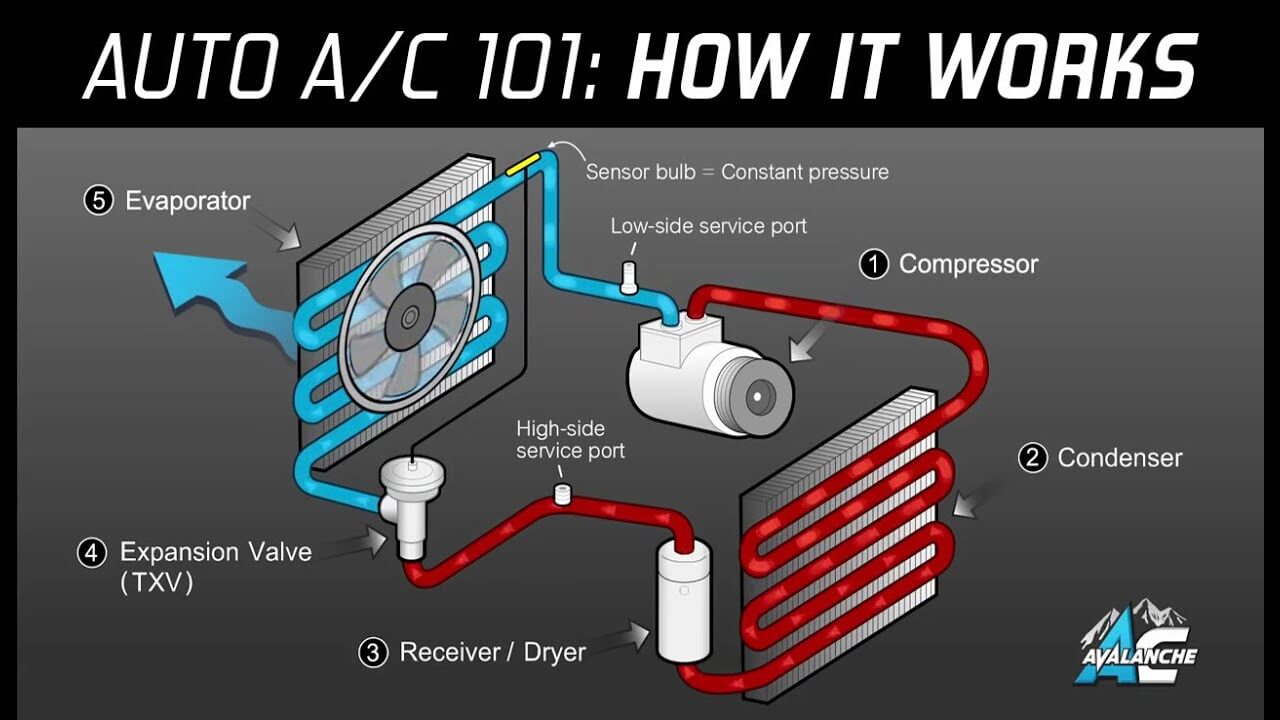
Your car AC works by moving heat from the cabin to the outside air. It does not create cold air by itself. Several parts work together to remove heat and keep the cabin comfortable.
The compressor moves refrigerant through the system. The condenser releases heat near the front of the vehicle. The expansion device lowers refrigerant pressure, and the evaporator absorbs heat from the cabin air. The blower then pushes cooled air through the dashboard vents.
The condenser needs enough airflow to release heat. When you drive, air naturally passes through the grille and across the condenser. When you stop, the cooling fan becomes much more important. If that airflow is poor, the AC may struggle to cool the refrigerant.
Source: psychoautos.com
While driving
Vehicle movement pushes outside air through the condenser. This helps remove heat and can improve AC performance.
While idling
The vehicle has little or no road-speed airflow. The cooling fan must move enough air through the condenser and radiator.
When airflow is weak
The condenser may retain too much heat. Operating pressure and temperature can rise, and the AC may stop cooling effectively.
What Is the AC Condenser?
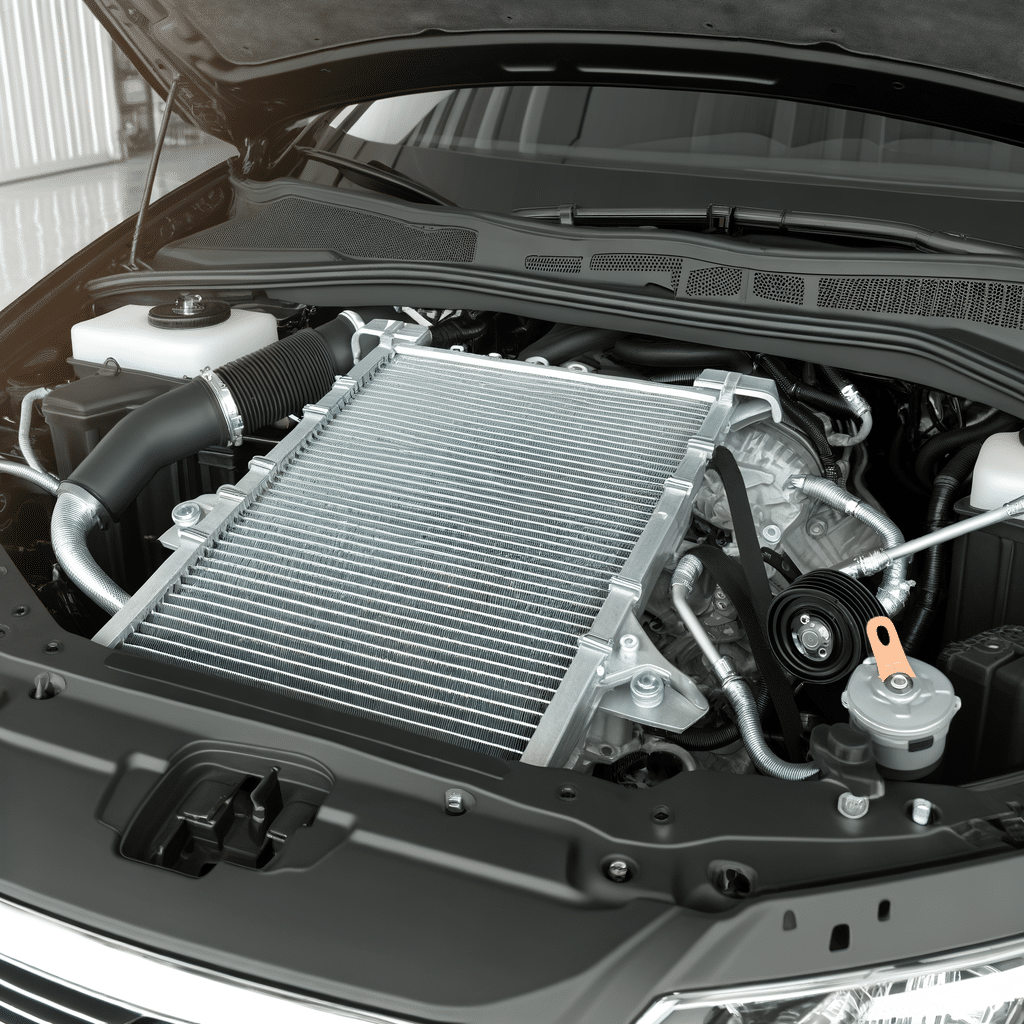
The condenser is a heat exchanger near the front of most vehicles. It often sits ahead of the radiator. Hot refrigerant enters the condenser and releases heat as outside air passes through its small fins.
Think of the condenser as a radiator for the air conditioning system. It needs a clear path for air to move across its surface. Dirt, insects, leaves, bent fins, and damaged air guides can reduce its ability to release heat.
At highway speed, stronger airflow may hide a small restriction. At a stoplight, the same restriction can become much easier to notice.
Main job
Release heat from the refrigerant before it moves toward the expansion device and evaporator.
Common problem
Blocked fins or poor airflow can reduce heat transfer and weaken AC cooling.
Why Does the Cooling Fan Matter So Much?
The cooling fan moves air through the condenser and radiator when natural airflow is limited. Depending on the vehicle, it may be electric, engine-driven, or controlled by a variable-speed module.
When the AC is requested, the vehicle computer may command the fan to run. The exact operating strategy depends on vehicle design, refrigerant pressure, engine temperature, and outside conditions.
If the fan cannot provide the airflow the system needs, AC performance may fall at idle. Once you drive faster, natural airflow can partly make up for the weak fan performance.
Important distinction
A fan that is not running at one particular moment is not always faulty. Some vehicles use different fan speeds and operating conditions.
7 Common Causes of Warm AC Air at Idle
Several faults can cause the same driving pattern. Start with condenser airflow because vehicle speed directly changes how much air reaches the condenser. Then consider refrigerant condition, compressor operation, and engine cooling.
Do not replace a part based on one symptom alone. A proper diagnosis should compare fan operation, system pressures, temperatures, and compressor control under the conditions that cause the problem.
Source: carreformer.com
1. Faulty AC cooling fan
A damaged fan motor, fuse, relay, wiring connection, or control module can reduce airflow when the vehicle is stopped.
2. Dirty or blocked condenser
Leaves, insects, road dirt, and damaged fins can restrict airflow and reduce heat transfer.
3. Low refrigerant
A refrigerant leak can leave the system with an insufficient charge and reduce its ability to cool the cabin.
4. Incorrect refrigerant charge
Both undercharging and overcharging can affect system pressures and cooling performance.
5. Weak AC compressor
Internal wear, a faulty control valve, or a clutch problem can reduce refrigerant circulation or compressor output.
6. Engine cooling or sensor problem
High engine temperature or incorrect sensor readings can cause the vehicle computer to limit or stop AC operation.
7. HVAC air delivery problem
A faulty blend door, actuator, or other dashboard control can allow warm air to mix with cooled air.
1. Cooling Fan Motor, Relay, or Fuse Failure
A cooling fan problem is a strong possibility when the AC works better at road speed. The fan may not run, may run too slowly, or may fail to reach the speed requested by the vehicle computer.
The problem can start with a worn fan motor. It can also come from a blown fuse, damaged relay, loose connector, poor ground, or faulty fan control module.
Some vehicles have more than one fan. Others use variable-speed fans. Therefore, seeing one fan move does not prove that the complete system works correctly.
A technician can compare the requested fan speed with its actual operation. This helps identify whether the problem comes from the motor, wiring, power supply, or control system.
Common clue
The AC gets warmer in traffic and becomes colder again when the car moves.
Possible repair
Repair the wiring or replace the confirmed faulty fan motor, relay, fuse, or control module.
2. Dirty or Damaged AC Condenser
A blocked condenser can prevent heat from leaving the refrigerant. Small objects, dust, insects, and road debris can collect between the condenser and radiator.
Bent condenser fins can also restrict airflow. A front-end impact may damage the condenser or disturb the air guides around it.
Inspect the front of the vehicle for visible dirt or damage. However, the outside surface may look clean while debris remains trapped between the heat exchangers.
DENSO troubleshooting information identifies poor fan airflow and dirt-covered condenser and radiator fins as possible causes of abnormal discharge pressure. This supports checking airflow before assuming the compressor has failed.
Common clue
Cooling gets worse in traffic or on very hot days but improves when the car moves.
Possible repair
Clean the condenser carefully or replace it if testing confirms internal damage or an unrepairable leak.
3. Low Refrigerant or a Refrigerant Leak
Refrigerant carries heat through the AC system. If the charge becomes too low, the system may struggle to absorb and release enough heat. Cooling can become weak or inconsistent.
Refrigerant does not normally disappear during regular operation. A low charge often points to a leak at a hose, fitting, condenser, evaporator, compressor seal, or service connection.
A small leak may cause gradual cooling loss. The system may still produce cold air while driving, but performance can become poor under demanding conditions such as heavy traffic and high outside temperatures.
However, low refrigerant is not the only possibility. An overcharged system can also create excessive pressure and poor cooling. A technician must identify the correct refrigerant and measure the actual charge before recommending service.
Common clue
Cooling becomes weaker over time, or the AC works inconsistently in different driving conditions.
Possible repair
Find and repair the leak, recover the refrigerant when required, and recharge the system to the manufacturer’s specified weight.
4. Weak AC Compressor or Compressor Control Valve
The compressor keeps refrigerant moving through the system. Some compressors may struggle to provide the required output at low engine speed when internal parts wear or control components fail.
A worn compressor, faulty clutch, damaged belt, or defective control valve can affect cooling. Modern vehicles may use variable-displacement or electronically controlled compressors, so a simple visual check may not reveal the problem.
If the compressor works poorly at idle but performs better at higher engine speed, cooling may improve when you accelerate. However, the same symptom can occur with an airflow or refrigerant problem.
A technician should check compressor commands, operating pressures, electrical signals, and vent temperatures before recommending compressor replacement.
Common clue
The AC struggles at idle and may improve when engine speed increases, even when condenser airflow appears normal.
Possible repair
Repair the confirmed electrical or control fault, or replace the compressor when testing establishes an internal failure.
5. Engine Overheating or Faulty Temperature Sensors
The engine cooling system and AC system share airflow at the front of many vehicles. A cooling fan problem can affect both systems. A blocked radiator or other cooling fault may also increase engine temperature in traffic.
Many modern vehicles can reduce or disable AC operation when engine temperature becomes too high. This protects the engine from additional heat and load.
A faulty coolant temperature sensor or refrigerant pressure sensor can also send incorrect information to the vehicle computer. The computer may then control the fan or compressor incorrectly.
Pay close attention to the temperature gauge. If engine temperature rises above its normal range, stop treating the problem as an ordinary AC fault.
Common clue
The AC gets warm at idle while the engine temperature also rises in slow traffic.
Possible repair
Diagnose the cooling system, sensor readings, fan controls, and related electrical circuits.
6. Faulty Blend Door or HVAC Controls
The blend door controls how much air passes through the heater core and the evaporator. If the door sticks or its actuator fails, warm air may mix with cooled air.
A faulty temperature sensor or climate control module can also affect the air temperature. This is more likely when different vents produce different temperatures or the problem changes with dashboard settings.
A dirty cabin air filter usually reduces airflow rather than directly making the air warmer. If the amount of air coming from the vents is weak, check the filter and blower system as well.
Common clue
The air temperature changes unexpectedly, different vents behave differently, or airflow remains weak at every vehicle speed.
Possible repair
Test the blend door, actuator, cabin temperature sensors, and climate control system.
How to Check Car AC Problems at Idle
You can perform several basic checks before visiting an auto repair shop. These checks help you describe the problem and identify visible warning signs. They do not replace professional refrigerant testing.
Park on level ground in a safe outdoor area. Keep the vehicle away from traffic and make sure the parking brake is set. Never reach toward a cooling fan, belt, or other moving engine part.
Source: smartacsolutions.com
Step 1: Set the AC controls correctly
Start the engine, select the coldest temperature, turn on the AC, choose recirculation, and set the blower to a consistent speed.
Step 2: Compare idle and driving performance
Note whether the vents blow cold air while driving and become warm after the vehicle stops.
Step 3: Check the airflow
Look for visible debris or damage around the front grille and condenser area.
Step 4: Observe the engine temperature
Watch the temperature gauge and note any rise above its normal operating range.
Step 5: Record the symptoms
Write down the outside temperature, driving conditions, vent temperature changes, and any unusual sounds.
Step 1: Confirm That the AC Is Set Correctly
Begin with the temperature setting. Select the coldest setting and turn on the AC. Choose recirculation so the system can cool cabin air instead of continuously drawing in hot outside air.
Set the blower speed to a level you can repeat during each test. Keep the settings the same when comparing idle and driving conditions.
If the cabin is very hot after sitting in the sun, open the windows briefly to release trapped heat before testing. Then close them and allow the AC to work in recirculation mode.
What to look for
The air should become cooler as the system runs. Note whether cooling disappears only when the vehicle stops.
Step 2: Check Airflow From the Vents
Check whether the blower moves a strong and steady stream of air. Weak airflow can make the cabin feel warm even when the AC system is producing cooled air.
A clogged cabin air filter, worn blower motor, or blocked air passage may reduce airflow. These faults deserve attention, especially when the air volume changes along with the temperature.
If the airflow remains strong but the air becomes warm at idle, the problem may be related to condenser airflow, refrigerant operation, or compressor control.
Strong airflow but warm air
Investigate the AC cooling system and its heat-rejection components.
Weak airflow at every speed
Check the cabin filter, blower motor, and air passages.
Step 3: Inspect the Condenser and Front Grille
Turn off the engine and allow the vehicle to cool before inspecting the front of the car. Look through the grille for leaves, insects, dirt, or visible damage.
The condenser fins are thin and can bend easily. Avoid scraping them with tools or spraying them with a high-pressure washer. Excessive pressure can damage the fins and make airflow worse.
Keep your hands and tools away from the fan area. Electric cooling fans can start unexpectedly, even when you are not touching the controls. Leave deeper cleaning and fan inspection to a qualified technician.
What to look for
Heavy debris, crushed fins, damaged air guides, and visible signs of leakage.
Step 4: Watch the Engine Temperature Gauge
The engine temperature gauge provides an important safety clue. If it rises when the vehicle sits in traffic, the cooling fan or engine cooling system may have a problem.
Some vehicles display a warning message when engine temperature becomes too high. Others use a warning light or gauge movement. Follow the vehicle owner’s manual if a warning appears.
Never remove a radiator cap or coolant reservoir cap while the engine is hot. Pressurized coolant can escape and cause severe burns.
Normal temperature
Continue with basic AC observations if no other warning signs appear.
Rising temperature
Turn off the AC, stop safely, and address the engine cooling problem promptly.
Step 5: Compare the Conditions and Record the Results
A simple record can help a technician find the fault faster. Note how long the car idles before the air becomes warm and how quickly cooling returns after you start moving.
Also record whether the issue happens only on very hot days, during stop-and-go traffic, or whenever the engine is warm. These details help separate a heat-load problem from a more persistent mechanical or electrical fault.
Useful details
Outside temperature, engine temperature, blower setting, recirculation setting, and the time needed for cooling to return.
How a Mechanic Should Diagnose AC That Gets Warm at Idle
A proper diagnosis should reproduce the exact problem. Checking the AC only while the car is moving may hide a fault that appears at idle. The technician should compare system behavior under both conditions.
A qualified technician can use temperature measurements, pressure gauges, scan data, and electrical tests to find the cause. These checks help avoid replacing the compressor or adding refrigerant when the actual problem is a cooling fan or blocked condenser.
DENSO recommends a systematic diagnostic process that starts by confirming the complaint and checking the relevant system conditions. Its troubleshooting charts also show why pressure readings must be interpreted alongside airflow and refrigerant conditions.
Source: carhelpers.com
Vent temperature test
Measure air temperature at the center vents while the vehicle idles and under suitable operating conditions.
Condenser fan test
Check fan commands, actual operation, speed, electrical supply, and control signals.
Refrigerant pressure test
Compare high-side and low-side pressures with vehicle-specific specifications and operating conditions.
Compressor performance test
Check compressor operation, control signals, clutch function where fitted, and pressure response.
Electronic system scan
Read relevant fault codes and compare pressure sensor, coolant temperature, fan command, and compressor data.
Leak inspection
Check hoses, fittings, condenser, evaporator, compressor seals, and other likely leak points.
Check the Cooling Fan Under Actual Operating Conditions
The technician should determine whether the fan receives the correct command when the AC is running. The next step is to confirm that the fan actually moves the required amount of air.
A fan may spin but still perform poorly because its motor is weak or its control system cannot provide the requested speed. A scan tool and electrical tests can help separate these problems.
The technician should also inspect the space between the condenser and radiator. Debris in this area can restrict airflow even when the visible front surface looks clean.
Important result
If cooling improves when adequate condenser airflow is restored, the diagnosis should focus on the airflow and heat-rejection system.
Measure Refrigerant Pressures and Charge
Pressure readings can reveal problems with refrigerant charge, condenser cooling, compressor operation, and refrigerant flow. However, one pressure reading cannot confirm every fault.
The correct pressure depends on refrigerant type, outside temperature, humidity, engine speed, fan operation, and vehicle design. There is no single pressure value that applies to every car.
When the charge is suspected to be incorrect, the technician may recover and measure the refrigerant. The system can then be checked for leaks and recharged to the manufacturer’s specified amount by weight.
Do not use a low-side pressure gauge alone to decide how much refrigerant to add. An incorrect charge can create high pressure, poor cooling, and additional system stress.
Useful test
Compare measured pressure and temperature data with the exact vehicle service specifications.
Check the Compressor and Electronic Controls
The technician should confirm that the compressor receives the correct operating command. On some vehicles, the computer can limit compressor output because of pressure readings, engine temperature, or electrical faults.
A scan tool can show whether the AC request is being received and whether the compressor and cooling fan are being commanded correctly. Additional electrical testing may be needed to check wiring and sensors.
The compressor should only be replaced after other likely causes have been tested. A fan fault, low charge, or incorrect sensor reading can create symptoms that look like compressor failure.
Best practice
Confirm the failed component with measurements before approving a costly replacement.
Use a Qualified AC Service Professional
Automotive AC systems contain pressurized refrigerant. Handling and recovering refrigerant requires suitable equipment and training. The refrigerant type must also match the vehicle’s specifications.
In the United States, the EPA requires technicians who service motor vehicle air conditioning systems for payment to hold Section 609 certification and use approved refrigerant handling equipment. Federal rules also prohibit intentionally releasing refrigerant into the atmosphere.
A professional shop should explain its findings before recommending a repair. Ask which test confirmed the failed part, whether a refrigerant leak was found, and whether the original idle condition will be checked again after the repair.
Ask the shop
Request the test results for fan operation, condenser airflow, refrigerant charge, compressor control, and engine temperature.
How to Fix and Prevent Warm AC at Idle
The correct repair depends on the test results. A fan problem needs a different repair from a refrigerant leak or a worn compressor. Fixing the actual cause is more reliable than replacing several parts based on symptoms.
After the repair, the technician should repeat the same idle and driving test. The air should remain properly cooled when the vehicle stops, provided the system is operating within its normal design conditions.
Source: carhelpers.com
Repair the cooling fan
Replace or repair the confirmed faulty motor, relay, fuse, wiring, or fan control module.
Clean the condenser
Remove debris carefully and repair or replace a damaged condenser when necessary.
Repair refrigerant leaks
Find the leak, repair the affected part, and restore the correct refrigerant charge.
Repair compressor faults
Fix the confirmed clutch, electrical, or control problem, or replace a failed compressor.
Correct engine cooling problems
Repair the fan system, radiator, coolant leak, or sensor fault responsible for abnormal engine temperature.
Repair HVAC controls
Test and repair faulty blend doors, actuators, temperature sensors, or climate control components.
Keep the Condenser Clean
Inspect the front grille and visible condenser area from time to time. Remove loose leaves and other debris that can block airflow, but avoid touching delicate fins.
If the condenser is heavily clogged, ask a technician to clean it using a suitable method. Avoid high-pressure water because it can bend the fins and reduce airflow.
Also check for damaged air guides and missing seals after front-end repairs. These parts help direct air through the condenser and radiator.
Maintenance tip
Check for visible debris after driving on dusty roads or through areas with heavy insects and leaves.
Maintain the Cooling System
A healthy engine cooling system supports normal AC operation. Follow the vehicle manufacturer’s maintenance schedule for coolant inspection and replacement.
Watch for coolant leaks, damaged hoses, unusual temperature changes, and warning messages. A cooling fan fault may affect both engine temperature and cabin comfort.
Use the correct coolant type and mixture specified in the owner’s manual. Do not open a hot cooling system or mix incompatible coolant products.
Maintenance tip
Have unexplained coolant loss or repeated overheating checked before it causes more serious damage.
Avoid Guessing With Refrigerant
Adding refrigerant without testing can make the AC system overcharged. This may increase operating pressure and reduce cooling performance.
Different vehicles use different refrigerants and charge amounts. Some use R-134a, while many newer vehicles use R-1234yf. The correct type is listed on the vehicle’s AC information label and in its service information.
Never mix refrigerants or use an unknown product. Do not vent refrigerant to the atmosphere. Have leaks and incorrect charges handled with suitable recovery and service equipment.
Better approach
Identify the refrigerant, measure the charge, check for leaks, and recharge according to the vehicle manufacturer’s specification.
When Should You Stop Driving?
Warm AC air alone does not always mean the vehicle is unsafe to drive. If the engine temperature remains normal and there are no other warning signs, you may be able to drive to a repair shop. However, arrange an inspection soon because a fan fault can affect engine cooling as well.
Stop in a safe place if the engine temperature rises into the warning range, a coolant warning appears, or you notice steam, smoke, or a serious mechanical noise. Turn off the AC and follow the vehicle manufacturer’s overheating instructions.
Do not continue driving an overheating vehicle just because the temperature drops when you start moving. A cooling system fault can lead to serious engine damage.
Urgent warning
Rising engine temperature, steam, coolant loss, or severe belt and fan noise requires prompt attention.
Less urgent condition
If only cabin cooling is affected and engine temperature remains normal, schedule an AC diagnosis rather than ignoring the problem.
Confirm That the Repair Worked
A repair is not complete until the original complaint has been checked again. Test the vehicle with the same AC settings and similar outside conditions whenever possible.
Allow the engine to idle long enough to reproduce the original problem. Check whether the vents continue to deliver cooled air and whether the cooling fan responds as designed.
Then compare the result with normal driving conditions. If the air becomes warm again, further testing may be needed to find an additional fault.
Sign of success
The AC maintains stable cooling at idle and while driving, without abnormal engine temperature or warning messages.
Frequently Asked Questions
Q
Why Does My Car AC Get Cold When Driving but Warm at a Stop?
The most likely area to investigate first is condenser airflow. When the vehicle moves, outside air passes through the condenser and helps release heat. At a stop, the cooling fan must provide much of that airflow.
A weak fan, blocked condenser, incorrect refrigerant charge, or compressor control problem can cause cooling to fall at idle. Proper testing is needed to identify the exact cause.
Q
Can a Bad Condenser Fan Cause Warm AC at Idle?
Yes. A faulty condenser or radiator fan can reduce airflow through the condenser. The system may struggle to release heat while the vehicle is stopped.
When you start driving, natural airflow can improve heat transfer and make the AC feel colder. A technician should check fan speed, electrical supply, wiring, and control signals before replacing the fan.
Q
Can Low Refrigerant Make AC Warm at Idle?
Yes. A low refrigerant charge can reduce cooling performance, particularly when the system faces a high heat load. A leak is often responsible for refrigerant loss.
However, low refrigerant is not the only cause of warm air at idle. An incorrect charge, blocked condenser, or weak fan can produce similar symptoms. Check the charge and look for leaks before adding refrigerant.
Q
Should I Add Refrigerant When My AC Gets Warm at Idle?
Not without proper testing. Adding refrigerant may not help if the actual problem is a faulty cooling fan, blocked condenser, compressor fault, or electrical issue.
Too much refrigerant can also create high pressure and reduce cooling. Have the system checked and charged to the manufacturer’s specified amount using suitable equipment.
Q
Is It Safe to Drive With AC That Blows Warm Air at Idle?
It may be possible to drive a short distance if the engine temperature remains normal and there are no warning lights, unusual noises, or other signs of a mechanical problem.
However, do not ignore a rising temperature gauge or cooling system warning. Turn off the AC, stop safely, and arrange assistance if the engine overheats. A faulty cooling fan can affect more than cabin comfort.
Q
Can a Dirty Cabin Air Filter Cause AC to Blow Warm Air at Idle?
A dirty cabin air filter usually reduces the amount of air coming through the vents. It does not normally explain why the AC becomes warm only when the vehicle stops.
If airflow is weak at every speed, inspect the cabin filter and blower system. If airflow remains strong but the temperature changes with vehicle speed, investigate condenser airflow and AC system operation.
Q
Why Does My AC Work Better When I Increase Engine Speed?
Some AC compressors produce different output as engine speed changes. A worn compressor or faulty control valve may struggle at low speed and perform better when engine speed increases.
However, improved cooling may also result from changes in airflow or refrigerant pressure. This observation is useful for diagnosis, but it does not prove that the compressor needs replacement.
✦ Wrapping Up
Conclusion
When your car AC blows warm air at idle but becomes cold while driving, start by checking condenser airflow and cooling fan operation. These components become especially important when the vehicle stops and natural airflow decreases.
Other possible causes include low refrigerant, an incorrect charge, a weak compressor, engine overheating, and HVAC control problems. The same symptom can come from several different faults, so replacing parts without testing can lead to unnecessary costs.
Perform safe visual checks, monitor engine temperature, and record when the problem happens. If the issue continues, ask a qualified technician to compare fan operation, condenser airflow, refrigerant pressures, and compressor control at idle and while driving.
💡 Key Takeaway
Start with the cooling fan and condenser airflow. Do not add refrigerant or replace the compressor based on symptoms alone. Get the system tested under the same idle conditions that cause the warm air, and confirm that cooling stays consistent after the repair.
About john Adword
John Adword has tested and reviewed car seat covers and interior accessories for 5 years, evaluating fit, material performance, and long-term wear across a range of vehicles and climates. His testing approach follows the same methodology used across car Reviewer Plus's product reviews — hands-on installation, real-world use, and comparison against manufacturer claims — with an ongoing focus on tracking new seat cover materials and cooling technology as they come to market.