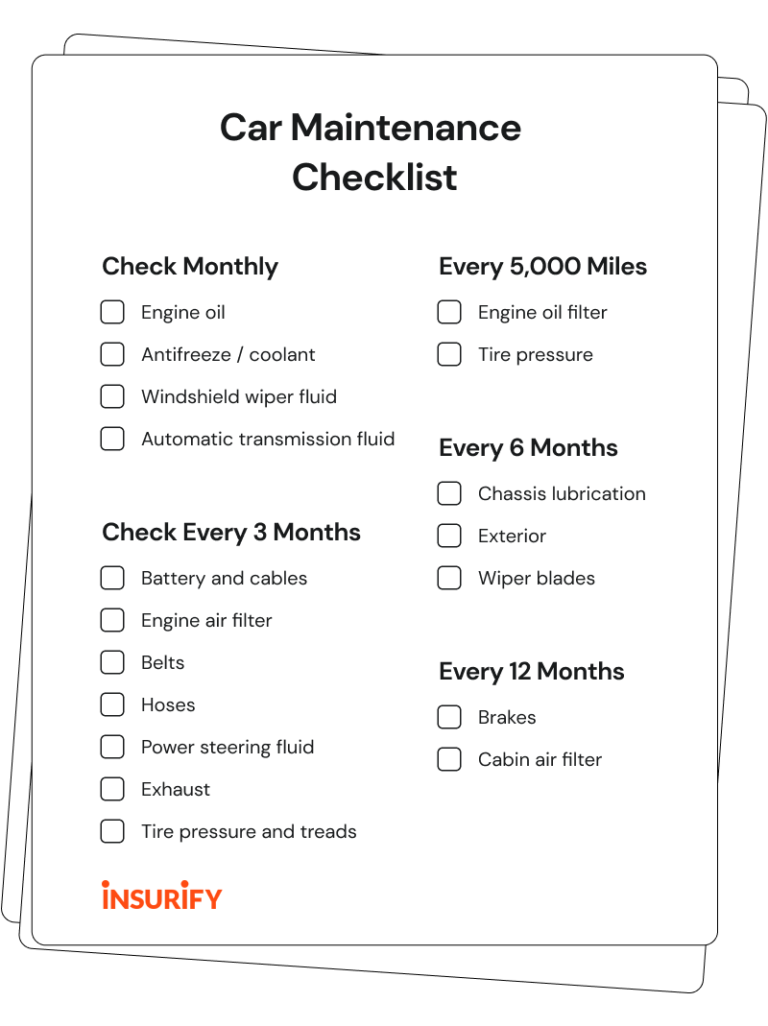
Car Shampoo Vs Dish Soap: Which Is Better For Your Paint?
Car shampoo beats dish soap for regular car care; dish soap strips wax and harms paint over time.
I have cleaned hundreds of cars and tested both products. This guide compares car shampoo vs dish soap with clear facts, simple chemistry, and real results. You will learn why the right product matters, what risks to avoid, and how to wash your car safely. Read on for practical tips, my hands-on lessons, and a step-by-step routine you can use today.

Why the debate about car shampoo vs dish soap matters
Most people ask if dish soap can save money when cleaning a car. The short answer is yes for short-term grime, but no for long-term paint health.
This topic matters because cars face sun, rain, road salt, and grime every day. The soap you use affects the clear coat, wax, and rubber parts. A wrong choice can lead to dull paint, more frequent polishing, and higher maintenance costs. I bring years of hands-on detailing and product testing to explain the trade-offs clearly.

Chemical differences: car shampoo vs dish soap
Car shampoos are made for automotive paint. They are usually pH-balanced and have gentle surfactants that remove dirt without stripping wax or sealants. Many formulas add lubricants to reduce swirl marks and may include gloss enhancers or protective agents.
Dish soaps are made to cut greasy kitchen oils. They contain strong surfactants that break oils fast. This makes them good at cleaning greasy dishes, but those same surfactants can remove protective wax and degrade some polymers on a car.
Key points to remember
- pH and gentleness vary widely between products.
- Car shampoo often contains lubricants to reduce scratching.
- Dish soap is more aggressive and can remove wax and sealants.
- Some dish soaps are harsher on rubber and plastic trims.
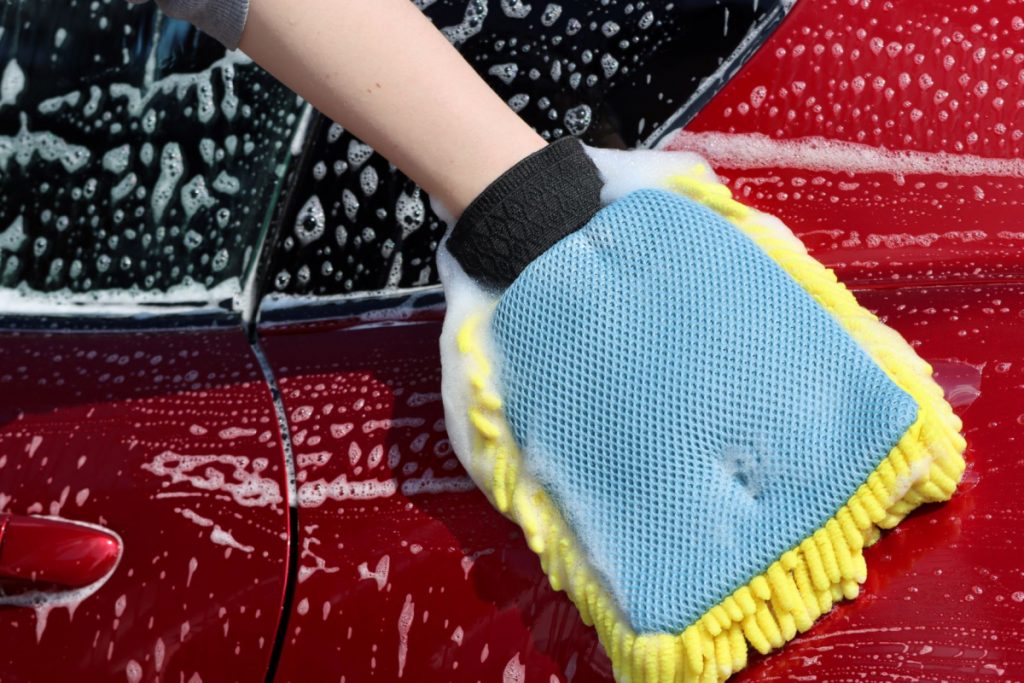
Pros and cons: using dish soap vs car shampoo
Understanding pros and cons helps you decide what to use and when.
Pros of car shampoo
- Designed to protect paint and wax.
- Adds lubrication to reduce swirl marks.
- Often pH-balanced and safe for repeated use.
- Formulated to rinse clean without streaks.
Cons of car shampoo
- Typically costlier than dish soap.
- Some cheap car shampoos lack protection ingredients.
Pros of dish soap
- Effective at cutting heavy grease.
- Very cheap and easy to find.
- Works well for engine bays or oily tools (not paint).
Cons of dish soap
- Strips wax and sealants quickly.
- Can dull paint finish over time.
- May dry out rubber and trim pieces.
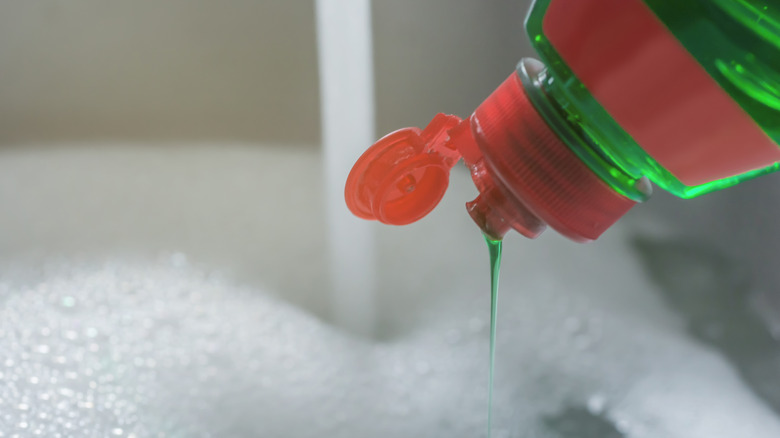
Real risks of using dish soap on cars
I once used dish soap on a client’s black sedan for a quick clean. The car looked fine for a day, then the wax came off and the paint looked flat under sunlight. Over months, the finish needed polishing more often.
Common risks
- Loss of wax and protective sealants, which leads to faster paint fade.
- Increased chance of micro-scratches from less lubricated washing.
- Drying and cracking of rubber seals and trim over time.
- More frequent need for compounding or polishing to restore gloss.
If you only wash a car once in a blue moon, dish soap may seem okay. For regular maintenance, the long-term cost and damage make dish soap a poor choice compared to a proper car shampoo.
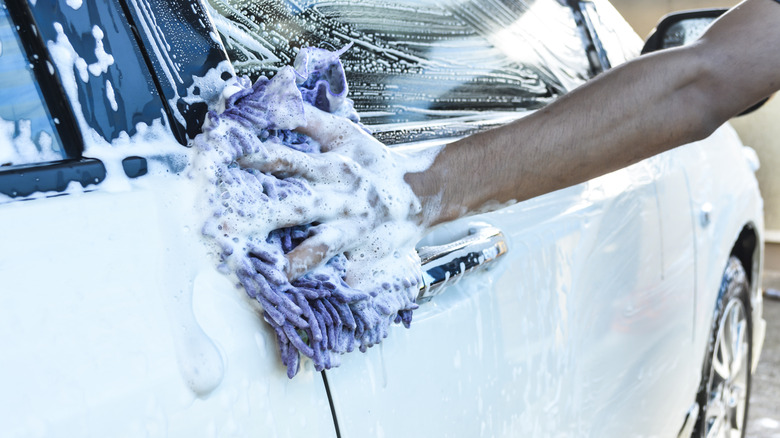
How to wash your car safely: step-by-step using the right products
Follow a simple, repeatable routine to protect your paint whether you use car shampoo or are forced to use dish soap in a pinch.
Step-by-step safe wash
- Rinse the car thoroughly to remove loose dirt.
- Use a two-bucket method: one with soap, one with clean rinse water.
- Add car shampoo to the wash bucket at the recommended dilution. Avoid dish soap for paint.
- Use a soft microfiber mitt and work top to bottom.
- Rinse each panel before the soap dries.
- Dry with a clean microfiber towel or blower to avoid water spots.
- Apply wax or sealant every few months to protect the paint.
Tips for occasional dish soap use
- Use it only for degreasing engine bays or greasy wheel wells.
- Rinse immediately and follow with a car-safe shampoo wash.
- Re-wax the car after using dish soap to restore protection.
Choosing the right car shampoo: features to look for
Not all car shampoos are equal. Choose one that fits your needs and budget.
What to look for
- pH-balanced formula for paint safety.
- Good dilution ratio for cost efficiency.
- Lubricity to reduce swirl marks.
- Biodegradable and eco-friendly ingredients if you wash outdoors.
- Additives like gloss enhancers or ceramic boosters if desired.
Budget options still beat dish soap if they protect wax and finish. For regular washing, pick a mid-range car shampoo that lists paint-safe or pH-balanced on the label.
My testing notes and lessons learned
I have tested dozens of products on many cars over years. I saw clear differences between car shampoo vs dish soap in both short-term look and long-term upkeep.
What I learned
- Cars washed weekly with a quality car shampoo kept their shine longer.
- Dish soap gives a quick clean but strips wax in one wash.
- Using proper tools matters as much as the soap—mitts and two buckets cut swirl marks.
- Re-waxing can fix damage from dish soap, but it costs time and money.
A small investment in a good car shampoo and the right tools saves money over time. That is the practical lesson from hands-on work.
Frequently Asked Questions of car shampoo vs dish soap
Is dish soap safe for car paint if diluted well?
Diluting dish soap can reduce its aggressiveness, but its surfactants still remove wax and sealants. For regular washing, car shampoo is the safer choice.
Can I use dish soap once in a while without harm?
A one-time use may not cause immediate damage, but repeated use speeds up wax loss and dulling. If you use dish soap, reapply wax afterward.
What is the two-bucket method and does it matter?
The two-bucket method uses one bucket with soap and one with rinse water to reduce dirt recontamination. It greatly reduces the chance of scratches and is recommended.
Are all car shampoos the same strength?
No. Some are mild and protective, while others are strong cleaners or contain gloss enhancers. Choose based on your car’s finish and how often you wash.
Can I use dish soap for wheels and engine bays?
Dish soap is acceptable for degreasing wheels and engine bays, but rinse thoroughly and avoid getting it on painted surfaces. Use wheel cleaners and engine degreasers made for those areas when possible.
How often should I wax my car if I use custom car shampoo?
Most people find waxing every 2–3 months keeps protection and gloss intact. Using a shampoo that adds protection can extend this interval.
Conclusion
Car shampoo vs dish soap is not just a cost choice. It is a decision that affects your car’s look and long-term finish. Use car shampoo for regular washes to protect wax, maintain gloss, and avoid costly repairs. Reserve dish soap for degreasing tasks only and always follow with a car-safe shampoo and re-waxing when needed. Try the two-bucket method, invest in a good mitt, and you will see how small changes save time and money. Ready to give your car the right care? Share your experience, subscribe for more tips, or ask a question below.