
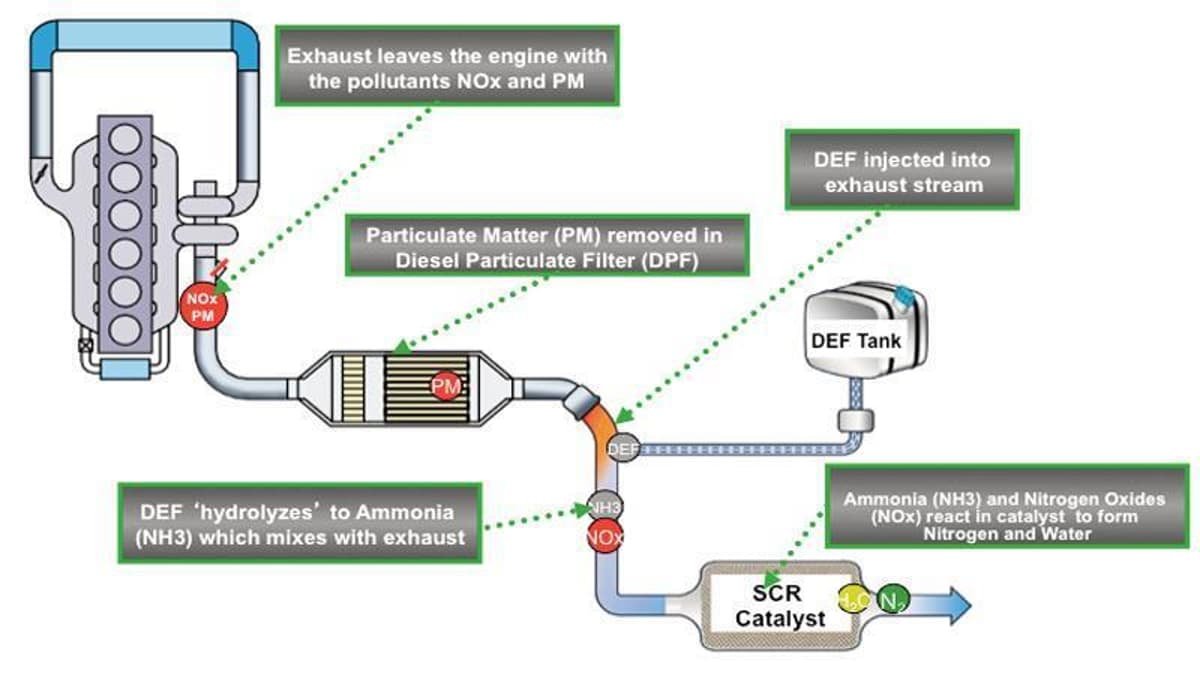
Modern diesel vehicles in the United States use advanced emission systems to control pollutants. One of the most important technologies is the Selective Catalytic Reduction system, which uses Diesel Exhaust Fluid, also called DEF, to reduce nitrogen oxide emissions.
From my experience studying diesel systems, many drivers understand DEF as a fluid they refill but do not know its real purpose. The key role of DEF is not to improve fuel combustion directly. Instead, it cleans exhaust gases after they leave the engine.
Understanding how Diesel Exhaust Fluid reduces emissions helps vehicle owners, truck operators, and fleet managers maintain their vehicles correctly and avoid costly emission system problems.
What Is Diesel Exhaust Fluid and Why Is It Used?
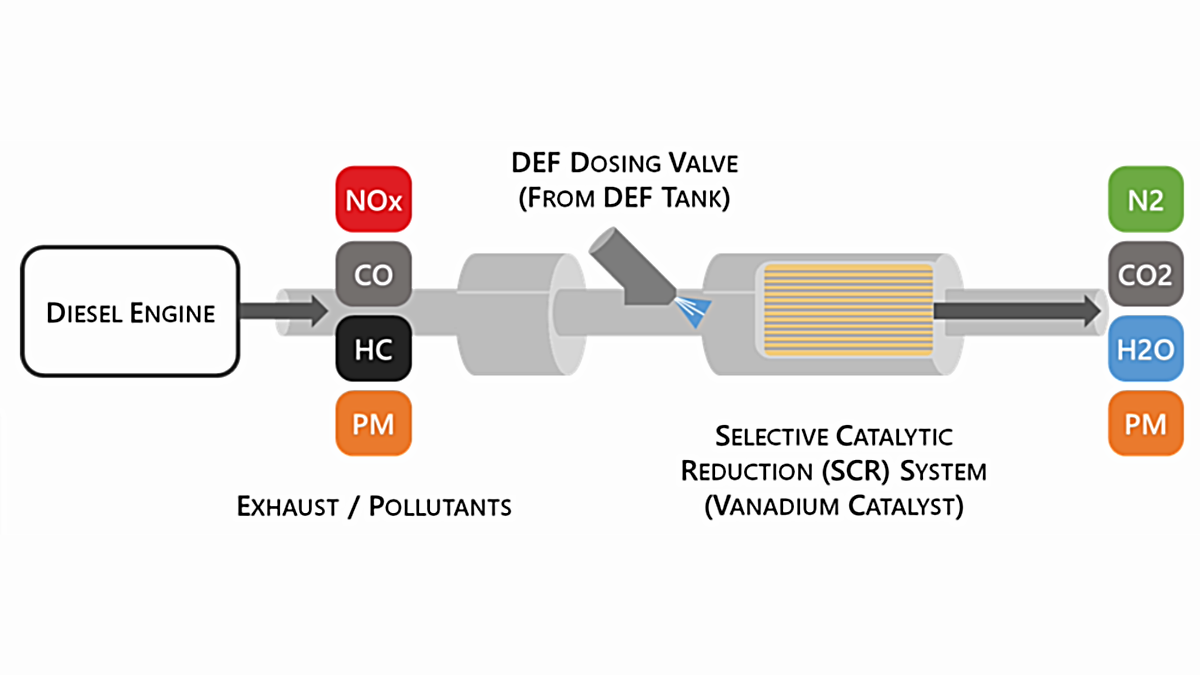
Diesel Exhaust Fluid is a clear liquid made from purified water and high-quality urea. It is stored in a separate tank and injected into the exhaust stream of diesel vehicles equipped with SCR technology.
The main purpose of DEF is to reduce nitrogen oxide, or NOx, emissions. NOx gases form during diesel combustion because engines operate at very high temperatures.
In the United States, diesel trucks, buses, and many passenger vehicles use DEF systems to meet Environmental Protection Agency emission requirements.
- ✦ DEF ingredients
DEF contains about 32.5% urea and 67.5% deionized water. The mixture is designed to create ammonia during the SCR process.
- ✦ DEF purpose
DEF helps reduce exhaust pollution after combustion by treating harmful gases before they leave the tailpipe.
DEF Is Not a Fuel Additive
A common misunderstanding is that DEF mixes with diesel fuel. It does not. DEF has its own storage tank and injection system connected to the exhaust system.
Because DEF works outside the engine, it does not increase engine power or change the fuel mixture. Its job is purely emission control.
How Diesel Exhaust Fluid Reduces Emissions Through SCR Technology
The best way to understand how Diesel Exhaust Fluid reduces emissions is to look at the SCR process. After diesel fuel burns, exhaust gases contain nitrogen oxides that must be treated before release.
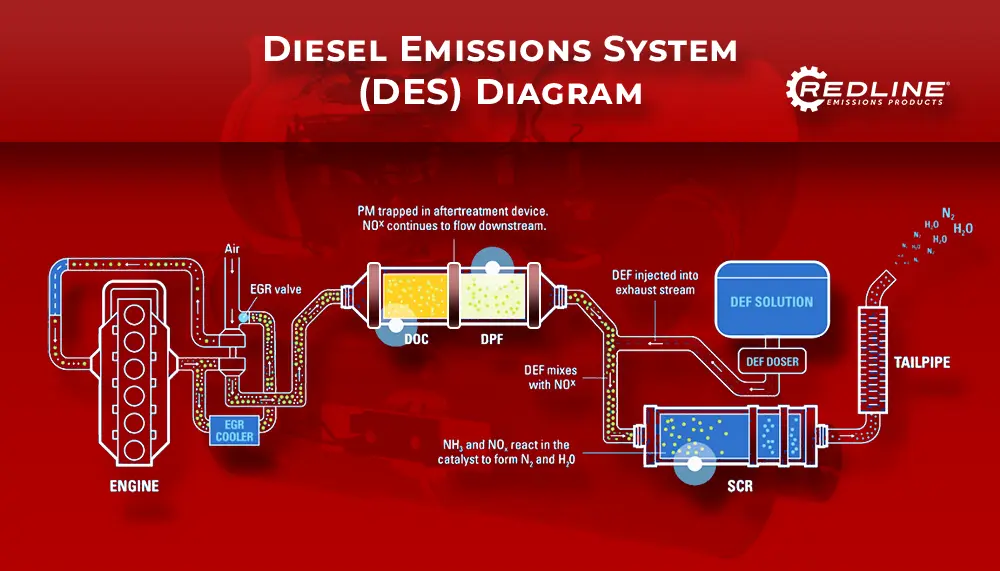
The SCR system sprays DEF into the hot exhaust stream. Heat breaks the urea in DEF into ammonia, which reacts with NOx gases inside the catalyst.
This chemical reaction changes harmful nitrogen oxides into nitrogen and water vapor, which are naturally found in the atmosphere.
- ✦ Step one: DEF injection
The vehicle computer controls DEF injection based on exhaust temperature and emission conditions.
- ✦ Step two: Chemical reaction
Ammonia from DEF reacts with NOx gases inside the SCR catalyst.
- ✦ Step three: Cleaner exhaust
The system releases mostly nitrogen and water instead of harmful nitrogen oxide pollutants.
The Role of Ammonia in Emission Reduction
Ammonia acts as a chemical helper in the SCR system. It attaches to NOx molecules and breaks them into safer compounds.
Without this reaction, diesel engines would release much higher levels of nitrogen oxide emissions.
Why Diesel Engines Produce NOx Emissions
Diesel engines are efficient because they use high compression ratios and operate with excess air. However, these high temperatures create conditions where nitrogen and oxygen combine to form NOx gases.
NOx emissions contribute to air pollution and can create environmental concerns. This is why modern diesel vehicles require advanced exhaust treatment systems.
DEF technology allows diesel engines to keep their efficiency while controlling harmful emissions.

- ✦ High combustion temperature
Higher temperatures inside diesel engines increase the chance of nitrogen and oxygen forming NOx.
- ✦ Emission regulations
Strict U.S. regulations encourage manufacturers to use systems like SCR and DEF to lower pollution.
Benefits of Using Diesel Exhaust Fluid in Modern Vehicles
Using DEF allows diesel engines to meet modern emission standards without sacrificing the benefits of diesel technology. Many commercial trucks depend on DEF systems for daily operation.
When maintained correctly, DEF systems help reduce pollution, support cleaner transportation, and improve compliance with emission laws.
The technology is especially important for long-distance trucks, delivery vehicles, construction equipment, and diesel-powered passenger vehicles.

- ✦ Lower NOx emissions
DEF systems can greatly reduce nitrogen oxide output from diesel exhaust.
- ✦ Cleaner air
Reduced NOx emissions help improve air quality around roads and cities.
- ✦ Better diesel efficiency options
SCR technology allows manufacturers to design efficient diesel engines while controlling emissions.
How to Maintain a DEF System Properly
A DEF system needs proper care to work effectively. Poor-quality fluid, contamination, or low DEF levels can affect emission performance.
Drivers should use certified DEF that meets industry standards. They should also avoid putting DEF into the diesel fuel tank because it can cause serious damage.
Regular checks help prevent warning lights, reduced engine performance, and expensive repairs.

- ✦ Store DEF correctly
Keep DEF away from extreme heat and direct sunlight because high temperatures can reduce its quality.
- ✦ Use clean equipment
Only use containers and funnels designed for DEF to prevent contamination.
- ✦ Monitor DEF levels
Refill DEF before the tank becomes empty to avoid vehicle warnings or power limits.
