
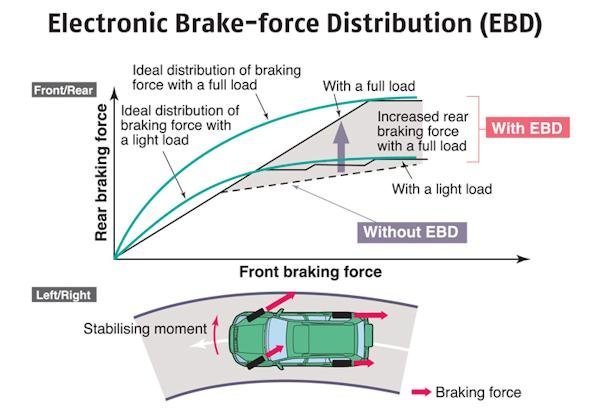
How Electronic Brake Force Distribution Works is a common question among drivers who want to understand modern vehicle safety. EBD is an advanced braking technology that uses sensors, electronic controls, and brake pressure management to improve stopping performance.
In my experience studying automotive systems, many drivers focus only on brake pads and rotors. However, electronic systems like EBD play a major role in keeping a vehicle stable during sudden stops, heavy loads, wet roads, and changing driving conditions.
Most vehicles sold in the United States today use some form of electronic brake control. Understanding How Electronic Brake Force Distribution Works helps drivers know why their car feels more controlled and predictable when braking.

What Is Electronic Brake Force Distribution?
Electronic Brake Force Distribution, often called EBD, is a vehicle safety system that controls how much braking force reaches each wheel. It improves the basic braking system by making small adjustments based on real-time driving conditions.
Traditional brake systems send pressure to all brakes in a fixed way. EBD is different because it checks factors like wheel speed, vehicle weight transfer, and road conditions before adjusting brake pressure.
When a driver presses the brake pedal, EBD works with the vehicle control module to decide the best pressure balance. This helps prevent wheel lock and improves vehicle control.
- ✦ Smart brake pressure control
EBD changes brake pressure between front and rear wheels instead of using one fixed pressure setting.
- ✦ Improved stability
The system helps reduce uneven braking forces that can make a vehicle pull or lose balance.
- ✦ Works with ABS
EBD normally operates with the Anti-lock Braking System to improve emergency braking control.
Why Brake Force Distribution Matters
During braking, vehicle weight moves toward the front wheels. This means front tires usually have more grip while rear tires have less load.
Without proper control, too much rear brake force can cause rear wheel lock. EBD solves this problem by adjusting pressure before instability happens.
How Electronic Brake Force Distribution Works Step by Step
How Electronic Brake Force Distribution Works starts with information collection. The system uses multiple sensors to understand what the vehicle is doing at that moment.
When the driver applies the brakes, wheel speed sensors measure rotation speed. The electronic control unit then analyzes this data and calculates the correct brake pressure for each wheel.
If the system detects that one wheel may lose traction, it reduces or adjusts pressure to maintain stability. This happens within milliseconds, much faster than a driver can react.

- ✦ Sensor data collection
Wheel speed sensors and vehicle control sensors provide information about movement and traction.
- ✦ Electronic calculation
The control module processes data and determines the safest brake pressure balance.
- ✦ Brake pressure adjustment
Hydraulic valves adjust brake pressure to different wheels based on driving conditions.
The Role of the Electronic Control Unit
The electronic control unit acts as the brain of the EBD system. It receives signals from sensors and makes decisions about brake pressure.
This computer system can make many small adjustments during a single braking event. These changes help maintain traction and vehicle control.
Main Components of an Electronic Brake Force Distribution System
To understand How Electronic Brake Force Distribution Works, it is important to know the parts that make the system operate. EBD depends on several electronic and hydraulic components working together.
Each component has a specific role. Sensors collect information, the control unit analyzes data, and hydraulic components apply the required brake pressure.

- ✦ Wheel speed sensors
These sensors monitor how fast each wheel rotates and help detect traction differences.
- ✦ Hydraulic control unit
This unit manages brake fluid pressure sent to individual wheels.
- ✦ Electronic control module
The module processes sensor information and controls brake adjustments.
- ✦ Brake pressure sensors
These sensors help measure braking force and support accurate adjustments.
How EBD Works During Different Driving Conditions
Electronic Brake Force Distribution changes its operation depending on road conditions, vehicle load, and braking intensity. This makes the system useful in everyday driving situations.
For example, a family SUV carrying passengers and luggage has different braking needs compared with an empty vehicle. EBD can adjust brake balance to match the situation.

- ✦ Heavy vehicle loads
EBD adjusts brake pressure when extra passengers or cargo change vehicle weight distribution.
- ✦ Wet roads
The system helps maintain control when tire grip is reduced by rain or slippery surfaces.
- ✦ Emergency braking
EBD supports stable braking when a driver must stop quickly.
EBD During Cornering
Braking while turning creates different forces on each wheel. EBD helps manage these changes by controlling brake pressure more accurately.
This improves stability and reduces the chance of losing control during sudden braking situations.
Benefits of Electronic Brake Force Distribution
The biggest advantage of EBD is better control. Instead of applying the same braking force everywhere, the system creates a more balanced braking response.
For American drivers who face highways, city traffic, rain, and heavy vehicle use, EBD provides an extra layer of safety during normal and emergency driving.

- ✦ Shorter stopping distance
Balanced braking can help tires maintain better contact with the road.
- ✦ Better vehicle stability
EBD reduces unwanted movement caused by uneven brake force.
- ✦ Reduced brake wear
Balanced pressure can help distribute braking work more evenly.
- ✦ Improved driver confidence
The vehicle feels more predictable during braking.
Common EBD Problems and Warning Signs
Although EBD systems are reliable, electronic parts can fail over time. Problems usually come from sensor faults, wiring issues, or hydraulic system problems.
Drivers should pay attention to warning lights and changes in braking behavior. Early inspection can prevent larger brake system problems.

- ✦ EBD warning light
A dashboard warning may indicate a problem with the electronic brake system.
- ✦ Uneven braking
The vehicle may pull to one side if brake pressure is not balanced.
- ✦ ABS warning light
Because EBD and ABS often share components, ABS issues can affect EBD operation.
