A fuel injection system meters and sprays the right fuel at the right time for efficient combustion.
I have spent years working on cars and studying engine systems, so I know how fuel injection system works from hands-on repair to tuning. This guide breaks down the parts, the science, and the real-world tips you need to understand how fuel injection system works in clear, simple steps. Read on to learn the types of systems, how components interact, common problems, and practical advice you can use today.

How fuel injection system works — a clear overview
A fuel injection system delivers fuel into an engine so the fuel and air mix burns cleanly. The system uses pumps, rails, injectors, and an electronic control unit to measure and time fuel delivery. Modern systems rely on sensors to adapt injection to load, temp, and emissions. Saying how fuel injection system works is really about showing how sensors, software, and precision parts join to match fuel flow to engine needs.
Key goals of the system:
- Meter fuel precisely for each cylinder.
- Atomize fuel so it mixes well with air.
- Time injection to match intake and compression cycles.
- Adjust continuously for load and conditions.
How fuel injection system works ties directly to fuel economy, power, and emissions. Knowing it helps you diagnose faults and tune performance.
Main components and what each does
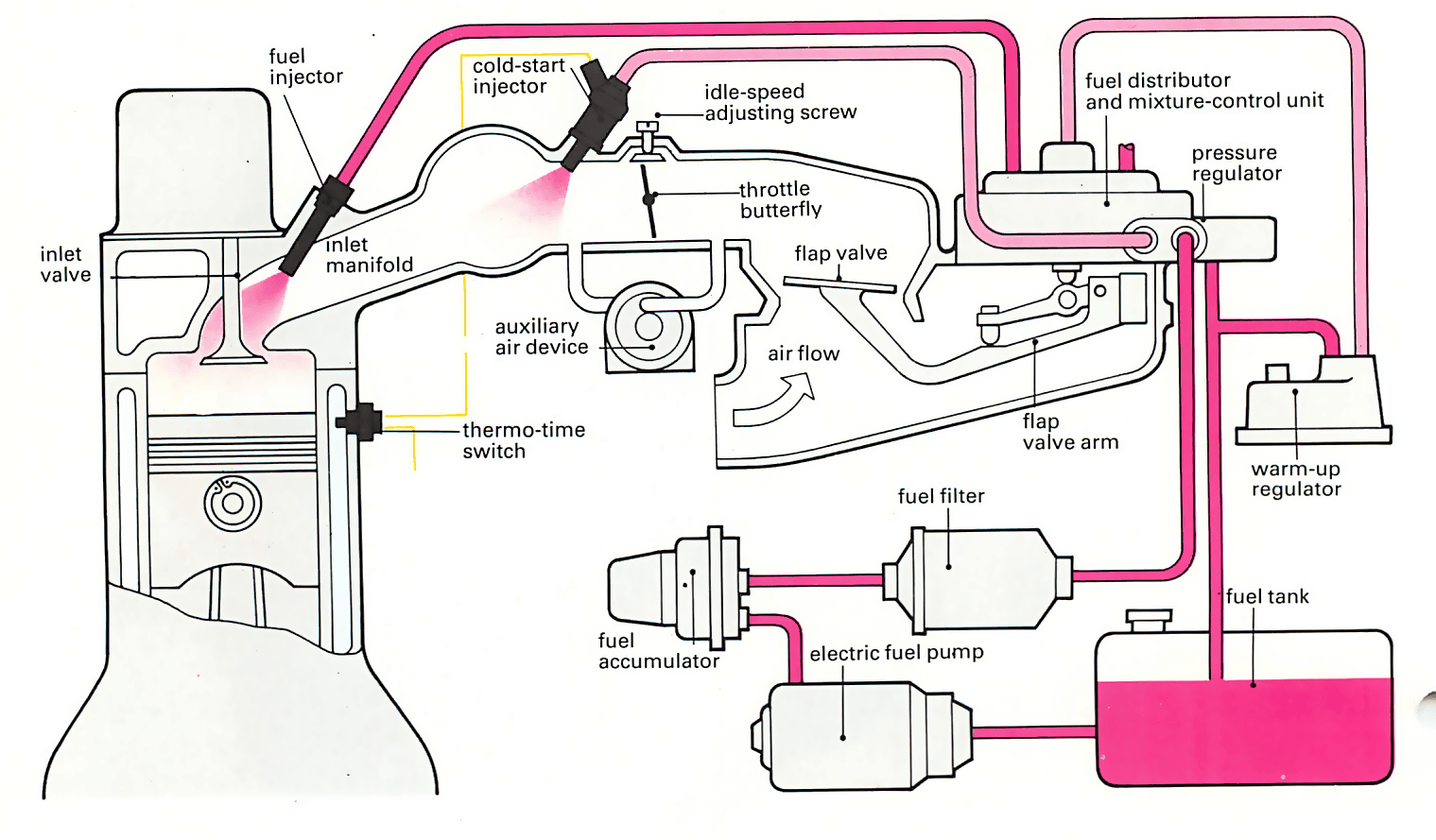
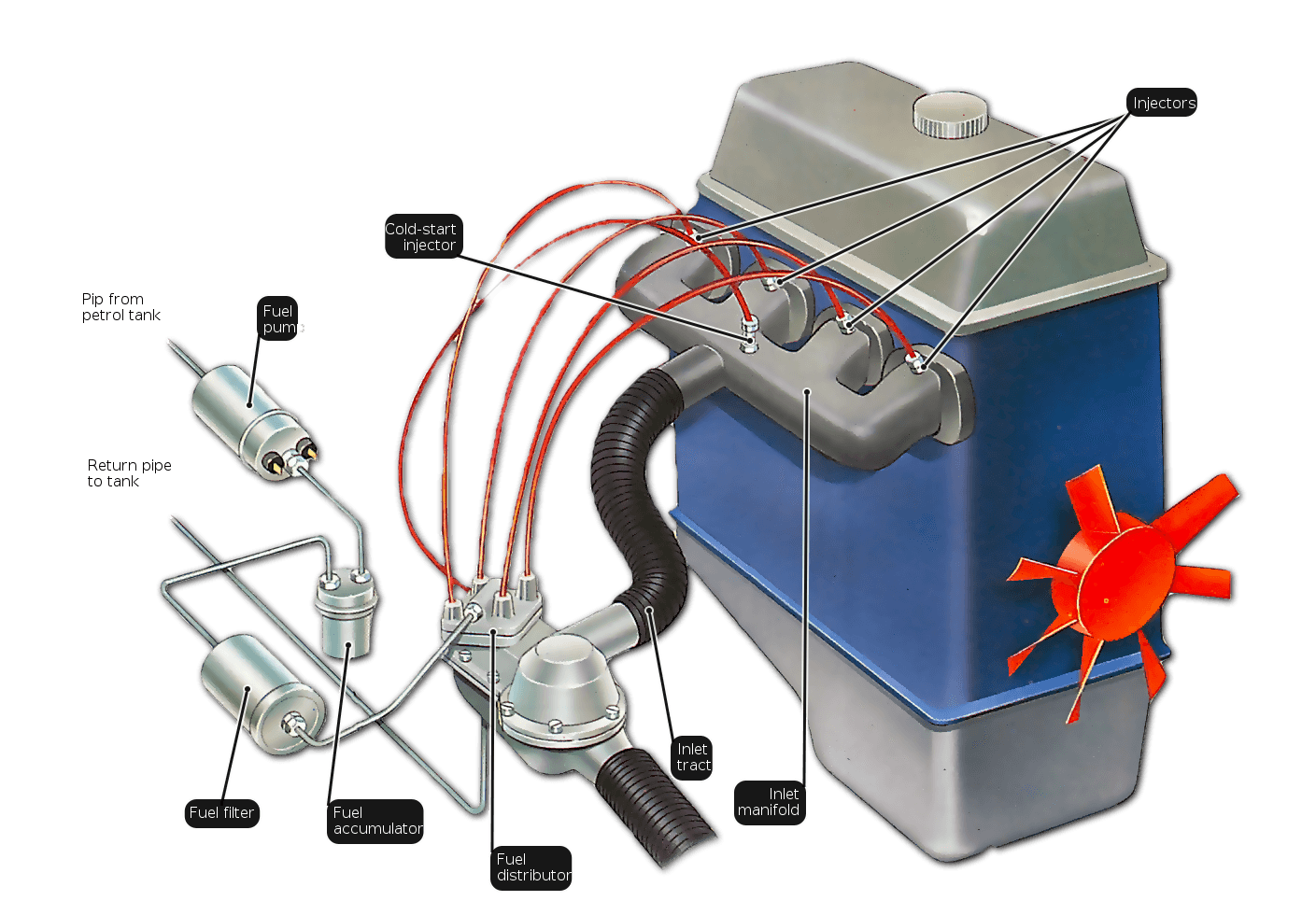
Understanding parts makes the whole system easy to follow. Here are the main pieces and their roles in how fuel injection system works.
- Fuel tank
- Stores gasoline or diesel.
- Supplies fuel to the pump under low pressure.
- Fuel pump
- Pressurizes fuel for the rail or pump-nozzle system.
- Electric pumps are common in modern cars.
- Fuel filter
- Removes particles before they reach injectors.
- Fuel rail
- A chamber that feeds injectors with steady pressure.
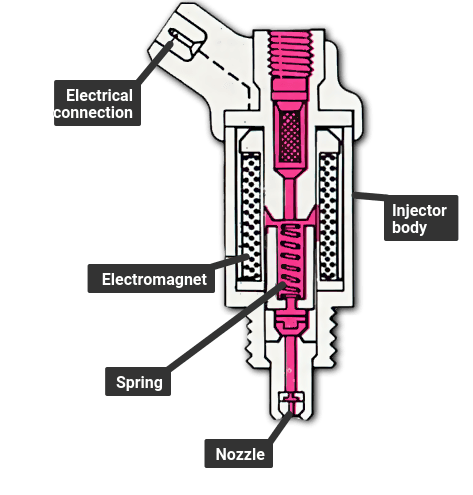
- Fuel injectors
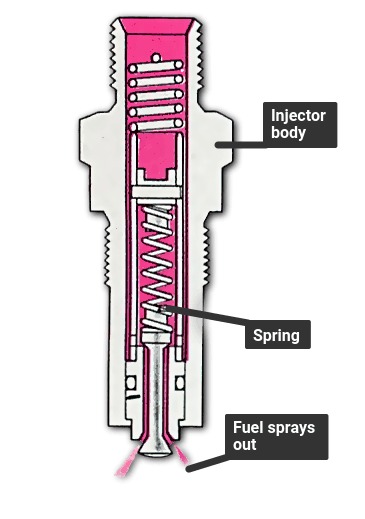
- Tiny valves that spray fuel into the intake or cylinder.
- Nozzle design changes spray pattern for best atomization.
- Engine Control Unit (ECU)
- The brain that times and meters injection.
- Uses maps and sensor data to compute fuel pulse width.
- Sensors
- Mass airflow (MAF) or manifold absolute pressure (MAP).
- Throttle position, coolant temp, oxygen (O2) sensors.
- Crankshaft or camshaft position sensors for timing.
- Pressure regulator or return system
- Keeps fuel pressure stable across conditions.
When you explain how fuel injection system works, show how each part links. The pump feeds the rail. The ECU reads sensors. The injectors open for a precise pulse. The result is controlled combustion.
Types of fuel injection systems and key differences
Different designs change where and when fuel is sprayed. Each type affects how fuel injection system works in practice.
- Throttle-body injection
- Single or dual injector at the throttle body.
- Older approach. Simpler but less precise.
- Port (multi-point) fuel injection
- Injector at each intake port, just before the valve.
- Good atomization, balanced cylinders.
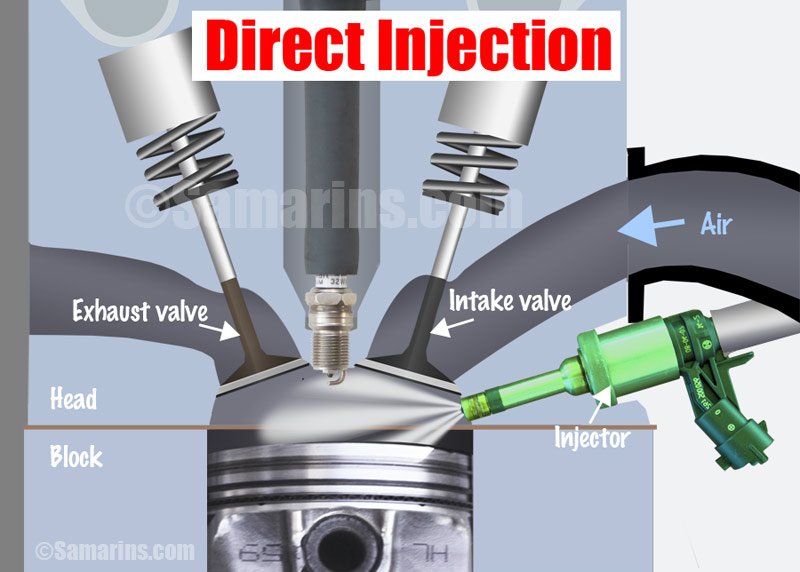
- Direct injection
- Injector sprays fuel directly into the combustion chamber.
- Offers precise control and higher efficiency.
- Sequential vs simultaneous injection
- Sequential injects to each cylinder in time with its intake stroke.
- Simultaneous fires multiple injectors at once.
How fuel injection system works differs mainly by where the injector sprays fuel and how the ECU times pulses. Direct injection changes spray timing and pressure a lot compared to port injection.

Step-by-step: how fuel injection system works during operation
Here’s a simple sequence to picture the cycle. Keep the phrase how fuel injection system works in mind as you read each step.
- Engine starts
- ECU reads crank/cam sensors and engine temp.
- ECU sets a base fuel map for cold start.
- Fuel pump pressurizes
- Pump sends fuel to the rail at set pressure.
- Pressure regulator maintains steady pressure.
- Sensors gather data
- MAF or MAP tells air mass entering the engine.
- Throttle, temp, and O2 sensors refine the need.
- ECU calculates pulse width
- It computes how long each injector must open.
- This is the core of how fuel injection system works.
- Injectors open and spray
- Injectors pulse for milliseconds.
- Fuel atomizes and mixes with air.
- Combustion and feedback
- Spark ignites the mix.
- O2 sensor reports exhaust richness.
- ECU adapts maps in closed-loop mode.
This cycle repeats many times per second. That is how fuel injection system works in real driving.

Why precise metering matters: air-fuel and timing
Correct air-fuel ratio is critical to performance and emissions. How fuel injection system works focuses on this balance.
- Stoichiometric ratio
- For gasoline, ideal is about 14.7 parts air to 1 part fuel.
- Open-loop vs closed-loop
- Open-loop uses preset maps (cold or WOT).
- Closed-loop uses feedback from O2 sensors to fine-tune fuel.
- Timing and atomization
- Proper spray pattern and timing improve burn.
- Direct injection can avoid intake port wetting for better control.
Get these right and you improve economy, power, and longevity.
Common problems and troubleshooting tips
Real cars show common issues that explain how fuel injection system works when things go wrong.
- Clogged injector
- Symptoms: rough idle, misfire, lower power.
- Tip: use cleaning kits or professional ultrasonic cleaning.
- Faulty fuel pump
- Symptoms: hard start, low fuel pressure, stalling.
- Tip: test pressure with a gauge before replacing.
- Bad sensors
- Symptoms: poor fuel economy and hesitation.
- Tip: scan ECU codes and replace suspect sensors early.
- Leaks or pressure loss
- Symptoms: fuel smell, low pressure, poor performance.
- Tip: inspect lines and fittings regularly.
From my experience as a mechanic, small injector clogs are common in older cars. A simple cleaner and proper fuel filter replacement prevent many failures. Always start with a fuel pressure test and a scan tool when diagnosing.

Maintenance tips and best practices
Routine care keeps the system accurate. These steps show how fuel injection system works reliably over time.
- Replace fuel filter per schedule.
- Use quality fuel to reduce deposits.
- Keep air filter clean to prevent lean conditions.
- Perform injector cleaning every 30k–60k miles.
- Address check-engine lights quickly to avoid damage.
I once delayed replacing a clogged filter. The result was an intermittent misfire and a faulty catalytic converter. Fixing the filter early would have saved cost and time.
Performance tuning and efficiency
Tuning can change how fuel injection system works to favor power or economy.
- ECU remaps
- Adjust fuel maps for more power or better economy.
- Larger injectors
- Needed for higher power but require proper tuning.
- Direct injection + port injection combos
- Some cars use both to gain low-end torque and efficiency.
Tuning needs care. Over-rich mapping can foul spark plugs and damage engines. Always monitor air-fuel ratio with a gauge when tuning.
Limitations and safety considerations
No system is perfect. Be clear about limits when explaining how fuel injection system works.
- High-pressure systems require specialist tools and training.
- Direct injection can cause carbon buildup on intake valves.
- Improper repairs can create fuel leaks and fire risk.
- Emissions systems are regulated; tampering may be illegal.
Stay safe. Work with qualified techs for high-pressure systems and always relieve fuel pressure before service.
Real-world examples and lessons learned
I tuned a compact car for better throttle response. Changing from a clogged port system to cleaned injectors and a remap improved mileage by 10%. That experience taught me two things about how fuel injection system works: small parts matter, and tuning without good data is risky.
Another example: a fleet I worked with had recurring rough idle. We found cheap fuel and old filters were the cause. Replacing filters and cleaning injectors solved the problem and cut fuel costs. These real cases show the practical impact of understanding the system.
Frequently Asked Questions of how fuel injection system works
How does a fuel injector actually spray fuel?
A fuel injector opens for a very short time and forces pressurized fuel through a tiny nozzle. The nozzle atomizes fuel into a fine mist so it mixes well with air for efficient combustion.
How is fuel injection different from a carburetor?
Fuel injection meters fuel electronically for each cylinder, while a carburetor mixes fuel based on airflow through mechanical venturi. Injection offers better precision and adapts to conditions faster.
What are signs of a failing fuel injector?
Common signs include rough idle, misfires, poor fuel economy, and a check-engine light. You may also hear the engine stumble under load or detect a fuel smell.
Can cleaning the injectors improve fuel economy?
Yes. Cleaning restores proper spray pattern and flow, which improves combustion. Many drivers see better mileage after professional cleaning or using quality fuel additives.
Is direct injection better than port injection?
Direct injection is more precise and often more efficient. However, it can cause intake-valve deposits and cost more to maintain. The best choice depends on goals and maintenance willingness.
Conclusion
Understanding how fuel injection system works gives you control over performance, efficiency, and reliability. You now know the parts, the cycle, the types, and practical maintenance tips to keep an engine running clean. Try basic checks like fuel pressure tests and injector cleaning first, and consult a pro for high-pressure or complex repairs. If you found this helpful, share your questions or experiences below, subscribe for more guides, or test one of the maintenance tips on your vehicle today.